3 reasons why dogs talk in their sleep. Understanding your dog's condition through their sleep talking

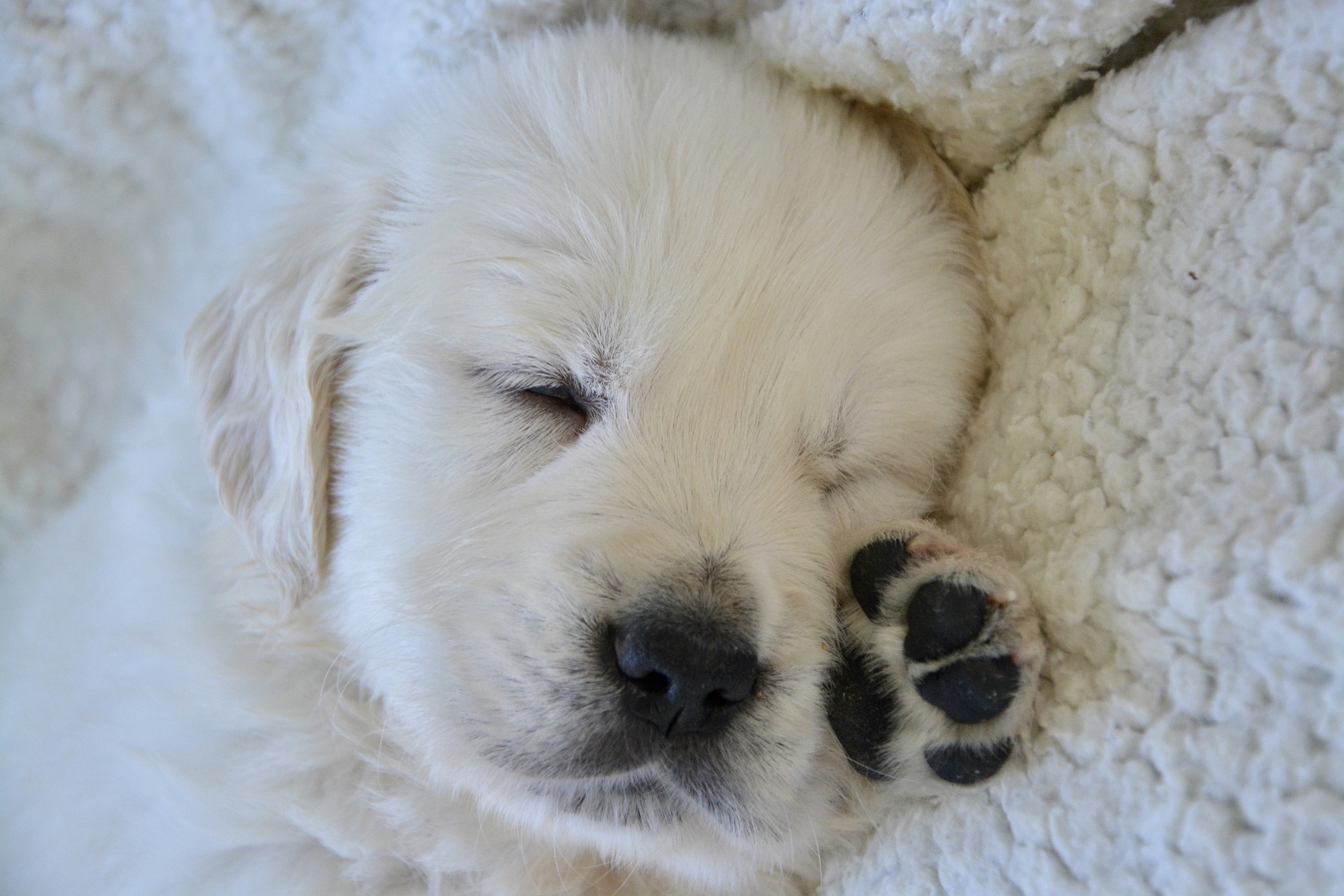
The sight of a dog sleeping soundly and comfortably is truly adorable and soothing.
Dogs sometimes mutter, howl, or twitch while sleeping. Seeing them like this makes you wonder, "Do dogs dream?"
But what's the truth? If they do dream, what kind of dreams do they have?
We'll explain why dogs talk in their sleep and what to do if they're snoring.
When do dogs talk in their sleep?

Humans' sleep talking can sometimes be incomprehensible, but sometimes it's so clear it feels like they're being spoken to.
The content of sleep talking doesn't necessarily correlate with dreams. Sleep talking can be caused by a variety of factors, including everyday stress. But what about dogs? When do dogs talk in their sleep?
Basically, the following reasons are considered.
When Dreaming
You've probably heard the terms "REM sleep" and "non-REM sleep."
It's said that humans alternate between REM and non-REM sleep.
REM sleep, during which we dream, and non-REM sleep, which allows the brain to rest, fluctuate in cycles of about 90 minutes. In other words, during REM sleep, the brain is active, and we dream and sometimes even talk in our sleep. REM sleep accounts for about 25% of REM sleep.
Like humans, dogs alternate between REM and non-REM sleep. However, the ratio is different from humans, with about 70% being REM sleep.
In other words, dogs rarely get a deep sleep.
This is a remnant of their wild habits, and it's believed that they sleep more lightly to protect themselves from predators.
Like humans, dogs' brains are active during REM sleep, and they appear to dream and talk in their sleep in relation to the content of their dreams. However, since dogs cannot speak, it's difficult to scientifically prove whether they are actually dreaming and talking in their sleep, so we can't say for sure.
However, because the brain mechanisms of humans and dogs are similar, it's believed that dogs also dream during REM sleep.
Something special or exciting happens to you
Here are some of the strange behaviors dogs exhibit while sleeping:
- Sleep talking (e.g., howling)
- Wagging a tail
- Twitching ears or nose
- Kicking legs
- Wiggling
- Sleepiness, etc.
The exact reason for these behaviors is unknown, but it has been said that sleep talking and sleepy behavior are more common when the environment changes, such as meeting another dog, having guests over, or going on a trip.
When something unusual happens, it may be that an instinct kicks in to process it in your head.
Three Reasons Why Dogs Talk in Their Sleep

It is believed that children are more likely to talk in their sleep. One reason is that their brains are less developed than adults'. Also, sleep talking during REM sleep and non-REM sleep appears to be different types of sleep talking.
Scientific explanations of dog dreams and sleep talking remain largely unknown, so the reasons are often conjecture. However, the following are possible reasons:
Memory Organizing
We humans use sleep to clear away the events and stress we've experienced during the day.
Like humans, dogs are said to consolidate and reset their brains' memories through sleep.
When their legs twitch, they may be dreaming about a walk, and when they cry in their sleep, they may be dreaming about playing.
Recovering Brain Fatigue
Similarly to humans, sleep not only relieves physical fatigue, but also helps the brain recover from fatigue.
Dogs also think about various things while awake during the day, and get tired from walks and exercise. Therefore, talking in their sleep can be seen as evidence that sleep is helping them recover from fatigue.
Talking in their sleep can also be seen as a way for the brain to recover from fatigue.
Depending on Dog Sleep Habits
As mentioned above, 70% of a dog's sleep is REM sleep. This means that they spend a lot of time dreaming. This also means that they have more opportunities to talk in their sleep.
What should I do if my child is talking in their sleep?
If your pet only makes short, soft noises while sleeping, it's easy to think it's okay to let them sleep. However, if the noises are long and lasting, or if their body twitches for a long time, you may start to worry.
What should you do if your pet is talking in its sleep or twitching?
Generally, there's no need to wake them up, but in some cases, it may be best to consult a veterinarian, so please keep an eye on them.
Should I wake them up?
Unless we're having a particularly unpleasant dream, humans don't feel good when they're woken up.
The same goes for dogs. Being woken up while sleeping is no good.
Sleep talking is evidence that your dog's brain is recovering from fatigue through sleep, so it's generally considered best to leave it alone for your dog's health.
In addition to sleep talking, if your pet jumps up in a startled state while half asleep, you should be there to calm them down.
Causes of Illness or Injury
Some sleep talking and howling can be left alone, while others require attention.
One reason is that your pet may be talking in its sleep because it is unable to achieve deep sleep due to pain or distress from an injury or illness, resulting in shallow sleep.
In cases like this where the cause is clear, the symptoms will likely subside naturally once the underlying illness or injury has healed.
However, in the following cases, it's best to consult a veterinarian as soon as possible.
- In addition to sleep talking, your pet may also be trembling or trembling in a seizure-like manner.
- If their voice sounds strained.
Also, be careful in the following cases:
- Snoring, not sleep talking
- Breathing stops
- Making violent movements
Snoring can also be caused by obesity, congenital respiratory disease, or tracheal collapse.
Snoring can also be caused by an enlarged heart compressing the trachea, or by polyps or tumors in the nose.
Breathing stops or violent movements can also be signs of a respiratory or brain disorder.
Snoring can be a sign of a serious illness, so it's something to be wary of, rather than just talking in your sleep.
If you're concerned about your dog's sleep behavior, observe it carefully.
Summary
You might be worried when your dog talks in its sleep and want to wake it up, but the mechanism behind dog sleep talking is basically the same as that of humans.
If your child seems to be sleeping soundly, ignore their sleep talking and let them be. You don't want to be disturbed while they're having a good dream.
Having good dreams also means that you have a good sleeping environment. A comfortable sleeping environment allows your body and brain to relax.
To that end, make sure you create a good sleeping environment that will help you get good quality sleep.
On the other hand, if your dog's talking or snoring seems uncomfortable, observe him closely and, if necessary, consult a veterinarian.
This is what your adorable dog is doing. It's important to observe him closely on a daily basis.





![Interesting! Names and secret stories of great men's dogs [Saigo Takamori and his beloved dog]](https://with-my-dog.com/wp-content/uploads/2022/04/image1-3-150x150.jpg)