

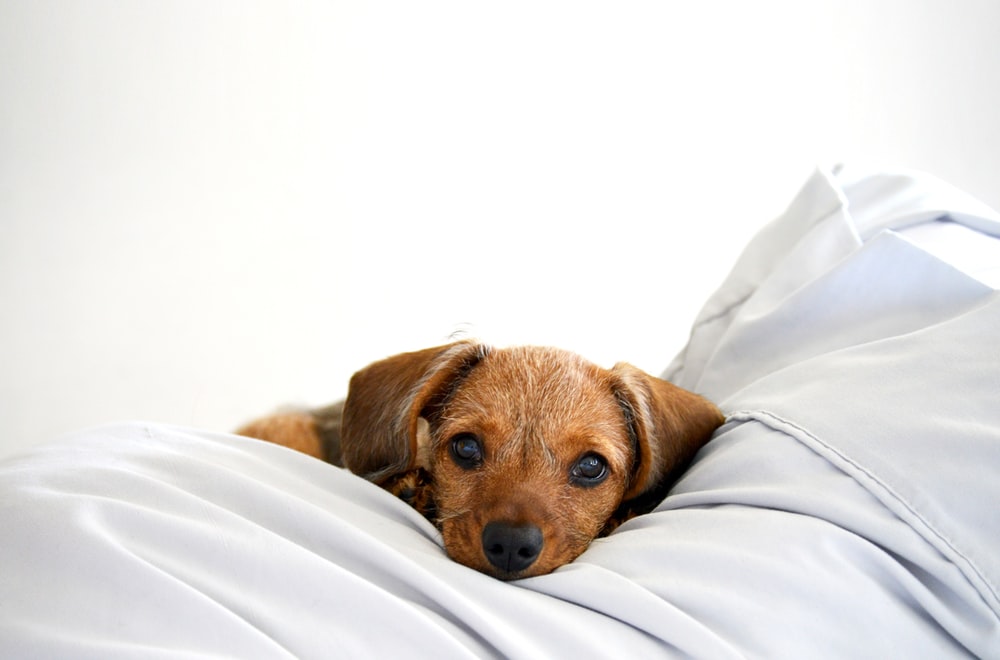
Even adult dogs are said to need 12 to 14 hours of sleep per day.
Puppies are said to need 16 to 18 hours of sleep. Just as humans sleep a lot as babies, puppies also need a lot of sleep.
There's a saying that a good sleeper grows a good baby. Sleep promotes skeletal muscle growth, so both humans and dogs need plenty of sleep as babies. Sleeping well and playing a lot is the key to a healthy puppy's development.
This article summarizes how much sleep puppies need by age.
Why Do Puppies Sleep So Much?
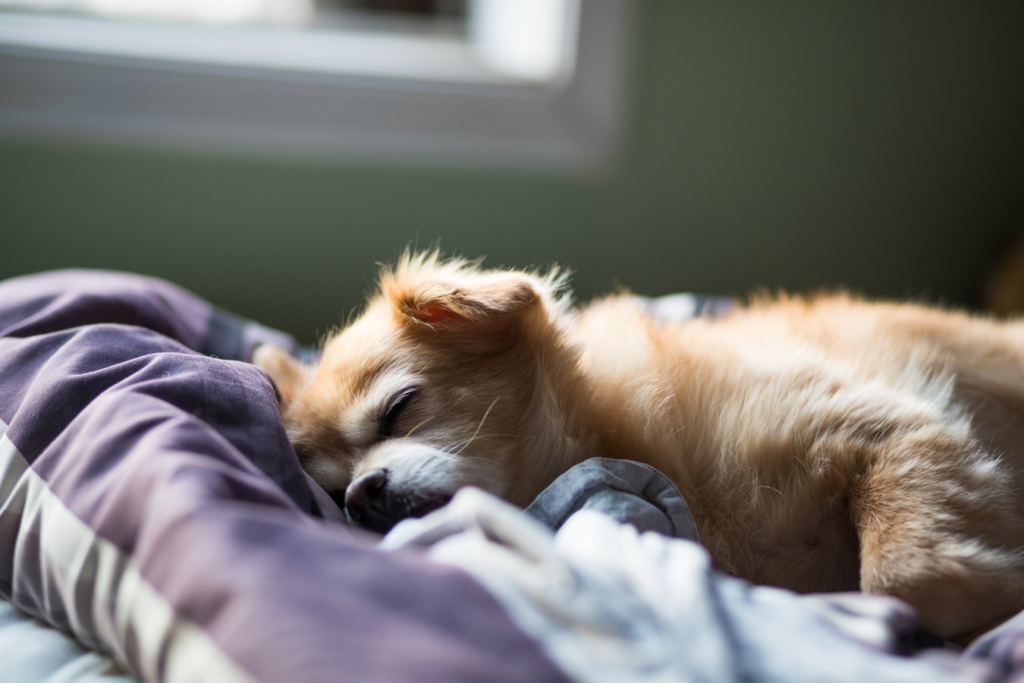
Puppies sleep longer than adult dogs, especially newborns who sleep almost all day. Human babies also sleep for long periods of time except when they're drinking milk.
Why do young dogs and humans need more sleep than adults?
Also, as puppies get a few months older, they start to develop different reasons for sleeping than human babies. Let's look at some of the reasons why puppies sleep a lot.
Puppy Sleep Mechanism
It is said that adult dogs spend 70% of their sleep time in REM sleep and 30% in non-REM sleep. However, puppies sleep longer, and therefore spend more time in deep sleep than adult dogs.
Growth hormones are secreted during sleep, so sleep is essential for puppies' growth.
Sleep begins with non-REM sleep and then transitions to REM sleep. If you wake your puppy up due to a noise or other reason before it transitions into REM sleep, it will not get enough rest during REM sleep.
Sleeping puppies are adorable and you might be tempted to pet them, but dogs only sleep for short periods of time, so to ensure they get the most total sleep possible, try not to wake them up.
High Energy Consumption
Puppies sleep for long periods of time, but they are very active when awake. Puppies are curious and will play with anything and everything. They also love toys.
They play a lot and learn a lot through play. Puppies are very active, so they consume more energy than adult dogs.
They have less energy to begin with.
Because puppies are small, their bodies store less energy, so they need plenty of deep sleep to recover.
Puppies need lots of nutrition for their physical growth and to replenish the energy they expend each day.
For this reason, puppy food is often more nutritious than adult dog food.
Puppies grow by replenishing the energy they expend with food and sleep.
Sleep Time Changes by Month
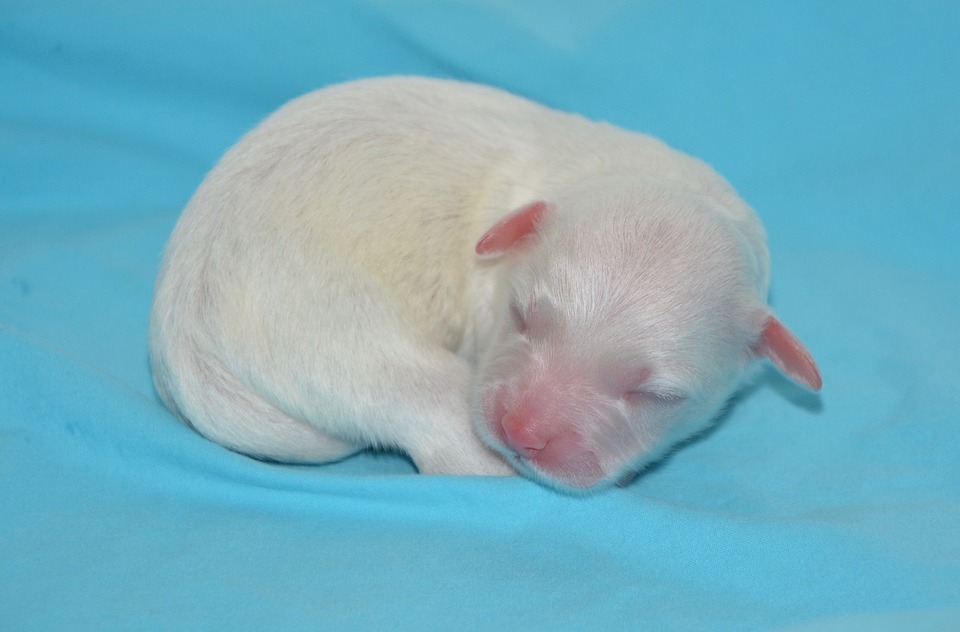
Sleep time changes with age. It gradually decreases as your puppy grows, and by 6 months of age, it's approaching that of an adult dog.
This is evidence that their body and brain are growing and approaching adulthood.
Sleep time changes by month as follows:
| Age | Sleep |
| 3 Weeks Old | Until about three weeks old, puppies' jobs are to eat and sleep. Their daily routine is one of eating and sleeping. They breastfeed and sleep, repeating this cycle throughout the day. After three weeks, the ratio of REM and non-REM sleep becomes 50/50, and their activity time gradually increases. |
| 2-3 Months Old | Puppies are more active than when they were newborns, but they still spend most of their day sleeping. It's said that puppies at this age sleep for about 18 hours, but they may try to stay awake if their owner is nearby. Sleep is crucial for the development of a puppy's brain and body, so if your puppy seems to be waking up whenever you do, try to encourage them to sleep peacefully in a separate room for about three hours. Playtime increases, and sleep time gradually decreases. Their sleeping habits reflect their personalities and lifestyles, and their individuality begins to emerge. Some puppies sleep a lot, while others don't sleep much. Be careful not to over-involve them and shorten their sleep time. Not getting enough sleep can affect their development, causing them to use up more energy than necessary, so make sure to play with them when they want to and ensure they get an average amount of sleep. |
| 5-6 Months Old | At this age, your dog's sleep time will decrease significantly, to around 14-16 hours, not much different from that of an adult dog. In addition to playing indoors, the quality of exercise will change, including walks. This is the time when your dog is transitioning from puppy to adult. As your dog transitions from puppy to adult, you will need to balance sleep and daily life. |
What should I do if my dog isn't sleeping much?
If you've just gotten a dog, you may have heard from the pet shop, breeder, or veterinarian that puppies sleep a lot, but you may find yourself thinking, "My puppy doesn't sleep as much as I expected," or "I heard he sleeps about 20 hours, but he doesn't sleep that much."
Sleep promotes puppy development, so it's natural to worry that a puppy that doesn't get enough sleep will not thrive properly.
However, in most cases, there's no need to worry too much if your puppy doesn't sleep much.
This is because puppies often eventually fall asleep when they're tired. If your dog won't sleep because he's excited from playing, take advantage of his natural tendency to prefer dark, confined spaces by creating a personal space for him by darkening the room and placing a partition near his dog bed. This will help him calm down.
If your dog isn't sleeping well at night and has a poor appetite, it may be ill, so be careful.
Some dogs wake up unusually early in the morning.
The most common reasons for this are wanting to go to the bathroom or getting attention.
If you respond to your puppy's barking, he may think that barking will get him some playtime. So, rather than waking up and playing with him, play with him a lot during the day to help him burn off some energy and get a good night's sleep when he should.
Puppies aren't very good at regulating their body temperature, so placing blankets or cool objects in their beds depending on the season and room temperature can help them sleep better.
Summary
Puppies grow and sleep a lot. Sleep is essential for a puppy's development.
While a little sleep deprivation won't immediately lead to illness or stunted growth, it's important to make sure your puppy gets plenty of sleep.
If your child is too playful during the day and won't fall asleep, try to provide a calming sleeping area.
If your child doesn't sleep well at night, let them play a lot during the day and make sure they get used to the cycle of being tired and falling asleep at night.
If your child doesn't spend enough time playing during the day, they are more likely to have trouble sleeping at night, so it's important to help them develop the habit of "playing hard and sleeping well."
And we hope they grow up healthy.

















![Interesting! Names and secret stories of great men's dogs [Saigo Takamori and his beloved dog]](https://with-my-dog.com/wp-content/uploads/2022/04/image1-3-225x300.jpg)