
"My dog's ears have dirty brown earwax."
"My dog's ears have a strange odor."
If your dog has unusual earwax or a strange odor, you may be worried that they might be sick.
Even owners who regularly care for their dog's ears may be especially concerned. If your dog has brown earwax, it's likely that there's a problem inside the ear.
Knowing the possible causes of brown earwax can help you determine when to visit a veterinarian and take appropriate measures.
In this article, we'll explain the causes of brown earwax in dogs and what you should be aware of.
Why Does My Dog's Earwax Turn Brown?
Normal dog earwax is white to milky white or light brown.
It has almost no odor, is produced in small amounts, and is not sticky.
However, brown earwax often has a smelly and a sticky texture.
Brown earwax is clearly different from normal earwax, but why does it turn brown?
It's related to the ear structure, which is different from that of humans.
A dog's ear is divided into three parts: the outer ear, the middle ear, and the inner ear.
In humans, the ear canal, which connects the outer ear to the eardrum, is a straight, horizontal line.
However, a dog's ear canal is L-shaped, making it difficult to see deep into.
As a result, if water gets deep into the ear during daily shampooing or playing in the water, it becomes difficult to drain.
Because this structure makes it difficult to remove dirt from inside the ears, dogs' ears are prone to various problems.
Ear problems can cause earwax to turn brown
When ear problems occur, earwax tends to turn browner than usual.
The following breeds are particularly prone to ear problems:
- Dog breeds with droopy ears
- Dog breeds with thick ear hair
- Dog breeds with narrow ear canals
Due to the structure of their ears, these breeds are more susceptible to ear dirt than other breeds.
In particular, breeds with droopy ears or thick ear hair are more likely to have ears that become humid, which can lead to ear inflammation.
Dirty ears can lead to the proliferation of a common bacteria called "Malassezia," which is normally harmless to dogs.
The proliferation of Malassezia can cause a sudden increase in dark brown earwax and lead to otitis externa, so ear problems should be avoided as much as possible.
Three Causes of Problems
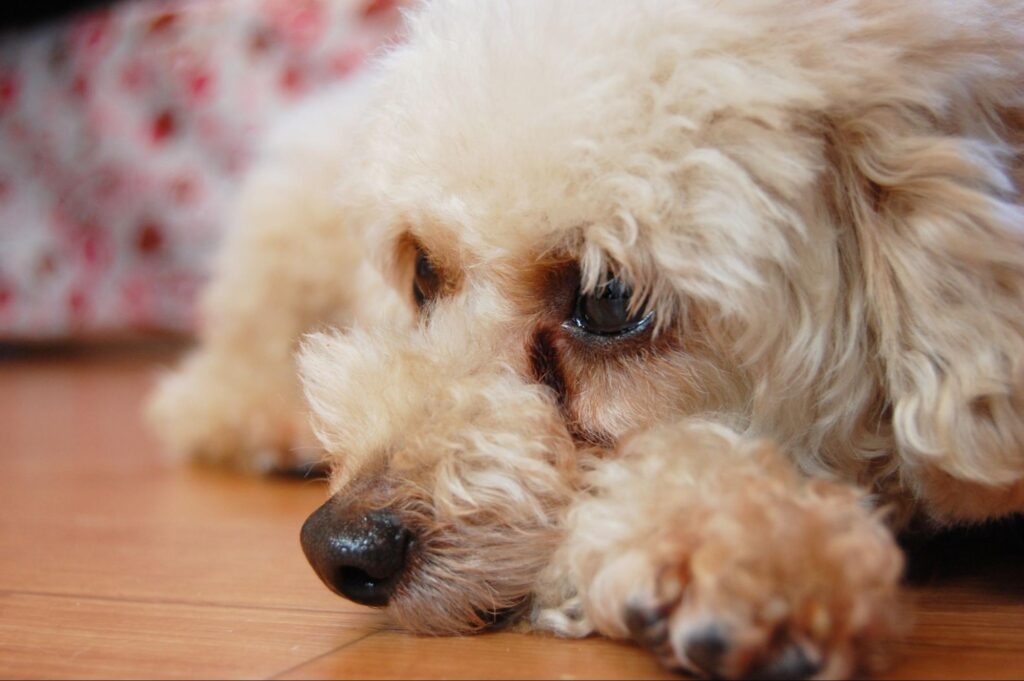
Ear problems occur for the following three reasons.
- Steaming due to heat and humidity
- Earwax buildup and excess sebum
- Foreign objects getting inside
Steaming due to heat and humidity
Steaming inside the ear due to heat and humidity makes ear problems more likely.
The following dog breeds are prone to sweating due to heat and humidity.
- Dog breeds with droopy ears
- Dog breeds with lots of ear hair
In fact, regardless of breed, dog ears, due to their structure, tend to become very sweaty inside.
Because the inside of a dog's ears tends to get sweaty, it's an ideal environment for bacteria to grow.
Furthermore, dog breeds with droopy ears have ears that close off the ear canals like lids, making them even more susceptible to humidity.
Dogs with lots of ear hair also tend to get sweaty inside their ears, so they need to be trimmed regularly.
These breeds require careful ear care, especially during the rainy season and summer, when humidity levels are high.
Earwax buildup prone, oily skin
Dog breeds with narrow ear canals and prone to earwax buildup are more likely to suffer from ear problems.
The following dog breeds have narrow ear canals:
- Pug
- Bulldog
- French Bulldog
These breeds have narrow ear canals, which narrow as they approach the eardrum.
Furthermore, due to their high oil content, their ears are more susceptible to dirt than other breeds.
Keep your dog's ears clean with regular ear care.
Foreign Objects Getting Inside
Foreign objects getting inside your dog's ears can cause ear problems.
For example, if your dog goes into the grass on a walk, seeds or insects may get inside the dog's ears.
Another problem is that your dog's own hair may get inside the ears.
These foreign objects can irritate the eardrum and cause redness, swelling, and inflammation in the ear canal.
Foreign objects in the ear are difficult for owners to remove, so they must be removed at a veterinarian.
If your dog is bothered by its ear or frequently shakes its head, a foreign object may be present.
If your dog seems unwell, take him to the veterinarian as soon as possible.
What should I pay attention to on a daily basis?
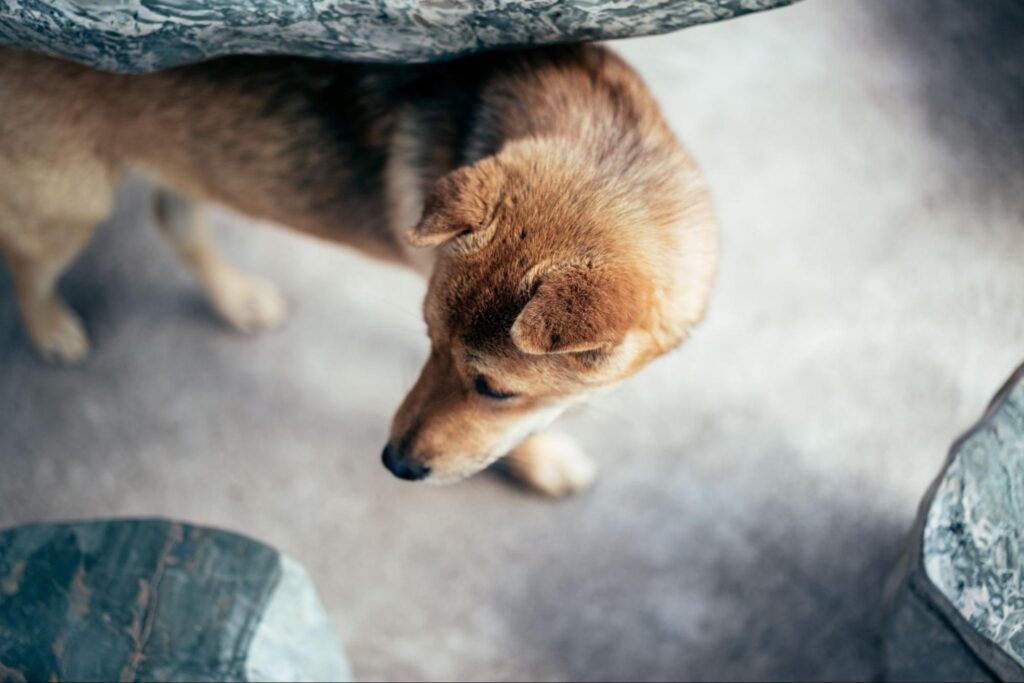
When it comes to regular ear care, it's a good idea to pay attention to the following two things.
- Regular Ear Hair Care
- Clean your dog's ears gently, focusing only on the visible areas.
Regular Ear Hair Care
Dog breeds with long hair tend to have more hair inside their ears.
Excessive ear hair can cause the inside of the ears to become more prone to moisture, so regular ear care is essential.
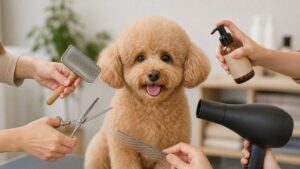
If you are trimming your dog's ear hair yourself, we recommend using scissors designed for trimming human eyebrows, as dogs' ears are small.
Dogs often have difficulty staying still, so it's best to have two people do the work.
One person should hold the dog's body while the other trims the ear hair.
If you find it difficult to trim your dog's ear hair yourself, we recommend having a grooming salon do the job for you.
Having your pet's ear hair professionally trimmed regularly and improving ear ventilation can help keep its ears clean.
However, excessive ear trimming can actually improve ear hygiene.
If you decide to trim your pet's ear hair, consult with your veterinarian to determine whether trimming is appropriate.
Clean your dog's ears gently, focusing only on the visible areas.
When cleaning your dog's ears, you don't need to go deep inside.
Only clean the visible areas.
The skin on a dog's ears is thin and delicate. Avoid rubbing too hard to remove dirt or using cotton swabs to reach deep inside.
This can actually cause earwax to become stuck deeper in the ear, or damage the eardrum or ear skin.
When cleaning your dog's ears, only gently wipe the visible area with a cotton ball or similar.
Summary

If your dog has ear problems, brown earwax is often present.
Brown earwax is a sign that your dog has ear problems.
Any dog breed can develop brown earwax, but breeds with particularly dirty ears require regular ear care.
We recommend consulting with your veterinarian to determine ear care methods and frequency.
To protect your beloved dog's health, it's important to prevent ear problems before they occur.
Dogs' ears are very delicate, making them prone to a variety of problems.
If you notice any concerns about your dog's ears, such as ear odor or earwax color, take them to the vet as soon as possible to receive appropriate treatment.



![[Stupid dogs are cute] Introducing funny pictures and simple questions](https://with-my-dog.com/wp-content/uploads/2022/07/image4-18-150x150.jpg)


![[Must-see for beginners] Introduction to potty training your dog. If you pay attention to these points, you'll be fine!](https://with-my-dog.com/wp-content/uploads/2022/07/image4-11-300x200.png)