

When a male dog reaches sexual maturity, you must consider neutering. Even if you decide to have your dog neutered, you may be worried about the pain and the plight of your dog.
However, neutering is a very important procedure for your dog's health.
Neutering can help reduce stress caused by sexual urges and prevent reproductive diseases.
Neutering can also be a great benefit for owners, as it can prevent unwanted pregnancy.
Neutering requires the insertion of a scalpel into the dog's body, which puts a great strain on the dog.
For this reason, it is important to care for your beloved dog thoroughly after surgery.
In this article, we will introduce the post-operative condition of your beloved dog as it endures surgery and provide key care tips.
Please read this article and use it as a reference for post-neuter surgery care.
Procedure After Neutering Surgery
The process after castration surgery is as follows:
1. After neutering surgery, wait for the dog to wake up from anesthesia.
2. If the dog is in good health, discharge the dog.
3. Avoid strenuous exercise and shampooing, and care for the dog at home until the stitches are removed.
4. Remove the stitches approximately one week after surgery.
Immediately after waking up from anesthesia
Canine neutering surgery is often performed as a same-day procedure.
After your dog wakes up from general anesthesia, if they are in good health, you can take them home the same day.
If the surgery is an outpatient procedure, your dog will rest at home after the procedure to allow the wound to heal and for its strength to recover.
Please refrain from strenuous exercise or walks until your dog is in perfect health.
While most neutering procedures are performed on an outpatient basis, some veterinary clinics offer the option of an overnight stay even if your dog is in good health. Be aware that overnight stays will incur additional hospitalization fees in addition to the cost of the neutering procedure.
Also, dogs feel most secure in their own homes, so an unfamiliar environment like a veterinary clinic can be stressful.
However, veterinary clinics provide thorough post-operative care and follow-up monitoring, so if your dog's condition suddenly changes, they can respond immediately.
Listen carefully to your dog's condition after surgery, and if you have the option of a same-day procedure or an overnight stay, discuss it with your veterinarian.
Discharge - Stitch Removal
After discharge, it's important to control your dog's exercise levels to minimize strain on its body, and to provide wound care and medication management.
After neutering, your dog may lick the wound out of concern. Licking the wound can introduce bacteria, so you should prevent this. For this reason, you should use an Elizabethan collar to protect the wound.
However, some dogs dislike wearing an Elizabethan collar, so keep an eye on your dog while wearing it.
The stitches will be removed a few days after surgery, but depending on the surgical method, they may not need to be removed.
Even if the stitches are not removed, wound care is necessary, so be sure to keep your dog wearing an Elizabethan collar.
Until the Wound Heals
Whether the stitches are removed or not, always keep the Elizabethan collar on until the wound's redness subsides.
If the wound becomes infected due to your dog licking it, it will further slow down the healing process.
You may feel bad for your dog and want to remove the Elizabethan collar, but for your dog's sake, you should be patient and endure the hassle.
The wounds from neutering will heal in about 1 week to 10 days.
Until the wounds have healed, limit walks to avoid putting stress on your dog's body.
Recovery After Neutering
For dogs, undergoing surgery at a veterinary clinic can be very stressful.
For this reason, it's important to allow your dog to relax at home as much as possible after neutering surgery.
Create an environment where your dog can rest.
If the wound opens while your dog is resting at home, contact a veterinarian immediately.
Food and Hydration
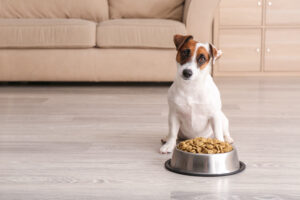
After neutering, your dog's appetite may decrease due to the strain on its body. As a guideline, limit the amount of food and water to about half of the usual amount.
Watch your dog's behavior closely.
If your dog refuses to eat, do not force it.
As your dog's strength gradually recovers, its appetite will return.
Once its appetite has fully returned, provide it with approximately the same amount of food and water as usual.
It's important to remember that neutering suppresses the secretion of sex hormones, which slows down a dog's metabolic rate.
A slower metabolism makes a dog more susceptible to weight gain, so feeding it its usual amount of food can lead to obesity.
For this reason, feeding your dog an amount appropriate for its condition after surgery is essential, not its usual amount.
Check with your veterinarian about how much food your dog should eat after neutering, and be careful not to let your dog become obese.
About Shampooing and Bathing
Avoid shampooing your dog until the redness of the wound subsides.
Also, if your dog has had surgery that requires stitches to be removed, shampooing is prohibited until the stitches are removed.
If you are concerned about odor, gently wipe your dog's body with a wet towel, avoiding contact with the wound.
About Walking Timing
The timing of walks after neutering surgery depends on your dog's physical condition.
If your dog is eager to go for walks or only relieves itself outside, it's a good idea to check with your veterinarian.
Even if you are given permission to take your dog for walks, vigorous exercise is prohibited.
In particular, until the stitches are removed, keep your dog to a light walk to avoid putting stress on the wound.
Changes in Physical Condition
After neutering, dogs with sensitive personalities may become depressed due to the stress of the surgery and being in an unfamiliar environment like a hospital.
For example, the following changes may be observed:
・Lack of appetite and energy
・Loose stool
・Irregular bowel and urinary patterns
・Emotional instability
If your dog seems unusual or you are concerned, contact your veterinarian for an examination.
Changes in Mental and Personality After Castration
Neutering a dog can impressively stabilize its mood and may even change its personality.
On the other hand, some dogs' mentality and personality do not change even after neutering, so it's a good idea to check in on your dog daily.
About Urination Style
Some dogs may experience changes in their urination style after neutering.
Once a dog reaches sexual maturity, it begins to lift its leg to urinate, signaling its scent to those around it.
This is called marking, and it's done to protect its territory.
It can lead to trouble if your dog marks the entrances, walls, or utility poles of other people's houses while on walks, so it's best to avoid marking as much as possible.
Some owners neuter their dogs to stop marking, but even if neutering is performed after marking has become a habit, it often does not improve the behavior.
However, if you neuter your dog before marking becomes a habit, your dog may learn to urinate by squatting.
If you want to prevent marking from becoming a habit, it is best to have your dog neutered by the time it reaches sexual maturity, around 7 months of age.
About Personality Changes
Depending on a dog's original personality, some dogs may become more timid or shy after neutering.
Neutering suppresses sex hormones, reducing their aggressive and territorial instincts and resulting in a more gentle personality.
Even if a dog's personality does change, it is not a drastic change; in most cases, the change is barely noticeable.
Summary
Since neutering surgery does not generally involve cutting the abdomen, it is considered less risky than spaying or neutering females or other surgeries.
Even so, when reading the pre-operative instructions and consent form, owners may still feel anxious, considering the risks of general anesthesia and their pet's physical condition after surgery. However, if you look anxious, your pet will sense your anxiety, as dogs are sensitive to human emotions.
To help your pet feel at ease after surgery and relax during the recovery period, be prepared to welcome them calmly.





![[Detailed explanation] How much does it cost to neuter a dog? Can insurance be used?](https://with-my-dog.com/wp-content/uploads/2022/03/22930207_sのコピー-150x150.jpg)
![5 sites for finding foster homes for rescued dogs and cats [Basic information before rescuing]](https://with-my-dog.com/wp-content/uploads/2021/09/andriyko-podilnyk-M4NYOsSre6g-unsplash-150x150.jpg)