

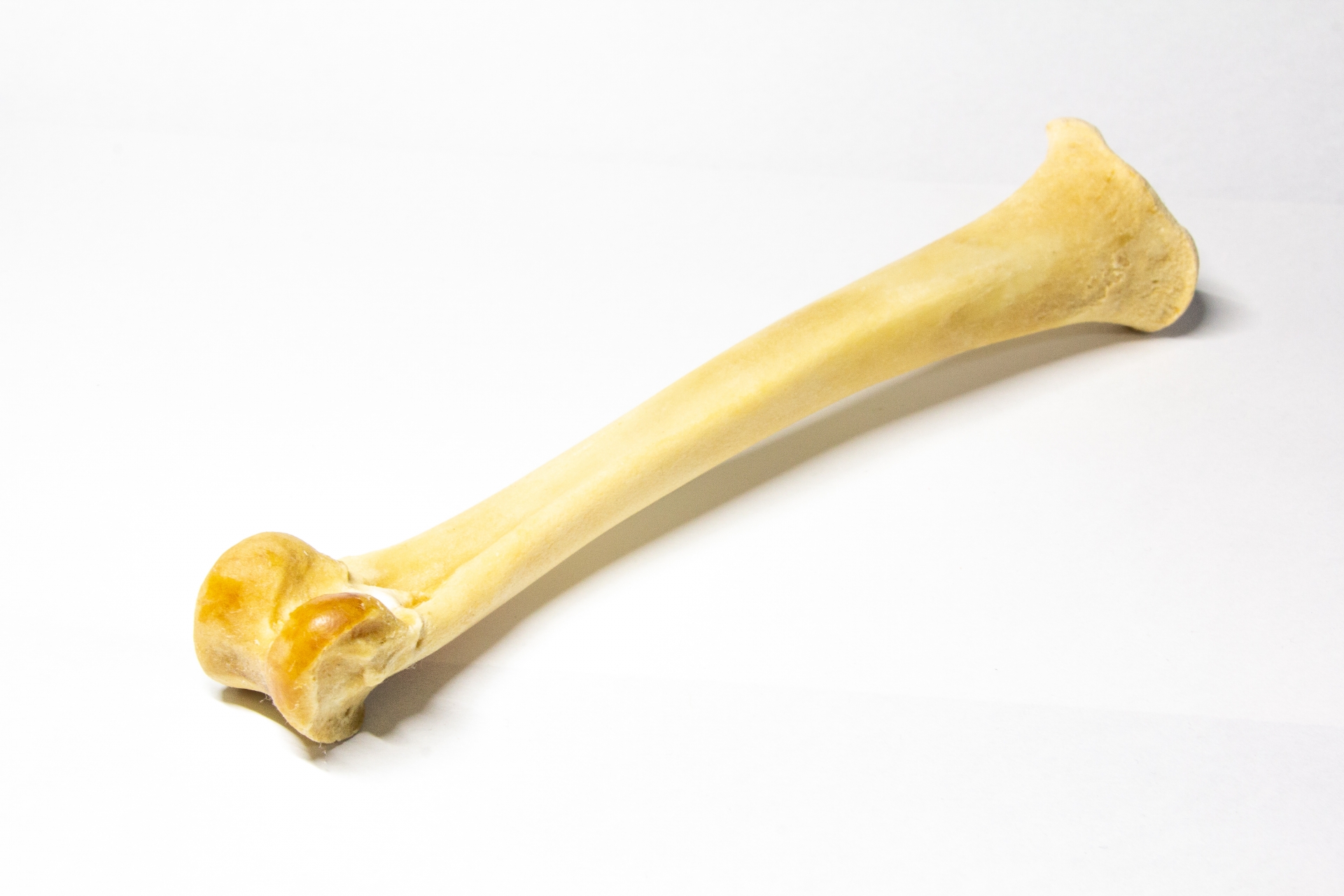
In addition to dog food, there are many dog treats that your dog will enjoy, including gum, jerky, and even beef and deer bones.
Bones are one of those treats.
Did you know that bones offer various benefits to your dog?
Dogs love chewing bones! There are many reasons for this. Dogs' ancestors date back to wolves, who hunted in packs about 8 million years ago. Wolves were "ultra-carnivores," with over 70% of their diet consisting of meat.
Over the years, dogs have developed strong teeth and jaws to eat larger prey. These durable teeth and bones have been passed down to modern dogs. Dogs are naturally able to eat any part of their prey, including bones.
However, there are some things to keep in mind when feeding bones to your dog. Please review the four benefits and drawbacks of bone eating for your dog and make sure you are feeding them the right way.
Why Dogs Love Bones

Dogs are crazy about bones. There's a good reason why they're so obsessed with them.
Dogs instinctively love bones, packed with essential nutrients. The marrow inside bones is rich in fat, and bones themselves are high in calcium. The meat left on the bones is also rich in protein.
Chewing on bones is also a pleasurable activity for dogs. Bones relieve boredom and satisfy a dog's natural chewing urge. Chewing also releases happy hormones! It's all good stuff.
4 Benefits of Eating Bones
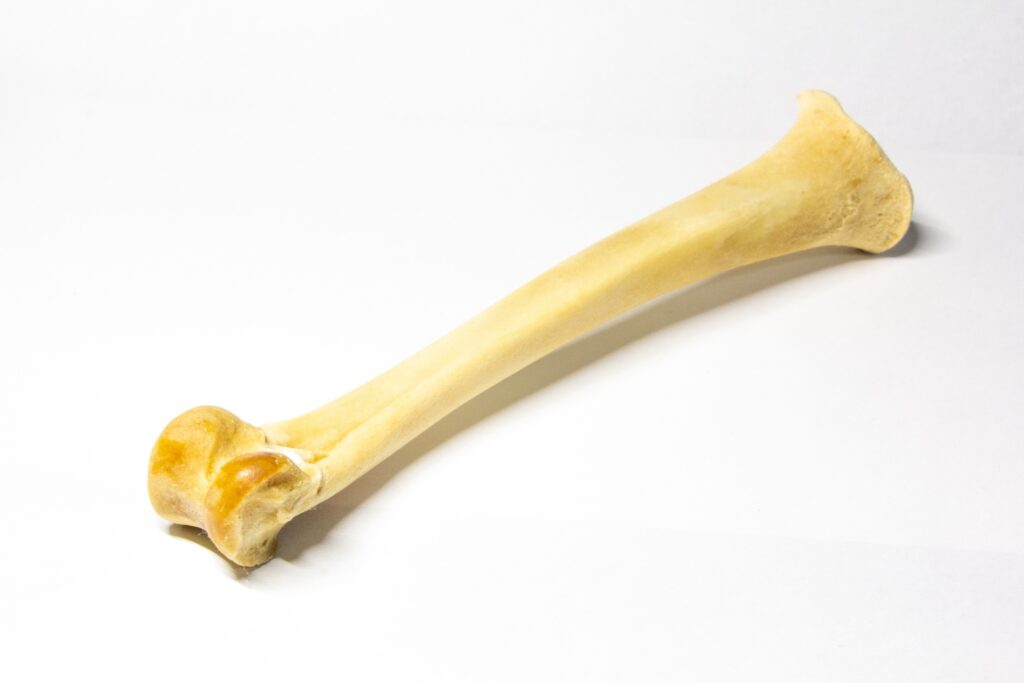
Here are four benefits of eating bones for dogs, from nutritional supplements and teeth-cleaning benefits to jaw muscle strengthening and stress relief.
Nutritional Supplementation Helps Maintain Health
The primary benefit of giving your dog bones is that they are delicious and nutritious. Here are the main nutrients found in bones that are beneficial to your dog's body.
・Calcium
The calcium contained in bones is an important nutrient that strengthens the joints of active dogs and helps prevent fractures.
Small and extra-small dogs may have weak bones, so chewing bones can be a good way to supplement calcium. The marrow inside the bones is rich in fat, while the hard bones surrounding the marrow are rich in calcium. In addition, bone marrow extract allows dogs to taste meat by chewing bones. This sensation may be similar to that experienced by humans when chewing gum.
・Phosphorus
Phosphorus, found in bones, is a nutrient whose ratio with calcium is important.
More than 80% of a dog's phosphorus is stored in its bones and teeth along with calcium, helping to strengthen the entire skeleton. Calcium deficiency can lead to growth retardation, loss of appetite, and bone and joint deformities. Calcium is an important nutrient for maintaining bone strength and normal bodily function.
・Fat
Fat, found in bones, is one of the three major nutrients, along with protein and carbohydrates.
It provides the energy your dog needs to stay alive and stay active. Fat also increases the absorption of fat-soluble vitamins such as vitamins A, D, E, and K, which are less soluble in water and more soluble in oil (fat). It also helps maintain a beautiful coat and healthy skin. Fat also enhances flavor and aroma, making food more palatable.
・Protein
Meat left on the bones contains a lot of protein.
Protein will help your dog feel full after a meal. It is also an important nutrient for maintaining healthy muscles and internal organs. Protein deficiency can lead to a weakened immune system, hair loss, and poor health, as it is the building block for skin and fur. Protein deficiency is especially important for puppies, and a lack of it can lead to delayed growth.
Brushing your dog's teeth helps keep them clean
Chewing bones also has a positive effect on your dog's teeth. The bones grind down the teeth, removing plaque and preventing tartar buildup. It also helps reduce bad breath.
Game and beef trotter bones are recommended because they do not crumble. Raw bones, in particular, are great for cleaning your dog's teeth.
Dogs love the bone marrow hidden inside bones, packed with natural nutrients. Chewing bones also helps remove tartar buildup from their teeth thanks to the live food enzymes contained within.
Raw bones can be fed to dogs either frozen or thawed. It's recommended to feed them on a hard surface to reduce the amount of cleanup. For small dogs, shank cuts are recommended, while larger bones are recommended for dogs with larger mouths.
For dogs who struggle with brushing their teeth, chewing on a bone can help remove tartar and strengthen the gums.
Maintains jaw and cheek muscles
Chewing on bones strengthens the jaw muscles and strengthens the dog's chewing ability (masticatory muscles). Furthermore, the stimulation caused by strengthening the chewing muscles may also activate the brain.
The benefit of brain activation is that it helps dogs maintain their master-servant relationship with humans and the enrichment of living together. Dogs are constantly watching their owners' actions. Their brains visually recognize their owners' emotional state and allow them to make decisions about their own behavior.
Chewing and brain activation are closely related, even in preventing cognitive decline in elderly dogs.
※The muscles used by dogs when chewing food and also involved in opening and closing their mouths (masseter, temporalis, and digastric muscles)
Stress Relief
Dogs instinctively want to chew.
Chewing bones for puppies is effective in easing the pain of teething during development and maintaining healthy, strong teeth as they age. Dogs are naturally hunting animals, so they have a chewing habit. They may even engage in playful biting. Training them with bones can help them improve their chewing habits.
Dogs, like humans, experience stress, so chewing a bone can help them release their natural instincts and relieve stress. Chewing a bone is a very pleasurable experience for dogs. It relieves boredom and satisfies their natural desire to chew.
Stress relief is also said to stimulate the secretion of endorphins, hormones that bring about feelings of happiness. The act of chewing itself is beneficial for your dog.
Two Disadvantages of Eating Bones
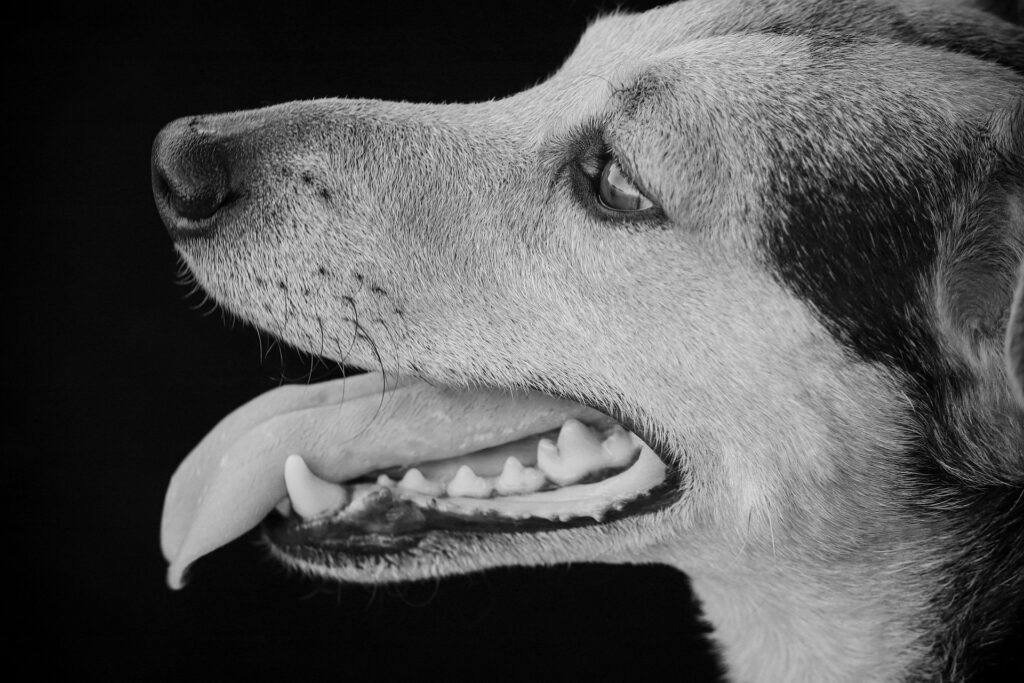
As we've explained, dogs naturally eat bones, a habit that dates back to their wolf ancestors.
However, while satisfying this instinct in our pet dogs, who are not wild animals, can be dangerous if we are not careful.
Here, we'll explain the disadvantages of giving bones to your dog.
To protect your beloved dog's health, be sure to know about bones beforehand and give them to him safely.
Damage to Tooth Enamel
Feeding your dog too many hard bones can damage tooth enamel and even chip teeth.
Dogs' teeth have a protective enamel coating. When this coating is removed, bacteria can easily enter through the rough dentin.
Furthermore, loss of enamel can lead to tooth decay, which is rare in dogs. Considering the role of bones in cleaning your dog's teeth, make sure to feed your dog bones of appropriate hardness, rather than overly hard parts like hooves.
Bones can get stuck in the throat or stomach.
Do not feed chicken bones, as they are split lengthwise into sharp ends that may damage internal organs.
We recommend hypoallergenic game bones (venison or wild boar) or beef bones. Dogs will chew bones with great enthusiasm, as if they are reminded of their ancestors' blood. Be careful, as they may swallow them whole in a fit of rage.
If bones get stuck in your dog's throat or he is unable to digest them, it can affect his health, so keep an eye on him while feeding him bones.
Summary
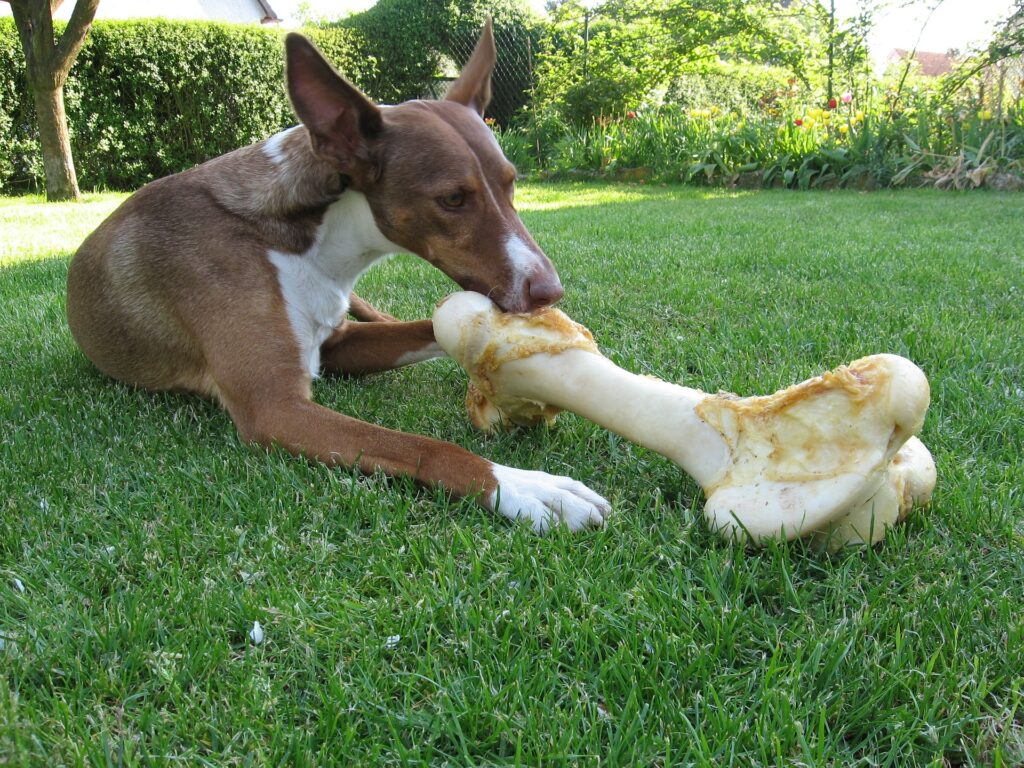
Bones contain minerals and other nutrients, satisfying your dog's appetite. Chewing stimulates saliva, which may help prevent plaque buildup and periodontal disease. Chewing bones also helps relieve stress, which can lead to excessive scratching and licking of the dog's paws.
However, feeding bones improperly can be dangerous.
Before giving your dog bones, make sure they are the right type and size for your dog. Bone fragments can be dangerous if ingested. Although dogs' digestive juices are superior to ours, do not feed bones to dogs with gastrointestinal disorders.
Also, when your dog is around other dogs, don't let them chew on bones, as this can lead to fights.
When giving your dog bones, we recommend fresh, raw game (venison or wild boar) or beef bones, which are hypoallergenic.
Remove the bone from your dog after 10 to 15 minutes and place it in the refrigerator. Dispose of the bone after 3 to 4 days.
For small dogs, give bones that are too small for them to swallow. For large dogs, give bones that are much larger than their mouths.
It's up to you to protect your dog, so always supervise when giving them a bone.
And if your dog accidentally swallows a bone, consult a veterinarian immediately.
Bones have many benefits for dogs, but don't forget to be aware of the correct pros and cons.
Feed your dog the perfect bones and enjoy a happy dog life.










![Want to see cute dog photos? A collection of popular sites [including free stock images]](https://with-my-dog.com/wp-content/uploads/2022/07/image4-11-150x150.jpg)







![[2022 Edition] What is the safest dog food? Survey of recommended popular products](https://with-my-dog.com/wp-content/uploads/2021/10/puppy-ged828c55e_1920-300x217.jpg)