
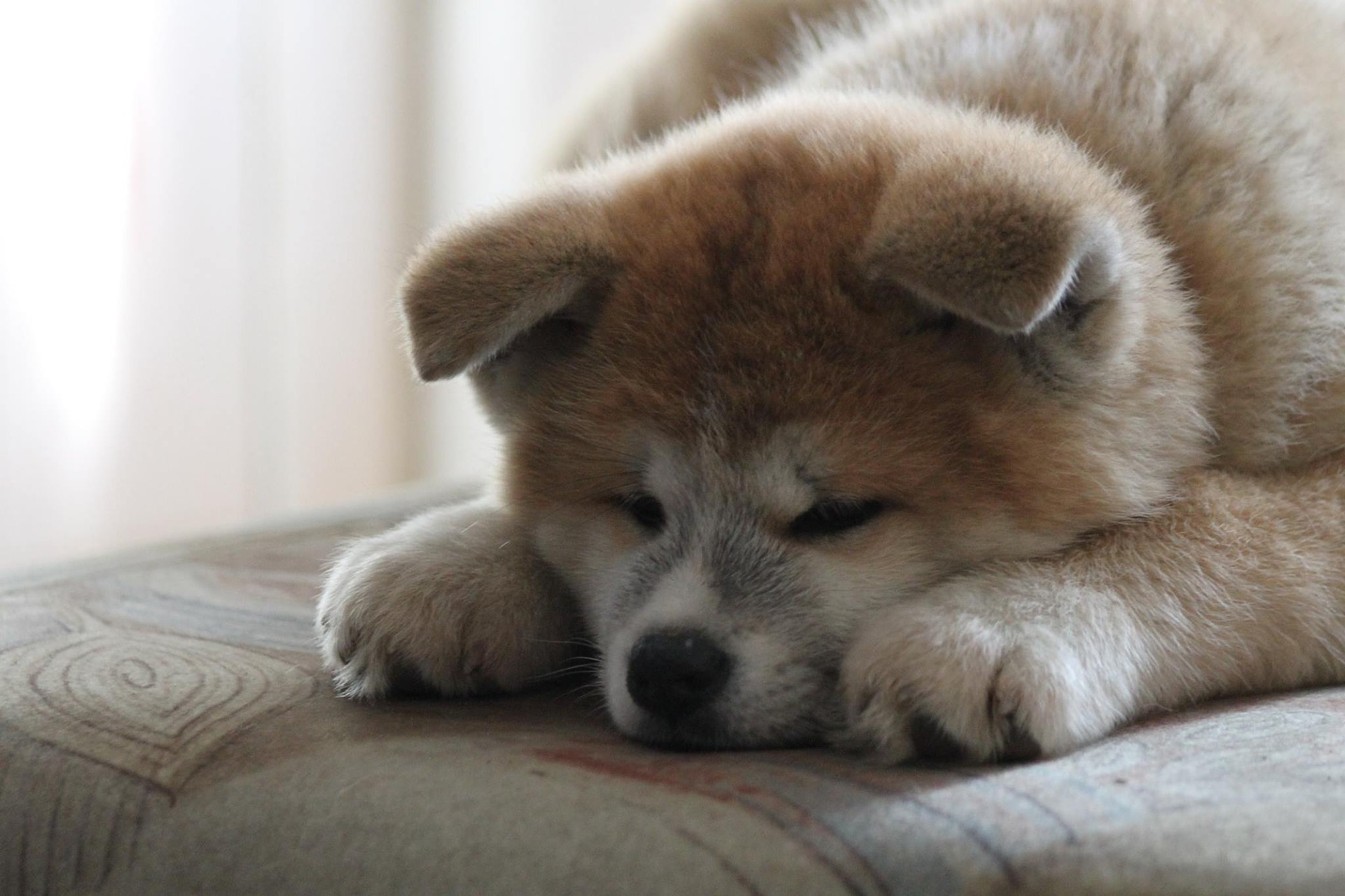
The Akita is a large dog native to Japan and designated as a natural monument.
It is characterized by a sturdy, robust body and long, slender legs. Its appearance is similar to that of a Shiba Inu when small, but it eventually grows much larger.
The Akita is well known to us Japanese as Hachiko, the loyal dog who waited in front of Shibuya Station for his deceased master.
As this story shows, Akitas are very patient and obedient to their owners.
Figure skater Alina Zagitova expressed her desire to own an Akita dog, and the Akita Inu Preservation Society presented one to her. As this story shows, Akita dogs are also attractive to foreigners.
The Akita is one of Japan's most iconic dog breeds. What should you pay attention to when raising an Akita from puppyhood?
- Feeding
- Walking
- Toileting
- Bathing
We'll introduce some important points.
Akita dog as a puppy

What are the characteristics of Akita puppies? We'll introduce their size, sleep time, how to walk them, and more.
Average Weight
Like most large breeds, Akitas weigh around 400-500 grams at birth. However, they can grow quite large, as the average adult weight is 35-50 kg.
A Siberian Husky, which is about the same size at birth, weighs around 30 kg as an adult, so this Akita is larger.
Because they grow so quickly, it's important to pay careful attention to their environment from a young age.
By around three months of age, they will weigh over 8 kg. Even if they reach the weight of an adult Shiba Inu, they are still puppies.
How to Handle Newborns
Like other dog breeds, you can bring an Akita into your home when it's around 2-3 months old.
Akitas are not commonly sold in pet shops, so you'll likely acquire them directly from a breeder.
Make sure to ask your breeder for advice on how to care for your dog.
Akitas are large dogs that can eventually weigh nearly 50 kg, so they require more thorough training than smaller dogs, even from puppyhood.
Sleep Time as a Puppy
Puppies sleep about 20 hours a day.
Like other dog breeds, their sleep time decreases as they grow. Akitas are originally from cold climates, so they have thick fur and are sensitive to heat.
Pay attention to your pup's sleeping environment during the rainy season and summer.
When to Start Walking
Akitas are a tough breed with plenty of stamina. Be sure to take them for a 30-minute walk in the morning and evening.
It is said that it is best to start walking your puppy about 2-3 weeks after its final combined vaccination, when it has developed antibodies.
While you may be eager to take them for walks, puppies have weak immune systems, so avoid taking them outside before their vaccinations are complete.
Akitas are very affectionate and obedient to their owners, but they can also be quite wary and not very friendly to anyone other than their owners. Therefore, give them plenty of opportunities to interact with other dogs and people from an early age, and help them get used to a variety of people, dogs, and things.
Feeding
Puppies' digestive systems are underdeveloped, so eating large amounts in one sitting can cause indigestion.
Feed them puppy food 3-4 times a day.
Proper nutrition is important during their growth period, so be sure to feed them puppy food. Switch your dog's food to adult food around 8 months of age, when their physical growth rate slows.
Akita Inu Growth Process
Although this may seem short compared to the average for all dogs, it's not particularly short, as large dogs tend to have shorter lifespans than small and medium-sized dogs. With improvements in food, medical care, and breeding conditions, the average lifespan of dogs is likely to increase in the future, so this average lifespan is merely a current guideline. Consuming high-quality animal protein is essential for maintaining good health, but too much protein can put a strain on the kidneys, so a diet with a balance of about half animal and half plant-based ingredients is ideal. Also, Akita dogs have a body type that makes them prone to gastric torsion, so to prevent this, avoid dry food that contains a lot of fat. Walk your dog twice a day, morning and evening, for about an hour in total. Insufficient exercise can cause stress, which can lead to problem behaviors like excessive barking, so be careful not to overexercise. Dogs don't naturally have the habit of defecating in the same place. They also don't defecate near their sleeping area, so it's important to place the litter box away from their sleeping area. Akitas have a lot of hair, so brushing is essential. Brush them daily, especially during the shedding season. At other times, brush them once or twice a week. Akitas are a breed of dog with a fluffy, adorable appearance as puppies and large paws typical of large dogs. They resemble Shiba Inu dogs when young. Age in Months Weight, Appearance, Raising, etc. Puppy Stage (Birth to 7 Months) Puppies weigh 4-5 kg at birth, 2-3 months after birth, but by 6 months, they have grown to over 20 kg, nearly five times their weight.
The amount of time spent walking them will also increase.
Akitas are very obedient to those they recognize as their leader, but they are also very wary and may become aggressive toward those they do not recognize. Therefore, it is important to start training them properly from this age. Let them play a lot, and clearly teach them the master-servant relationship. Walks are also very important for developing social skills. Adolescence (Around 8 Months to 3 Years Old) They grow to 30 kg in about a year after birth. That's quite large.
Their growth rate slows around 9 months.
Feeding puppy food during this period can lead to overnutrition and obesity, so switch to adult food. Large dogs like Akitas are at risk of developing a condition called hip dysplasia, in which their hip joints cannot support their own weight. Obesity is believed to be the primary cause of this condition, so weight control is essential. Exercising puppies from an early age, such as through walks, to strengthen their leg muscles can also help prevent hip problems. If you keep your Akita indoors, ensuring a non-slip floor will reduce strain on the hip joints. Adulthood (4-7 years) Akitas grow to 30-60 kg. Akitas' size is strongly influenced by genetics, so looking at the size of their parents can help predict their size. Because they grow to be quite large when fully grown, care must be taken to ensure they do not scare others.
If you keep your dog indoors, make sure it has enough space to avoid stress.
Keep your dog in a cage or crate when necessary, but make sure it doesn't remain there too long. Senior Stage (8 years and older) Just like humans, dogs' digestive organs weaken as they get older.
As your dog becomes a senior, their digestive organs weaken, so reduce the amount of food they eat at one time and divide it into 3-4 meals.
Also, switch their food to senior food. As this breed is prone to hip joint problems, there are foods containing ingredients such as glucosamine that support the joints, so you may want to consider this in some cases. Key Points for Raising an Akita Inu

How to choose bait
It may be surprising, but large dogs consume fewer calories per day as adults than small or medium-sized dogs. Calorie control is essential to prevent obesity.Walk Frequency
Originally from cold climates, this breed has thick fur and is extremely sensitive to heat. Therefore, be careful about walking your dog during the rainy season and summer. Toilet Training
For large dogs like Akitas, a small litter box can make them less likely to defecate calmly and increase the chance of accidents. Create a dedicated litter box space using a cage or crate. Akitas have long legs and a high-waisted build, so a small litter box can make them more likely to have accidents. Therefore, a large litter box is necessary. Bathing Frequency
Shampoo them about once a month, but shampooing a large Akita at home can be difficult. In some cases, you may need to have them groomed. When shampooing at home, as with most dog breeds, start by wetting their feet, as they often dislike getting their face wet. Summary
They are very obedient to their owners, making them ideal companions. However, they are not a highly sociable breed, so training them from a young age is extremely important.
Because of their large size, poor training can lead to unfortunate accidents for both the owner and the dog, so great care must be taken.
However, once the training issues are resolved, Akitas can become wonderful family members. Be sure to pay attention to the important points and give them a try.







![[Dog Names] Is the Japanese name boom here?! Ranking of Japanese dog names!](https://with-my-dog.com/wp-content/uploads/2021/10/adtDSC_0871-150x150.jpg)