
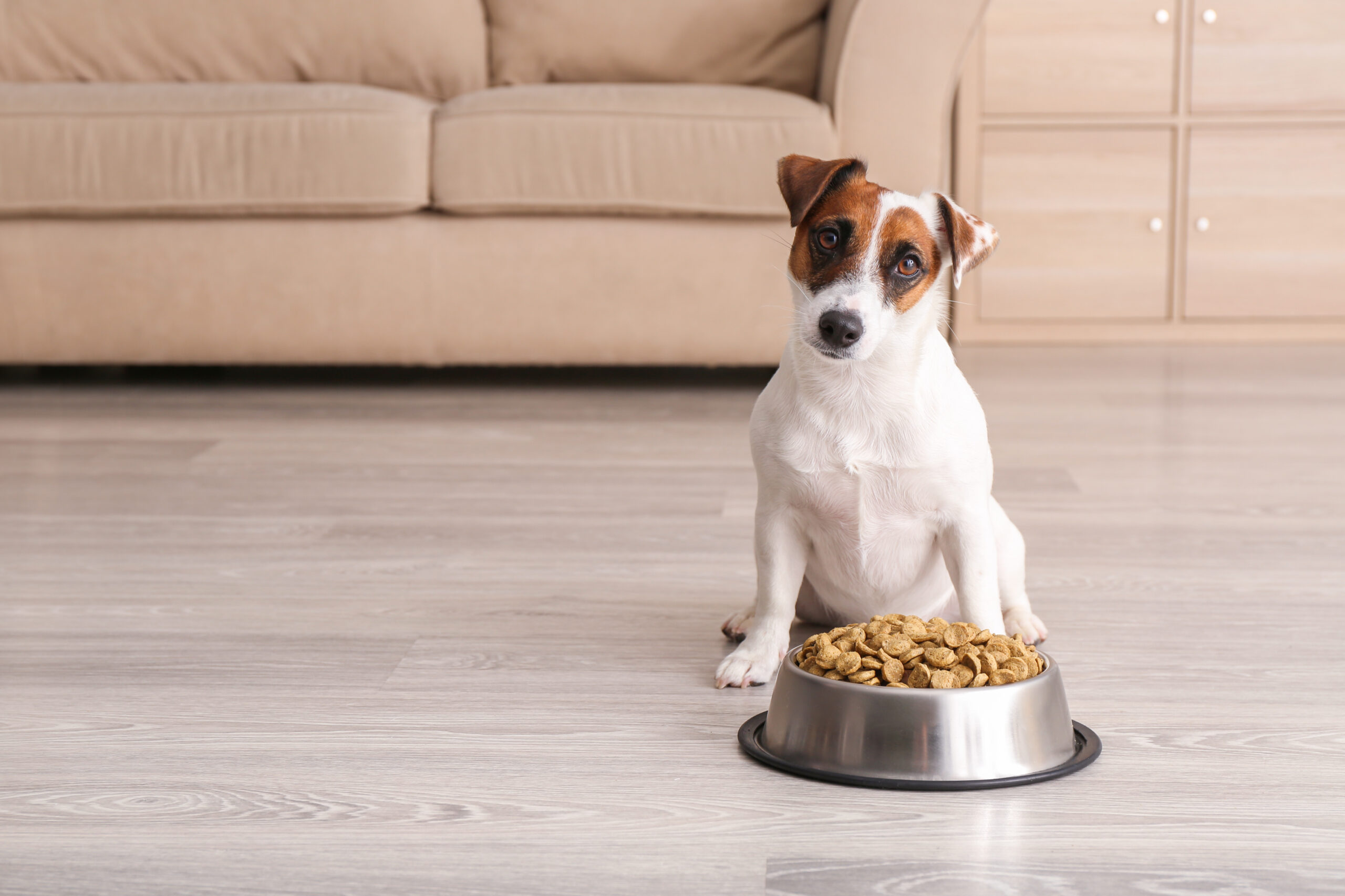
If your dog, who usually has a great appetite, suddenly starts leaving food on the table, it can be very worrying.
"Is he sick?"
"What should I do if he stops eating?"
"Should I take him to the vet?"
When your dog's behavior seems different than usual, you can become very anxious.
Dogs generally love to eat. Therefore, when your dog stops eating, there's usually a reason. Since dogs can't speak, these subtle changes may be a sign from your beloved dog.
This article explains when your dog might not eat, and is intended for worried owners.
5 Major Reasons Your Dog Stops Eating
Here are five possible reasons why your dog might stop eating.
- Imwell
- Stress
- Aging
- Lack of exercise
- Self-indulence
If your dog has stopped eating, check to see if any of these factors could be contributing to the problem.
Imwell
Just like humans, if a dog is not feeling well, it will lose its appetite and be less inclined to eat.
If your dog isn't eating much after two to three days, it may be that it's not feeling well.
In particular, if your dog exhibits the following symptoms, it may be ill, so please check on it.
- Vomiting, or vomiting immediately after eating
- Diarrhea
- Refusing to drink food or water
- Low energy all day
- Listless
- Refusing to eat its favorite treats
Stopping eating may be a sign of poor health or illness.
Observe your dog's behavior other than eating, and if you notice any abnormalities, take him to the vet immediately.
Stressed
Stress can also cause a loss of appetite in dogs.
Check whether there have been any recent environmental changes around your dog.
For example, dogs often lose their appetite due to stress when the following environmental changes occur:
- A new dog has been brought into the household
- A new member of the family has been added, such as a baby
- The dog has moved
- The dog has been separated from its owner for extended periods of time
- The dog has been left alone for long periods of time
- The dog has been in a different environment, such as traveling
If your dog has experienced any of these changes in its environment, its lack of appetite may be a sign of stress.
Aging
Like humans, dogs' metabolisms slow down and they become less active as they age, which can lead to little energy expenditure and a loss of appetite.
Another possible reason is that their sense of taste and smell may weaken, causing them to lose interest in food.
If they haven't had the habit of brushing their teeth, dental problems such as periodontal disease and cavities may prevent them from eating even if they want to.
Both humans and dogs experience weaker teeth and a decreased appetite as they age, so we recommend making food easier for your dog to eat.
Lack of Exercise
If your dog continues to lack exercise, it may lose its appetite and stop eating.
Many dogs have a strong appetite after a walk or a trip to the dog park. Conversely, if they don't exercise at all, they may not feel hungry and their appetite may decrease.
For example, during the rainy season, continuous rain makes it difficult to go for walks, and your dog is likely to continue to lack exercise.
If your dog continues to lack exercise, try to find ways to increase its exercise, such as playing with toys indoors.
Selfish
In fact, sometimes dogs refuse to eat their food because they're being selfish.
For example, if your dog eats treats but refuses food, selfishness may be the culprit.
However, when a dog is selfish about food, it's usually the owner's actions that are causing the dog to be selfish.
If you experience any of the following, your dog may be thinking, "Even if I don't eat the food that's being offered to me now, I'll get a meal later."
- Giving too many treats
- Feeding human food separately
- Frequently changing dog food
Continually feeding your dog treats, human food, or other foods other than its staple dog food can cause it to become picky about what it eats.
How to Deal with a Dog That Won't Eat Its Food
If your dog stops eating, what should you do?
There are four main ways to deal with a dog that won't eat:
- Review your dog's physical condition and lifestyle
- Eliminate causes of stress
- Take a firm stance against selfishness
- Review feeding habits
The response method will vary depending on the cause, but it's a good idea to first observe your dog's behavior and try to eliminate the cause.
Review Your Dog's Health and Lifestyle
If you think your dog's health is poor, don't panic. Keep an eye on your dog's behavior other than feeding for 2-3 days.
However, if your dog is showing obvious signs of illness, such as vomiting or diarrhea, a veterinarian examination is necessary.
If your dog's stool seems unusual, we recommend taking a photo of it, as it may be helpful during your examination.
If your dog is not eating and nothing else is wrong, it may just be a minor illness.
In this case, your dog's condition will often improve within a few days, so please monitor the situation for a while.
Also, if your dog is not getting enough exercise, make sure to take them for walks and exercise regularly. Lack of exercise can lead to stress, so if you can't take them for walks, try to find ways to get them to exercise indoors.
Eliminate the cause of stress
If your dog has stopped eating due to stress, try to eliminate the cause.
If your dog is feeling stressed, the following measures may help reduce the stress.
- Spend more time with your dog
- Minimize the time you leave your dog alone
- Create a quiet and calm environment for your dog
- Do things that your dog enjoys
By eliminating stress, your dog will begin to eat its food little by little.
If you're not sure what's causing your dog's stress, it's a good idea to observe the environment from your dog's perspective.
Communicating with your dog can sometimes help reduce stress, so try to communicate with your dog as much as possible.
When your dog is being stubborn and refusing to eat
If your dog is being stubborn and refusing to eat, we recommend that you take a firm stance and start the meal training process again.
When training your dog to eat, keep the following points in mind.
- Ignore your dog's barking to request attention or food.
- Don't feed your dog whenever it wants (you decide mealtimes).
- Quietly watch your dog while it's eating, and take its bowl away after a certain amount of time.
If your dog thinks it can eat whenever it wants, it will discontinue to eat.
It may be difficult to immediately resolve this selfish behavior, but be patient.
Reconsider Your Feeding Strategy
If your dog has stopped eating, one solution is to reconsider your feeding strategy.
Changing the food content can act as a stimulus and get your dog to eat again.
When reconsidering your feeding strategy, try the following three things:
- Change your dog's food
- Try making a little extra effort with your dog's food
- Adjust your dog's diet to suit its age
Change your dog's food
Changing your dog's food can increase the likelihood that your dog will eat it again due to the new taste.
Dogs are very sensitive to differences in texture and smell.
Therefore, it's a good idea to try a dog food with a different texture or flavor than usual.
Simply changing your dog's food can surprisingly increase your dog's appetite.
To regularly vary your dog's diet, it's a good idea to rotate multiple dog foods.
However, be careful not to change dog food too frequently, as your dog may think, "I don't have to eat my current food, I'm getting something different."
Try putting a little extra effort into your dog's food
Dog food is a complete, nutritious diet designed with your dog's nutrition in mind.
If you were to gather ingredients and cook a meal from scratch, considering nutritional balance, it would be a lot of work.
If preparing homemade food is difficult, try adding a little extra effort, such as soaking the dog food in hot water, to vary the flavor of the meal.
Other methods include the following two:
- Add vegetables or meat to dog food to change its texture
- Add fragrant ingredients
If you want to make homemade food for your dog, be sure to pay attention to the seasoning and the size of the ingredients.
Use light seasoning and cut the ingredients into bite-sized pieces, and your dog will likely enjoy the homemade food.
Adjusting Feeding Styles According to Age
If your dog stops eating, we recommend changing feeding style according to age.
As dogs age, their muscle strength decreases, making it difficult for them to lower their heads and they may not be able to eat.
If your dog only eats when you bring it to its mouth or frequently spills food, you may want to adjust the height of the bowl or dish to make it easier for them to eat. Placing food on a platform that fits your dog's size should make eating much easier.
If you've been feeding your dog hard dog food, it's a good idea to soften it. As dogs age, their chewing and swallowing abilities weaken. Their teeth also weaken, so they may no longer be able to eat crunchy, hard food like they did when they were younger.
To ensure your older dog can eat without straining their body, adjust their feeding style according to their age.
Summary
We've introduced the reasons why your dog might stop eating and what to do when it does.
The reasons for a dog's stop eating vary depending on the dog, but it's a good idea to observe your dog's personality and any differences from their usual behavior to find the cause. When trying to find the cause, it's important to see it from your dog's perspective.
By seeing it from your dog's perspective, you may see something for the first time.
Once you have identified the reason your dog is not eating, try to eliminate the cause.
If the cause is an obvious illness, immediate veterinary examination is necessary.
Create an environment where your dog looks forward to mealtimes every day.













![[Dog Allergies] Do dogs have allergies? Explaining safe foods!](https://with-my-dog.com/wp-content/uploads/2021/10/3029373_m-300x200.jpg)