
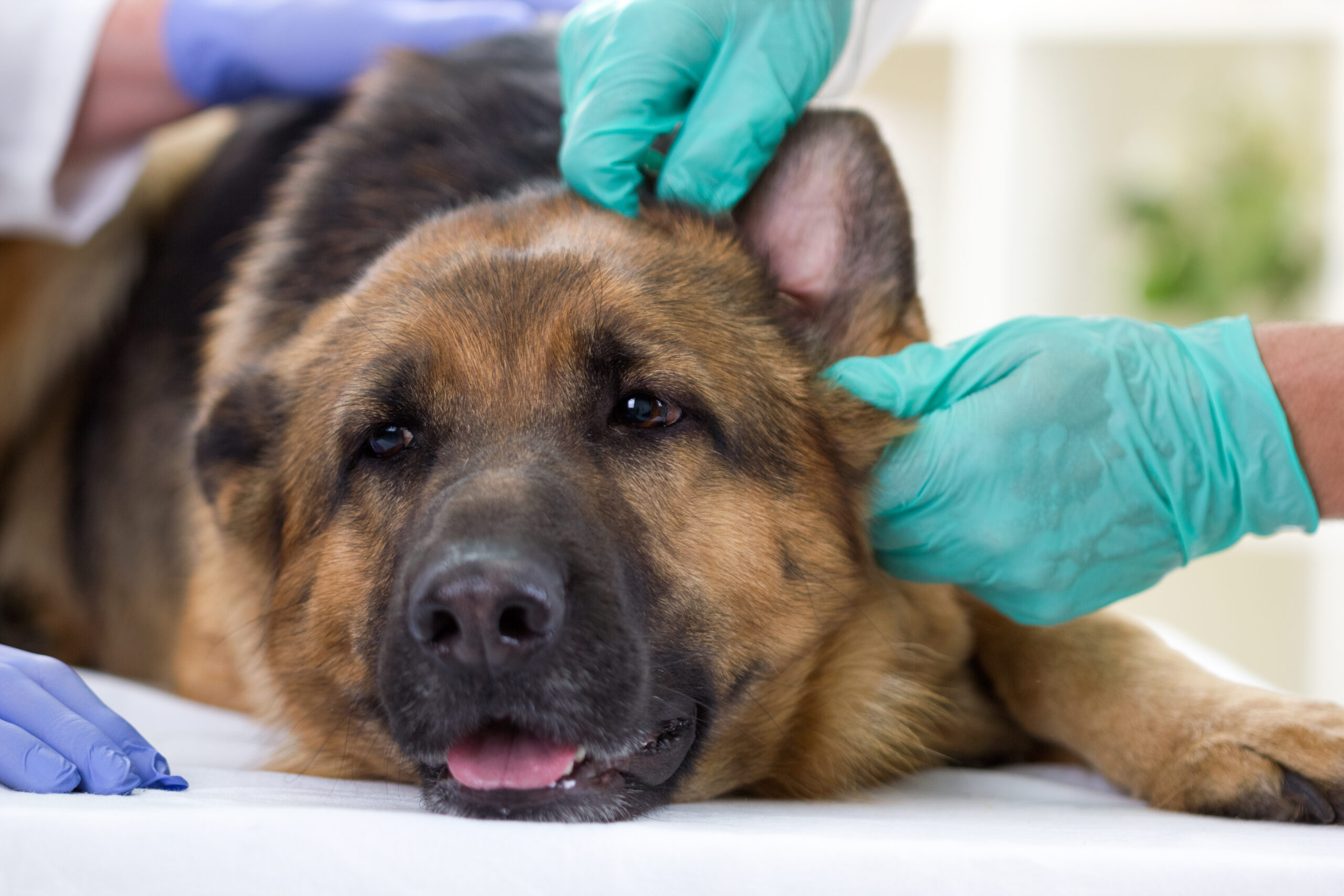
"My dog's ears are cleaning too frequently."
"The inside of his ears are pitch black and smelly!"
If this is the case, your dog may be infected with ear mites.
Ear mites are a type of disease that is very difficult to treat at home. If you notice any of the symptoms, take your dog to the vet immediately.
We've listed the symptoms in detail below, so please take a look if you suspect ear mites.
My dog constantly scratches his ears
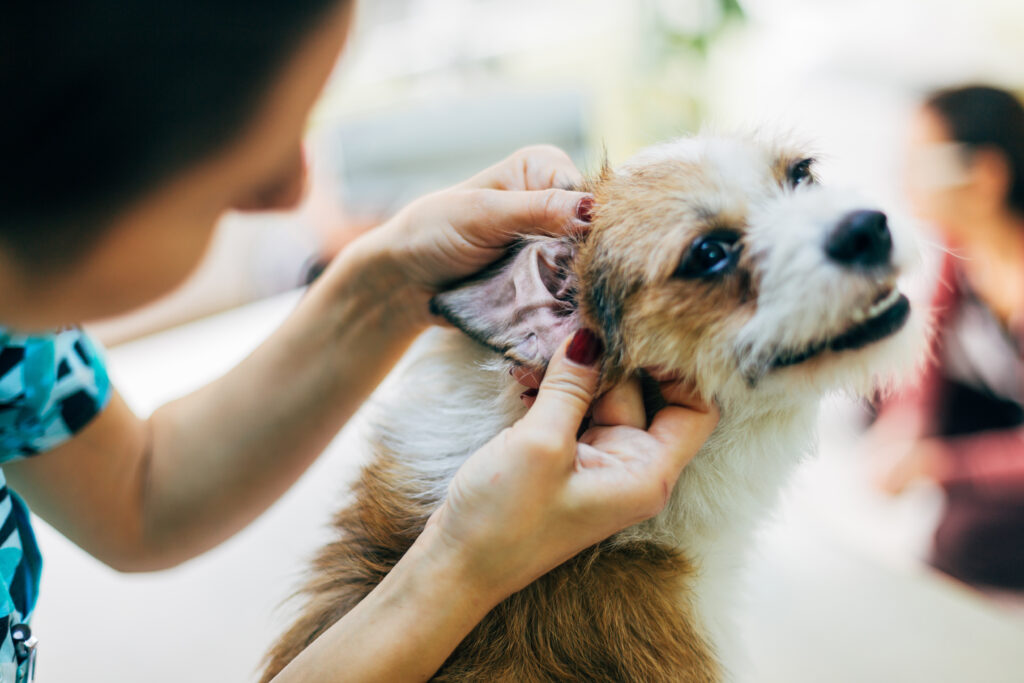
If your dog has a habit of scratching its ears with its paws, it's highly likely that it has ear mites.
Continued scratching can cause ear damage, potentially leading to both mites and bacterial infections.
If you notice something unusual, take your dog to the vet immediately.
Frequent head-shaking can also be a sign that there's a foreign object in the ear.
If this happens too frequently, it's probably a sign that something is wrong with the ear.
Ear conditions associated with ear mites include:
- Ears become dirty quickly even after cleaning
- Earwax becomes hard and thick, like blood clots
Examples include:
If you notice any of these ear conditions or behaviors in your dog,
Take your dog to the vet immediately.
Ear mites are a long-term treatment, so
Don't just assume it's cured and stop going to the doctor. Instead, be patient and continue going until your doctor gives you the OK to be safe from ear mites.
Something white is moving around in my ear...?!
My ears are completely black, are they really ear mites? If you think so,
Try looking into the ear with a magnifying glass. You may be able to see the mites moving about.
However, even with a magnifying glass, it's often difficult to see anything. Mites are so tiny.
If your normally clean ears turn completely black, it's likely a sign of some kind of illness, not ear mites.
If you notice anything unusual, go to the hospital immediately.
The most common type of ear mite is Otodectes occidentalis. Female mites are prone to reproducing if they are carrying eggs. They lay several eggs per day. The eggs hatch within 3-4 days, then mature and lay eggs within a month...
This process is repeated. While the medication used is effective at killing adult mites,
it has no effect on the eggs, so once the mites have matured, medication is used again to kill them...
This process is repeated until a test confirms that the ear mites are completely gone, and the treatment is complete.
This is why it's not effective to stop visiting the vet after one treatment, even if you're happy that the ear mites are gone!
Furthermore, hair loss during an ear mite infestation is extremely dangerous.
Ear mites may be living in the fallen hair. It's not enough to just treat the problem; you'll also need to thoroughly clean your home in addition to the treatment...
Ear mites. How scary...
Where do they get them?

I'm sure there are many of you out there wondering why this is happening, even though I haven't taken my dog to particularly dirty places and my house is very clean.
Ear mites can be acquired through contact with neighboring dogs during walks, or they can be transmitted through shed hair, as mentioned above. It's inevitable that you'll have to deal with neighboring dogs, so this may be unavoidable...
To prevent infection through shed hair, thorough cleaning and disinfecting of the room is necessary, which can be quite a hassle.
This also includes toys, collars, and beds that your dog regularly uses.
In addition, dogs undergoing and after treatment should be bathed regularly to prevent breeding through shed hair.
Ear mites can be particularly devastating when you have multiple dogs.
It can also infect other dogs and cats. Therefore, if even one infected cat is found, all of them will end up in the hospital.
It's a real pain in the wallet... and in some cases, you'll have to go to the hospital.
Ear mites seem to thrive in humid environments, so walking your cat after a rain shower might actually be dangerous...!?
Wipe your cat's body thoroughly after it gets wet in the rain or after a bath.
Wipe inside the ears as much as possible.
Dogs with floppy ears are particularly susceptible to infection and can be difficult to detect.
Clean their ears regularly and take them to the vet immediately if you notice any abnormalities.
Ear mites are a major source of stress for dogs. Go to the vet right now
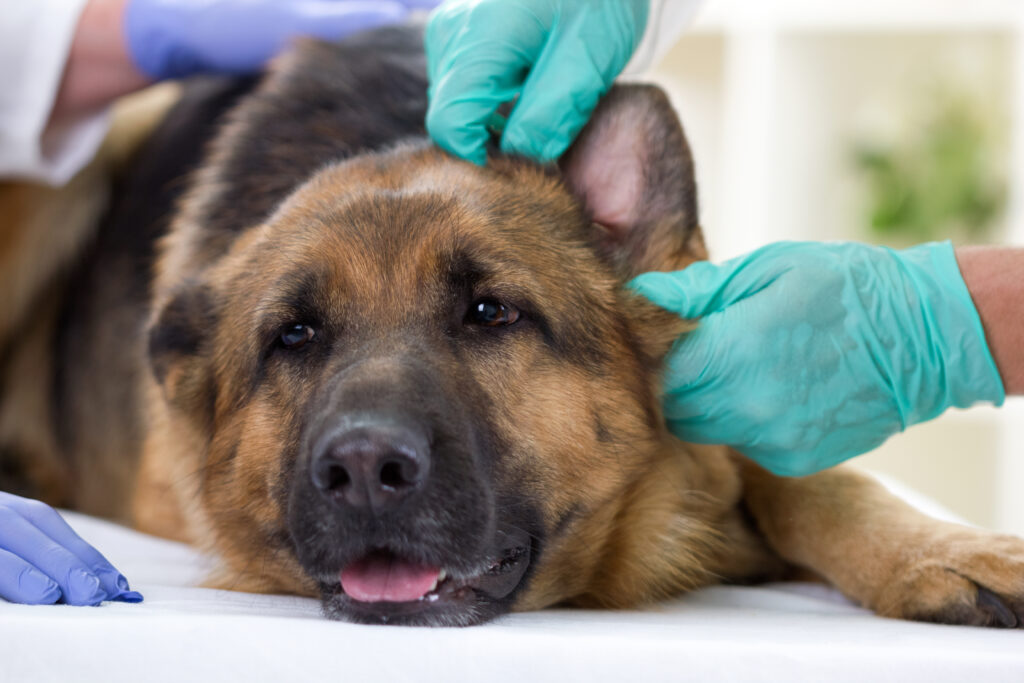
Just like humans, if your dog's ears are constantly itchy, it can be stressful and unsettling. Of course, the same is true for dogs. Even if your dog seems to be itchy and not suffering from any particular problem, the itch could be keeping them up at night.
While you'd love to completely cure ear mites at home, ear mites won't go away completely without proper treatment.
For this reason, it's important to regularly visit the vet and keep your dog's home clean to ensure a complete recovery.
There are over-the-counter medications available, but they may not be suitable for some dogs or may even cause illness. Therefore, be sure to consult with your doctor before using them properly.
Summary

Completely curing ear mites at home is extremely difficult. Seek proper medical treatment from a doctor and allow your dog to recover slowly and steadily.
Don't let your guard down just because your dog has recovered. Reinfection is possible through hair loss during infection.
If you discover your dog has ear mites, thoroughly clean and disinfect all toys, beds, collars, and other items your dog regularly uses.
Dogs with floppy ears have difficulty drying their ears, creating an ideal breeding environment for ear mites.
Since the ears are hard to see, check them frequently and take them to the vet if you notice any abnormalities.
"He looks itchy, but he doesn't seem to be in any other pain, so I guess he's okay."
Don't be complacent and think, "He looks itchy, but he doesn't seem to be in any other pain, so I guess he's okay."
A constant itchy ear can be extremely stressful for a dog.
Stress can build up, leading to unusual behavior. It's important to keep in mind that it's normal to take your dog to the vet just because it seems itchy!