

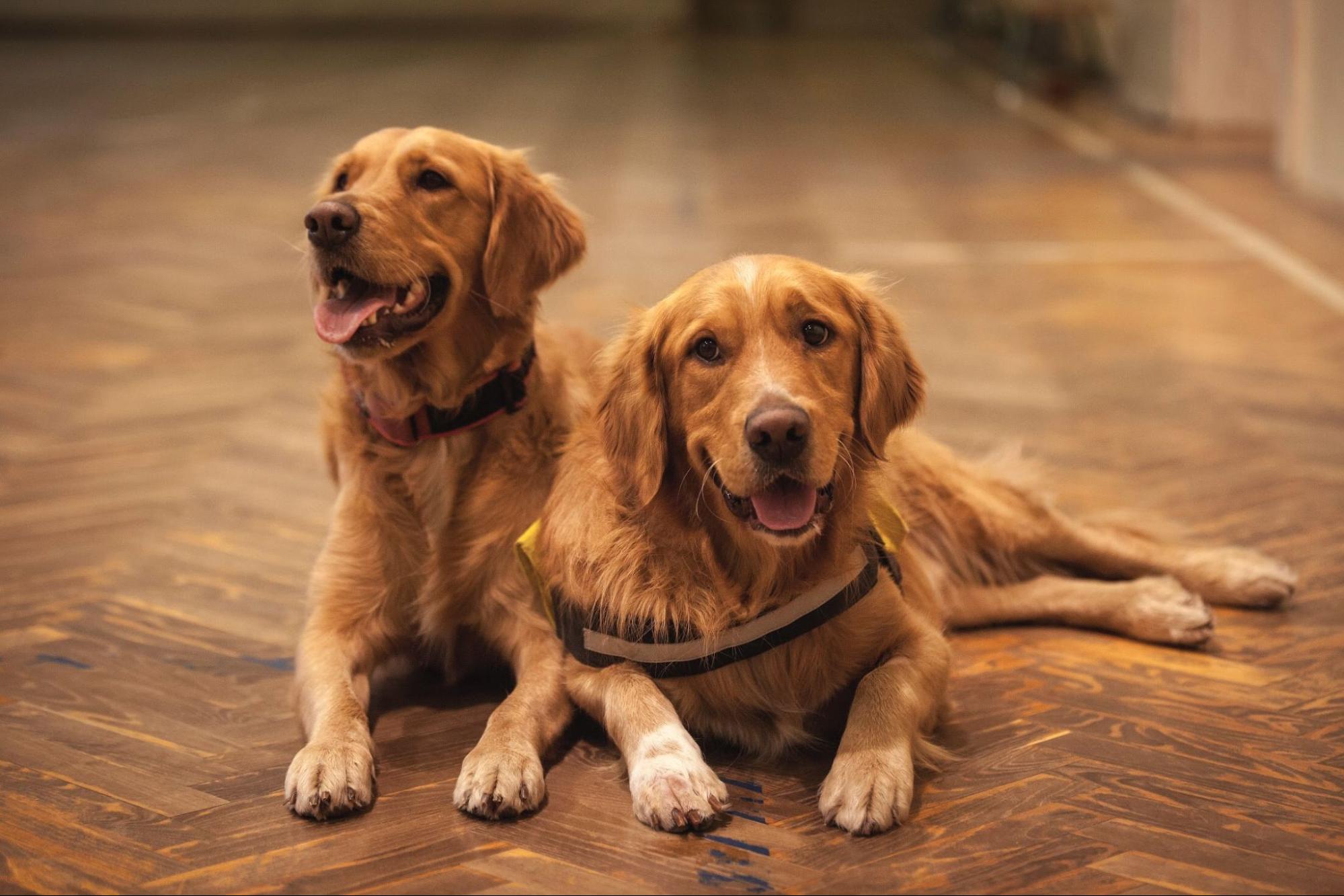
Before bringing a large dog home, you first need to prepare a dog litter box. Dogs start defecating from the day they arrive, so be sure to have a litter box ready.
However, some owners may be unsure of what kind of litter box to prepare for their large dog. Many first-time dog owners, especially, are left wondering, "Even if I prepare a litter box, I don't know what to do with it."
This time, for those of you who are concerned about large dog litter boxes, we'll explain what to do when you bring a large dog home and the litter box situation for large dogs.
Things to Do When Bringing a Large Dog Home
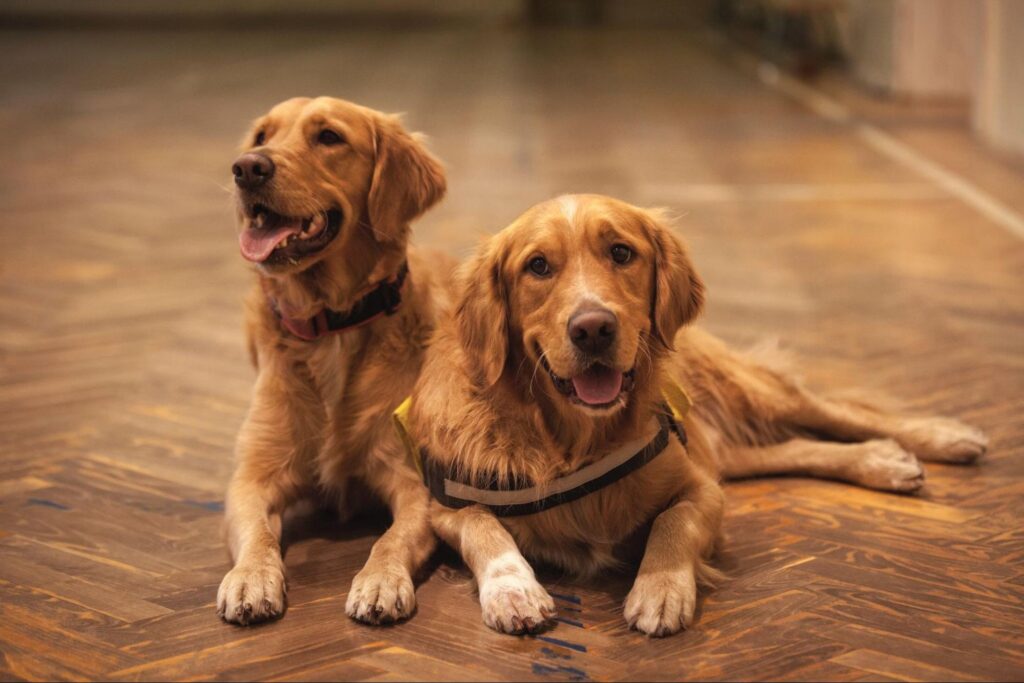
When you bring a large dog home, in addition to preparing a playpen and dog food, be sure to prepare a dog litter box.
Your dog's litter box will be needed from the first day you bring him home.
It's best to prepare it the day before you bring him home, if possible.
Once you've chosen the best litter box for your large dog, start toilet training him from the first day.
Choosing the Best Litter Box for Large Dogs
Large dogs are very large, so they need a litter box designed to fit their size.
There are many different types of litter boxes available these days, so choose the one that's best for your dog.
When choosing a litter box for your large dog, keep the following three points in mind.
- Toilet Size
- Toilet Features
- When to Replace Your Toilet
Toilet Size
Large dogs are large, so choose the size of the litter box carefully.
A small litter box will cause your dog's body to overhang, which could result in waste spilling out of the box.
The ideal litter box size for large dogs is the large size.
A regular-sized litter box may work fine for puppies, but when preparing a litter box, you need to consider what will happen when your dog becomes an adult.
Dogs have a habit of circling around the same spot or walking back and forth when they relieve themselves.
Make sure your litter box is large enough to accommodate large dogs.
Litter Box Features
Some dog litter boxes have convenient features, so choose the type that best suits your dog's personality.
Currently, the following three are popular for their convenient features.
- Mesh
- L-Shaped (Wall-Mounted)
- Non-Slip
Mesh toilets prevent dogs from chewing or scratching the toilet paper.
This is a very effective feature as it prevents dogs from accidentally swallowing the toilet paper.
Large-sized male toilets with walls are particularly effective for male dogs.
Male large breeds reach sexual maturity at approximately 10 to 12 months of age. Sexually mature male dogs may lift one leg to urinate.
If your dog uses a flat litter box, urinating with one leg raised can cause urine to stain the walls and floor.
A dirty room is unhygienic, so we recommend an L-shaped litter box for dogs that urinate with one leg raised.
A non-slip litter box can prevent your dog from slipping and falling.
A non-slip litter box may be especially safe for puppies who are particularly mischievous.
As you can see, litter boxes for large dogs come in a variety of different designs, so choose the best type based on your dog's behavior.
When to Replace a Dog's Litter Box
The main reasons to replace a large dog's litter box are as follows:
- The litter box tray is cracked
- Part of the litter box tray is broken
- Dirt and odors persist even after washing
If the litter box is broken, your dog may tangle and get injured, so be careful.
If the litter box is very dirty or smelly, it's unhygienic and you should buy a new one.
Toilet Training
Once you've prepared a litter box suitable for your large dog, the next step is to toilet train it.
When your dog needs to go to the toilet, you'll notice three main behaviors:
- Becomes restless
- Starts sniffing the floor
- Starts circling around in the same spot
If your dog starts to become restless and restless, it's your chance to potty train.
First, guide your dog to the toilet and make sure he or she is able to use the toilet.
Then, if he or she does so successfully, praise him or her profusely.
The key is to praise him or her a lot and give him or her a successful experience.
If your dog fails, don't scold him. Instead, work hard with your dog to help him succeed next time.
Large dog toilet situation
Next, we'll introduce you to the toilet situation for large dogs.
- Toilet Frequency
- Toilet Timing
The frequency and timing of toilet training for large dogs is important information to know when toilet training them.
Owners of large dogs should be aware of this information.
Toilet Frequency
Large dogs typically toilet about 7-10 times a day as puppies, and about 3-4 times a day as adults.
Older dogs' toilet frequency increases slightly to about 5-6 times a day.
Puppies tend to toilet more frequently, so make sure to clean their litter box frequently.
Dogs are clean animals and dislike using a dirty litter box.
For this reason, we recommend replacing the toilet paper immediately if it becomes dirty.
While toilet frequency varies from dog to dog, if your dog is clearly toileting too frequently or too infrequently, it may be a sign of poor health.
Keep an eye on your dog and if you notice any abnormalities, take him to the vet.
Timing for Toilet Use
Large dogs often toilet when:
- After waking up
- After eating
- After playing or coming back from an outing
Ideally, you should take advantage of these opportunities to toilet train your dog.
Many dogs especially use the toilet after waking up, so don't miss this opportunity.
5 Common Large Dog Toilet Mistakes
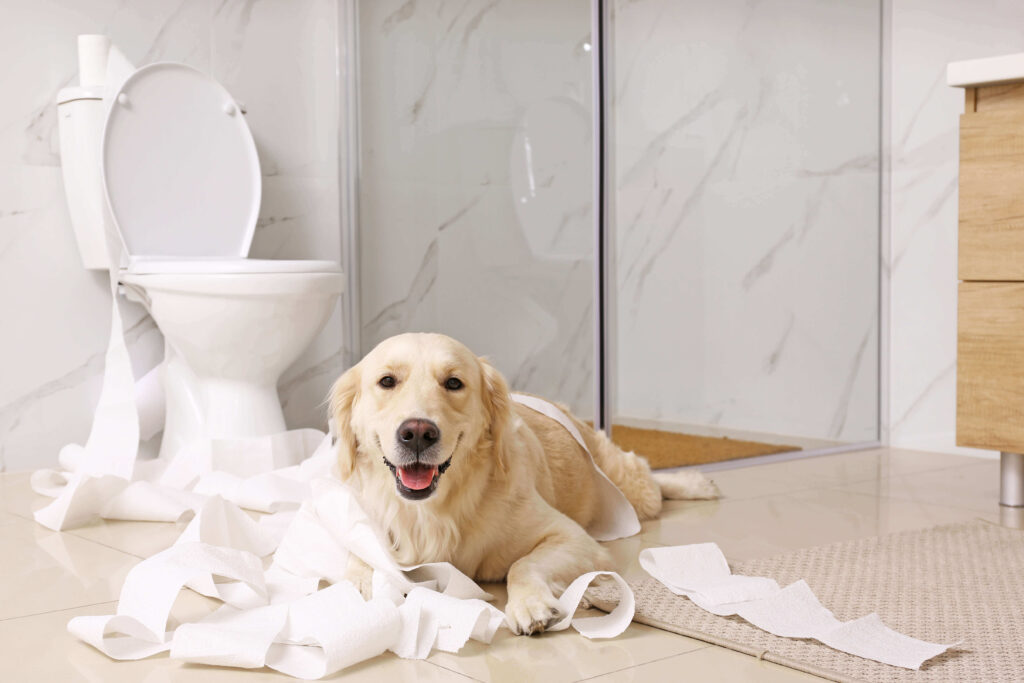
Here are five common toileting mistakes made by large dogs.
If your dog has made the same mistake, please try these solutions.
① Body overhangs the toilet
A common toileting mistake for large dogs is "body overhangs the toilet.".
This is especially true after the dog becomes an adult, growing larger than expected, and the toilet they've been using until now no longer fits.
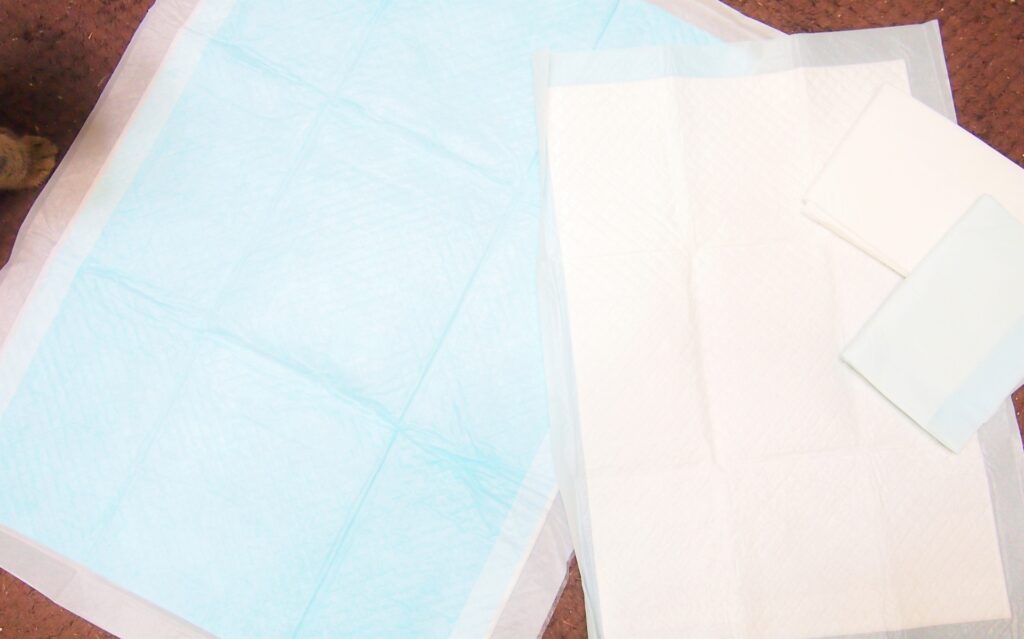
As a solution, it's a good idea to choose a toilet tray that's at least 1.5 times the size of your dog's body. If you can't find one that fits, try spreading out several super-wide toilet sheets.
Large dogs are large, so some care must be taken to prevent them from spilling out of the toilet.
② Making a mess of the toilet sheet
Making a mess of the toilet sheet is a common mistake among puppies.
If the toilet sheet is a "toy" for your puppy, they're probably just messing it up as a form of play.
Also, as puppies, their teeth are growing in, so it's possible that they're chewing on the toilet sheet because their teeth are itchy.
Since messing up the toilet paper can lead to accidental ingestion, take measures such as purchasing a mesh toilet tray.
It's also a good idea to provide your dog with other toys to play with.
At the same time as taking measures, it's also important to train your dog not to mess up the toilet paper.
③ Urinating anywhere
Urinating anywhere is a common mistake puppies make.
It's frustrating when your dog urinates anywhere even after you've properly trained him to use the toilet.
If your dog urinates anywhere, it may be that he hasn't yet memorized the exact location of the toilet.
For this reason, we recommend that you do not stop potty training until you've successfully trained your dog for several consecutive days.
Make sure your dog remembers where the toilet is.
If your dog urinates anywhere despite having a clear memory of where the toilet is, he may be marking.
Marking is common in male dogs around 10-12 months of age, when they reach sexual maturity. It's difficult to address with training, so you should consider neutering.
Early neutering will reduce the frequency of marking.
④ He's having a hard time remembering where the toilet is
When you first start potty training, your dog may have a hard time remembering where the toilet is. Even in such situations, don't scold your dog, but instead increase the number of successful experiences.
If your dog has an accident, be sure to clean and deodorize the area.
Dogs identify the area where the smell of their own excrement remains as the toilet, so if the smell remains in the wrong place, they may repeat the same mistake multiple times.
Your dog will definitely succeed at using the toilet one day, so when they do, praise them as much as you can and continue to train them patiently.
⑤ Dogs only fail when the owner isn't watching
"My dog succeeds when the owner is around, but fails when the owner isn't watching" is a common story.
If this happens, your dog may hate being scolded.
Do you always scold your dog when it has a toilet accident?
Your dog may mistakenly believe that "I'll get scolded if I go to the toilet when the owner is around, but I won't get scolded if I go when the owner isn't around," and so pick to defecate when the owner isn't around.
Even if you scold your dog for a toilet accident, it won't understand why you're scolding it.
Dogs, like people, don't have the concept of "putting their body in a toilet (a designated place)." Therefore, they mistakenly believe you're scolding them for using the toilet.
For this reason, try not to get angry when your dog has a toilet accident.
Just clean up calmly and continue training.
And when they do succeed, praise them profusely to help them learn that using the toilet isn't a bad thing.
Summary
We've introduced what you should do when bringing a large dog into your home, as well as the toilet situation for large dogs.
Large dogs are large, so choosing the right litter box size is very important.
If the litter box is too small and the dog's body hangs over the litter box, the dog's waste may spill over the litter box and cause accidents.
Therefore, consider the size your dog will need as an adult and choose the most suitable litter box.
Then, once the litter box is ready, start potty training, taking into account the toileting needs of large dogs.
Teach your dog to use the toilet at your own pace, even if it's slow.






![[Dog Food Storage] How to store dog food](https://with-my-dog.com/wp-content/uploads/2022/09/pumpkin-hokkaido-gd74954bb8_1920-150x150.jpg)








![[Funny Dog & Cat Videos] Tips for Filming to Bring Out Their Charm and Make Your Dog Look Like That!](https://with-my-dog.com/wp-content/uploads/2022/04/3015452_s-300x200.jpg)
![My puppy won't learn to use the toilet [Keep training simple!]](https://with-my-dog.com/wp-content/uploads/2021/12/dog-g33cd6bf6a_1920-300x199.jpg)
![[Senior Dog Food] What kind of food does an elderly dog need?](https://with-my-dog.com/wp-content/uploads/2021/09/TSURU170308-074_TP_V-300x200.jpg)