
[Must-see for beginners] Introduction to potty training your dog. If you pay attention to these points, you'll be fine!

![[Must-see for beginners] Introduction to potty training your dog. If you pay attention to these points, you'll be fine!](https://with-my-dog.com/wp-content/uploads/2022/07/image4-11.png)
If you're thinking, "I brought a dog home, but I don't know how to potty train him," or "My dog won't use the toilet properly!", this article will explain how to potty train him.
Start potty training your dog from the moment you bring it home. Puppies will frequently poop and pee. Until they're about three months old, puppies can't control their own elimination well. Therefore, it's important for owners to carefully manage their dog's toileting and help it get used to using the toilet.
You may also be considering adopting an adult dog. The difference between puppies and adults is that they go to the toilet less frequently, so they don't defecate as frequently as puppies. You may not be able to successfully train them on the toilet sheet as often.
Also, if your adult dog has had a history of failures, it may take some time to rewrite that memory. Therefore, keep in mind that adult dogs can also learn to use the toilet, but it will take longer than puppies.
This article explains how to potty train your dog if you're having trouble with it!
Why You Should Potty Train Your Dog?

If your dog isn't potty trained, he'll defecate freely in the house, which is bad for both you and your dog.Not only will it be a hassle to clean, but it will also make the room dirty and unhygienic. It will also be difficult to take your dog to dog cafes or dog parks.
To prevent this from happening, it's very important to properly potty train your dog.
No dog learns to use the toilet naturally.
If your dog was able to do this right away when you brought him home, it's likely thanks to the proper training provided by the pet shop or breeder who raised him.
First, prepare a place and environment in your dog's new environment where he can feel safe.
Preparing for Potty Training
Here are some items you should prepare before starting potty training.
- Cage or playpen
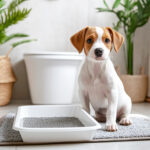
- Toilet sheet
- Toilet tray
- Treats
Preparing the above items first will help you start potty training smoothly.
Decide on the location of the toilet
Where do you place your dog's crate or playpen after purchasing it?
Some people may think that the location of a crate or playpen has no effect on toilet training. However, the location of the crate can help ensure that your dog is trained in a comfortable environment.
For this reason, it is important to create an environment that is in line with your dog's habits and behavior.
So where should you place it?
If you have an indoor dog, the best place to keep it is in the living room, where family and other people frequently come and go.
Just knowing your presence will give your dog a sense of security.
The living room is a place where you can concentrate on potty training in a relaxed atmosphere.
It's best to place it in a well-ventilated area out of direct sunlight.
Also, it's not a good idea to locate the toilet in a noisy place or one that can be seen from all sides.
Set it up in a quiet corner.
Dogs are clean animals, so it's important to set it up away from their sleeping area.
At first, make sure the owner can easily take your dog to the toilet area, so place it in a place that is visible to the owner
.
Preparing the Toilet Sheet
For the toilet, prepare a playpen filled with toilet sheets.
The ideal size is large enough to fit two puppies and one adult dog. Dogs will not learn where the toilet is if the cage is too large or too small.
Circle or Tray
When using a toilet training pen, choose one that is properly enclosed so your dog cannot escape.
It's best to choose one that can be opened partially so your dog can go to the toilet on his own.
If using a toilet tray, practice using a circle around it at first. Once your dog has fully mastered the toilet, you can switch to just the toilet tray. However, the key to a dog's identification is the location of the toilet and its sense of its feet.
Therefore, Once you've decided on a toilet location, the general rule is not to move it around.
Since the toilet's feel is the same as the material used, even if you use a toilet tray, practice by enclosing it in a circle at first.
Potty Training Sequence
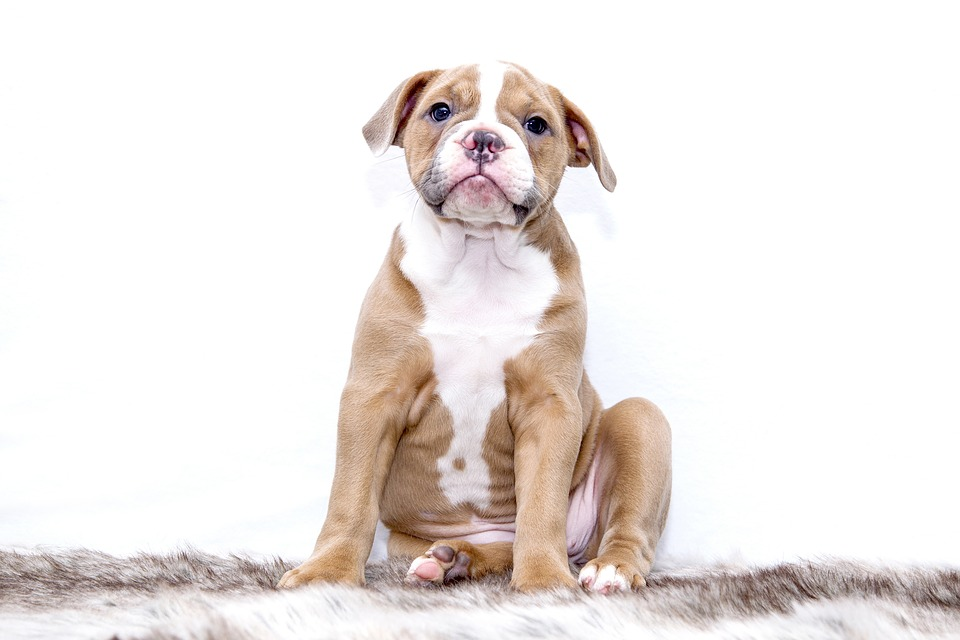
This time, we'll introduce training methods for dogs who are used to being at home and are active.
Training using a playpen is recommended for small dogs and puppies who have just come home.
1) Go to the toilet when it's time to go
When your dog is about to go, take him to the toilet.
The following are signs of when your dog needs to go to the toilet.
- When waking up
- After eating
- After drinking water
- When excited after playing
- When your dog spins around in circles
- When your dog suddenly runs to the corner of the room
Take your dog to the toilet at these times.
2) Call out the toilet signal while inside the toilet.
Leave your dog alone until it urinates, and when it does, gently call out to it, such as "One, two, one, two."
If you call out a specific command while your dog is urinating, it will eventually learn to urinate with that command.
This is convenient because you can let your dog urinate whenever you want, even when you're out. Any call will do, but it's important to use a consistent call to avoid confusing your dog.
3) Give your dog a gentle compliment when he uses the toilet properly.
After he defecates, immediately praise him for being good and give him some food. It's a good idea to place food near the toilet beforehand.
4) Cleaning a dirty litter box
If your child successfully uses the toilet, praise them first and then clean up after them.
If your child fails, clean up quickly without saying anything.
Four Dog Training Tips
So, what should you pay attention to in order to help your dog successfully use the toilet?
Next, I'd like to introduce four training tips.
① Don't miss the timing to go to the toilet
By recording your dog's daily habits and looking for patterns,it's a good idea to record meal times and toilet times.
Mealtimes and toilet time are closely related, so make sure to give your dog meals at regular times until he learns to use the toilet.
② Don't miss the right opportunity to praise him.
Don't praise him excessively, but it's important to praise him immediately after he successfully uses the toilet.
This will help your dog understand what he was praised for.
③ Keep an eye on your dog while he's toileting.
It's common for your dog's head to be in the toilet, but the toilet itself may be outside the sheet.
Take measures such as gently pushing the dog into the toilet area or enclosing the tray.
The goal of tray training is to ensure stress-free toileting for both you and your dog. Avoid rustling around while your dog is toileting to prepare treats, as this will distract your dog.
④ Don't scold them for making mistakes.
Don't scold or yell at them for making mistakes.
Scolding your dog may cause it to mistakenly believe that the act of defecating itself was wrong, leading to hiding or holding it in.
Also, making a fuss or saying things like "Oh, come on," may lead your dog to mistakenly think you're paying attention to it.
If you notice a mistake, clean it up silently without bothering your dog, and use a deodorizer or something to remove the smell.
Summary
This summarizes the basics of toilet training. The location of the toilet will vary depending on the dog's condition, such as whether it's a puppy or an adult, and whether it usually spends time in a crate or free-roaming.
Owners should continue to train their dogs patiently so that they learn to use the toilet comfortably.
Training can be difficult at first, but once you've mastered it, you'll be able to expand your dog's range of activities.
Once your dog learns to use the toilet properly, both you and your beloved pet will be able to live a more comfortable life than ever before.
Good luck in creating a wonderful and enjoyable life with your beloved pet.













![[Must-see for beginners] Introduction to potty training your dog. If you pay attention to these points, you'll be fine!](https://with-my-dog.com/wp-content/uploads/2022/07/image4-11-300x200.png)