

One of your dog's toilet worries is, "He seems to remember where the toilet is, but he just can't seem to use the toilet sheet properly."
When this happens, your dog is sure he's using the toilet.
The most common reason is that he's using the toilet with only his front paws on it, or with his tail sticking out when he squats, or lifting his paws in the wrong direction, so unfortunately, he's missed the mark.
"He often removes the toilet sheet and uses the toilet."
For owners with this problem, we'll introduce some recommended enclosed toilets.
While potty training is essential, choosing the right litter box can help reduce toilet-related stress for both your dog and you.
In this article, we'll explain the necessity of a litter box enclosure and introduce recommended enclosed litter boxes.
Four Benefits of Enclosing Your Dog's Toilet Area
"I use large toilet sheets." "I keep them clean at all times."
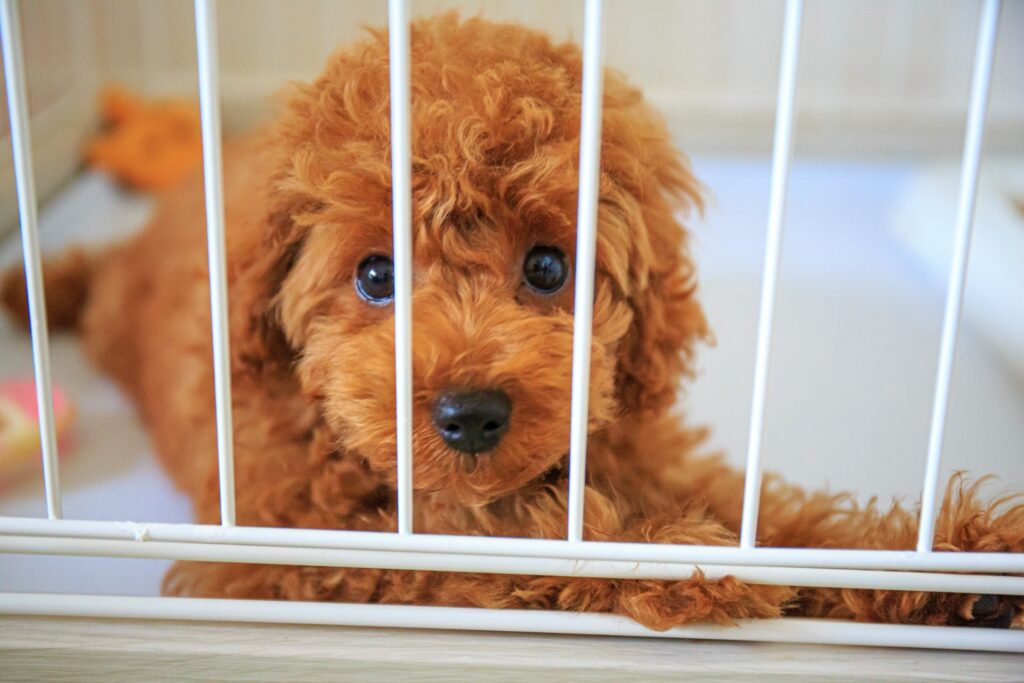
If your dog still overflows the toilet sheet, try enclosing the toilet.
Here, we'll introduce the benefits of enclosing your dog's toilet area.
① Prevents soiling
By enclosing the toilet area, your dog will stay within the area and won't go beyond the toilet sheet.
For example, it can be used to prevent male dogs from lifting their legs to urinate, or to prevent larger dogs from urinating when their bodies don't fit over the toilet.
By enclosing the litter box, you can prevent spills and spills.
② Makes it easier for your dog to recognize the litter box space.
Enclosing the litter box creates a separate space, making it easier for your dog to recognize that area as the litter box.
It also prevents your dog from accidentally using the toilet on something that looks like a toilet sheet.
It's especially useful for dogs that want to use the toilet in peace or senior dogs with poor eyesight.
③ Effective in preventing odors
Enclosing the toilet not only prevents spills and spills, but also prevents odors from spreading to the surrounding area.
This ensures that the only place your dog can smell his own scent is inside the toilet, further helping to prevent accidents.
Also, some materials used for enclosures have odor-preventing and deodorizing properties.
④ Restricting your pet's behavior until it urinates or defecates
Some pets may pee as soon as they leave the enclosure.
In such cases, you can use a toilet training enclosure to train your dog to leave the enclosure after using the toilet (i.e., he cannot leave the enclosure until he urinates and defecates).
Praise him generously when he leaves the enclosure after using the toilet.
Recommended Enclosed Toilets
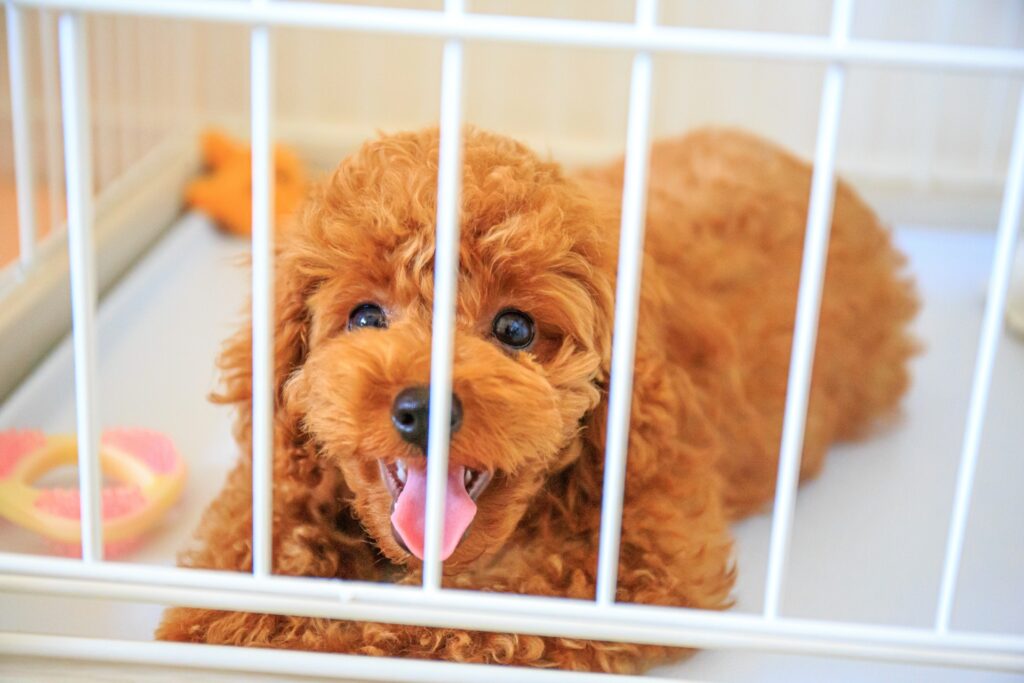
There are two main types of litter box enclosures: "gauge-type" and "combined litter tray and enclosure."
Here, we'll introduce recommended products for each type and their features.
Toilet Training Circle (Cage)

Toilet training pens are a type of pen (cage) with a toilet built into it. There are two types: one with only a toilet and one with a toilet and sleeping area.
This toilet training pen is particularly effective for training newly adopted dogs (especially puppies) to recognize the toilet area, as it helps them establish their own area.
As your dog gets used to the environment, it will likely leave the pen more often and its range of movement will expand. Considering dog habits, it's a good idea to move the toilet outside the pen, away from the sleeping area, by this point.
Training toilet

A training toilet is a toilet tray with low enclosures on three or all sides.
Many of these types of toilet trays allow you to place a toilet sheet underneath the mesh cover and secure it in place. Some also allow you to secure the toilet sheet to the wall.
By creating a space that is easily recognized as a toilet, this is also effective as a toilet for puppies who are not yet potty trained to step up their training.
This training toilet's enclosed design encourages calm toileting and prevents accidents and splashes.
Pradan toilet
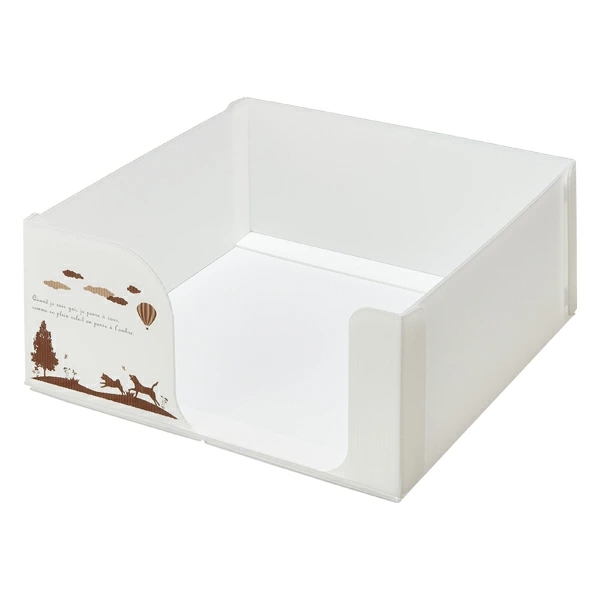
Pradan, short for lightweight plastic cardboard, is a lightweight, washable material.
It's easy to move, flexible, and you can attach a sheet to the front using adhesive, making it especially recommended as a toilet for senior dogs.
Pradan toilets are available for purchase, but if you want to customize a toilet to fit your dog's size and location, you can also make one yourself using 100-yen store plastic cardboard.
This plastic toilet is available in larger sizes, so it can be safely used by even large dogs in their senior years.
Clear Toilet
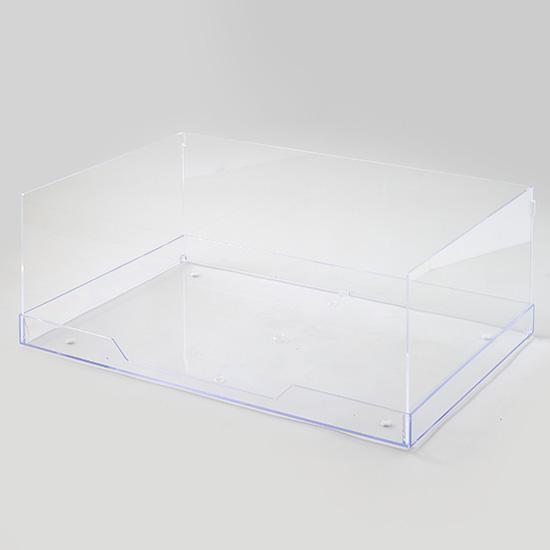
Clear-type litter boxes are primarily made of acrylic. The transparent enclosure makes them easy to match with any interior, and they're durable and easy to clean.
Another benefit is that the transparency reduces the need for attention to dirt, making it easier to keep clean.
Some acrylic manufacturers offer fully custom litter boxes, so you can have them custom-made to your dog's specifications, including the color and size.
This clear-type litter box can be used in any room, is easy to clean, and keeps the litter box clean at all times.
Solving Your Dog's Toilet Problem

Toilet issues are often the first obstacle pet owners face.
We've introduced how an enclosure can be an effective way to create a comfortable toilet environment for both you and your dog.
However, even if your dog's toilet training goes well and they've established a good habit of using the toilet, they may still occasionally have accidents.
There's probably a reason why your dog has an accident. If that's the case, take another look at the toilet environment.
Understanding Dog Behavior
Dogs don't go to the bathroom in their sleeping area.
Dogs have the habit of going to the bathroom as far away from their sleeping and eating areas as possible.
For this reason, we recommend placing indoor litter boxes as far away from sleeping and eating areas as possible.
The litter box inside the cage should only be used in emergencies. For example, there may be times when your dog needs to stay in the cage for long periods of time, such as when you sleep, when you're away from home, or when guests arrive. In such cases, training your dog to use the litter box inside the cage will provide peace of mind for both you and your dog.
Praise your dog when it succeeds
The most important thing when potty training is "praise."
When your dog successfully uses the toilet, praise him enthusiastically. Initially, giving him a treat can also be effective.
Then, if possible, keep an eye on your dog while he's using the toilet until his toilet success rate increases. Once you've confirmed his success, praise him enthusiastically. If his bottom slips out of the toilet tray, gently push him back into place.
Even if your dog has an accident, do not get angry loudly
or get angry by putting your dog's face close to the area where he made an accident.
Be careful, your dog may think that using the toilet means you'll get scolded, which could lead to poop eating.
Also, it's best to avoid cleaning up a dirty area in front of your dog.
Your dog may think that using the toilet means you'll pay attention to it or play with it.
Summary
Many dog owners are troubled by their dog's toileting issues, such as difficulty with toilet training, occasional slip-ups despite success, or slipping off the toilet pad.
In this article, we introduced enclosed trays as one way to solve toileting problems.
These days, there are a variety of enclosed litter boxes and litter boxes available in a variety of materials and shapes to address a variety of issues.
Changing your dog's litter box products or environment can sometimes be the key to resolving litter box issues.
Make sure your dog's current litter box environment is optimal for your dog.
Then, find the litter box products that best suit your dog's personality, condition, and the issues you want to address.





![[Chihuahua] How to choose dog food without making a mistake and 6 recommendations!](https://with-my-dog.com/wp-content/uploads/2022/07/image1-8-150x150.jpg)
![[Dog Baths] Explaining the optimal frequency and how to bathe your dog!](https://with-my-dog.com/wp-content/uploads/2021/10/22107314_m-150x150.jpg)

![My puppy won't learn to use the toilet [Keep training simple!]](https://with-my-dog.com/wp-content/uploads/2021/12/dog-g33cd6bf6a_1920-150x150.jpg)


![[Treatment by a Groomer] How to Groom Your Dog? How to Do It Yourself and Why You Should Go to a Salon](https://with-my-dog.com/wp-content/uploads/2021/09/alvan-nee-lvFlpqEvuRM-unsplash-1-300x200.jpg)