If your dog's ears are dirty or smelly and can't be cured with just care, it may be an illness.

"My dog's ears seem different than usual."
"I tried cleaning them, but it didn't help at all."
If you notice any ear problems in your dog, take him to the vet as soon as possible!
It could be ear mites or otitis externa.
When it comes to ear problems in dogs, otitis externa is the most common, with ear mites occurring occasionally.
This article covers both ear mite infection and otitis externa infection.
We hope this information is helpful.
Ear mite symptoms
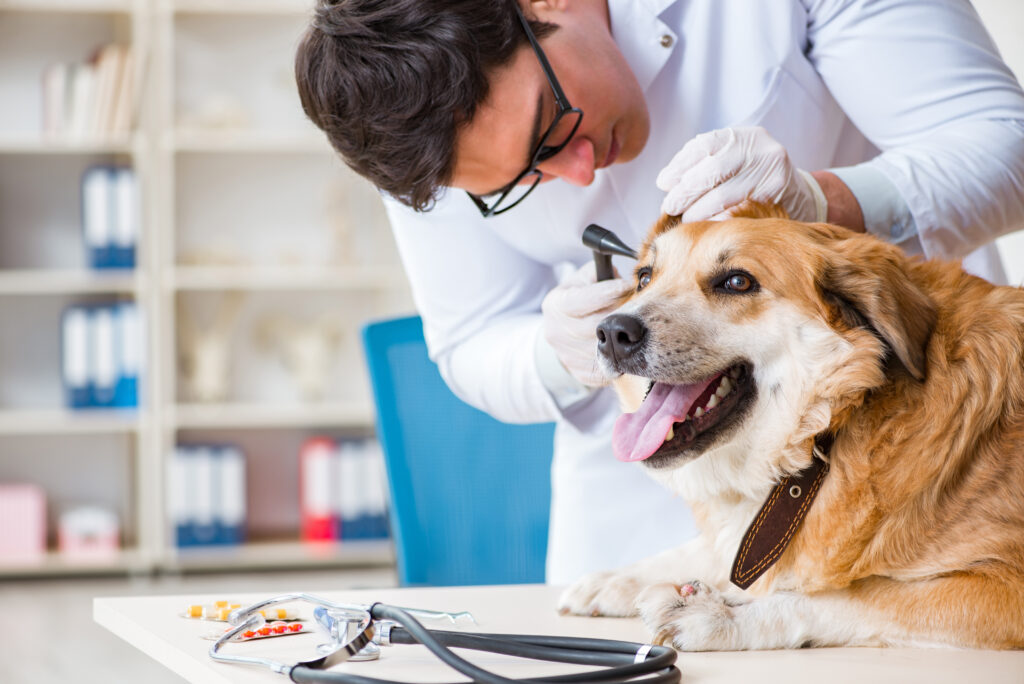
- Hard earwax like clotted blood.
- Ear cleaning quickly turns black and dirty.
- Always scratching the back of the ear as if it's itchy.
- Extremely averse to having their ears touched.
The above symptoms are likely a sign of ear mite infection.
Once ear mites have taken up residence, they can quickly and easily reproduce.
Treatment takes time and is quite difficult, but
Ignoring it will never cure it. Get proper treatment from a veterinarian and treat it thoroughly.
The difference between otitis externa and otitis externa is that it has less of an odor.
In either case, if you notice any abnormalities, don't ignore it and go to the vet!
If you have multiple pets (dogs and cats), other pets may also be infected. If one pet is found to be infected, take all of them to the vet for testing.
If there are no problems, it's time to start a thorough cleaning of the room. These pesky dog mites can spread through shed hair.
All pet items, including pet beds, toys, and collars, must be thoroughly cleaned and disinfected.
It takes about a month to completely cure ear mites. Even if you use medication to kill adult mites, eggs remain. These eggs take about two to three weeks to hatch. This is why multiple visits to the vet are necessary.
Because a single dose of medication kills adult mites, it's easy to think you're cured after just one visit, but within a few weeks, your pet's ears will turn completely black again. The quickest way to help your pet recover is to keep taking them to the vet until they are completely cured. Please keep taking them to the vet until you receive permission.
Symptoms of otitis externa
- A strong, sour smell coming from the ears
- Stick earwax
- Ears get dirty quickly even after ear cleaning
If you have the above symptoms, you likely have otitis externa.
Most cases of otitis externa are caused by a fungus called Macellatia.
Treatment at the hospital appears to involve ear cleaning and antibiotic administration.
The biggest difference between ear mites and ear mites is whether or not the earwax is sticky.
If the earwax is sticky and has a strong odor, it's likely otitis externa.
If otitis externa is left untreated, it can eventually develop into otitis media and then into otitis interna,
Treatment can be quite extensive.
Please take your pet to the vet as soon as you notice any symptoms before they become severe.
Dogs with floppy ears, oily skin, and allergies are prone to ear infections.
Clean your dog's ears frequently, especially after bathing or playing in the water.
Since Masellaria is a type of mold, it grows in high humidity.
In fact, Masellaria lives alongside humans as a normal flora.
However, excessive growth can be harmful.
Common examples include scalp itching and dandruff. This resident bacteria feeds on sebum, so it tends to develop in the summer when people sweat a lot.
The same can be said for the red bumps that appear on the décolleté. When Maccellatia enters deep into the pores and multiplies, red bumps appear.
This is common in humans, so it's likely a common occurrence in dogs as well.
This is a temporary immune system disorder, so recovery can be seen by boosting your immune system with antibiotics, etc.
Don't worry, your dog will recover without any problems if you keep him in good health and treat him properly.
Thoroughly clean your dog's ears at home

Depending on the breed, this disease is easily contracted when ear cleaning is infrequent.
It can also be said that this disease can be avoided by thorough ear cleaning. Therefore, even if you're unsure how often to clean your dog's ears, be sure to ask your veterinarian for instructions on how to do it and how often, and learn how to clean your dog's ears at home.
Ear cleaning wipes are also available, which make ear cleaning much easier.
This wipe, combined with ear cleaning at the vet or groomer, will be perfect.
Don't try to force yourself to do difficult ear cleaning using cotton swabs or other tools. Instead, gradually get used to it, starting with what you can do!
Once your dog gets used to it, you can pour ear cleaning liquid into the ears and wipe them off after they shake their head. This method is recommended as it thoroughly cleans the inside of the ears.
The items you'll need and how to do it are listed below.
Things to Prepare
- Ear Cleaning Solution
- Cotton
How to Do It
- Soak a cotton ball with plenty of ear cleaning solution.
- Hold your dog securely, squeeze the cotton ball, and pour the solution into the ear.
- Gently massage the base of the ear.
- The dog will shake its head, so wipe away any excess liquid after shaking.
- If step 3 is difficult, you can move on to step 4.
This is ultimately the most recommended method.
However, some dogs may dislike this, so start slowly and do what you can to avoid stressing your dog!
Summary
If your dog is constantly scratching its ears, be careful.
Dry earwax could be ear mites, while sticky earwax with an odor could be otitis externa.
Either way, this is a condition that cannot be cured without medical treatment and medication.
If you notice any signs of this condition, take your pet to the vet immediately.
This condition can be prevented by regularly cleaning your pet's ears.
Ear cleaning frequency and method vary depending on the breed of dog, so be sure to ask your veterinarian for advice!
Ear cleaning wipes are convenient and recommended. They're easy to use and effective!
Once you've gotten used to cleaning your dog's ears, you might want to try using ear cleaning solution and cotton.
That's all about dog ear odor.







![[Dog Baths] Explaining the optimal frequency and how to bathe your dog!](https://with-my-dog.com/wp-content/uploads/2021/10/22107314_m-150x150.jpg)