
How much should you feed your dog? A comprehensive guide to the optimal amount of food for your dog!


Is the amount of food I'm feeding my dog appropriate? I'm feeding it exactly as instructed on the food package, but
"He's a little chubby."
"He's not gaining weight very well."
Some dog owners may be concerned about whether the amount of food they're currently feeding their dog is adequate, based on their dog's size. The amount of food needed also varies depending on the dog's age, whether it's a puppy, adult, or senior.
If you're worried about how much to feed your dog, try calculating the appropriate amount using the "RER" and "DER" methods. Here, we'll explain how to use "RER" and "DER" to calculate the amount of food your dog should receive, as well as the recommended amount for each age group.
Please use this article as a reference to determine the appropriate amount of food for your dog!
How to Know How Much Food Your Dog Needs
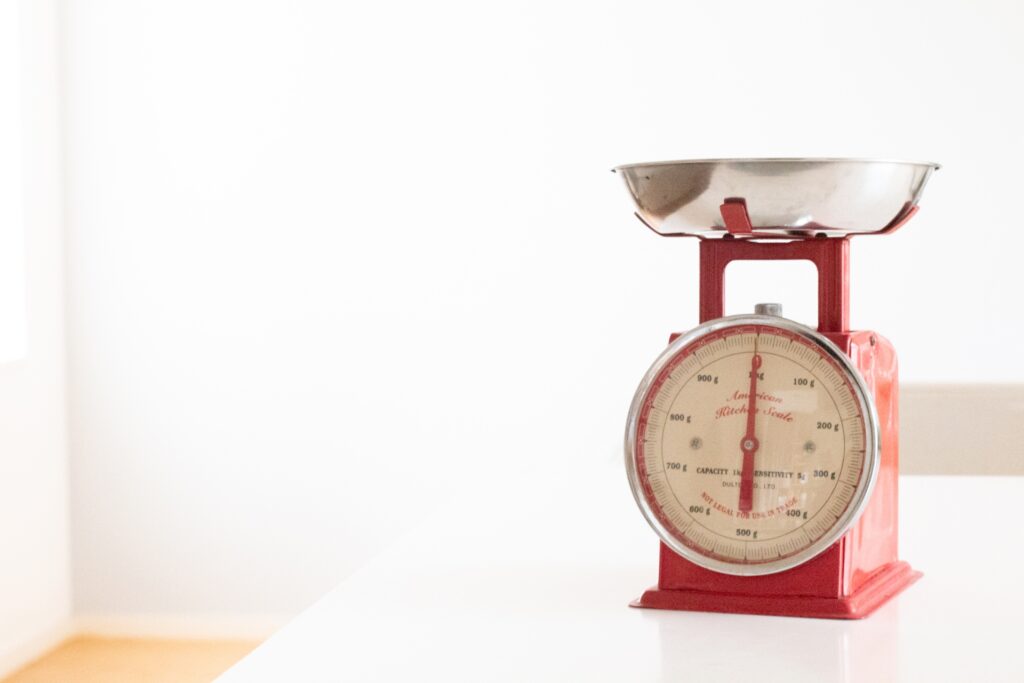
Once you know your dog's weight and constitution, you can use a formula to calculate the amount of food they need.
Here, we'll show you how to calculate the daily amount of food your dog needs using your dog's resting calorie requirement (RER) and daily activity requirement (DER).
Calories Needed at Rest
Resting energy requirement (RER) is the amount of energy needed while at rest at room temperature. This RER can be calculated using the following formula:
RER = 70 × (body weight in kg) to the power of 0.75
For example, the RER for a person weighing 4 kg can be calculated as follows:
(Here, we're using a calculator.)
① Cube 4
4 × 4 × 4 = 64
② With 64 displayed, press the √ button on the calculator twice
→ 2.828……
③ Multiply that value by 70
70 × 2.828 = 197.9……
→ As a result, the RER for a 4kg person is approximately 198kcal/day.
The RER for each weight calculated based on this calculation is as follows:
【Small dog】
| Weight (kg) | RER (kcal) |
|---|---|
| 1 | 70 |
| 2 | 118 | < /tr>
| 3 | 160 |
| 4 | 198 |
| 5 | |
| 6 | 268 |
| 7 | 301 |
| 333 | |
| 9 | 364 |
【Medium-sized dog】
| Weight (kg) | RER (kcal) |
|---|---|
| 10 | 394 |
| 11 | 423 |
| 12 | 451 |
| 13 | 479 |
| 14 | 507 |
| 15 | 534 |
| 16 | 560 |
| 17 | 586 |
| 18 | 612 |
| 19 | 637 |
| 20 | 662 |
| 21 | 68 7 |
| 22 | 711 |
| 23 | 735 |
| 24 | 759 |
【Large dog】
| Weight (kg) | RER (kcal) |
|---|---|
| 25 | 783 |
| 26 | 806 |
| 27 | 829 |
| 28 | 852 |
| 29 | 875 |
| 30 | 897 |
| 31 | 920 |
| 32 | 942 |
| 964 | |
| 34 | 986 |
| 35< /td> | 1007 |
| 36 | 1029 |
| 37 | < td>1050|
| 38 | 1071 |
| 39 | 1092 |
| 40 | 1113 |
Calculating Calories Needed Based on Activity Level
Once the "RER" is determined, the "DER" can be calculated.
The daily energy requirement (DER) is the amount of energy your dog needs per day, calculated based on its physical condition.
This DER can be calculated using the following formula:
DER = RER × (Activity Coefficient)
The "Activity Coefficient" used in this calculation formula is as follows:
| Age | Condition | Coefficient |
|---|---|---|
| Senior Dogs | General | 1.4 |
| Adult Dogs | Not Spayed/Neutered | 1.8 |
| Adult Dogs | Spayed/Neutered | 1.6 |
| Adult Dogs | Gestation (1-4 weeks) | 2 |
| Adult Dogs | Gestation (5-6 weeks) | 2.5 |
| Adult Dogs | Pregnancy (7-8 weeks) | 3 |
| Adult Dog | Nursing | 4.0-8.0 |
| Adult Dog | Prone to Obesity | 1.4 |
| Puppy | Under 4 months | 3 |
| Puppy | 4-9 months | 2.5 |
| Puppy | 10-12 months | 2 |
Once you know your dog's DER, you can calculate the amount of food he needs per day.
Daily food amount (g) = DER ÷ (calories per 100g of food) × 100
For example, if you have a 10kg neutered adult dog and you feed it 317kcal per 100g of food, you can estimate the amount of food it needs as follows:
① Calculate the DER
DER = 394 (RER) × 1.6 (activity coefficient) = 630 kcal
② Calculate the daily food intake
630 ÷ 317 × 100 = 198.738 g
→ The resulting daily food intake is approximately 199 g.
How much should you feed your dog at each age?

The daily energy needs of puppies and senior dogs, who are in their most rapid growth stages, naturally differ. Therefore, the amount of food they receive should be adjusted based on their growth.
In addition to the amount of food, other considerations, such as the type of food, feeding method, and frequency of feeding, also differ. Here, we'll introduce some important points to consider for each age group, such as the amount of food and feeding method.
For Puppies
Puppies need energy to grow. However, their digestive systems are underdeveloped, so they cannot eat a lot at once.
Generally, it's fine to feed your puppy the number of feedings recommended on the food package. However, during their rapid growth periods (up to 5-6 months for small and medium-sized dogs and up to around 10 months for large dogs), it's recommended to divide the daily amount into 4-5 feedings. After their rapid growth period, gradually reduce the number of feedings to 2-3 times a day, depending on their condition.
Small breed puppies are particularly prone to hypoglycemia due to hunger. Because they can only eat very small amounts at a time, pay close attention to the frequency and timing of feedings to minimize periods of hunger.
Overfeeding large breed puppies can lead to rapid weight gain and skeletal growth, which can lead to musculoskeletal disorders. Therefore, choose a food appropriate for large breeds during their growth period. Also, pay close attention to the amount of food and how you feed them to ensure they grow at a healthy pace.
For Adult Dogs
Once they have passed their growth period, all breeds should be fed two to three times a day.
Also, don't forget to switch to adult food once their growth has stabilized. Owners should carefully manage their dog's nutritional status during this period to prevent obesity, which can affect their health and accelerate aging.
The following points are particularly important to pay attention to:
- If your pet has been spayed or neutered
After spaying or neutering, your pet's energy needs decrease, making it prone to obesity. It's important to monitor its weight by switching it to a low-calorie diet designed for spayed or neutered pets and regularly weighing it to control its feeding.
- If your dog tends to eat quickly
Eating quickly can be risky, so be careful. If your dog tends to eat quickly, you need to take measures. Try using a bowl designed to prevent eating quickly or softening the food.
Eating quickly has the following risks:
- Choking
- Indigestion
- Obesity
Furthermore, eating dry food too quickly can cause your dog to swallow air along with the food, which can be dangerous. In the worst case, this can lead to gastric dilatation or volvulus. Gastric volvulus, in particular, is a condition in which the stomach expands and compresses organs and blood vessels, sometimes resulting in death within a few hours. It is said to be more common in large breeds, so please be careful.
Gastric dilatation and volvulus can also occur with strenuous exercise or walks immediately after eating. Avoid strenuous exercise after eating.
For Senior Dogs
There's generally no need to change the number of feedings just because your dog has entered the senior stage. Two to three times a day is fine.
However, if you notice your dog's appetite decreasing, reduce the amount of food you give it at one time and increase the number of meals to ensure it gets the necessary amount each day.
Although this varies from dog to dog, all breeds experience a decrease in activity, muscle mass, and basal metabolic rate as they enter senior years. Feeding your dog the same food in the same amount as when it was young can lead to obesity. Therefore, when your dog enters senior years, switch to senior dog food with a lower fat content.
Ideally, even for adult dogs, switching their food should take about a week. However, especially for senior dogs, it's important to give them time to adjust to the new food so their taste buds and body can adapt.
This is because your dog may not accept the new food or may develop indigestion due to a decreased ability of their gastrointestinal system to adapt.
Also, if your dog is eating less or losing weight, a more easily digestible food may be better. Consult your veterinarian to choose a food that's right for your dog's physical condition.
Summary
When it comes to dog food, the appropriate amount is printed on the package, so there's generally no problem with feeding that amount.
However, depending on your dog's physical condition, constitution, and age, the amount listed may be too much or too little. In such cases, knowing the "RER" and "DER" values, which are used to calculate the optimal amount of dog food for your dog, will give you peace of mind and allow you to respond flexibly.
As an owner, your dog's best interest is for them to stay healthy and active. Always manage the appropriate amount of food and portion size, taking into account your dog's age and physical condition.





![[Free] 5 dog foods you can try! Depending on your dog's growth and preferences](https://with-my-dog.com/wp-content/uploads/2022/07/image7-12-150x150.jpg)






![[Latest] French Dog Names: A Guide to Cool and Stylish Names](https://with-my-dog.com/wp-content/uploads/2022/04/image1-150x150.jpg)





![[Veterinarian's recommendation] How to choose dog food! Find the perfect food for your dog!](https://with-my-dog.com/wp-content/uploads/2022/07/image4-11-300x200.png)
![[Dog Baths] Explaining the optimal frequency and how to bathe your dog!](https://with-my-dog.com/wp-content/uploads/2021/10/22107314_m-300x200.jpg)