

Hello everyone!
This may be a bit sudden, but is your dog toilet-training well?
Some of you may be wondering, "My dog was good at it from the moment I got him," while others may be wondering, "My dog struggled to learn..." Or perhaps you're wondering, "I'm getting an adult dog, but how should I potty train him?"
Today, I'll be answering your questions!
Toilet Training an Adult Dog

Toilet training is generally initiated in puppies and is said to be complete within 2-3 weeks.
It is said that 90% of dogs kept indoors these days are kept indoors. This number has increased dramatically over the past 20 years, representing a dramatic change in lifestyle for dogs.
Toilet training is one of the most important training steps you should take when you first bring a puppy into your home, so that you can spend a long time with it. However, some dogs struggle to use the toilet properly even as adults, and some people choose to adopt an adult dog for various reasons.
At times like these, some people worry, "Can adult dogs be toilet trained?"
"Conclusion: Adult dogs can be toilet trained!!"
Don't worry! The important thing is to be patient, believe in your dog, and be patient with him!
Can't my adult dog use the toilet? The reason is

The reasons why puppies and adult dogs have trouble using the toilet are slightly different.
① Past training failures and trauma
If a dog isn't properly toilet trained as a puppy, there's no way it will be able to do it well as an adult. Some dogs are even traumatized by their owners' scoldings after failing as puppies!
Even if you think you're telling your dog, "This isn't the toilet!", your dog will think, "I got scolded for using the toilet."
If this continues, the experience of being scolded for using the toilet can become stressful, leading to problems with toileting and, in some cases, illness.
Some of you may think, "But other dogs were able to use the toilet sheet right from the start," but that's only if they were taught by a breeder, pet shop staff, or their parents or siblings before you brought them home.
The important thing is to train your dog patiently and repeatedly without getting angry, whether it's a puppy or an adult, even if they fail!
② Stress from Environmental Changes or Unsuitable Environments
Even humans can become uneasy or sick when moving to a new home or unfamiliar place. Dogs, in particular, have a keen sense of smell, making them sensitive to unfamiliar or unpleasant odors. They can also become uneasy or sick.
Also, if your dog has a designated toilet spot but refuses to use it there, it's likely that the location is not a good environment for the dog.
For example...
・An environment where people are always present
Privacy is important for dogs, too! Some dogs don't like to go to the bathroom in front of other people.
・Obstacles on the way to the bathroom
Places where dogs can't move freely are also a no-no for dogs!
・Reflective surfaces or unpleasant odors
Dogs are defenseless when defecating, putting them at risk of attack by predators.
For this reason, they cannot go to the bathroom in an uneasy place!
・The litter box is small or the space is narrow
A litter box that doesn't fit your dog's size or is located in a small space is also a no-no.
Dogs often defecate by turning around in circles, so they dislike using the toilet in small spaces.
Otherwise, your dog may have been able to use the litter box in its crate as a puppy, but has stopped doing so as it gets older. If this is the case, it may have become a "clean freak" as an adult and doesn't want to get the inside of its cage dirty!
It's not uncommon for a dog's tastes and preferences to change as it grows older. Similarly, a clean freak often develops.
Provide a spacious, relaxing space.
Restarting Potty Training an Adult Dog

Basically, it's no different from regular toilet training.
However, when retraining an adult dog to go to the toilet, you'll need to overwrite what it already learned, so it may take longer than training a puppy. Don't give up, just be patient and take your time.
① Guide your dog to the toilet. Establish a rhythm for elimination.
Make sure to guide your dog to the toilet when it needs to go.
At this time, do not turn off the alarm and speak harshly. Children who have experienced trauma may become timid and reluctant to use the toilet. The key is to establish a routine and minimize accidents by repeating the same routine at set times. It's a good idea to record the time of each toilet visit beforehand.
If your child starts fidgeting and sniffing, or moves away from others and into a corner, that's a sign they need to go to the toilet!
② Don't get angry if they fail
As mentioned before, don't get angry if your child fails to use the toilet, and clean up their waste promptly.
Research has also shown that dogs can understand human facial expressions, and it's said that showing your dog tidying up with a "troubled" expression is effective. Patience and gentleness are key to success.
③ Praise your dog enthusiastically when they succeed
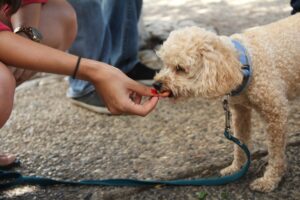
When your dog successfully uses the toilet, praise them in a bright, high-pitched voice! It's also effective to give them their favorite treat at the same time.
However, please note that the effect of a treat lasts for a few seconds after praise, so if you go to get the treat after praising, the effect of the treat will be reduced! Praising your dog not only by talking to him, but also by playing with him afterward to increase the effect!
Also, be sure to clean the litter box and playpen promptly. If your dog develops the notion that "excrement = dirty, unpleasant place," he will stop using the litter box there.
Summary
What did you think?
Even adult dogs can be retrained if you take the time and be patient.
To do this, first examine your dog's environment and the way you interact with them to determine why they're having trouble using the toilet.
The key to retraining an adult dog is to record the timing of their bowel movements and help them learn more about "successful experiences" than about failures. In other words, praise them a lot when they succeed! Trust your dog, be gentle, patient, and take your time to train them.
Your beloved dog will definitely respond!

















![[Must-see for beginners] Introduction to potty training your dog. If you pay attention to these points, you'll be fine!](https://with-my-dog.com/wp-content/uploads/2022/07/image4-11-300x200.png)