A thorough explanation of why dogs fold their ears back, what they're feeling, and what to do about it!

Have you ever wondered, "My dog keeps rolling his ears back. What does it mean?"
"Is he feeling unwell?"
?
When a dog rolls its ears back, it's a form of body language that can mean a variety of things. This article explains the meaning of a dog's ears rolling back and what you can do to deal with it, so you can take action if something happens!
A dog's ears folded down are a form of "body language."
Although dogs can't speak, they communicate with humans through various body language, such as wagging their tails and showing their bellies.
A dog's ears folded down are also a form of body language. A dog's ears folded down can indicate affection or trust, or it can be fear or intimidation. By observing them in conjunction with other gestures and behavior, you can understand what they are trying to convey.
Learn your dog's body language to better communicate with him.
List of Reasons Dogs Fold Their Ears

Knowing why your dog folds its ears can help you understand how it's feeling. Broadly speaking, there are positive reasons for this, such as trust, friendship, or a desire for affection, and negative reasons, such as dissatisfaction, fear, or intimidation.
Indicating Trust and Friendship
If your dog folds its ears back and is also showing relaxed behavior, such as a relaxed expression, a raised mouth, or a vigorously wagging tail, it is expressing trust and friendship toward its owner or companions.
If your dog exhibits these behaviors when you are angry, it means you are communicating, "I submit" and "I won't attack." If your dog exhibits these behaviors while playing with other dogs, it means you are communicating, "I won't attack."
Signs of Anxiety, Fear, and Frustration
If your dog's ears are back and its tail is down, it means it is feeling anxious or frightened.
If your dog folds its ears and appears stiff and tense when a dog that seems stronger approaches it during a walk,
- Scary
- No match for him
- Don't attack him
This indicates anxiety or fear.
Your dog may also fold its ears and look dissatisfied when it's frustrated, such as when your dog won't play with you or give you a toy.
If your dog shows signs of anxiety, fear, or frustration, you should observe his behavior and determine whether or not he needs to take action. If so, please refer to the solutions introduced later and deal with the situation appropriately.
Threatening
Ears tilted forward may be a sign of threat.
If your dog is holding its tail in its mouth, wrinkling its muzzle, or growling, you should be concerned. If you notice these behaviors,
- I'm going to attack
- Don't come near me
- I'm stronger
They're trying to communicate something like this.
If you notice threatening behaviors, it's important for owners to understand the situation and understand their dog's feelings. Please refer to the methods for dealing with threatening behaviors introduced later and deal appropriately with them.
I want to be pampered
Your dog may also fold its ears when it wants to be pampered.
It's incredibly adorable to see them tilt their ears back and their eyes watering with excitement. Sometimes, they know their owner is going to pet them, and they'll fold their ears to make it easier for them to do so. At this point, the dog is appealing to you:
- Pamper me
- Touch me more
- Look at me more
How to Eliminate Anxiety, Fear, and Frustration
If your dog's ears are folded back due to anxiety, fear, or intimidation, you need to calm it down. Knowing the appropriate way to deal with the situation will help prevent fights and problem behaviors.
Identify and Eliminate the Cause of Anxiety and Fear
If your dog is anxious or scared, it's important to identify the cause and eliminate it.
For example, the cause could be a car, a motorcycle, a person, or another dog. Some dogs are afraid of everyday objects like vacuum cleaners and hair brushes.
If the cause is cars or motorcycles encountered on walks, choose roads with less traffic. If your dog is afraid of people or other dogs, try to keep as much distance as possible. Try to keep the trigger away. Also, if your dog is afraid of everyday objects like vacuum cleaners or hair brushes, it's effective to intentionally place the trigger near your dog and wait for it to get used to them.
Fear of everyday objects can be difficult to deal with, but if you've built a trusting relationship with your dog, simply gently saying things like "It's okay" or "It's not scary" or petting them should help them gradually get used to them.
Communicate Dissatisfaction Closely
If your dog shows signs of dissatisfaction, it may be that you are not communicating with him enough. He may not be getting enough walks, physical contact, or playtime.
Try to increase communication with your dog by talking to him frequently, walking on a different route than usual, taking the time to groom him, and spending time playing with him, such as playing with a ball or tug-of-war.
However, for some affectionate dogs, frequent communication can worsen problem behaviors, such as barking and mischief. In such cases, it may be necessary to ignore them to a certain extent.
If your dog is threatening, simply wait until it calms down.
If your dog is threatening other dogs, a fight may break out. Keep your distance from the other dog and wait for your dog to calm down. Taking a place where other dogs cannot see you or hiding your body from them can also be effective.
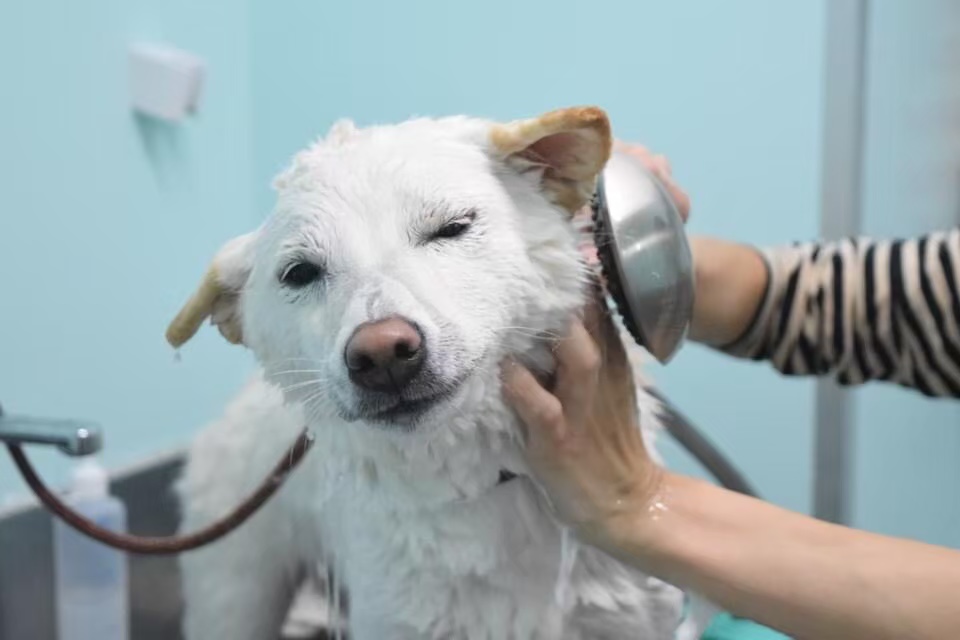
Dogs who dislike grooming, such as brushing and shampooing, may even become aggressive toward their owners. In such cases, don't force them. Instead, gently encourage them and take your time to groom them. As you build a relationship of trust, they'll gradually learn to trust you.
Summary: Understanding Your Dog's Feelings Through Ear Folding

Folding your dog's ears is one of its body languages. By observing and interpreting not only this behavior but also other behaviors, you can understand your dog's feelings.
If your dog shows signs of dissatisfaction or intimidation and needs to be addressed, do so appropriately. Responding appropriately can help prevent fights and problem behaviors.
To understand your dog's body language, communicate closely with him and observe his reactions. By understanding his subtle body language, you can build a trusting relationship with him.








![[Dog Allergies] Do dogs have allergies? Explaining safe foods!](https://with-my-dog.com/wp-content/uploads/2021/10/3029373_m-150x150.jpg)









![What is a dog neuter? The contents and purpose of the surgery [For first-time owners]](https://with-my-dog.com/wp-content/uploads/2021/10/dog-g0fd92e32e_1920-300x200.jpg)