
![My puppy won't learn to use the toilet [Keep training simple!]](https://with-my-dog.com/wp-content/uploads/2021/12/dog-g33cd6bf6a_1920.jpg)
Hello!
Training a dog can be quite difficult, and I think toilet training is the first thing you'll struggle with.
Today, I'd like to introduce some things you can and shouldn't do if your puppy is having trouble toilet training.
Puppies are the easiest time to train them (they have the best memories). Don't rush into training them!
Let's start by creating the environment
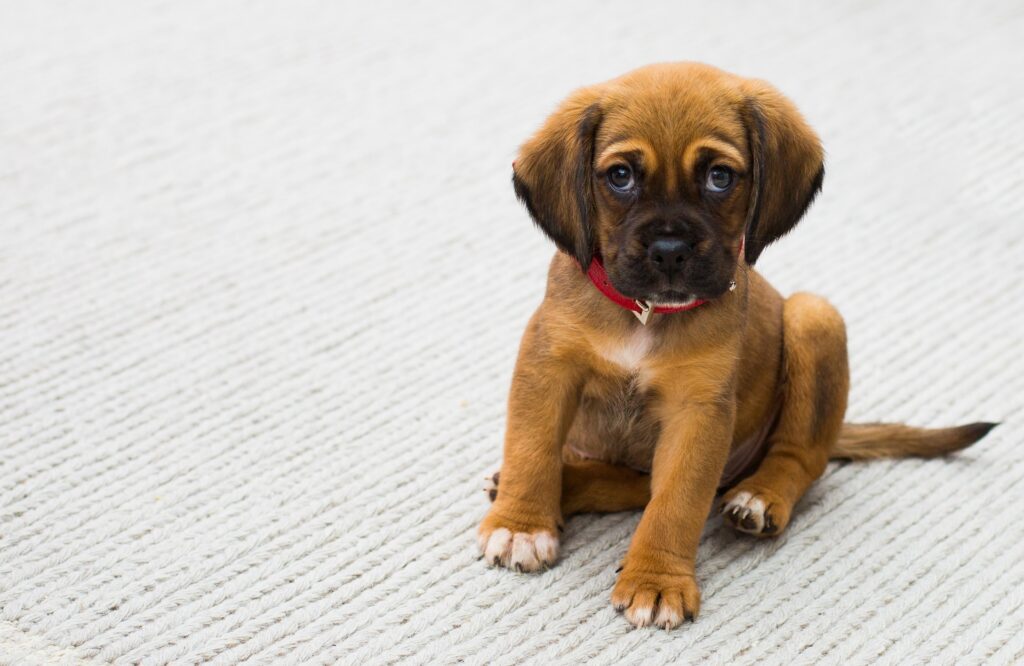
Puppies often go to the bathroom around 10 times a day. It's a good idea to provide a toilet area in their crate so they can use the toilet even when you're not watching.
One thing to keep in mind when doing this is that dogs are very clean, so make sure to clearly separate the toilet area from their bed. Place a towel or blanket over the bed area to create a fluffy sleeping area.
If your puppy doesn't have any accidents while in his crate, but when you take him out, he'll go to the bathroom in a different place.
Dogs will use places they like not only for their smell but also for the feel of their feet. Be especially careful on carpets, tatami mats, and floor mats. Since the feeling is similar to dirt or grass, your dog may urinate on them. Carpets and tatami mats tend to retain odors, so your dog may urinate in the same spot again.
To prevent this, it's a good idea to avoid carpeting while your dog is still a puppy and instead use a non-slip mat to play on. We recommend a water-repellent mat in case your dog accidentally urinates on it.
Understanding the timing of elimination
Times when your dog is most likely to urinate.
- After waking up
- After exercise
- Regular times
- After eating or drinking
These are the times when your dog is most likely to urinate, so encourage them to go to the toilet at these times. When your dog uses the toilet, praise him profusely and give him treats. Repeat this process over and over to help him remember.
In addition to the above, if your dog starts sniffing the floor, fidgeting, or circling around in circles, these are signs that he needs to go to the toilet. Guide him to the toilet.
Scolding and yelling are not allowed

If your dog gets scolded for toileting, he won't understand why. If he thinks, "I was scolded for using the toilet" or "I'll be scolded if I use the toilet," he'll start to toilet away from you or hold it in, making potty training take even longer. Don't scold your dog if he fails; instead, plan your next course of action.
The area where your dog toileted may have felt similar to his usual toileting area, or it may have had an odor. Clean the area thoroughly after the accident. If an odor remains, he may try to toilet in the same place again. Cleaning and deodorizing sprays are available, so try using one of those to eliminate the odor.
Keep potty training simple
If you overcomplicate the training, your dog will not remember.
When your dog goes to the toilet, use a sound like "shhh," "toilet," or "tsk tsk" that won't startle him. This will help your dog learn to use the toilet when it hears that sound. If your dog starts to fidget when it hears that sound, guide it to the toilet and let it relieve itself. Give lots of praise if it does! Treats are also effective.
As a guideline, aim to complete potty training within 2-3 weeks of bringing your dog home.
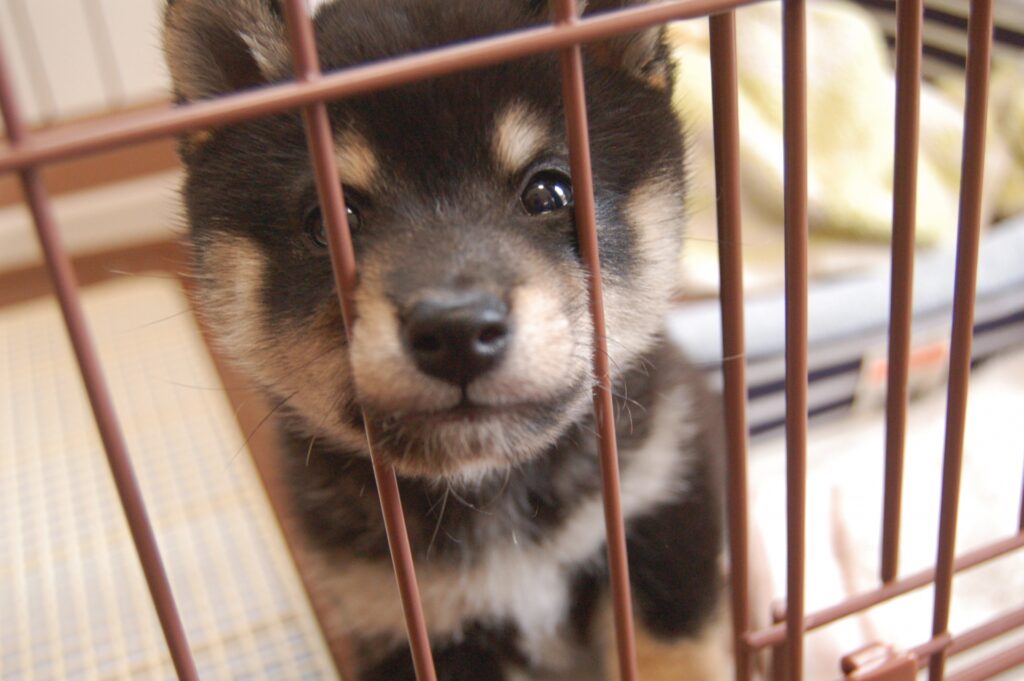
Toilet training should be completed within three weeks of bringing your dog home at the latest.
Toilet training is probably the first thing you should teach your dog after bringing it home. Don't put it off, make it your top priority.
It's also a good idea to provide a playpen separate from the cage.
While this varies from dog to dog, some dogs are very clean and don't like their cage, sleeping area, and toilet area being close together. In this case, your dog may not use the toilet in its cage. In that case, it's effective to provide a separate enclosure called a playpen. It should be large enough for your dog to turn around inside. It's quite spacious. Cover the area with pet sheets to create a toilet area.
To train your dog, simply teach it to use the toilet with a cue, then give the cue inside the playpen to use the toilet. However, this requires a fair amount of space, so it's best for people with extra space in their homes.
Pay Attention to the Location of the Toilet
Dogs are especially vulnerable when using the toilet, so they prefer a quiet place where they can use the toilet safely.
Some dogs dislike places with a TV on, such as the living room, or where people are constantly present. On the other hand, some dogs feel safe knowing that humans will protect them. However, if your dog doesn't like noisy places, it may be a good idea to provide a toilet space in a quieter area.
Summary
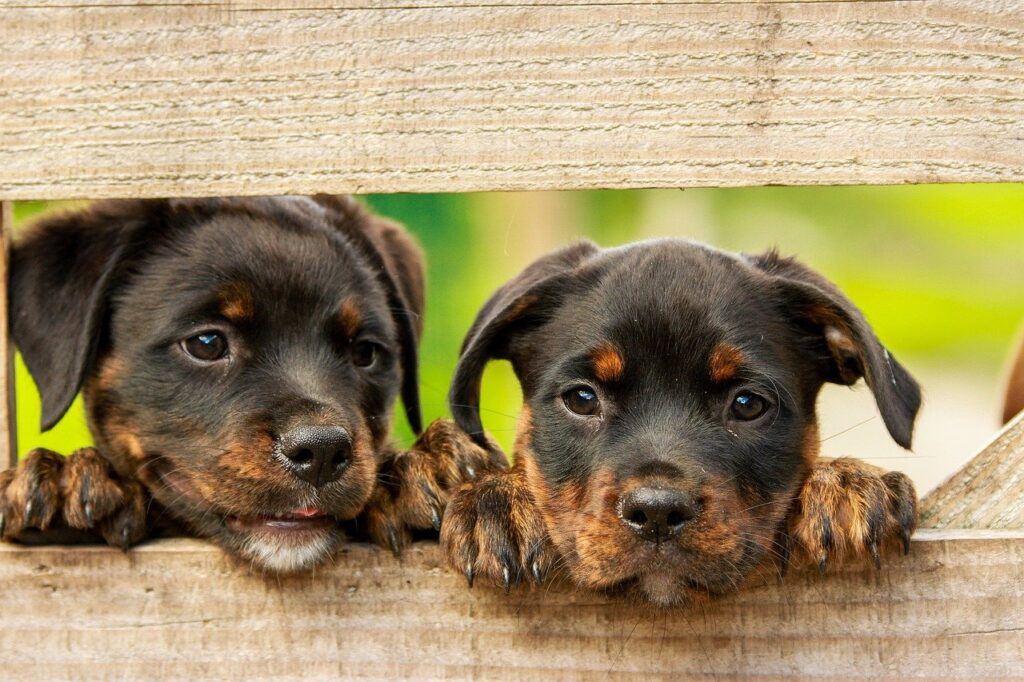
Provide a toilet in the cage so your dog can use the toilet even when you're not watching.
One thing to note is that dogs are very clean, so make sure to clearly separate the toilet area from the bed. Place a towel or blanket on the bed area to create a fluffy sleeping area.
Dogs can be motivated to use the toilet not only by smells but also by the sensation of footsteps. Be especially careful on carpets, tatami mats, and floor mats.
Toilet training will be easier if you can grasp the timing of your dog's elimination.
This usually happens when waking up, after exercise, at set times, or after eating or drinking. If your dog starts sniffing the floor, fidgeting, or circling around in circles, it's a sign that it's time to go to the toilet. These are fairly obvious movements, so you should be able to notice them.
Don't scold or yell at your dog for an accident. Some dogs may become unable to go to the toilet or may go to the toilet far away from you. Instead of scolding them for their mistakes, praise them for their successes.
The quickest way to potty train your dog is to get them used to the sound that signals it's time to go to the toilet!!
That concludes our summary of puppy training tips and points to bear in mind. We hope this information is helpful!









![[Latest] French Dog Names: A Guide to Cool and Stylish Names](https://with-my-dog.com/wp-content/uploads/2022/04/image1-150x150.jpg)
![[When to Neuter a Dog] Is it too late for an adult dog? Risks, advantages and disadvantages](https://with-my-dog.com/wp-content/uploads/2022/05/cocker-spaniel-g0d3ad5651_1920-150x150.jpg)





![[Sheltie puppies] Check breeder information for baby dogs](https://with-my-dog.com/wp-content/uploads/2022/01/image1-300x199.jpg)