
Some dog owners may be worried that their puppy was good at using the toilet, but now it's starting to have more accidents as it grows into an adult. Adult dogs produce more feces, so it can be a real hassle for owners when they have accidents.
But why does your dog start having more accidents as it grows into an adult?
Is it even possible to toilet train an adult dog?
In this article, we'll introduce three key points for toilet training an adult dog. By keeping these points in mind, potty training is perfectly possible even for adult dogs. Let's do our best to make sure your dog feels safe at home, just like when he was little.
3 Reasons Adult Dogs Have Potty Accidents
If your dog was potty trained but has started having toilet accidents as an adult, possible causes include physical or mental issues, lifestyle habits, or an unhealthy toilet environment.
Here, we'll introduce three reasons why adult dogs have toilet accidents. Understanding the causes can help you take appropriate measures.
① Outdoor elimination has become a habit
When dogs become adults, they tend to defecate less frequently than puppies, down to about two or three times a day.
For example, if you take your dog for walks in the morning and evening, it's likely that it can hold its elimination until walk time. Therefore, elimination during walks is sufficient, and since dogs also have a habit of marking their territory, it's likely that outdoor elimination has become the norm.
The frequency and circumstances of toileting in puppies are discussed in the following article.
A lot changes when a dog becomes an adult, so please take a look at this article for reference.
【What to do with a puppy's toilet? What to do when you bring a dog home】
② The interval between walks is too long
If your dog has become accustomed to defecating outside, it will likely hold it in between morning walks and when you get home.
In this case, it's a vicious cycle where your dog will only urinate outside if it can hold it in, and will have an accident if it can't. The longer the interval between walks, the higher the chance of your dog having an accident.
③ Environmental, psychological, or physical issues
Possible causes of accidents include mental stress, poor health, and the litter box environment.
For example, changes in the environment, such as moving and changing the home or litter box location, or being away from home more often, can cause stress and lead to accidents.
Kidney disease, cystitis, urinary tract diseases such as urinary stones, and other lower urinary tract conditions can also cause accidents by not making it to the toilet in time. Therefore, if you notice an increase in accidents, please visit a vet as soon as possible.
Speaking of physical changes, accidents in senior dogs may be due to a decline in their functions, causing them to mistake the location of the toilet or become unaware of it. In such cases, you should also consult a veterinarian.
The causes of toilet accidents are discussed in the following article.
My dog keeps having toilet accidents. Three Causes and Solutions
Three Key Points for Successful Potty Training in Adult Dogs
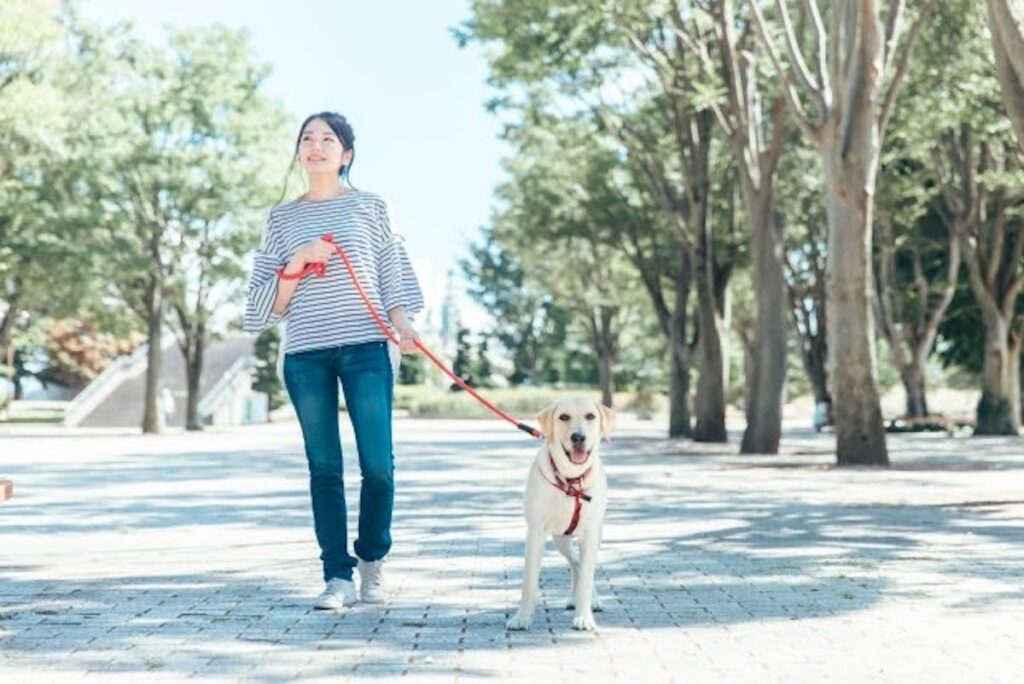
To successfully toilet train an adult dog, it's important to reduce the number of times your dog defecates outside and gradually encourage it to defecate indoors so that it can also defecate inside the house. So, how can you train it effectively?
Here are three key points for successful toilet training an adult dog.
① Keep your dog's attention on you during walks
Dogs often sniff the ground before defecating. This encourages "marking" and helps them develop the habit of defecating outside.
To prevent your dog from defecate and marking outside more frequently, walk beside you as much as possible during walks, giving treats to keep your dog's attention on you.
② Gradually get your dog used to using the toilet indoors
If your dog has gotten used to using the toilet outdoors, it may be difficult to get it to use the toilet indoors all of a sudden.
Gradually get your dog used to using the toilet indoors by gradually moving it from an outdoor environment, such as a garden or balcony, to an indoor environment.
Use an outdoor environment on your property, such as a garden or balcony, as a toilet.
Place a toilet tray and toilet sheets in a place, such as a garden or balcony, that will help you recreate the outdoor environment where your dog normally defecates. Then, before going for a walk, take your dog to the toilet set up in the garden or on the balcony, allowing it to defecate beforehand.
Once your pet gets used to using the outdoor litter box, move it indoors
Once your pet gets used to using the litter box in the garden or on the balcony, it's time to move the litter box indoors. However, don't immediately install the litter box inside the cage. First, place the litter tray and litter sheet near the entrance or window, or somewhere close to the outdoor environment. If it works well here, it won't matter where you place it.
③ Make your dog's preferred toilet spot
When potty training an adult dog, it's more likely to be successful if you practice in various places around the house and make your dog's preferred toilet spot, rather than deciding on a specific toilet spot in advance.
Also, if you take measures such as enclosing areas where you don't want your dog to defecate, you won't have to get angry if your dog fails.
Instead of having your dog memorize the exact location of the toilet, help him recognize the toilet as a toilet sheet. This will allow him to use the toilet even when you're out and about, so you can rest assured that he'll be able to do so as long as you have the toilet sheet. And when he's successful, praise him wholeheartedly.
We also recommend using commercially available toilet aids to guide your dog to the toilet.

There are products on the market designed to help teach your dog where the toilet is. Using these products to guide your dog is one way to do it.
For example, there are toilet paper sprays that you can simply spray on the toilet paper. Spraying a spray containing ammonia and the scent of flowers that dogs like onto your dog's usual toilet paper will make it easier for your dog to recognize the toilet and guide it there. There are also training toilet paper products that are pre-scented with ammonia and other scents.
Make good use of these products as you continue your training.
Time is the key to potty training an adult dog
It naturally takes time to change a dog's habit of using the toilet outside.
Don't rush into toilet training, as this could lead to your dog becoming even more averse to using the toilet indoors, or even to disliking the toilet altogether. Potty training should proceed at your dog's own pace.
It's also important to be consistent in your instructions so your dog doesn't get confused. However, don't get angry. Even if you think you're scolding your dog for an accident, your dog may interpret the "excretion itself" as a bad thing. It's important to approach the job with the mindset that even if you make a mistake, you can just clean up so that the smell doesn't remain.
Summary
Changing an adult dog's habitual behavior requires patience.
Successful potty training means you can take your dog on trips, to dog cafes, and more easily leave him at the vet or pet hotel, allowing you to do more with your dog.
It also eliminates the need to worry about situations that make it difficult to take your dog for walks, such as bad weather, when you're not feeling well, or when your dog gets older and has difficulty defecating outside.
If your dog can properly defecate indoors, its quality of life will improve. Take your dog's personality and defecation patterns into consideration as you potty train it, taking it easy.














![What is a dog neuter? The contents and purpose of the surgery [For first-time owners]](https://with-my-dog.com/wp-content/uploads/2021/10/dog-g0fd92e32e_1920-300x200.jpg)