What's the ideal amount of food for a puppy? A thorough explanation of how often, how to feed it, and how to choose the right food!

When you first bring a puppy into your home, you're likely excited, but also worried and anxious.
For example,
- How often and how much should you feed your puppy?
- How should you feed your puppy?
- What kind of food should you choose?
These questions may include how to feed your puppy and what kind of food to choose.
While the appropriate amount and selection of food will vary depending on your dog's breed, the puppy's constitution, and living environment, knowing the standards is important for your puppy's health and growth. This article explains the appropriate amount of food for puppies, how to feed them, and how to select their food.
Learn how much, how often, and how to feed your puppy
Puppies grow rapidly and need the most calories of their lives.
Just as dieting for growing children is said to have a negative impact on their health and growth, it's not a good idea to restrict the amount of food your dog eats during puppyhood just because it's a breed prone to obesity, has been neutered or spayed, or you're worried about its size.
Until around one year of age, don't worry about obesity.It's most important to provide your puppy with proper nutrition to ensure healthy bone, muscle, and body tissue development. So, what are the appropriate amounts of food and feeding methods?
What is the appropriate amount of food for a puppy?
Until puppies reach the age of five months, when their growth slows, many breeders don't measure dog food and instead feed them as much as they want, as long as it doesn't cause loose stools. However, since the nutritional balance of dog food varies, as a general rule, feed the amount listed on the package.
The standard amount of dog food is generally determined based on the dog's adult weight.
The recommended amount of food per month based on adult dog weight is as follows:
▼ Daily feeding amount by age based on adult dog weight
| Age in months | Extra small dog (1-5 kg at adult weight) | Small dog (5-10 kg at adult weight) | Medium-sized dogs (10-25kg as adults) |
|---|---|---|---|
| 2-3 months | 60-70g | 140-150g | 210-220g |
| 4-5 months | 80-90g | 160-170g | 230-240g |
| 6-7 months | 90-100g | 175-185g | 250~260g |
| 8-9 months | 80-90g | 160-170g | 230-240g |
| 10-11 months | 60-70g | 150-160g | 220-230g |
| 12-13 months | 60-70g | 160-170g | 210~220g |
Puppies have more water in their bodies than adult dogs, so it's fine for them to appear chubby until around 4 months of age. In fact, if you can clearly see their spine, ribs, and hip bones, they may be underweight, so be careful.
Especially during puppyhood, we recommend having your veterinarian check your puppy's weight and build regularly, even when you take them for vaccinations or to get heartworm, flea, and tick preventatives.
How often should I feed my puppy based on its developmental stage?
It is said that puppies should eat 3-5 times a day. Because their digestive organs are underdeveloped, they can only eat small amounts at a time. Therefore, to provide the necessary amount of food per day, you need to adjust the number of meals accordingly.
The recommended number of meals per month is as follows:
▼Number of Feedings per Day by Age
| Age | Number of Feedings |
|---|---|
| Up to 3 months old | About 5 times a day |
| 4-5 months | About 4 meals a day |
| 6 months to 1 year | 2-3 meals a day |
Furthermore, puppies can develop hypoglycemia due to hunger, so it's important to feed them frequently to ensure they always have a sufficient amount of sugar.
How can I help my puppy develop regular eating habits?
As a puppy, it's important not only to ensure that your puppy eats well and stays well-nourished, but also to develop regular eating habits. To help your puppy learn mealtimes and places, always feed it in the same place, at the same time, and using the same bowl.
Also, if your puppy's food is left out for more than 15-20 minutes, remove it even if it hasn't eaten. This will help your puppy understand that it's time for meals at a set time.
A dog's appetite often changes from day to day, so don't worry too much if it doesn't eat all of the food you've prepared. The important thing is your eating habits. If you have a fixed eating habit, with a set time and place, you will gradually learn to satisfy your hunger within that cycle.
What Happens When Your Puppy Isn't Being Feeded Properly

If your pet's stool is not appropriate, it may experience diarrhea or other changes in its stool.
For example, if your pet's stool is small, hard, and clumpy, like that of a sheep or rabbit, it may be due to a lack of food or water. Therefore, you should adjust the amount and frequency of feeding based on the condition of your pet's stool.
On the other hand, if your pet's stool becomes loose, it may be due to indigestion caused by feeding too much food at one time. Therefore, you should adjust the amount of food you feed your pet by reducing the amount of food you feed it at one time.
Furthermore, if the interval between meals is long and your pet becomes hungry, it may vomit stomach acid. In such cases, shorten the interval between meals.
Things to Consider When Choosing Puppy Food
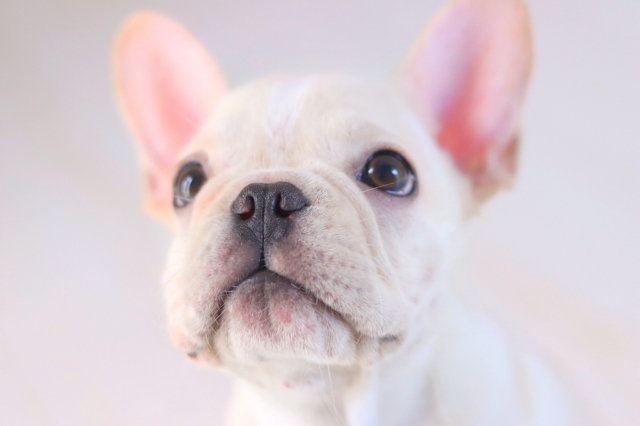
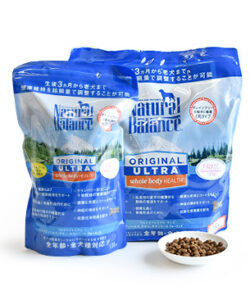
Until your dog is about one year old, feed it "puppy" dog food that contains sufficient nutrients necessary for puppies.
In particular, food products labeled "Complete Nutrition" on the packaging contain a balanced blend of the three major nutrients: carbohydrates, fat, and protein, as well as essential vitamins and minerals, eliminating the need for supplements.
Also, the quality of dog food is important. Dog food made with poor quality ingredients and excessive additives is said to cause diseases such as cancer. Therefore, choosing high-quality dog food is key. Considering the quality of the ingredients used, it's recommended to choose dog food that costs at least ¥1,000 per kg.
In addition to selecting the right food, it's also important to get your dog used to a variety of foods.
Getting your dog used to about three different types of dog food, each with a different manufacturer and protein source, can help prevent food imbalances.
For example, if your dog always eats the same food, there's a risk that he won't be able to eat therapeutic food in the event of an allergy or illness, or food provided at evacuation shelters during a disaster, which could be distressing for your dog.
Please note that changing to a new food suddenly may cause your pet's health to deteriorate. When switching to a new food, mix it with the old food and gradually increase the proportion of the new food over a period of about one week.
You need to soften your dog's food until all of its baby teeth have erupted.
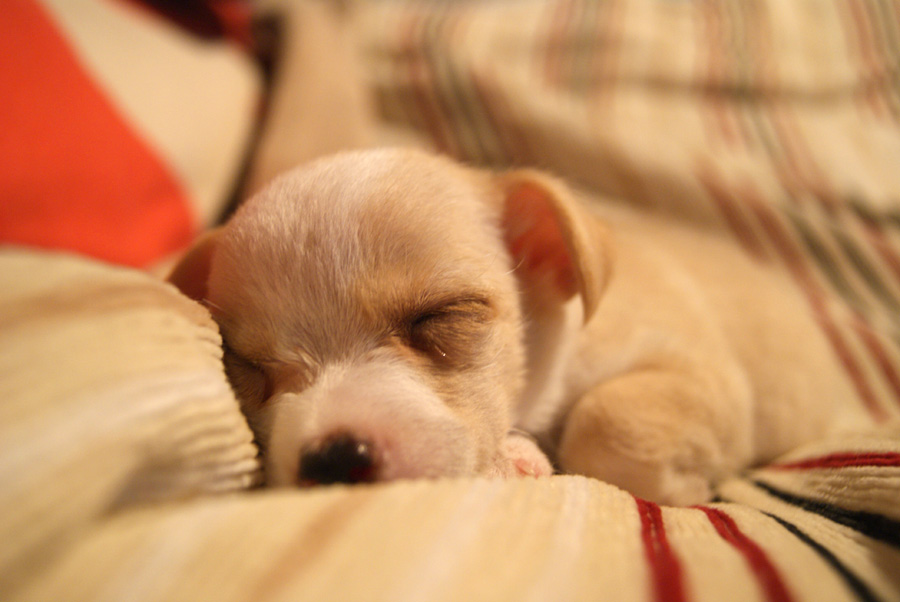
When it comes to feeding, you need to be especially careful during the period until all baby teeth have erupted.
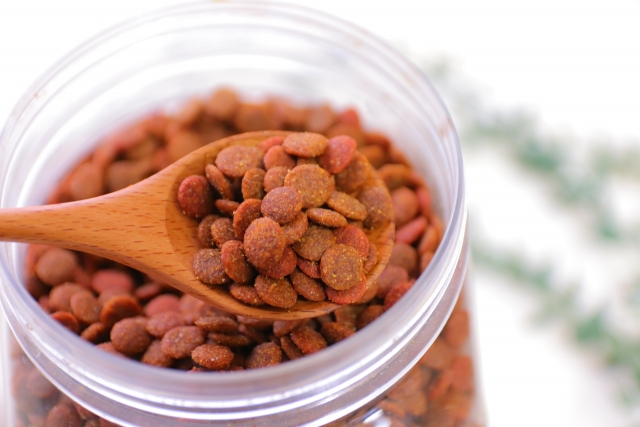
Until all baby teeth have erupted, your puppy cannot eat hard dry food. Also, since their digestive system is still immature at this stage, you should soften the food before giving it to them to make it easier to digest and absorb.
As a guideline, soften dry food until it is soft enough to crush with your fingers and no core remains. As baby teeth gradually emerge, soften the food until it is soft enough to still retain a small core. Note that soaking dog food in boiling water can destroy the nutrients, so soak it slowly in lukewarm or room-temperature water.
Also, mineral water is a no-no. Dogs don't need as many minerals as humans do. Excessive mineral intake can lead to diseases like urinary stones, so be careful.
Once your dog's digestive and chewing abilities have developed, soaking the food is no longer necessary. While this varies from individual to individual, dogs can generally be fed dry food after 4 months of age.
Summary
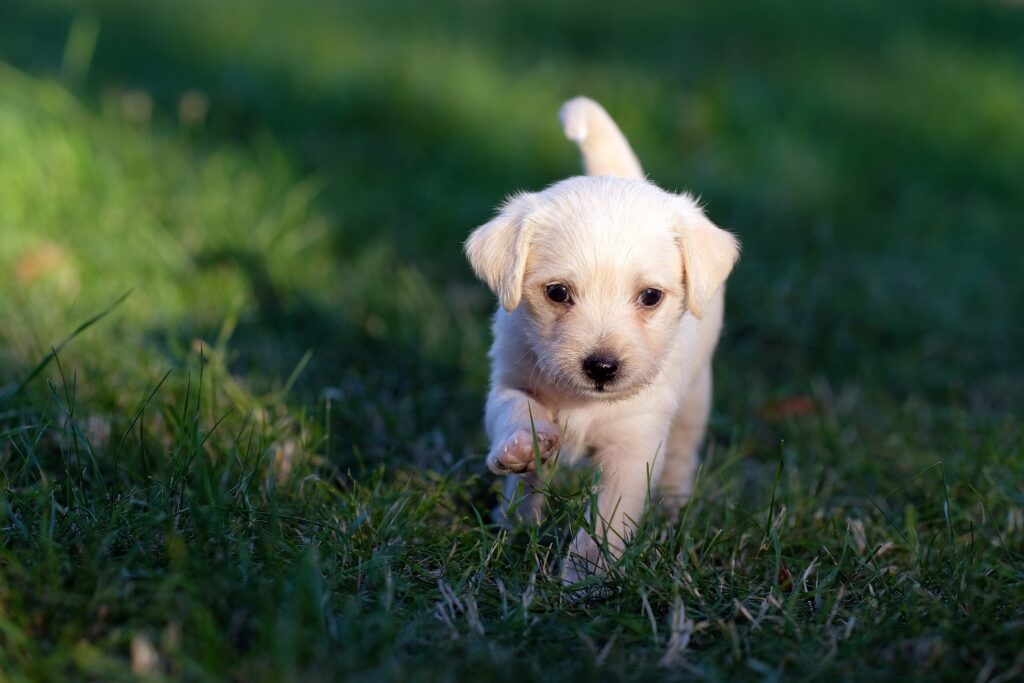
Puppies require the most calories of their lives, so it's important to feed them a diet appropriate for their life stage.
Puppy diet can affect their future growth. If your puppy isn't eating enough, isn't gaining weight, or you're worried about them becoming overweight, consult your veterinarian immediately. It's especially important to have your veterinarian frequently check your puppy's ideal weight during the puppy stage.
To ensure your dog always receives the best nutritional status, properly manage his diet and establish good eating habits to promote healthy growth.



![What is a dog neuter? The contents and purpose of the surgery [For first-time owners]](https://with-my-dog.com/wp-content/uploads/2021/10/dog-g0fd92e32e_1920-150x150.jpg)


![Dog diet [exercise]](https://with-my-dog.com/wp-content/uploads/2022/07/image2-37-150x150.jpg)