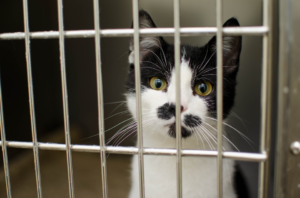


- I want to keep a dog or cat, but I'm worried about allergies.
- I experience allergic symptoms when living in the same space as a dog or cat.
For those who already own a pet or are concerned about getting one.
I hope this article will be helpful for those who have discovered they have an allergy but want to do something about it because they already own a pet.
Major Allergens

The allergens that cause dog allergies are called "Can f," and there are seven types, from Can f1 to Can f7. Can f1 is the primary allergen and is found in large amounts in dog dander and saliva. It attaches to dog fur during grooming, and to floors and clothing when playing with toys. Even if you're not allergic to dog fur, contact with dog saliva can trigger an allergic reaction.
The allergens that cause cat allergies are called "Fel d," and there are eight types, from Fel d1 to Fel 8. Fel d1 is the primary allergen and is found in secretions from the sebaceous glands, salivary glands, and anal glands. Unneutered male cats produce a lot of Fel d1, so if you have an unneutered male cat, neutering it may significantly reduce allergies.
Allergy Symptoms

The main symptoms of dog allergies are similar to hay fever, including itchy/bloodshot eyes, runny nose, sneezing, coughing, and itchy skin. This is because they are the same allergies.
For those with asthma, dog allergies can worsen their symptoms. We do not recommend keeping a cat if you are overwhelmed.
The main symptoms of cat allergies are similar to those of dog allergies, including itchy/bloodshot eyes, runny nose, sneezing, coughing, and itchy skin.
How to Test for Allergies

Testing for dog and cat allergies can be done at an internal medicine, otolaryngology, dermatology, or allergy clinic.
There are two types of tests: skin tests and blood tests, which vary in time and accuracy.
Prick Test (Skin Test)
The test takes about 15 minutes. The cost is about 400 yen per allergen.
This method involves making a small hole in the skin that won't bleed, then applying an allergen to the surface of the skin to check for a reaction.
RAST Test (Blood Test)
The test takes about a week (until the results are known). The cost is about 800 yen per allergen.
A blood test can reveal the level of your allergy in detail, making it easy to understand how much care you need to take. Although it takes a few days, this blood test is highly accurate and therefore recommended.
How to Minimize Allergic Reactions

If the results of your allergy test show that you're allergic.
If you already have a dog or cat, you'll want to do whatever you can to prevent allergic reactions.
To reduce allergic reactions, paying attention to their fur and saliva can help.
It seems that frequent cleaning and using an air purifier can significantly reduce allergic reactions.
For dogs, it's a good idea to have them regularly groomed and shampooed at a salon, and brush them at least once a day at home to minimize dandruff and shedding.
For cats, since you can't shampoo them, you should brush them frequently. They also like to rub their bodies against walls, so be sure to clean the walls frequently!
I've also heard that vacuuming daily to keep their fur from flying around makes things much easier. Please give this frequent cleaning and washing a try.
Some people find it difficult to vacuum every day because they don't have much time.
If your allergy level can be determined through a blood test, you can control it with anti-allergy medication, so it might be a good idea to consider that.
For those who want to raise a dog or cat

You're allergic to dogs or cats, but you really want to keep a pet.
By the way, even if you're allergic to dogs, you can still keep a cat, since the major allergens are fundamentally different. Conversely, even if you're allergic to cats, you can still keep a dog.
That's fine, but... what if you're allergic to dogs, but you want to keep a dog? What if you're allergic to cats, but you want to keep a cat?
If this applies to you, you'll likely face challenges, and no matter how difficult it is, you need to take good care of your pet. If you're prepared for that, I think you'll be fine as long as you use anti-allergy medication, clean frequently, and try to minimize allergic reactions.
Some breeds are less likely to cause allergic reactions, and breeds that shed less hair may be less likely to cause allergic reactions.
Dog breeds that lack a single undercoat (a layer of hair that provides warmth and moisture and sheds during the shedding season), such as the Maltese, Toy Poodle, Papillon, Miniature Pinscher, and Italian Greyhound, are examples.
Cat breeds that are examples include the Russian Blue, Siberian, Sphynx, and LaPerm.
Summary

Don't judge your allergies on your own. Instead, thoroughly test your allergy level with a blood test called the RAST test. Depending on the severity, frequent cleaning, shampooing, and brushing can often eliminate symptoms.
In severe cases, anti-allergy medications can be used to control symptoms.
By using this method, even people with allergies can minimize their symptoms when interacting with dogs and cats.
If you have allergies and are considering getting a dog or cat, it may be a good idea to choose a breed that doesn't shed easily.
Allergies can be controlled to some extent by diligently cleaning and caring for your pet. If you suspect you are experiencing allergic symptoms, it may be a good idea to get tested at a hospital and get medication for future considerations.
That's all about dog and cat allergies.


















![[Shiba Inu] Why does he get angry when you touch his food bowl? Here are the reasons and three solutions](https://with-my-dog.com/wp-content/uploads/2022/07/image2-15-300x200.jpg)