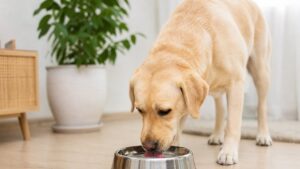

The amount of food your dog eats should be adjusted based on their age, physical condition, and weight.
Feeding them too much can lead to obesity, while feeding them too little can lead to poor condition.
This time, we'll also introduce the amount of food your dog should eat at one meal and the amount of food recommended for sick or unwell dogs, so we hope you find this information helpful!
How much food should a dog eat each day?

This method calculates the calorie needs of your pet based on its weight, age, and whether it has been spayed or neutered.
Amount of food to feed per day (kcal) = (body weight in kg x 30 + 70) x coefficient
【Coefficient】
| Puppies (0-4 months) | 3.0 |
| Puppies (4-12 months) | 2.0 |
| Pregnant/Nursing Females | 2.0 |
| Unneutered Adult Dogs | 1.8 |
| Spayed/Neutered Adult Dogs | 1.6 |
| Non-Spayed/Neutron-Free Dogs | 1.4 |
| Spayed/Neutered Dogs | 1.2 |
| On a Diet | 1.0 |
Example
For a 5kg adult dog that has not been spayed or neutered
(5×30+70)×1.8=396kcal
The answer is...
The calories per gram are listed on the back of the label of your dog's food, so use that as a guide to determine the daily amount. If you're not giving treats, multiply the calculated calories by 3.
If you give your dog treats, limit them to 10% of their daily food intake.
Disadvantages of Eating More Than Your Calories Require
If dogs continue to consume a high calorie diet, they will become obese, just like humans.
Dogs have weak joints due to their skeletal structure, so obesity can lead to illness. Neutering or spaying also increases the tendency for dogs to gain weight.
After surgery, adjust your calorie intake by switching to food designed for neutered or spayed dogs.
Food for dogs that are normally eaten by humans is also a bad idea. Even small amounts are high in calories, so it's easy to exceed the recommended daily calorie intake.
The wide variety of flavors and aromas makes them tempting to eat, so it's tempting to give them food, but for health reasons, it's best not to. Even if they beg, don't feed them.
Disadvantages of Eating Less Than Your Calorie Intake
Continuing to live a life where your calorie intake is lower than your daily calorie expenditure can lead to poor health.
Your pet's coat and skin condition can visibly deteriorate, and it can even lose muscle mass, making it difficult for it to stand.
While it may seem like a leaner diet is better for your pet than an overweight one, it actually seems that pets who are average to slightly overweight live longer.
That doesn't mean overfeeding your dog, but if you notice bones sticking out or your dog's coat is matted, your dog may not be getting enough calories.
For dogs that eat less, give them more treats to ensure they get enough calories.
Feeding a Sick Dog
Let's start by looking at what to look for when your dog is sick.
- Whether or not your pet is in good health
- Whether or not your pet is vomiting or has diarrhea
- Runny nose and drooling (excessive, green, or yellow drooling is abnormal)
- Gum and tongue color (whitish or pale is abnormal)
- Eye discharge (green or red is abnormal)
- Whether or not your pet has bloodshot eyes
- Urine frequency and color (frequent urination, red, or brown is abnormal)
- Whether or not your pet has a fever
The above may be an indication. If any of these apply to you, seek medical attention immediately!
If your dog is not feeling well, forcing it to eat may cause vomiting or indigestion.
Don't force your dog to eat. Feed it only what it can handle. If it continues to refuse to eat, take it to the vet as soon as possible! If your dog refuses to eat food but is keen on treats or human food, it may be acting selfish.
As mentioned above, human food is high in calories and is not suitable for dogs. If you regularly feed your dog human food and it has become selfish, you should correct this through discipline.
Feeding Frequency by Age
Feeding frequency should vary depending on age. We've summarized the information by life stage for your reference.
■1 month old (when baby teeth start to come in)
Weaning food (4 times a day)
■2 months old
Weaning food/puppy food 3-4 times a day.
Since they are still growing, it's okay to overfeed them.
■4 months old
Puppy food (3 meals a day)
◼︎6 months old
Puppy food (2-3 meals a day)
■8 months old
Once the puppy reaches adult size, switch to adult food (2-3 meals a day)
◼︎1 Year Old
Adult dog food (twice a day)
Strict adherence to calorie intake. "Just a little..." can lead to obesity.
■7 Years Old
Transition to senior dog food (2-3 times a day)
Small dogs generally burn more calories, but because they can only consume a small amount, we recommend a food that efficiently absorbs calories in small portions.
Conversely, large dogs burn fewer calories than small dogs, and because their stomachs are larger, be careful not to overfeed them with regular food or high-calorie foods. If you're not careful, they'll quickly become over-caloric.
Summary

Calculating the Daily Calorie Requirement
Daily Amount of Food (kcal) = (Body Weight in kg x 30 + 70) x Coefficient
【Coefficient】
| Puppies (0-4 months) | 3.0 |
| Puppies (4-12 months) | 2.0 |
| Pregnant/Nursing Females | 2.0 |
| Unneutered Adult Dogs | 1.8 |
| Spayed/Neutered Adult Dogs | 1.6 |
| Non-Spayed/Neutron-Free Dogs | 1.4 |
| Spayed/Neutered Dogs | 1.2 |
| On a Diet | 1.0 |
Signs of a sick dog
- Whether your dog is in good health
- Whether your dog is vomiting or has diarrhea
- Runny nose and drooling (excessive, green, or yellow is abnormal)
- Gum and tongue color (whitish or pale is abnormal)
- Eye discharge (green or red is abnormal)
- Whether your eyes are bloodshot
- Urine frequency and color (frequent urination, red, or brown is abnormal)
- Whether your dog has a fever
The above may be a symptom. If any of these apply to you, take your dog to the hospital immediately!
Don't force your puppy to eat when it's not feeling well! If it seems out of sorts, take it to the vet immediately!
Number of Feedings Per Day
■1 Month Old (Once Teeth Begin)
Baby Food (4 Meals Per Day)
■2 Months Old
Baby Food/Puppy Food 3-4 Meals Per Day.
Since your puppy is still growing, it's okay to overfeed it.
■4 months old
Puppy food (3 meals a day)
◼︎6 months old
Puppy food (2-3 meals a day)
■8 months old
Once the puppy reaches adult size, switch to adult food (2-3 meals a day)
◼︎1 Year Old
Adult Dog Food (2 Meals a Day)
Keep an eye on calorie intake. Even a little bit can lead to obesity.
■7 Years Old
Transition to Senior Dog Food (2-3 Meals a Day)
That's it for "How Much Food Should Your Dog Get in a Single Meal!"






![[Dog Allergies] Do dogs have allergies? Explaining safe foods!](https://with-my-dog.com/wp-content/uploads/2021/10/3029373_m-150x150.jpg)