

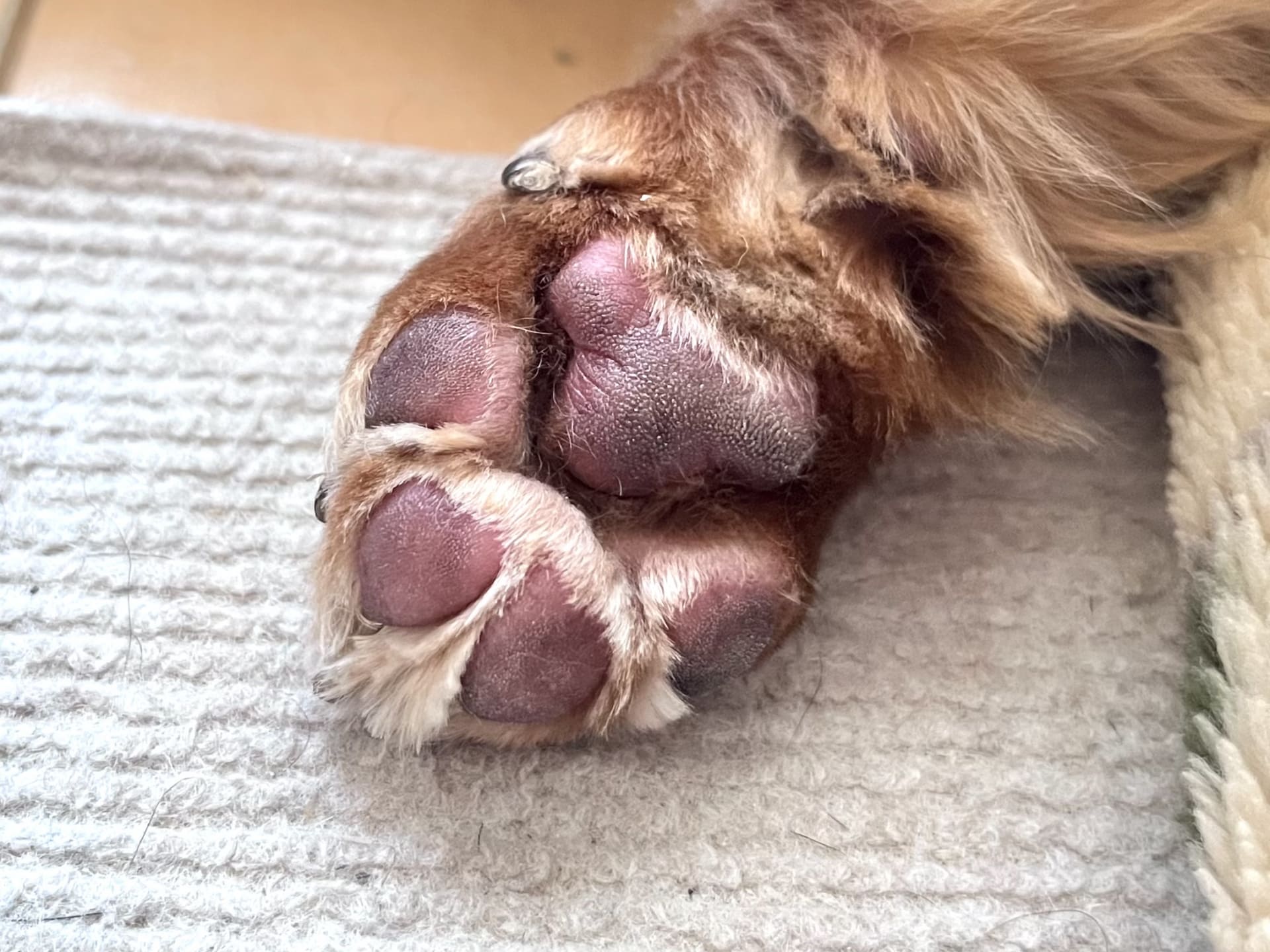
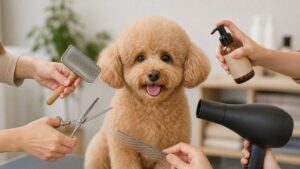
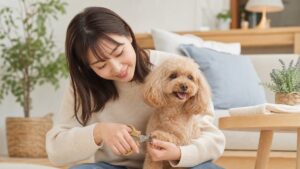
While dog hair trimming is typically done at a salon, you can also trim it yourself at home.
Here, we'll introduce the things you need to check before trimming your dog's hair, the tools you'll need, and where to trim.
Why Dogs Need to Get Their Hair Trimmed
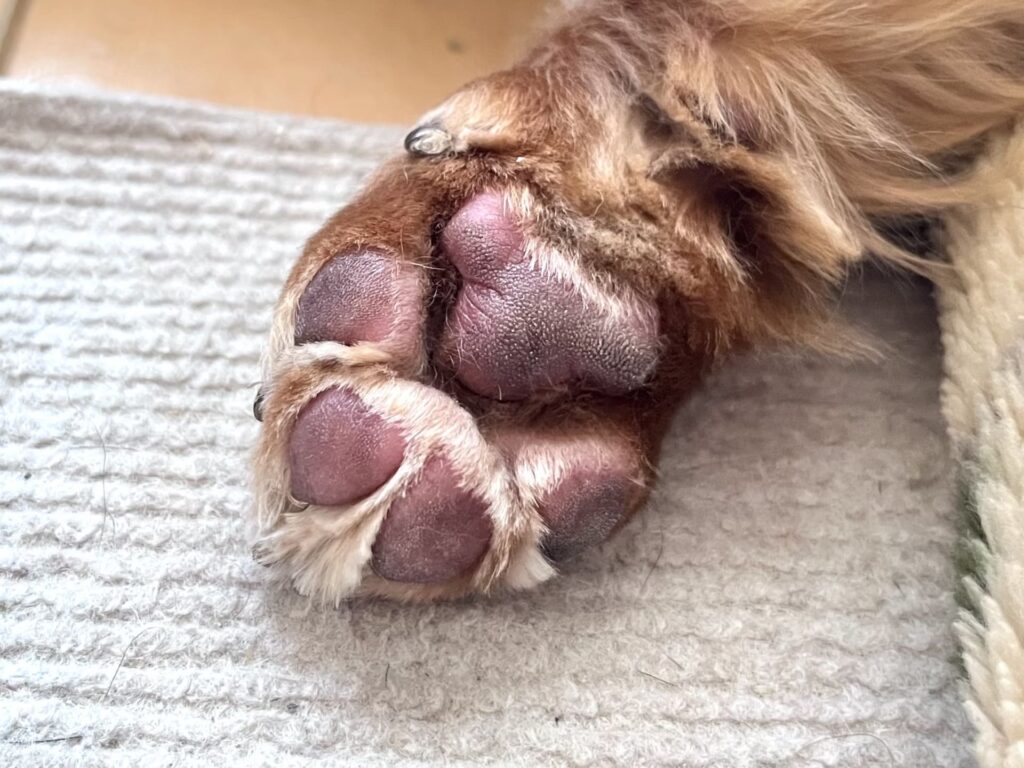
First, let's explain why we trim dogs' hair.
There are many reasons why haircuts are necessary.
Bacteria are likely to grow on their bodies
Dogs are covered entirely in hair, making it easy for bacteria to grow, which is why hair trimming is necessary.
Bacteria are particularly likely to grow around the anus and urethra, as these areas are close to the excretory organs, leading to infections.
Causes tears and eye discharge
When the hair around the face grows long, the ends of the hair can get stuck in the eyes, causing tears and eye discharge.
More susceptible to injury
When the hair around the paws grows long, it covers the pads, preventing them from slipping properly and making them more susceptible to injury.
Checkpoints before Cutting
Check your dog's health before self-cutting.
Check the Skin Condition
First, check the skin condition.
Check for any abnormal skin conditions, such as those listed below.
- Warts
- Skin swelling
- Skin eczema
Is your dog showing any signs of discomfort?
Next, feel your dog's body and limbs to see if they seem to be in pain or uncomfortable.
If you notice any abnormalities in your dog's body or behavior, do not attempt to trim it yourself at home.
Make sure it's after a meal
Cutting your dog's hair after a meal can cause it to become excited and vomit what it has eaten.
If you are going to trim your dog's hair after a meal, wait 1-2 hours.
Where to Groom
Choose a grooming location where your dog can feel calm and where it's easy to clean up.
Avoid grooming in your own backyard or outdoors, as dogs often become excited there.
A grooming table is ideal, but if you don't have one, it's a good idea to place a non-slip mat on the table for safety.
Bathrooms, washrooms, and entryways are also recommended as they are easy to trim and clean.
If your dog is not comfortable in the above locations, you can try holding him while you trim.
Tools Needed for Trimming
The three main tools you'll need for self-trimming are listed below.
- Cutting scissors
- Dog clippers
- Brush
Scissors
The first item is a pair of cutting scissors.
It's useful to have scissors for cutting hair and thinning shears to gradually reduce the amount of hair.
Dog Clippers
The second item is dog clippers.
It's convenient to have two types of clippers: one large for full body use and one small for partial cuts.
Brush
The third item is a brush.
Brushing your dog's entire body thoroughly before trimming ensures a safe and clean finish.
How to Trim Ears, Paws, and Bottom
Once you're ready to trim, the next step is to actually trim your dog's hair.
Cutting Order
The order in which you cut is important to ensure your dog gets used to the cuts and doesn't get annoyed.
It's recommended to cut in the following order.
- Ears
- Feet
- Butt
- Face
- Torso
First, trim the ear hair, then move on to the soles of the feet.
Once you've trimmed the soles of the feet, move on to the butt area, trim the hair around the face, and finally move on to the torso. This will make trimming relatively easy.
Next, I'll explain how to trim the ear hair and the feet and butt.
Cutting Ear Hair
Excessive ear hair can reduce the airflow inside the ear, leading to stuffiness and ear infections, so it's important to trim it as it grows.
How to Trim Ear Hair
Be careful not to cut the ear itself, and carefully trim the ear hair while checking with your hand.
They may not like being cut at first, so it's safer to use blunt scissors, like those used for human eyebrows or noses.
Also, their ears have feathering, so it's a good idea to use the same trimming method for feathering to keep them looking neat.
Cutting the Feet
The soles of the feet are particularly important when cutting the feet.
Dogs have paw pads on the bottom of their paws. These pads provide anti-slip support, cushioning, and temperature regulation.
If the paw pads are covered by hair, these functions are reduced, so regular trimming is necessary for your dog's health.
How to Trim Paw Hair
To trim the area around the paw pads, use small clippers that are easy to use in specific areas and carefully trim to avoid damaging the paw pads.
Cutting the Butt
The butt contains the anus, and the area around it needs to be kept clean to prevent the growth of bacteria.
How to Trim the Butt
To trim the tail, use scissors or small clippers. Either way, lift the tail and cut from the anus in the center outward.
Be careful not to make any sudden movements while trimming the tail or anus, as this may cause injury.
You may need to shave the dog's head to prevent hairballs and other issues, but since dogs have sensitive skin, consult a professional.
How to Trim the Face and Body
Next, we'll explain how to trim the face and body.
Cutting Around the Face
When trimming hair around the face, use scissors or clippers. Carefully trim the hair to avoid damaging sensitive areas like the eyes and nose.
When trimming hair around the mouth, be careful not to injure the face.
Using Scissors
If using scissors, thoroughly comb the hair around your face and then trim small amounts of hair.
Using Clippers
If using clippers, trim from your eyes and nose outward to avoid getting any cut hair in your eyes or nose.
It's safer to ask a salon for help
The area around the face has a particularly large impact on overall appearance, so if you feel even the slightest bit of difficulty, ask a salon for help.
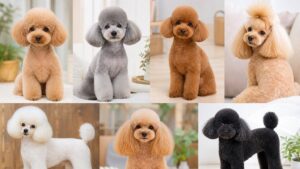
In addition, Toy Poodles and other breeds have a lot of hair around the eyes, which can easily become dirty due to eye discharge and tears. Regular trimming will help keep the area around the eyes clean.
Body Cut
The most important part of the body is the fur on the underside.
If the fur on the underside is not well-groomed, it will get dirty during walks or when urinating.
How to Trim the Belly Hair
To trim the belly hair, use a larger pair of clippers.
To trim the belly hair, lay the dog on its back between your legs, or lift its front legs and trim.
This can be done by one person, but it's easier if two people work together, with one person supporting the dog while the other trims.
How to keep your dog calm during a haircut
Many dogs tend to dislike having their hair cut.
Also, even if your dog is normally well-behaved, some may become frightened or aggressive when it comes to getting their hair cut.
If your dog has a natural tendency to bite, they may become violent and bite harder than usual when you try to cut their hair, so you need to be especially careful.
Reasons for Refusal
If your dog resists or becomes violent when you have their hair cut, it's often because they dislike being brushed or having their hair cut in the first place.
Dogs are wild animals, and their belly hair and leg hair are not brushed with a comb or their body hair is not cut.
A cat's first experience with brushing or haircutting is when it is kept as a pet.
If your cat has a bad experience with a haircut the first time, it may become traumatized and become fearful or aggressive.
What to do if your cat refuses to be cut
If your cat refuses to be cut, the solution is to interact with it during the cut and gradually get it used to being cut over time.
Like people, dogs calm down when they feel safe.
Massages are relaxing and effective
Massages that utilize the autonomic nervous system are effective.
Massage from the base of the tail to the base of the neck, brushing the hair upward.
It's important to gradually get your dog used to the haircut by repeating this kind of physical contact.
Cut the Hair Gradually
After your usual walk, try trimming a small amount of hair on your dog's rear end with scissors or lightly showing it the clippers.
It's also effective to give your dog a treat when you do this. When your dog learns that he'll get a treat after cutting with scissors or clipping with clippers, his fear will gradually fade.
The Pros and Cons of Cutting Your Hair at Home
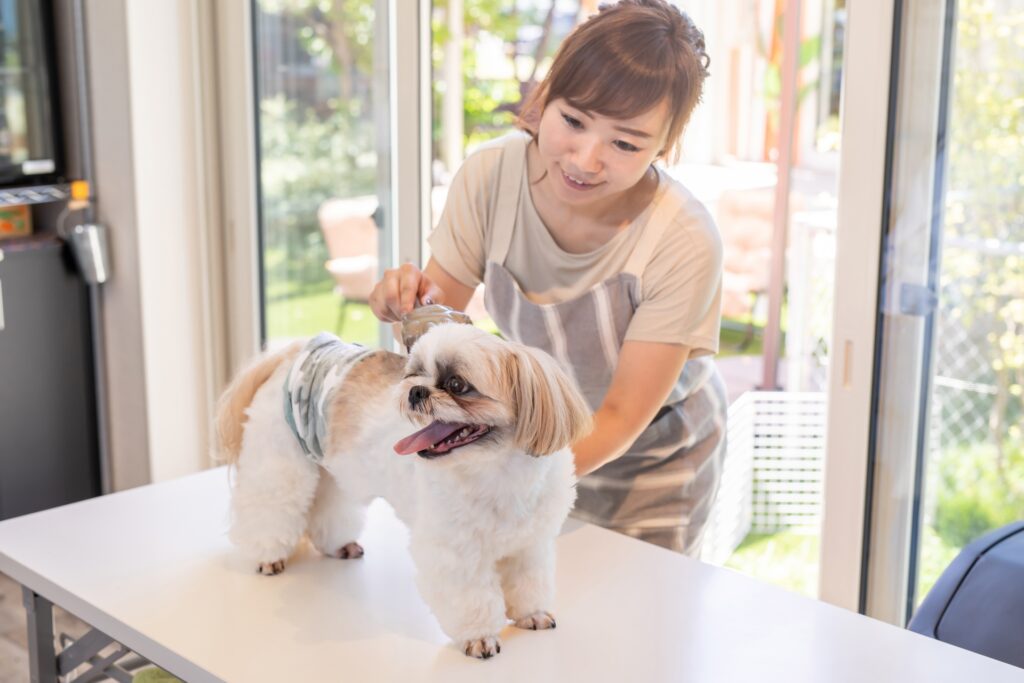
The advantages and disadvantages of self-cutting your dog's coat are as follows.
Advantage 1: Low Cost
A major advantage of self-cutting is that the only expenses you incur are the cost of dog scissors and clippers.
Advantage 2: Stress Reduction for Dogs
Cutting your dog's coat yourself in the comfort of your own home can also reduce stress for your dog.
Disadvantage 1: Risk of Injury
The disadvantage of self-cutting is the risk of injury to your dog.
Dogs generally dislike being cut and often become violent.
When amateur owners trim hair around sensitive areas such as the eyes, ears, mouth, and anus, there is a high risk of injury.
Disadvantage 2: Poor Finish
If you're looking for a better finish, it's better to ask a professional.
An amateur may not be able to achieve the desired style or achieve a beautiful finish.
Also, cutting your dog's hair until the owner is satisfied takes time and can be stressful for the dog.



![[Shiba Inu Lovers Must-See] Why are Shiba Inu so cute? A summary of their cute points](https://with-my-dog.com/wp-content/uploads/2022/07/image2-26-150x150.jpg)






![[2022 Edition!] Popular Small Dog Names](https://with-my-dog.com/wp-content/uploads/2022/04/image2-1-300x200.jpg)


![[Shiba Inu] Why does he get angry when you touch his food bowl? Here are the reasons and three solutions](https://with-my-dog.com/wp-content/uploads/2022/07/image2-15-300x200.jpg)
![[I love both!] Can you keep dogs and cats together? Here are some tips and tricks to keep in mind](https://with-my-dog.com/wp-content/uploads/2022/07/image3-18-300x200.jpg)