

Many owners struggle with potty training, feeling overwhelmed by the daily cleanup. When trial and error lead to more mistakes, it can be stressful for your dog as well. That’s why professional potty training classes, where expert trainers teach the basics, are gaining attention. This article provides an objective look at the types of classes available, who they’re best suited for, and key points for choosing the right one to help you and your dog succeed together.
Why consider professional potty training help?
Professional potty training support can make house-training faster, clearer, and far less stressful for both dog and owner. Many owners try to follow online tips but end up with inconsistent routines or mixed signals, which can confuse a puppy and slow progress.
Dog potty training classes offer structured plans with set schedules, immediate feedback from trainers, customized solutions for specific situations, and proper guidance on handling accidents. Professional help is especially useful for puppies that keep having accidents, recently adopted adult dogs, and owners who feel overwhelmed.
Common house-soiling problems in dogs
House-soiling issues usually fall into predictable patterns. Common problems include urinating indoors after walks, submissive or excitement urination, marking behavior, surface preferences, and crate accidents. Recognizing the specific pattern helps determine whether dog potty training classes are the right solution.
Many challenges improve quickly with structured schedules, consistent reinforcement, and clear communication - all key elements of well-designed potty training programs.
Benefits of structured training over DIY only
Structured dog potty training classes provide a clear framework that many owners struggle to create independently. Professional classes offer immediate feedback, standardized methods, socialization opportunities, and increased owner confidence.
DIY training can work, but combining home practice with structured classes typically results in faster progress, fewer setbacks, and more reliable long-term potty habits.
Types of dog potty training classes available

Dog potty training classes generally fall into a few main categories, each designed for different lifestyles and living spaces.
Puppy group classes at pet stores and schools
Puppy group potty training classes at pet stores and training schools are often the first step for new dog owners. These classes combine basic manners with structured house training, giving young dogs clear routines in a distracting but controlled environment.
Many pet stores offer set curricula that cover how often to take a puppy outside based on age, recognizing early signs a puppy needs to eliminate, using crates and playpens to prevent accidents, reward timing for successful outdoor potty trips, and cleaning accidents correctly to avoid repeat marking.
Training schools tend to provide smaller class sizes and more individualized feedback, which can be helpful for shy or very energetic puppies. Both settings typically include socialization with other dogs, which teaches puppies to focus on toileting even when excited.
Private in-home sessions for targeted support
Private in-home potty training sessions bring a professional trainer directly into the dog's daily environment. This approach is particularly useful for dogs that are anxious, easily distracted, or struggling with accidents despite group classes or owner-led efforts.
A certified trainer can observe the dog's actual potty patterns and accident locations, adjust crate placement and potty schedules in real time, teach owners how to recognize early signs the dog needs to go out, and create a customized plan for cleaning, management, and rewards.
In-home support is especially valuable for puppies in apartment settings with elevators or shared yards, adult rescues with unclear house-training history, busy families who need a simple routine, and dogs with medical issues that complicate potty timing.
Online and hybrid potty training programs
Online and hybrid potty training programs give dog owners access to professional guidance without needing to attend every session in person. They are especially helpful for busy schedules, multi-dog households, or puppies who are not yet fully vaccinated.
Most programs fall into two formats: fully online with pre-recorded lessons and live video calls, or hybrid with a mix of in-person classes plus online modules and virtual check-ins.
Effective programs typically include step-by-step schedules for feeding and outdoor breaks, instructions for crate training, real-time troubleshooting via chat or video, and homework sheets to track accidents and successes.
Options for adult, rescue, and small-breed dogs
Many potty training classes welcome adult dogs that never learned reliable house manners or have regressed after life changes. Instructors focus on re-establishing a clear bathroom schedule, reward-based marking of exactly where and when to go, and interrupting indoor accidents without punishment.
Rescue dogs often come with unknown history, so classes typically begin as if training a puppy but progress faster. Programs use calm, predictable routines to build confidence and address fear or anxiety from shelter habits.
Small dogs can be harder to potty train because of small bladders and weather sensitivity. Specialized classes include higher frequency potty breaks with very fast rewards, clear rules for indoor pads if used, and solutions for weather aversion like covered potty stations.
When to start potty training and class timing
Potty training can begin surprisingly early, and the choice of class timing often determines how quickly a dog learns. Formal dog potty training classes usually start once a puppy has received initial vaccinations and can safely attend group sessions. For adult and rescue dogs, training can begin as soon as the dog is settled enough to focus and is medically cleared by a veterinarian.
Many owners find structured schedules helpful. Common class formats include:
- Once-weekly group classes (45–60 minutes) for owners who need guidance and homework
- Short, intensive programs over several consecutive days to jump-start reliable habits
- Private sessions scheduled around work hours, ideal for dogs with anxiety or specific issues
Timing within the day also matters. Potty-focused sessions are most effective:
- In the morning, when the dog naturally needs to eliminate
- After meals, naps, and play sessions
- In the evening, to reinforce routines before bedtime
Choosing a predictable class schedule and practicing consistently at home between sessions helps the dog generalize the routine and reduces accidents more quickly.
Ideal age to begin with puppies
Most puppies are ready to begin structured potty training around 8–12 weeks of age. At this stage, puppies have enough bladder control to start forming reliable habits, but are still young enough for routines to become automatic.
In dog potty training classes, trainers usually tailor expectations to age:
- 8–10 weeks: Focus on frequent potty breaks, gentle handling, and introducing a consistent cue when the puppy eliminates
- 10–16 weeks: Build stronger routines, add crate or confinement training, and start extending the time between bathroom trips gradually
- 4–6 months: Reinforce house rules, work on signaling (teaching the puppy how to "ask" to go out), and reduce indoor accidents
Early enrollment helps prevent accidental self-rewarding of bad habits, such as sneaking off to eliminate indoors. However, reputable classes will not push very young puppies beyond their developmental limits. Puppies still need many scheduled outdoor trips, supervision whenever they are loose in the home, and calm, consistent reactions to accidents.
Starting later with adult or rehomed dogs
Adult dogs and rehomed dogs can learn reliable potty habits, even if early training was missed or inconsistent. Progress may be slower than with young puppies, but mature dogs often have better bladder control and can quickly connect routines with rewards.
For adult or rescue dogs, potty training classes usually focus on:
- Establishing a predictable schedule for meals, water, and outdoor breaks
- Careful supervision indoors to prevent unnoticed accidents
- Crate or pen training to limit unsupervised time and encourage holding it
- Reward-based reinforcement the moment the dog finishes toileting in the correct spot
- Addressing anxiety or past neglect, which can contribute to indoor accidents
Many rehomed dogs arrive with mixed habits: they may have been allowed to toilet on balconies, puppy pads, or even on certain surfaces indoors. A structured class helps owners reset the dog's understanding by redirecting the dog to one or two consistent outdoor locations, using a clear toileting cue word, and cleaning any indoor accidents thoroughly to remove lingering odour cues.
How long potty training usually takes
For most dogs, basic potty training takes several weeks, not days. A realistic timeline is usually 4–8 weeks of consistent work before accidents become rare, with full reliability often taking 3–6 months.
A rough guide many trainers use:
| Timeframe | What most owners see |
|---|---|
| Week 1–2 | Many accidents, owner is learning the routine, dog is just starting to understand |
| Week 3–4 | Fewer accidents, dog is beginning to hold it and head to the right spot |
| Month 2–3 | Only occasional mistakes, usually due to human error or schedule changes |
| Month 3–6 | Dog is mostly reliable, even with moderate distractions and routine changes |
Speed depends on several factors: age and physical control (very young puppies need more time), consistency of the schedule for meals, water, and toilet breaks, supervision and management inside the home, and previous habits, including any history of eliminating indoors.
Good potty training classes set expectations early: progress is measured in fewer accidents and more correct choices over time, not overnight perfection.
What good potty training classes actually teach
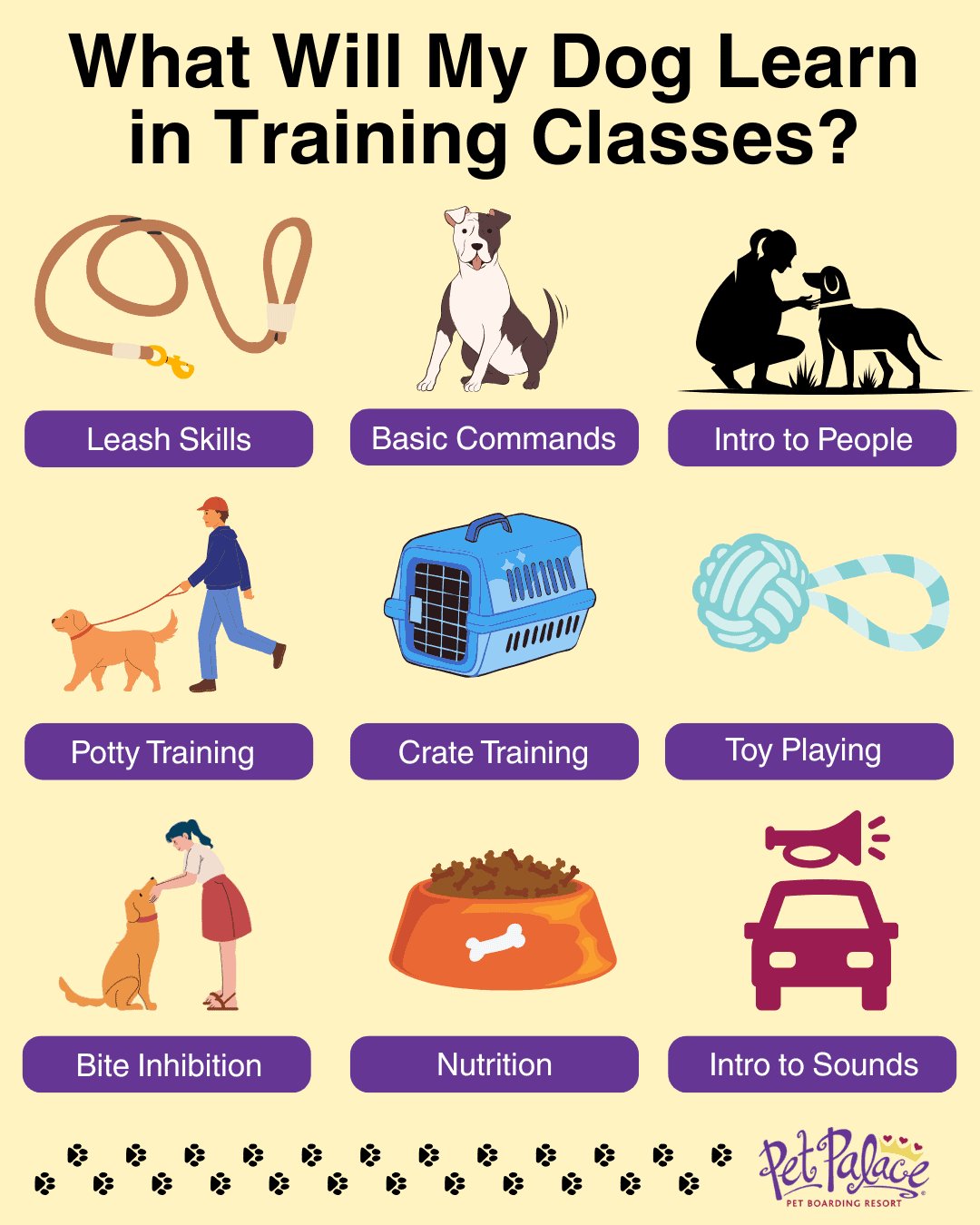
Effective potty training classes go far beyond telling a dog where to go. Quality programs focus on teaching both the dog and the owner a structured system that is easy to follow at home.
Most reputable classes cover clear communication cues, crate and confinement training, reward timing and motivation, accident management, reading body language, and consistency for all family members. High-quality classes also teach problem-solving for common setbacks, such as night-time accidents, apartment living, and transitioning from puppy pads to outdoor toileting.
Building a predictable toilet schedule
A predictable toilet schedule is the foundation of successful potty training, and reputable dog potty training classes emphasize routine from day one.
Puppies usually need to eliminate after waking up, after eating or drinking, after play sessions, and every 1–3 hours depending on age. Quality classes teach owners to bring the dog to the same spot, use a consistent cue word, wait quietly, and reward immediately after success.
Crate training and confinement strategies
A properly used crate is one of the most effective tools in dog potty training classes. Most dogs naturally avoid soiling the area where they sleep, so a crate encourages the puppy to "hold it" until a scheduled toilet break.
When full crate use is not practical, classes often recommend a small confinement area with a bed, water bowl, chew toys, and designated potty area. Over time, trainers gradually reduce the size of the potty area and increase supervised freedom as the dog succeeds.
Reward-based methods and timing of praise
Reward-based potty training focuses on paying the puppy for making the right choice, rather than punishing accidents. Effective rewards include small treats given instantly, calm verbal praise, and brief play for social dogs.
Timing is crucial. The reward needs to arrive within 1–2 seconds of the puppy finishing. Consistent, well-timed rewards help the puppy quickly connect the outdoor location with something highly positive.
Teaching a potty cue word and routine
A consistent potty cue word helps dogs understand exactly what is expected when they go outside. Professional classes introduce a simple cue such as "go potty" paired every time the puppy is placed in the designated toilet area.
Instructors coach owners to follow the same order each time: go to the spot, give the cue, wait quietly, then reward generously for successful potty. This steady pattern speeds up learning and reduces accidents indoors.
How trainers coach the human, not just the dog
Effective dog potty training classes focus heavily on coaching the human. Trainers know that owner consistency is what turns a good lesson into a lasting habit.
Instructors help pet parents learn to read early signs, use clear cues, reward at the exact moment, track feeding and potty times, and respond to accidents without punishment. By practicing these skills during class, owners gain confidence and become more predictable for their dogs.
How a typical potty training class works
A typical dog potty training class follows a structured, step‑by‑step format so that both dog and owner can practice clear, consistent habits.
Most classes include brief review sessions where trainers check progress, management planning for potty schedules and crate use, hands-on practice in designated potty areas, accident-prevention strategies, and homework tracking between sessions.
What happens in the first session
In most dog potty training classes, the first session focuses on assessment, education, and setting up a clear routine.
The trainer will usually begin by asking about the dog's age, breed, daily schedule, and current potty habits, reviewing any accidents or problem behaviors, and checking health considerations that might affect toileting.
Next, the class introduces core concepts such as crate and confinement training for safe management, determining how often to take the dog out based on age, proper reward timing for marking elimination moments, and establishing a simple verbal cue like "go potty."
By the end of the first session, most owners leave with a written schedule, clear supervision rules, and specific goals to achieve before the next class.
Progress checks and homework between classes
Effective dog potty training classes treat progress checks as part of the curriculum. Trainers usually review a written log at the start of each session, asking owners to record the time of each potty break, location, what happened, and any accidents with triggers.
Between classes, owners are expected to practice consistently at home. Homework often includes scheduled potty trips at fixed intervals, reward practice within seconds of successful elimination, crate training to reduce accidents, supervision drills using tethering or baby gates, and consistent cue word repetition.
Trainers may provide printed guides or digital checklists. Regular tracking and homework completion are usually the difference between slow progress and fast, reliable house-training.
Hygiene, cleanup, and accident protocols
Effective dog potty training classes place strong emphasis on hygiene. Reputable instructors require owners to bring waste bags, paper towels, and enzymatic cleaners to every session, clean soiled areas immediately, and designate clear potty zones separate from walking areas.
Most trainers recommend investing in enzymatic cleaners for urine and feces, disposable gloves and absorbent towels, and washable pee pads for puppies and small breeds.
Accidents are expected during potty training. Responsible protocols include no punishment for the dog, quietly interrupting and redirecting if caught in the act, thorough cleanup with odor-neutralizing products, and recording accidents in training logs to identify patterns. A well-run class teaches owners to treat accidents as information rather than misbehavior.
Choosing the right potty training class

Selecting an effective potty training class begins with matching the program to the dog's age, temperament, and the owner's schedule. Classes for young puppies often focus on prevention and routine building, while courses for adult or rescue dogs emphasize habit change and problem solving.
Trainer qualifications and methods to look for
A reliable dog potty training instructor should have certification from recognized bodies such as CCPDT, IAABC, or APDT. Look for continuing education in puppy development, specialized house-training experience, and insurance credentials that indicate professionalism.
Effective programs use positive reinforcement (treats, praise, toys) for correct potty behavior and emphasize management techniques such as schedules and supervised free time. The trainer should explain reasoning behind each technique so owners can apply the same principles consistently at home.
Red flags that suggest you should walk away
Avoid programs that rely on fear or punishment for accidents rather than positive reinforcement. Warning signs include use of leash yanks, yelling, or forcing dogs to "hold it" for unreasonably long periods during class.
Poor environments with overcrowded spaces, filthy floors, or no clear curriculum are also concerning. Any trainer who guarantees instant results or refuses to answer questions should be avoided.
Class size, schedule, and cost considerations
Smaller classes provide more individual feedback. Look for 4-6 dogs per instructor for puppies, or 3-5 dogs for adult dog training. Ideal programs offer weekly classes for 4-8 weeks, with sessions lasting 45-60 minutes.
| Format | Typical Range (USD) | Notes |
|---|---|---|
| Group class | $100-$300 / 4-6 weeks | Most budget-friendly |
| Semi-private | $200-$400 | More attention per dog |
| Private sessions | $75-$200 per visit | Tailored plan, higher convenience |
Questions to ask before you enroll
Before enrolling, ask about training methods used (look for positive reinforcement), how progress is measured, and whether the program adapts to your home setup. Clarify how accidents are handled during class and what homework is required between sessions.
Clear answers about individual feedback availability and support between classes help owners choose a program that fits their dog's temperament and household routine.
Finding potty training classes near you

The most reliable potty training classes are usually found close to home, where trainers understand local housing types, weather, and common schedules. Begin by searching within a realistic travel radius, such as 20–30 minutes from home, to make regular attendance manageable.
Look for facilities that specialize in puppies or young dogs, because classes designed around early development often include a strong house-training component. Daycare-and-training combinations can also be effective when owners have limited time.
Using local search, vets, and shelters for leads
Local search is often the fastest way to uncover reputable dog potty training classes. Searching for terms such as "dog potty training classes near me" in Google Maps or another map app will surface nearby options along with ratings, photos, and reviews. Filtering by distance, average review score, and "dog training" category helps narrow the list to realistic choices.
Veterinarians are another strong source of trusted recommendations. Many clinics maintain a list of trainers and behaviorists they refer to regularly, and some host in-clinic training sessions or puppy socialization classes that include house-training support. Asking the vet about trainers who handle specific issues, such as apartment potty training or stubborn marking, can lead to more targeted referrals.
Local animal shelters and rescue organizations often partner with trainers who specialize in basic manners and potty training. Adoption counselors, volunteer coordinators, or training coordinators can usually point new pet parents to affordable group classes or low-cost community programs.
Comparing big-box store classes and small schools
Big-box pet stores and small, independent schools often take very different approaches to dog potty training classes, and each option has trade-offs.
Large chains typically offer lower prices and frequent discounts, highly structured curricula that are the same in every store, convenient locations and multiple class times, but larger class sizes which can mean less individual attention.
Smaller training schools or private studios usually provide smaller groups or semi-private lessons, more customized potty training plans based on breed, schedule, or home layout, trainers with specialized certifications or behavior backgrounds, and greater flexibility to address problems such as anxiety, marking, or regression.
For puppies that only need basic house-training and socialization, big-box classes can be sufficient and budget-friendly. For dogs with persistent accidents, rescue histories, or medical or behavioral complications, a small school or boutique trainer often delivers faster, more reliable results.
When an online course might be a better fit
Online potty training classes can be as effective as in-person options when the learning environment at home is the priority.
An online course may be a better fit when the dog is easily overstimulated or anxious around new people, dogs, or environments, the household schedule is unpredictable and class times are difficult to attend, the owner prefers to move at a custom pace, or access to qualified local trainers is limited.
High-quality online potty training programs typically offer clear, step-by-step video demonstrations filmed in real homes, printable schedules and tracking logs for bathroom breaks, troubleshooting guides for common problems, and optional community forums or live Q&A sessions for personalized feedback.
Preparing your dog for their first class
A successful potty training class starts before the dog ever enters the training room. Preparation helps reduce stress, increases focus, and allows the trainer to see an accurate picture of the dog's routine and habits.
A few days before class, owners should review the dog's potty schedule and note when the dog usually urinates and defecates. Trainers often use this information to plan breaks and homework. Gradually adjusting feeding times creates a predictable elimination pattern during training hours.
What to bring on the day of training
Arriving prepared helps the class run smoothly and keeps the dog focused on learning.
Essential items include vaccination records (most reputable classes require proof of up-to-date vaccinations), a secure collar or harness with a 4–6 foot leash, and plenty of small, soft treats for reinforcing correct behavior. Owners should also bring waste bags, cleaning wipes, a labeled water bottle with collapsible bowl, and a towel or small mat for resting.
Many instructors send a pre-class checklist to ensure nothing important is forgotten.
Setting routines at home before classes start
Establishing a predictable daily schedule helps dogs learn faster during formal training. Dogs thrive on consistency, so each day should follow a similar pattern of sleep, meals, potty breaks, play, and rest.
A simple structure includes morning potty breaks followed by breakfast, midday walks when possible, evening dinner with subsequent potty breaks, and a final bathroom trip at the same time each night. Each outdoor trip should be to the same designated area, using a consistent cue word like "go potty" to help trainers reinforce the behavior.
Managing food and water before each session
Managing food and water creates predictable bathroom needs, making it easier for trainers to reinforce correct potty behavior during classes.
General guidelines include offering the last full meal 3–4 hours before class and removing food access around 2 hours beforehand. Water should be freely available during the day, but large drinks should be limited 1–1.5 hours before class unless advised otherwise by a veterinarian.
Puppies should have potty breaks right after eating, about 20–30 minutes before leaving for class, and immediately upon arrival at the facility. Owners of dogs with medical conditions should always follow veterinary guidance rather than standard training recommendations.
Keeping progress going at home between lessons
Sticking to a consistent schedule every day
A predictable daily routine is one of the strongest tools for successful potty training. Dogs learn fastest when feeding times, walks, and potty breaks happen at roughly the same times every day.
A simple schedule often includes:
- Morning: Immediate outdoor potty break, followed by breakfast, then another trip outside 10–20 minutes later.
- Midday: Potty break after play or a nap. For puppies, an additional brief outing every 1–3 hours.
- Evening: Potty break after dinner and again after playtime.
- Bedtime: One last chance to eliminate outdoors right before going to sleep.
Consistency helps a dog's body adjust, reduces anxiety, and makes "predictable" accidents far less likely. In many dog potty training classes, trainers will encourage owners to write the schedule down and track successes and accidents for several weeks.
The schedule should be realistic for the household's routine, repeated daily including weekends where possible, and adjusted gradually as the dog matures and gains bladder control. Over time, the dog begins to anticipate potty breaks and learns to hold it until the next regular opportunity.
Handling accidents without punishment
Accidents are a normal part of potty training, even in high-quality dog potty training classes. The key is to respond calmly so the puppy keeps feeling safe and willing to learn.
Instead of punishing, owners can interrupt gently if the puppy is caught in the act indoors with a soft clap or a calm "uh‑uh," move the puppy quickly to the designated potty spot and wait quietly, then reward generously with praise and a small treat if the puppy finishes in the correct area.
If an accident is found after the fact, the puppy should not be scolded or dragged to the spot. Dogs do not connect delayed punishment with the earlier behavior and may only learn to fear the owner. Proper cleanup with enzymatic cleaners removes lingering odor so the puppy is less likely to reuse the same spot.
Adjusting for work hours and busy families
Busy schedules are a major reason many owners seek dog potty training classes, so reputable programs are designed with flexibility in mind. Even when owners work long hours, a consistent routine is still possible.
Many classes focus on building a schedule that fits around commuting and family life, such as early-morning potty breaks and short training sessions, brief structured practice during lunch, and evening reinforcement sessions with the whole family.
Modern potty training classes often provide weekend intensives for families who cannot attend weeknight sessions, online or hybrid classes with video lessons and live Q&A, and day-training programs where professionals handle weekday practice. For dogs left alone for extended periods, instructors commonly recommend a trusted dog walker for midday breaks, doggy daycare a few days per week, or exercise pens to prevent bad habits.
Common setbacks and how classes help fix them

Common potty training setbacks often make owners feel as if progress has stalled, but structured classes are designed to tackle exactly these issues.
Typical setbacks include:
- Frequent indoor accidents despite going outside often
- A puppy that urinates as soon as it comes back indoors
- Excitement or submissive peeing around new people
- A dog that only eliminates on certain surfaces (carpet, bathmats, or grass only)
- Inconsistent progress when multiple family members handle the dog differently
Dog potty training classes address these problems by:
- Resetting the routine: Trainers create a clear schedule for feeding, water access, and outdoor trips so the dog's body clock becomes predictable.
- Clarifying signals: Handlers learn to recognize early signs that the dog needs to go and to teach a reliable "potty cue."
- Cleaning up communication: Classes standardize cues, reward timing, and correction methods across all family members.
- Using targeted setups: Instructors recreate problem scenarios (guests arriving, new surfaces, distractions) in a controlled setting and coach owners through the correct response.
With repetition and professional feedback, many stubborn problems turn into consistent, reliable bathroom habits.
Crate soiling, leash reluctance, and regressions
Crate soiling, leash reluctance, and training regressions are common problems that structured dog potty training classes address directly.
Crate soiling often stems from a crate that is too large, anxiety, or confusion about the schedule. In class, trainers typically:
- Adjust crate size and bedding so one end is for resting only
- Pair the crate with high-value chews and calm entry/exit routines
- Implement precise potty breaks based on age and bladder capacity
Leash reluctance can make outdoor potty trips difficult. Professional programs usually focus on:
- Desensitizing dogs to the leash, harness, and doorway
- Rewarding any forward movement toward the potty area
- Using short, predictable "business-only" walks so the dog learns the purpose
Regressions often appear after schedule changes, illness, or moves. Classes help owners:
- Go back to basics with supervision, confinement, and frequent breaks
- Keep a potty log to spot patterns and missed signals
- Differentiate between a temporary setback and a potential medical issue
With consistent guidance, most dogs overcome these hurdles and return to reliable potty habits.
Apartment, balcony, and indoor potty solutions
Apartments and condos can work well for potty training when a clear, convenient bathroom area is provided. Dogs often struggle when the outdoor area is far away or access is delayed, so a nearby solution reduces accidents and confusion.
Useful indoor or balcony potty options include:
- Grass pads (real or artificial) on a tray
- Pee pads with a holder or frame to prevent shredding
- Litter boxes designed for small dogs
- Gravel or turf boxes that mimic outdoor textures
Place the potty station in a low‑traffic corner, away from food, water, and the dog's bed. In class, trainers typically teach a consistent routine:
- Take the dog on leash to the designated spot.
- Use a specific cue (for example, "go potty").
- Stand still and give the dog a few minutes.
- Reward immediately with high‑value treats when the dog eliminates in the correct area.
Many potty training classes in urban areas start with indoor or balcony setups and gradually shift to outdoor-only habits. Trainers may:
- Move the pad or grass tray closer to the door over several days
- Take the dog outside first and only offer the indoor option if the dog does not go
- Reduce the size or number of indoor pads as outdoor success improves
For long‑term success, owners are encouraged to decide whether the indoor area will remain a permanent option (helpful for small breeds or owners with mobility limitations) or be phased out completely to avoid mixed signals.
Medical issues that can look like training failure
Medical problems can easily masquerade as poor potty training, even when the dog understands the rules. When progress suddenly stalls or accidents increase, a veterinary check is often the most important next step.
Several conditions can make a reliably trained dog start eliminating indoors:
- Urinary tract infections (UTIs): Frequent, urgent urination, straining, or small dribbles can appear as "ignoring" training.
- Bladder stones or crystals: Pain, blood in urine, or licking at the genital area often accompany accidents.
- Gastrointestinal upset: Parasites, dietary changes, or food intolerance can cause loose stool and reduced control.
- Endocrine disorders: Conditions such as diabetes or Cushing's disease can increase thirst and urine volume.
- Age-related changes: Senior dogs may develop cognitive dysfunction or arthritis that affects where and when they eliminate.
A veterinarian should be consulted before assuming a training failure if any of the following appear:
- Sudden change in potty habits in a previously trained dog
- Straining, vocalizing, or signs of pain when urinating or defecating
- Blood in urine or stool
- Marked increase in thirst or urination
Potty training classes can build excellent habits, but only a medical evaluation can rule out health problems that undermine training success.
Is a potty training class worth it for your dog?

For many dog owners, a structured potty training class is worth the investment, but the value depends on the dog, the household, and the owner's goals.
A well-run program can provide clear, step-by-step guidance for creating a reliable potty schedule, immediate feedback on timing and rewards, troubleshooting support for issues like marking or anxiety, and consistency when multiple family members attend.
Who benefits most from structured programs
Structured potty training classes are particularly helpful for specific types of dogs and owners who need more guidance than a DIY approach can provide.
Dogs that often benefit most include puppies from busy households where routines are inconsistent, rescue or shelter dogs with unknown histories, small breeds that struggle with holding bladders, and dogs with previous training failures where punishment created anxiety.
Owners who tend to gain the most value are first-time dog guardians who want clear instruction, families with children who need everyone to follow the same rules, people with limited time who prefer structured plans, and owners in apartments where accidents are harder to manage.
Balancing cost, time, and long-term results
Effective dog potty training classes strike a balance between upfront investment and long-term payoff. Owners are often choosing between group classes, private trainers, or self-paced online courses.
| Option | Typical Cost | Time Commitment | Long-Term Impact |
|---|---|---|---|
| Group classes | Lower per session | Fixed schedule, weekly sessions | Strong if owners practice between classes |
| Private in-home lessons | Highest per session | Flexible, shorter programs | Very strong, tailored to home environment |
| Online courses | One-time fee | Self-paced, variable | Depends on owner consistency |
For lasting results, owners should consider consistency requirements, household schedule, and the dog's age and specific issues. In many cases, a hybrid approach—short structured classes plus ongoing practice—delivers the best balance of cost, time, and stable results.
For owners looking to solve their dog's potty issues once and for all, this article explores the features, selection criteria, and real-world effectiveness of "dog potty training classes." The true strength of these classes lies in learning systematic techniques that are hard to master at home—such as consistent professional guidance, perfect timing for rewards, and the right way to handle mistakes. We also cover specific strategies for both puppies and adult dogs, as well as the benefits of online classes. By choosing the right program for your needs, you can create a stress-free environment where you can finally trust your dog's potty habits.






![5 sites for finding foster homes for rescued dogs and cats [Basic information before rescuing]](https://with-my-dog.com/wp-content/uploads/2021/09/andriyko-podilnyk-M4NYOsSre6g-unsplash-150x150.jpg)

![[How to choose a dog toilet sheet] Introducing recommended toilet sheets](https://with-my-dog.com/wp-content/uploads/2021/10/991804_m-150x150.jpg)