

Many puppy owners worry about "when to start training their puppy." Starting too early or too late can be worrying, but there is actually an optimal time for puppies to learn, and it is very important not to miss that timing. This article will explain the best time to start training your puppy and the basic training you should teach them first, taking into account the characteristics of puppies at each age. We hope to provide information that will help alleviate some of the anxieties of those who are about to welcome a puppy into their home or who have just welcomed one into their home.
Puppy development stages and learning ability
Puppies pass through several key development stages, and each stage affects how quickly they absorb training.
In general, learning ability increases rapidly from birth to around 5 months, then gradually becomes more mature and steady. Early experiences in each stage strongly shape adult behavior, which is why timing matters for training.
A simplified overview:
| Age range | Stage name | Learning features |
|---|---|---|
| 0–2 weeks | Neonatal | Senses limited; learns mainly through touch, warmth, smell |
| 2–4 weeks | Transitional | Eyes/ears open; begins responding to sights, sounds, movement |
| 3–12 weeks | Socialization period | Prime window for social and basic manners learning |
| 3–6 months | Juvenile | High curiosity and energy; ideal for structured training |
| 6–18 months | Adolescent | Testing boundaries; training must be reinforced consistently |
Puppies are capable of simple forms of learning surprisingly early, especially through association (linking a sound or event with an outcome). As coordination, attention span, and confidence grow, puppies can handle more formal cues such as "sit," "come," and leash manners, provided sessions remain short, positive, and age-appropriate.
Birth to 7 weeks: early learning with litter
During the birth to 7 weeks period, a puppy is not ready for formal training, but crucial early learning is already taking place within the litter. Most of the "lessons" come from the mother dog and siblings through everyday interactions.
In the stage, puppies learn:
- Bite inhibition by playing and being corrected when they bite too hard
- Canine communication, such as body language and vocal cues
- Basic confidence, as they explore their environment in short bursts
- Routines, including sleep–wake cycles and early toileting patterns
Breeders or caregivers can support healthy development by:
- Gently handling puppies daily to build positive associations with human touch
- Providing a clean, safe, and varied environment with different textures, sounds, and mild household noise
- Ensuring puppies stay with their litter and mother until at least 7–8 weeks, unless a professional advises otherwise
Early removal from the litter can increase the risk of fearfulness, poor bite control, and social issues later. At the age, "training" is mainly about nurturing security, social skills, and curiosity, forming the foundation for structured training in the coming weeks.
8 to 12 weeks: ideal age to bring puppy home
Eight to twelve weeks is often considered the ideal window to bring a puppy home and begin structured training. By the age, most puppies have finished crucial social learning with their mother and littermates, and are ready to form strong bonds with humans.
Early training at home should focus on gentle foundations rather than strict obedience. Key priorities include:
- House training: establishing a consistent potty routine and supervising closely to prevent accidents
- Crate training: creating a safe, calm space so the puppy learns to relax alone
- Name recognition: rewarding the puppy for looking when called
- Basic manners: beginning simple cues such as sit, come, and leave it using food rewards and short sessions
- Positive handling: pairing gentle touching of paws, ears, and mouth with treats to prepare for vet visits and grooming
Puppies in the age range have short attention spans, so sessions should last only a few minutes, several times a day. Training should remain playful, reward-based, and patient, building confidence rather than causing fear or stress.
3 to 6 months: rapid growth and teen behaviors
Between three and six months, a puppy moves from the baby stage into rapid growth and early "teen" behavior. Training can progress quickly, but consistency becomes even more important.
At the age, a puppy is ready for more structured work. In addition to reinforcing the basics (sit, down, come, stay, leave it), many puppies can learn:
- Walking politely on a leash
- Going to a "place" or mat on cue
- Short, reliable stays
- Coming when called around mild distractions
Impulsive behavior often increases. Puppies may test boundaries, ignore cues that were previously understood, or become more mouthy and jumpy. Calm, predictable responses are key:
- Reward desired behavior immediately and generously
- Prevent bad habits with management (baby gates, pens, leashes indoors)
- Keep training sessions short (3–5 minutes) and frequent
Socialization should continue actively, with positive exposure to new people, sounds, surfaces, and friendly, vaccinated dogs. During the period, good habits form quickly—but so do unwanted ones—so early, reward-based training pays off for the long term.
6 months and older: moving toward adulthood
By around 6 months and older, many puppies are approaching adolescence and early adulthood. Hormones start to influence behavior, and ingrained habits—good or bad—become more obvious. Training at the stage should focus on solidifying foundations and preparing the dog for adult life.
Key priorities include:
- Reinforcing basics: Continue to reward reliable responses to sit, down, stay, come, and leave it, especially around distractions
- Improving impulse control: Practice waiting at doors, settling on a mat, and ignoring dropped food or exciting stimuli
- Leash manners in real-world settings: Walk in new environments, around other dogs, bikes, and traffic, gradually increasing difficulty
- Adolescent behavior management: Address jumping, mouthiness, and selective listening with consistent rules and clear consequences
For many dogs, 6–12 months is also an appropriate time to:
- Begin more advanced obedience or sport foundations (agility, rally, scent work) with age-appropriate exercises
- Increase mental enrichment with puzzle toys, trick training, and short training games
Consistency, clear boundaries, and regular practice sessions help the maturing puppy transition into a well-mannered adult dog.
Best age to start different types of training
A puppy's training plan can be loosely matched to age, but individual temperament and breed matter. The following ranges are guidelines, not rigid rules.
| Puppy age (approx.) | Best‑suited training focus |
|---|---|
| 8–10 weeks | Name recognition, daily routine, gentle handling, simple luring (follow a treat), toilet area habits |
| 10–14 weeks | Basic cues such as sit, down, come, watch me, beginning leash skills, crate training |
| 3–6 months | More reliable recall, loose‑leash walking, impulse control (wait, leave it), polite greeting, alone‑time practice |
| 6–12 months | Refining manners in distracting places, longer stays, off‑leash work in safe areas, canine sports foundations |
In general:
- Socialization to people, environments, and sounds should start as soon as the puppy comes home and continue through the first year.
- House training and crate training are appropriate from day one.
- Obedience classes often accept puppies from 10–12 weeks, provided vaccinations are on schedule.
Training should stay short, upbeat, and reward‑based at every age. When sessions stay fun and frequent, most puppies learn faster and develop stronger lifelong habits.
What you can teach from the very first day
From the moment a puppy comes home, gentle training can begin. Very young puppies have short attention spans, so early sessions should be brief, positive, and based on reward rather than pressure.
Key skills that can be taught from day one include:
- Name recognition: Say the puppy's name once, then reward with a treat or praise when the puppy looks up.
- House training basics: Take the puppy to the chosen toilet area frequently (after sleep, play, meals) and reward immediately after elimination.
- Handling and grooming: Lightly touch paws, ears, tail, and mouth, pairing handling with treats so the puppy learns to relax during vet visits and grooming.
- Simple manners: Reward four paws on the floor instead of jumping, and discourage mouthing by redirecting to an appropriate toy.
- Crate or confinement area introduction: Make the crate a safe, comfortable space with bedding, chews, and calm, short stays.
Early training focuses on building trust, creating good habits, and preventing unwanted behaviors from developing, rather than strict commands or long, structured lessons.
When to begin formal obedience training
Formal obedience training usually begins after a puppy has settled into the home and mastered basic daily routines. For most puppies, a structured program can start around 10–12 weeks of age, provided the puppy is healthy, vaccinated according to the veterinarian's schedule, and comfortable in its environment.
At this stage, puppies are able to focus for short periods and are ready for simple, structured exercises such as:
- Response to name and reliable "come"
- Sit, down, and short stays
- Beginning leash manners
- Gentle handling and cooperative care (examining ears, paws, mouth)
Sessions should remain very short and positive—often only 3–5 minutes, several times per day. Puppies have limited attention spans, so frequent breaks, play, and rest are essential.
For large or working breeds, early formal work may focus more on self‑control and calm behavior than on complex commands, to avoid overstimulation. Regardless of breed, any formal training at this age should rely on rewards, patience, and clear, consistent cues rather than corrections or punishment.
Right time to enroll in puppy classes
Puppy kindergarten classes can usually begin earlier than many owners expect. Most trainers accept puppies once they have received their first set of vaccinations and are cleared by a veterinarian, which is often around 8–10 weeks of age.
For many dogs, the ideal window to start structured group classes is 8–16 weeks. During this key socialization period, guided exposure to people, dogs, sounds, and environments helps prevent fear and behavior problems later.
When choosing the right time and program, consider:
- Vet clearance and vaccines: Confirm that core shots are up to date and that the puppy is healthy enough to attend.
- Class requirements: Reputable facilities specify minimum age, vaccine proof, and hygiene standards.
- Class focus: Early classes should emphasize socialization, gentle handling, and basic manners rather than strict obedience.
- Puppy's temperament: Very shy or easily overwhelmed puppies may benefit from smaller class sizes or semi-private sessions.
Starting early, under professional guidance, allows owners to build good habits from the beginning and address minor issues before they develop into persistent problems.
Age-based puppy training schedule and goals
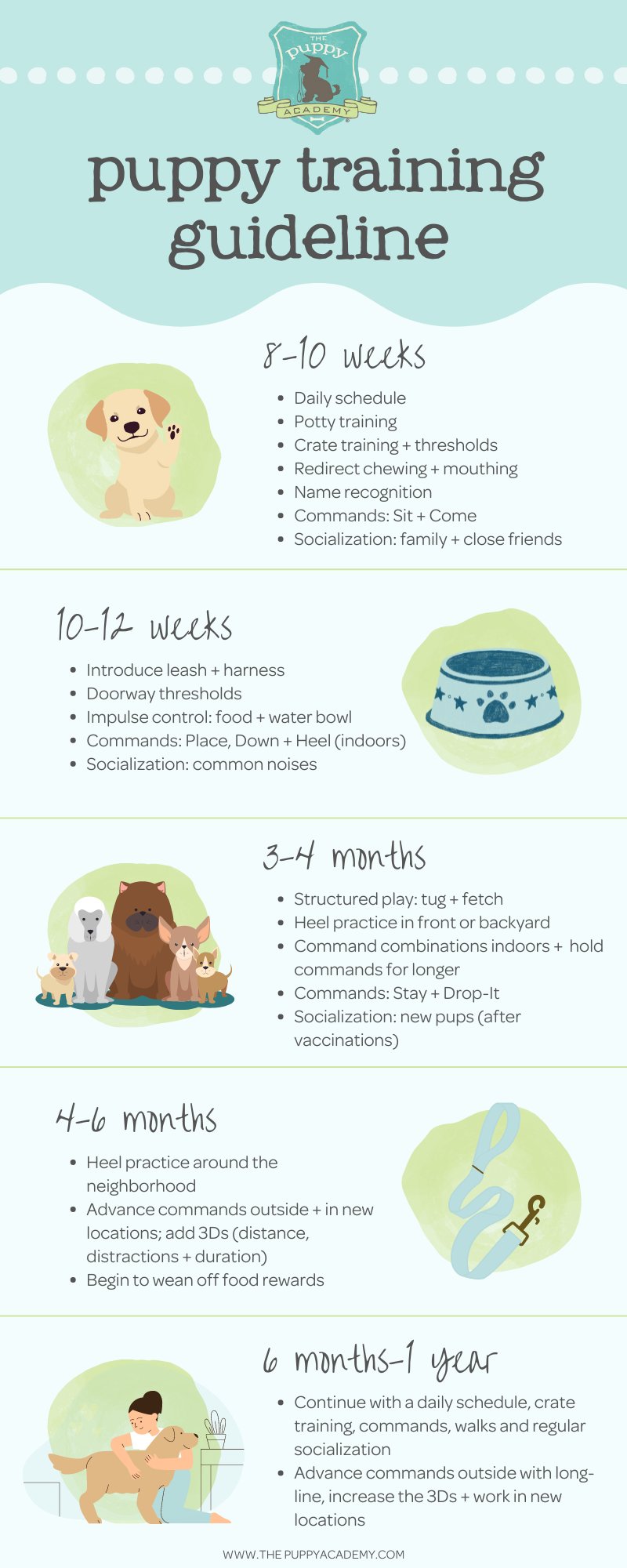
A rough age-based plan helps owners set realistic expectations and avoid pushing a puppy too fast. Every dog develops at a different pace, but most follow a similar progression.
Overview of puppy training by age
| Puppy age | Main focus | Key goals |
|---|---|---|
| 8–10 weeks | Bonding, basic manners | Name recognition, simple cues, gentle handling |
| 10–16 weeks | Socialization window | Positive exposure to people, places, sounds |
| 4–6 months | Structure and consistency | Reliable potty habits, simple leash skills, impulse control |
| 6–9 months | Adolescent challenges | Reinforcing cues, managing energy, polite greetings |
| 9–18 months | Advanced manners and life skills | Solid recall, loose-leash walking, calm behavior in public |
Training should stay short and fun at every stage. Sessions of 3–5 minutes, repeated several times a day, are usually more effective than long, formal lessons. Owners can gradually increase difficulty only when the puppy responds reliably in quiet, low‑distraction environments.
8–10 weeks: settling in at home
The period from 8–10 weeks is primarily about adjustment rather than formal training. A puppy is leaving its mother and littermates, learning a new environment, and forming first impressions that will shape future behaviour.
The main goals in this stage are:
- Creating a predictable routine for feeding, toilet breaks, play, and sleep
- Introducing safe confinement areas, such as a crate or puppy pen
- Beginning gentle handling and basic house rules
- Providing calm, positive experiences in the home
Short, frequent sessions work best. Puppies at this age have very limited attention spans, so training is woven into daily life rather than set “lessons.” For example:
- Carry the puppy to the toilet spot after waking, eating, and playing
- Reward calm behaviour, such as sitting before being picked up
- Pair new experiences (vacuum noise, doorbell, visitors) with treats and praise
Focus on safety and confidence. Avoid overwhelming situations, rough play with children, or long outings. A secure, low-stress start in the home environment helps the puppy feel safe and ready to learn more structured skills in the coming weeks.
Name recognition, bonding, and recall games
Name recognition is one of the earliest skills a puppy can learn, often from day one at home. Say the puppy’s name in a cheerful tone, then immediately offer a tiny treat or gentle praise. Repeat several short sessions each day. The goal is for the puppy to snap attention to the person whenever the name is heard, not to come from a distance just yet.
Bonding develops through calm, predictable interaction. Short play sessions, hand-feeding part of meals, and quietly sitting with the puppy all help build trust. Avoid overwhelming the puppy with constant handling; several brief, positive interactions are more effective than long, tiring ones.
Simple recall games for very young puppies
Early recall training can begin indoors once the puppy is comfortable at home. Keep sessions light and fun:
- Sit a few steps away, say the puppy’s name once, then a clear cue such as "come" in a happy voice.
- Encourage movement with clapping or gently patting the legs.
- When the puppy arrives, reward with a high-value treat, praise, or a quick play.
- End the game after a few successful repetitions to keep enthusiasm high.
At this age, recall is a game, not a test. The priority is to build a strong association: coming when called always leads to something good.
House rules, gentle handling, and routines
A puppy benefits from clear house rules from the first day at home. Early consistency prevents confusion later. Decide in advance:
- Where the puppy is allowed (sofa, bed, stairs)
- Where the puppy sleeps
- Potty area and schedule
- Mealtime rules (no begging at the table, waiting for a release cue)
Everyone in the household should use the same words and expectations. For example, if one person allows couch time and another does not, the puppy will learn to ignore boundaries.
Gentle handling should also begin immediately. Short, positive sessions help a young puppy accept everyday contact:
- Touch ears, paws, tail, and collar, then reward
- Briefly hold the puppy for a soft hug, then release
- Pair every handling exercise with a small treat or calm praise
Regular routines create security and reduce anxiety. Aim for a predictable pattern of:
- Wake-up, potty, and breakfast
- Play and training, then rest
- Short outings, then quiet time
By linking calm behavior to rewards and following the same daily rhythm, a puppy learns what to expect and settles into good manners more quickly.
10–12 weeks: building daily good habits
Daily habits formed at 10–12 weeks often shape a puppy’s long-term behavior. At this age, puppies are usually more alert and ready to practice simple, consistent routines throughout the day.
Focus on short, predictable patterns:
- Wake-up routine: Calmly take the puppy outside, praise for toileting, then offer breakfast.
- Meal times: Feed at the same times daily to support house training and digestion.
- Rest and play cycles: Alternate 15–20 minutes of play or training with quiet time in a crate, playpen, or bed.
- Chew management: Provide safe chews and toys and calmly swap forbidden items for approved ones to prevent destructive habits.
Basic manners can be woven into daily life rather than taught only in “sessions”:
- Sit before meals, going outside, or getting a toy.
- Gentle four paws on the floor before greeting people.
- Brief name recognition and recall games indoors.
Keeping sessions very short, positive, and frequent helps the puppy succeed. Puppy-safe social exposure—new surfaces, sounds, and friendly people—should be paired with treats and praise so the puppy learns that everyday experiences are safe and rewarding.
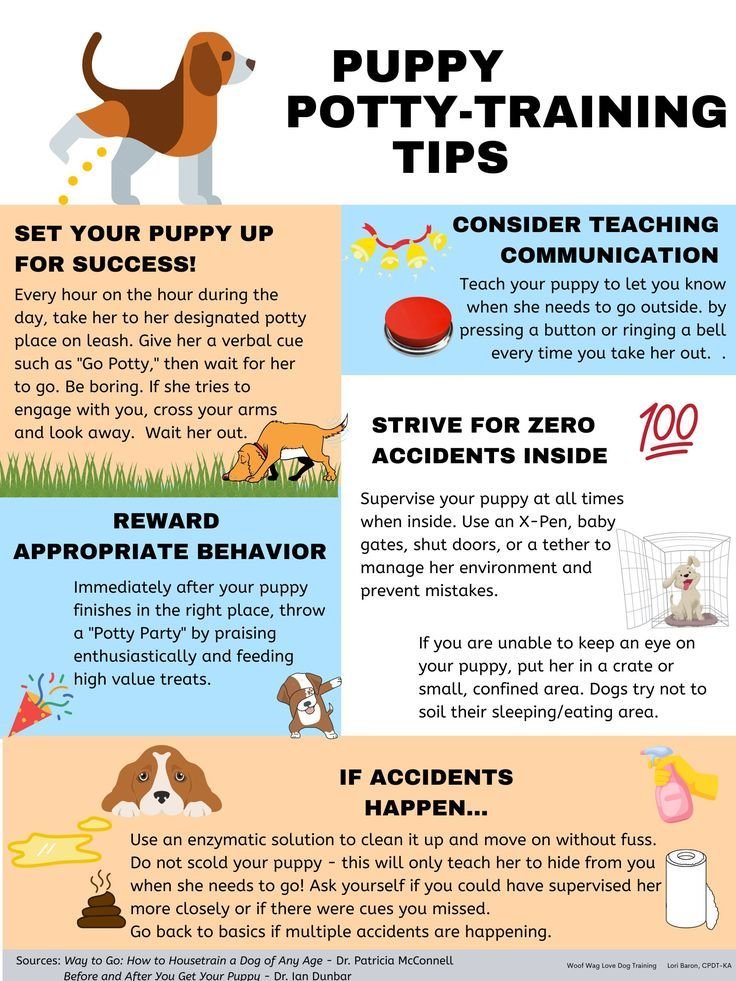
Potty training steps and accident prevention
Effective potty training starts as soon as a puppy comes home, usually around 8 weeks old. Puppies have tiny bladders, so success depends on a predictable routine and close supervision.
Step-by-step potty training routine
- Choose a bathroom spot outside and always walk the puppy to the same area.
- Take the puppy out frequently:
- First thing in the morning
- After every meal and drink
- After play sessions
- After naps
- Before bedtime
- Use a consistent cue phrase, such as “go potty,” as the puppy starts to eliminate.
- Reward immediately with praise and a small treat the moment the puppy finishes. Delayed rewards are confusing.
- Keep a schedule for meals and outings to predict potty times more easily.
Preventing accidents in the house
Accidents are more likely when puppies have too much freedom too soon. To reduce mistakes:
- Supervise closely in the home; use baby gates or a playpen.
- Limit access to carpets and rugs during early training.
- Watch for signs such as circling, sniffing intensely, or suddenly wandering off.
- If an accident starts, calmly interrupt and take the puppy outside to finish.
- Clean indoor accidents with an enzymatic cleaner to remove lingering odors that invite repeat marking.
With consistent management and quick rewards for outdoor success, most puppies begin to understand house rules within a few weeks.
Crate training basics and quiet time
Crate training introduces a puppy to a safe, den-like space and can begin as soon as the puppy comes home, usually around 8 weeks old. Early crate work supports potty training, prevents destructive behavior, and helps the puppy learn to settle.
To build a positive association, the crate should never be used as punishment. Instead, owners can:
- Place the crate in a quiet area of the home, near family activity but not in the middle of it.
- Add a comfortable bed and a safe chew toy.
- Feed the puppy meals or treats in the crate with the door open at first.
- Close the door for short periods while the puppy is calm, gradually increasing duration.
Planned quiet time in the crate teaches the puppy to relax and be alone. Short rest periods after play, training, or meals can prevent overtired, fussy behavior. Many puppies protest briefly at first; responding to calm behavior with release and attention, while ignoring brief whining, helps the puppy learn that settling quietly brings rewards.
Night-time crate use also supports a consistent sleep routine and makes overnight potty breaks more manageable.
3–4 months: core manners and focus work
By 3–4 months of age, many puppies are ready for more structured manners and focus training. Short, upbeat sessions help the puppy learn to listen even with distractions and to control impulsive behavior.
Key skills to build at this age include:
- Name recognition under distraction: Say the puppy’s name once, and reward eye contact with a treat or praise.
- Hand-targeting (touch): Teach the puppy to boop a hand with the nose, which later helps with recall and loose-leash walking.
- Polite greetings: Reward four paws on the floor when people approach; calmly remove attention when the puppy jumps.
- Impulse control games: Simple exercises like “leave it,” waiting for a food bowl, or pausing at doorways.
Sessions should stay very short—often 3–5 minutes—several times per day. Puppies at this age have limited attention spans, so training is most effective when the puppy is:
- Not overly tired or hyper
- Recently pottied
- In a relatively quiet environment
Focusing on calm behavior, eye contact, and responding to a name during this stage lays the groundwork for more formal obedience skills in the coming months.
Sit, down, and coming when called
Basic position cues such as sit, down, and come can be introduced as early as 8–10 weeks, then strengthened between 3–4 months as the puppy’s focus improves. Short, upbeat sessions prevent mental fatigue and help the puppy enjoy training.
For sit and down:
- Use a small treat to lure the puppy’s nose up for a sit, or down between the paws to encourage lying down.
- Mark the moment the puppy’s bottom hits the floor or elbows touch the ground with a clear word like “yes,” then reward.
- Keep sessions to 3–5 repetitions, a few times per day, in low-distraction areas.
For coming when called (recall):
- Start indoors or in a fenced yard, using the puppy’s name followed by a happy cue such as “come.”
- Reward generously with high-value treats, praise, or a quick play session every time the puppy responds.
- Avoid calling the puppy for anything unpleasant (like ending all play) so the cue stays positive and reliable.
Consistent practice during this age window builds automatic responses that are easier to maintain during adolescence.
Loose leash walking skills and focus
Even very young puppies can begin learning loose leash walking and basic focus skills as soon as they come home, usually around 8 weeks old. The goal is not a perfect heel, but building good habits and teaching the puppy that staying near a handler is rewarding.
Start in a low‑distraction area, such as indoors or in a quiet yard. Clip on a lightweight harness and short leash, then:
- Reward the puppy for choosing to walk beside the handler
- Mark and treat whenever the leash stays slack
- Take a step, stop, and feed a treat at the handler’s side
- Change direction often so the puppy learns to follow
Focus games make later leash training much easier. Helpful exercises include:
- Name recognition: say the puppy’s name once, reward eye contact
- Watch me: cue a brief look at the handler’s face, then treat
- Hand target: encourage the puppy to touch a hand with its nose
Sessions should be short (1–3 minutes), frequent, and positive. If the puppy pulls, remain still and wait for the leash to slacken before moving again, so pulling never earns progress.
4–6 months: impulse control and manners
At 4–6 months, many puppies begin to test boundaries. Hormones, growing confidence, and higher energy levels make impulse control and manners training especially important.
Puppies at this age can usually handle slightly longer training sessions, about 5–10 minutes, a few times per day. The goal is to teach that calm, polite behavior is more rewarding than jumping, barking, or grabbing.
Key manners to focus on include:
- No-jump greetings: Reward the puppy only when all four paws are on the floor; ask visitors to ignore jumping.
- Polite mealtime behavior: Waiting briefly before the bowl is placed down, no grabbing from hands.
- Doorway manners: Sitting and waiting for a release cue before going through doors or gates.
- Calm handling: Reward the puppy for staying relaxed during brushing, nail checks, and gentle restraint.
Short "settle" periods on a mat or bed help puppies learn to switch off after excitement. Consistency, clear rules, and generous rewards for calm choices build strong impulse control that supports more advanced training later on.
Stay, wait, leave it, and drop it
Impulse-control cues such as stay, wait, leave it, and drop it can begin as early as 8–10 weeks, using very short, positive sessions.
For stay and wait, start once the puppy knows a basic sit. Ask for a sit, say “stay” or “wait” one time, pause for one second, then reward. Gradually increase:
- Duration: add a second at a time.
- Distance: take one step back, then return to reward.
- Distractions: practice in quiet rooms before moving to busier areas.
Teach leave it to prevent grabbing unsafe items. Hold a treat in a closed fist, say “leave it,” wait for the puppy to back off or look away, then reward from the other hand. Over time, move to items on the floor, always on a leash for safety.
Use drop it for items already in the mouth. Offer a high-value treat, say “drop it,” and reward when the puppy releases the object. Trade up frequently so the puppy learns that letting go pays off rather than losing possessions.
Short, frequent practice and consistent wording help puppies build reliable control by 4–6 months of age.
Calm greetings without jumping up
Puppies can begin learning polite greetings from the moment they come home, usually around 8 weeks of age. The goal is to teach that four paws on the floor makes good things happen, while jumping never gets attention.
A simple approach is:
- Prepare rewards – keep treats or a favorite toy nearby.
- Approach calmly – step toward the puppy; if the puppy jumps, stay still and withhold attention.
- Reward standing or sitting – the moment all four paws are on the floor, quietly praise and offer a treat.
- Add a cue – when the puppy remains grounded, say a calm word such as “gentle” or “say hi,” then reward.
- Practice with visitors – ask friends to follow the same rules: ignore jumping, reward calm.
Consistency is essential. Everyone in the home should:
- Avoid pushing the puppy down or shouting.
- Turn away or step back when jumping starts.
- Greet and reward only when the puppy is sitting or standing politely.
Over time, the puppy learns that calm behavior reliably leads to attention, touch, and treats, while jumping does not pay off.
6 months and beyond: teen dog training
Teenage dogs often forget their manners, even if early training went well. Around 6–18 months, dogs experience a mix of hormonal changes, high energy, and growing confidence, which can lead to selective hearing and boundary testing.
At this stage, training should focus on consistency and impulse control rather than teaching a large number of new cues. Helpful priorities include:
- Reinforcing sit, down, stay, and come around increasing distractions
- Practising loose-lead walking in more challenging environments
- Continuing calm greetings with both people and other dogs
- Teaching the dog to settle on a mat or bed
Short, frequent sessions work best. Reward reliable choices (checking in, coming when called, settling) and avoid giving attention for unwanted behaviours such as jumping, mouthing the lead, or excessive barking.
Adolescence is also an ideal time to:
- Enrol in teen dog or intermediate training classes
- Increase structured enrichment such as sniff walks, puzzle feeders, and scent games
- Revisit crate or confinement training to help manage overexcitement
With patient, consistent training, most teenage behaviours fade and solid adult habits replace them.
Strengthening cues in real life settings
Daily life is the best classroom for a growing puppy. Once a cue is reliable indoors, it needs to be carefully strengthened in real-world environments where distractions are stronger.
Gradually increasing difficulty
To avoid confusion, increase challenges in stages instead of jumping from the living room to a busy park. A simple progression might be:
- Quiet room indoors
- Other rooms with mild distractions
- Enclosed yard
- Quiet sidewalk
- Busier parks or pet-friendly areas
At each stage, reward the puppy for any correct response to the cue, even if the response is slightly slower at first.
Using real-life rewards
Outside, food is helpful but not the only motivator. Real-life rewards teach the puppy that listening pays off in everyday situations. For example:
- Asking for a sit before crossing the street, then moving forward as the reward.
- Calling a come at the park, feeding a treat, then releasing back to play.
- Requiring a brief stay before greeting people or other dogs.
By pairing cues with meaningful outcomes in daily routines, the puppy learns that obedience is worthwhile everywhere, not only during formal training sessions.
Preparing for sports and advanced skills
Age guidelines for sport foundations
Puppies can begin sport foundations surprisingly early, as long as the work is age‑appropriate and low impact. Between 8–16 weeks, focus on building motivation, confidence, and body awareness rather than physical difficulty or repetitive impact.
Suitable early foundations include:
- Hand targets and nose targets
- Rear‑end awareness (stepping on low platforms, pivoting around objects)
- Moving over safe, low surfaces (cavaletti poles on the ground, wobble boards with strong support)
- Short shaping games that encourage focus and problem‑solving
High‑impact activities such as jumping at full height, hard stops, and repetitive tight turns should wait until growth plates are nearly closed, usually around 12–18 months depending on size and breed.
Building advanced skills safely
Advanced skills start as simple versions in puppyhood. Complex behaviors like agility contacts, scent work, or obedience heeling can be broken into tiny, puppy‑friendly pieces:
- Teach position changes (sit, down, stand) with good form
- Start flatwork for agility: attention, turns around cones, following body cues
- Introduce scent games using food or toys hidden in easy places
Sessions should be very short, end on success, and use high‑value rewards. Frequent rest, varied surfaces, and careful observation of fatigue signals help protect growing joints while still preparing the puppy for future sports and advanced training.
Core training topics every puppy should learn
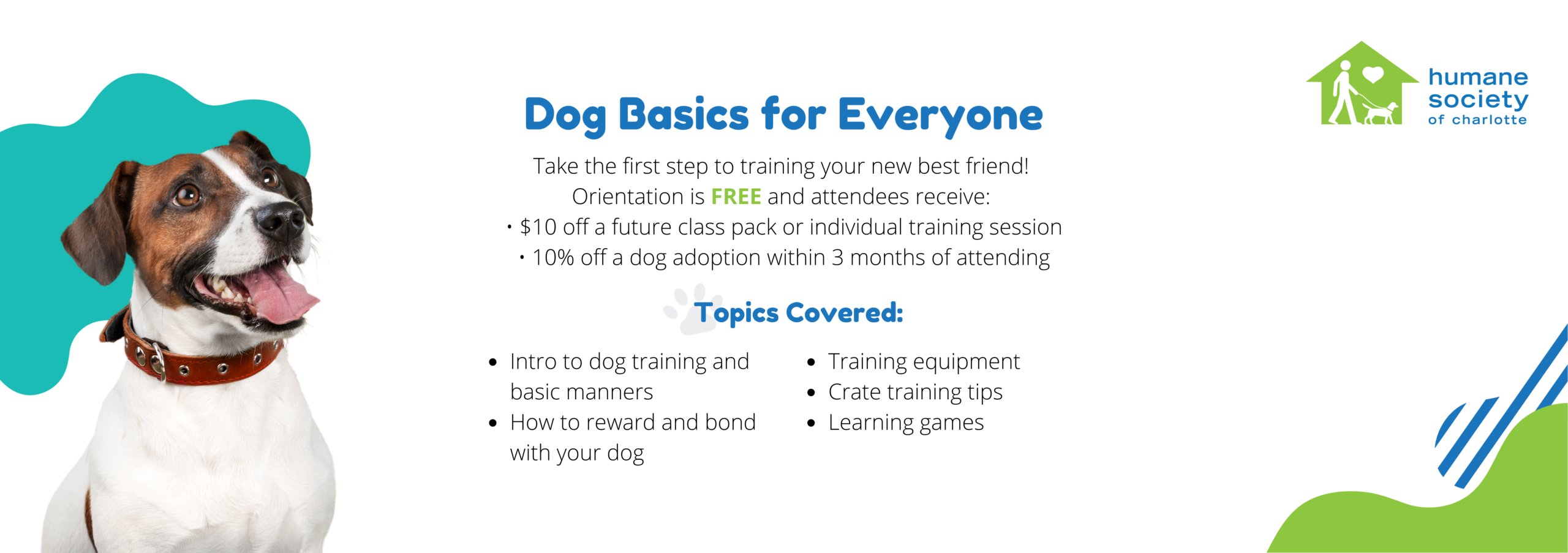
Every puppy, regardless of breed or future role, benefits from the same foundational skills. Many can begin as early as 8 weeks old, using gentle, reward-based methods.
Key early-life training topics include:
- Name recognition and engagement – teaching the puppy to look to the owner when hearing their name and to choose the human over distractions.
- Handling and grooming acceptance – calmly introducing touch to paws, ears, mouth, tail, and collar, plus short, positive sessions with brushes and nail tools.
- Basic manners – simple cues such as sit, down, stay, come, and leave it, practiced in short, fun sessions.
- Leash foundations – getting comfortable with a collar or harness and learning to walk near the handler without pulling.
- Calm alone time – practicing short, positive separations to prevent separation-related problems later.
- Polite greetings – rewarding four paws on the floor and calm behavior instead of jumping, mouthing, or nipping.
Focusing on these core topics early builds confidence and self-control, making more advanced training smoother and less stressful for both puppy and owner.
Housebreaking and toilet routines by age
Early potty foundations: 8–12 weeks
Very young puppies have limited bladder control, so owners should focus on frequent, gentle routines rather than strict expectations. At 8–12 weeks:
- Offer toilet breaks every 30–60 minutes when awake
- Always go to the same outdoor spot if possible
- Take the puppy out immediately after waking, playing, and eating
Reward with praise and a small treat as soon as the puppy finishes. At this age, accidents indoors are normal and should be cleaned quietly without punishment.
Building a routine: 3–6 months
From around 12 weeks, many puppies can start holding their bladder a little longer. A simple guide is age in months + 1 for the maximum hours between toilet breaks during the day (with a conservative cap of 4–5 hours for young puppies).
Owners can now:
- Introduce a clear cue word such as "toilet" or "go potty"
- Keep a consistent feeding schedule to predict bathroom times
- Supervise closely indoors and limit free access to large areas
Most puppies are reliably housebroken closer to 5–6 months if routines and rewards remain consistent.
Fine‑tuning habits: 6 months and beyond
By 6 months, many dogs can last longer between breaks, but regular outings are still important for health and behavior.
At this stage, owners can:
- Gradually extend time between toilet trips
- Phase out food rewards, keeping praise and occasional treats
- Address any lingering issues (night accidents, marking) with a vet or trainer
Consistent schedules, clear cues, and patient supervision are the keys to lifelong toilet reliability.
Crate comfort, alone time, and sleep habits
Young puppies can begin learning crate comfort from 8 weeks of age. The goal is to create a calm, safe space rather than a punishment area.
To build positive crate associations:
- Feed some meals or treats in the crate with the door open
- Add soft bedding and a safe chew toy
- Start with very short periods of the door closed (seconds to a few minutes), then gradually increase
Alone-time training should start early as well, in very small doses:
- From 8–10 weeks: step out of sight for a few seconds, return before the puppy becomes distressed
- By 10–14 weeks: extend to a few minutes, then 10–15 minutes, pairing departures with a chew or stuffed food toy
- After 14 weeks: slowly build toward 30–60 minutes of calm alone time during the day
Healthy sleep habits also develop in the first months. Most young puppies need 18–20 hours of sleep per day. Short play or training sessions should be followed by rest in the crate or a puppy-safe pen. Consistent nighttime routines, including a final toilet break and quiet settling period, help puppies sleep longer between bathroom trips as bladder control improves.
Safe socialization with people, dogs, places
Early socialization can start as soon as the puppy comes home (usually 8–10 weeks), as long as safety is the priority. The goal is to create many calm, positive experiences, never to overwhelm or force interaction.
People
Introduce the puppy to a variety of people in a controlled way:
- Adults and supervised children
- People wearing hats, glasses, uniforms, or carrying bags
- People moving differently (using canes, wheelchairs, strollers)
Ask visitors to let the puppy approach at its own pace, offer treats, and avoid loud voices or grabbing. Short, pleasant encounters help prevent fear of strangers later.
Dogs and places
Until vaccinations are complete, avoid high-risk areas such as dog parks or busy pet-store floors. Instead, focus on:
- Safe dog contacts: healthy, friendly, fully vaccinated dogs belonging to friends or family
- Low-germ locations: carried in arms through town, on a blanket in a quiet park, car rides, outdoor cafés where the puppy observes at a distance
Pair new sights, sounds, and surfaces (grass, pavement, vet lobby) with rewards and praise so the puppy learns unfamiliar environments are safe.
Handling practice for grooming and vet care
Puppies should begin gentle handling practice as soon as they come home, often around 8 weeks old. Early work helps grooming sessions and veterinary visits feel routine instead of frightening.
Focus on very short, positive sessions:
- Gently touch ears, paws, tail, chest, and belly while offering small treats
- Briefly open the mouth, lift lips, and touch teeth to prepare for dental care
- Hold the collar, clip it on and off, and lightly touch around the neck
- Run a soft brush over the coat for only a few strokes at first
If the puppy wriggles or looks worried, pause, reduce intensity, and reward any calm behavior. The goal is not restraint, but building a pleasant association with being handled.
A simple routine several times per week works well:
- Invite the puppy onto a mat or bed
- Give a treat, then touch one body area for 2–3 seconds
- Reward again and release the puppy
Regular, reward-based handling makes nail trims, ear cleaning, and veterinary exams faster, safer, and far less stressful throughout the dog's life.
Preventing nipping, chewing, and jumping
Puppies begin exploring the world with their mouths and paws from as early as 8 weeks, so prevention should start immediately.
Stopping nipping and mouthing
Nipping is normal play behavior, but it must be consistently redirected so it does not become a habit.
Useful strategies include:
- Provide a variety of safe chew toys and swap hands or clothing for a toy the moment teeth touch skin
- Interrupt hard nips with a brief, calm "ouch" and immediately end attention for 20–30 seconds
- Avoid rough play with hands that encourages grabbing and biting
- Reward gentle interaction and calm behavior with treats or praise
Consistency from all family members is essential so the puppy receives a clear message.
Managing chewing and jumping
Chewing peaks during teething (around 3–6 months), but start teaching rules from day one.
- Puppy‑proof the environment by removing shoes, wires, and children's toys from reach
- Offer legal chew items and reinforce the puppy for choosing those
- Use baby gates or pens to limit access when supervision is not possible
Jumping can be reduced by:
- Ignoring the puppy when it jumps and only giving attention when all four paws are on the floor
- Asking for a sit before greetings and rewarding the sit heavily
Early, calm redirection helps the puppy learn appropriate ways to seek attention and relieve energy.
Training methods that work best for puppies
Puppies respond best to gentle, consistent methods that focus on rewarding desired behavior instead of punishing mistakes. At a young age, training sessions should be short, upbeat, and tailored to a puppy's limited attention span.
How to use positive reinforcement correctly
Positive reinforcement means rewarding wanted behavior so the puppy is more likely to repeat it. To use positive reinforcement effectively, timing, consistency, and reward choice matter.
Reward the puppy within 1–2 seconds of the correct behavior. A delayed treat or praise confuses the puppy about what earned the reward. Use a marker such as a clicker sound or a clear word like "Yes!" to pinpoint the exact moment the puppy does the right thing.
Keep rewards small and motivating:
- Soft, pea-sized treats
- Gentle praise in a happy tone
- Brief play with a toy
- Access to something the puppy wants (going outside, greeting a person)
Be consistent with cues and rewards. Everyone in the household should use the same words and reward the same behaviors. End training on a success, and keep sessions short (1–3 minutes) to match a young puppy's attention span.
Gradually reduce food rewards as the puppy improves, but continue to offer praise and occasional treats so the behavior stays strong.
Why punishment and yelling can harm learning
Harsh methods such as yelling, leash-jerking, or physical punishment can seriously undermine a puppy's ability to learn. Young dogs are still figuring out how the world works; when training feels frightening, they often become anxious or shut down instead of understanding what is expected.
Punishment tends to teach a puppy what not to do without showing what to do instead. As a result, many puppies simply learn to avoid the person, the place, or the situation where they were punished. This can damage the bond between puppy and caregiver and may lead to fear-based behaviors.
Common problems linked to harsh corrections include:
- Increased anxiety and stress
- Submissive urination or hiding
- Defensive behaviors, including growling or snapping
- Slower learning and poor focus
From a training standpoint, an upset or frightened puppy cannot concentrate or process new information effectively. Calm, reward-based methods are far more effective because the puppy feels safe, motivated, and eager to try again.
Keeping training sessions short and fun
Puppies learn best in short, playful bursts, not long, serious lessons. Young puppies have very limited attention spans, so frequent mini-sessions help prevent frustration and keep training positive.
Aim for sessions of about 2–5 minutes several times per day rather than one long block. End while the puppy is still engaged so the puppy looks forward to the next round instead of feeling tired or pressured.
To keep training fun and motivating:
- Mix easy cues the puppy already knows with one new skill
- Use high-value treats, toys, or praise as rewards
- Incorporate training into everyday activities (before meals, during walks, before play)
- Add simple games, such as "find it," name recognition, or short recall runs
If a puppy starts sniffing, wandering away, or scratching, it usually indicates mental fatigue. At that point, give a cheerful release cue, offer a short play break, and try again later. Maintaining a light, game-like atmosphere encourages the puppy to see training as enjoyable time with the owner.
Being consistent with cues, rules, and timing
Consistency helps puppies understand what is expected and prevents confusion. Every person who interacts with the puppy should use the same words, rules, and timing.
Use the same cues every time
Choose simple cues and stick to them. For example:
- "Sit" (not "sit down" one day and "park it" the next)
- "Down" for lying down, not getting off furniture
- "Off" for getting down from furniture or people
Inconsistent wording can slow learning and lead to unreliable responses.
Keep household rules uniform
Puppies learn faster when rules never change. Decide in advance:
- Is the puppy allowed on the sofa or bed?
- Where is the puppy allowed to sleep?
- When and where is the puppy fed?
If one person allows jumping on guests while another corrects it, the puppy receives mixed signals and the behavior becomes harder to change.
Time rewards correctly
Reward timing is critical. Treats, praise, or play should arrive immediately after the desired behavior—ideally within 1–2 seconds. Delayed rewards teach the puppy to associate the reward with whatever it is doing at that later moment, not with the behavior the owner intended.
Practicing skills in different environments
Puppies often behave perfectly at home but seem to "forget" everything in a new place. This happens because puppies do not automatically generalize skills. A cue learned in the kitchen needs to be relearned, step by step, in other locations.
Practicing in different environments helps a puppy understand that "sit" means sit everywhere, not only on the living room rug.
Why changing environments matters
Introduce new locations gradually so the puppy is not overwhelmed. A simple progression could be:
- Quiet indoor room (few distractions)
- Other rooms in the home (hallway, bedroom)
- Backyard or garden
- Quiet street or driveway
- Busier sidewalks, parks, or pet-friendly stores
In each new setting:
- Start with easy cues the puppy already knows (sit, hand target)
- Stand closer to the puppy and use clearer body language
- Use higher-value rewards (such as soft treats) if distractions increase
- Keep sessions short and end on a successful repetition
If the puppy struggles, move back to an easier step or a calmer area and rebuild success before trying again in a more distracting place.
How to tell if your puppy is ready for more

A puppy is usually ready for more challenging training when basic tasks look easy and daily life remains calm between sessions. Owners can look for consistent performance of current skills before adding new ones.
Clear signs include:
- The puppy responds to known cues (such as "sit" or "come") correctly most of the time, even with mild distractions.
- The puppy can focus on a handler for short periods without constant treats or prompting.
- Recovery from small setbacks (such as a loud noise or a mistake in training) is quick and the puppy returns to work.
- The puppy finishes sessions with some energy left, not exhausted or shutting down.
- The puppy shows curiosity and eagerness when the training area, treats, or toys appear.
If the puppy is meeting these indicators, training can be made slightly harder by:
- Increasing distractions very gradually.
- Asking for one or two extra seconds of a known behavior (for example, a longer sit).
- Practicing in a new, low-stress location.
Progress should always be incremental so that the puppy remains confident and engaged while skills advance.
Signs your puppy is coping well with training
A puppy that is coping well with training typically looks relaxed, curious, and eager to engage, rather than tense or shut down. Several small, everyday signs can show that the pace and methods are working.
Key indicators include:
- Loose body language: soft eyes, relaxed ears and tail, and a wiggly body rather than stiff posture or cowering.
- Eagerness to participate: the puppy approaches the handler for sessions, follows willingly, and offers behaviors in anticipation of rewards.
- Short recovery from distractions: if something startles the puppy, it returns to training quickly and resumes focusing.
- Consistent appetite for rewards: the puppy still wants food, toys, or praise during sessions and does not "switch off" from rewards.
- Steady learning progress: new behaviors become more reliable over a few days, with fewer mistakes and less confusion.
- Good sleep and play: between sessions, the puppy naps, plays, and explores normally, without becoming unusually clingy or withdrawn.
When most of these signs are present, the training load is likely appropriate and the puppy is building confidence along with skills.
When to slow down, pause, or go back a step
Training should feel challenging but not overwhelming. If a puppy begins to struggle rather than learn, it is time to adjust the pace.
Clear signs training is moving too fast
Consider slowing down, pausing, or returning to an easier step when a puppy shows:
- Repeated failure to perform a cue it has previously understood
- Signs of stress: yawning, lip licking, turning away, hiding, or sudden sniffing
- Overexcitement that is hard to calm: constant jumping, grabbing, nipping
- Avoidance: walking away from the training area or ignoring treats
- Sudden loss of interest in a favorite reward
How to respond when progress stalls
If any of the above appears, it helps to:
- Shorten sessions to 2–3 minutes
- Move back to a simpler version of the behavior (for example, sit without distractions before sit outdoors)
- Increase the value of rewards (higher‑value treats or a favorite toy)
- Reduce distractions and train in a quieter space
- Give the puppy a rest, play break, or nap and try again later
Returning to an easier step does not mean failure; it is a normal part of age‑appropriate puppy training and often leads to faster progress in the long term.
Common age-related training mistakes

Many puppy training problems come from age-related misunderstandings rather than stubbornness. Owners often misread what a puppy can realistically handle at each stage.
Common age-related mistakes include:
- Expecting adult-level self-control from a very young puppy (8–12 weeks)
Puppies at this age are still learning basic body control and bladder awareness. Long sits, perfect heeling, or reliable off-leash recalls are not realistic yet. - Delaying any training until the "teenage" phase (5–8 months)
Waiting for a puppy to be older often leads to ingrained habits such as jumping, mouthing, and ignoring the name. Early, gentle guidance is more effective than trying to fix well-practiced behaviors later. - Pushing too much independence too early (10–16 weeks)
Allowing a very young puppy to roam freely or explore off leash without a recall foundation teaches that ignoring humans is an option. - Underestimating the adolescent regression (6–18 months)
Many owners assume a trained adolescent is "finished." In reality, hormones, confidence, and distractions increase, so previously learned cues often temporarily decline and need reinforcement.
Starting too late or expecting too much early
Many owners either delay training or expect advanced behavior from a very young puppy. Both approaches can cause frustration and slow progress.
Waiting until a puppy is 5–6 months old to begin any training often leads to:
- Stronger unwanted habits (jumping, mouthing, barking)
- A puppy that has never learned to focus on people
- Increased difficulty with house training and manners
By contrast, expecting too much from an 8–10 week old puppy can be equally problematic. Young puppies have short attention spans and are still adjusting to a new home. Common unrealistic expectations include:
- Perfect house training within a few days
- Long, formal training sessions
- Reliable obedience around heavy distractions
A more realistic approach is:
- Start very simple skills (name recognition, coming when called, handling, basic cues) as soon as the puppy settles in, using short, fun sessions
- Aim for progress, not perfection; puppies will make mistakes
- Increase difficulty and duration gradually as the puppy matures
Balancing early introduction of skills with age-appropriate expectations helps create steady, positive learning instead of stress for both puppy and owner.
Missing the critical socialization window
Puppies pass through a critical socialization window from roughly 3 to 16 weeks of age. During this period, the brain is especially open to new experiences. Positive exposure teaches a puppy that the world is safe and predictable.
If a puppy is kept isolated or only experiences a very limited environment during this window, the result can be:
- Lasting fear of unfamiliar people, dogs, or places
- Heightened startle responses to sounds, vehicles, or household noises
- Difficulty coping with routine changes, grooming, or veterinary visits
- Increased risk of fear-based aggression later in life
Effective early socialization does not mean overwhelming a young puppy. The goal is calm, controlled exposure to:
- Different people (ages, appearances, clothing)
- Friendly, vaccinated dogs and other animals
- Varied surfaces, environments, and sounds
- Gentle handling of paws, ears, mouth, and body
Veterinary guidance is essential to balance disease prevention with behavioral health, but completely avoiding social experiences until all vaccinations are finished often creates more behavioral problems than it prevents.
Accidentally rewarding problem behaviors
Puppies learn from every interaction, which means problem behaviors are often reinforced without anyone noticing. Early training should focus on preventing owners from accidentally rewarding actions that will later be considered unwanted.
Common ways people unintentionally reinforce problem behaviors include:
- Jumping up – looking at, talking to, or touching a puppy that jumps up teaches that jumping earns attention.
- Mouthing and biting – pulling hands away dramatically or engaging in play when the puppy bites can make biting more exciting.
- Barking and whining – responding by giving treats, toys, or freedom can teach the puppy to bark or whine for what it wants.
- Pulling on the leash – allowing the puppy to move forward when it pulls rewards the pulling with progress.
Instead, reward calm, polite behaviors:
- Give attention only when all four paws are on the floor.
- Offer a toy or chew when the puppy sits quietly instead of nipping.
- Wait for a brief pause in barking before opening doors or starting play.
- Reward a loose leash with movement and praise.
Starting this approach as soon as the puppy comes home helps build good habits before problem behaviors become ingrained.
FAQs about when to start training a puppy
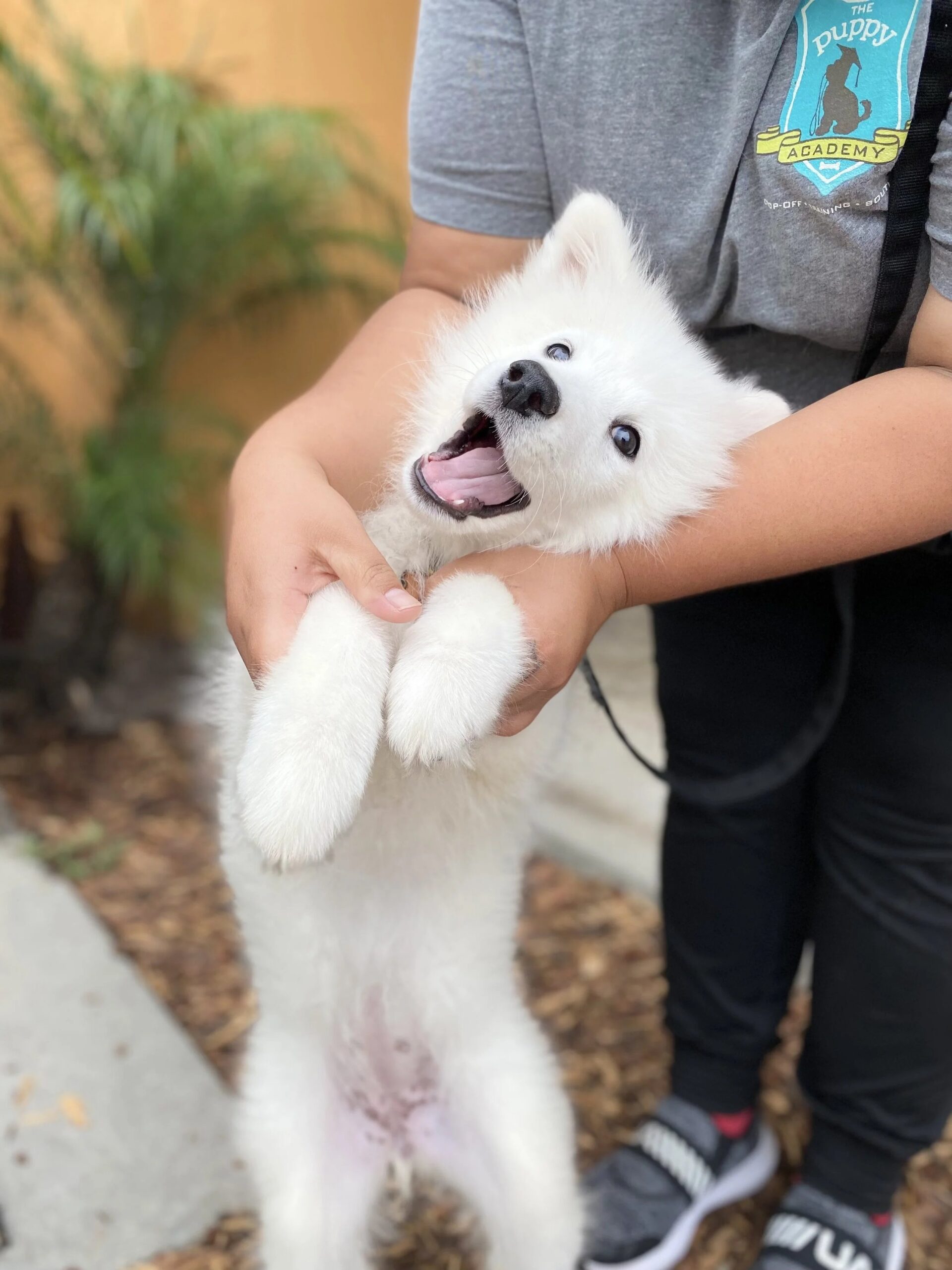
How long does basic puppy training take?
Basic puppy training skills can be acquired in approximately 4 to 8 weeks with consistent practice. However, the overall timeline depends greatly on age, breed, and frequency of practice.
Most puppies can reliably learn simple commands such as sit, lie down, recognize their name, and come within a month with 2 to 4 sessions of 5 to 10 minutes each day. Toilet training and crate training usually take longer and require 2 to 4 months of supervision and routine.
Typical Acquisition Times for Key Skills:
- Name Recognition and Focus: A few days to 2 weeks
- Sit, Lie, Come (in a distraction-free environment): 2-4 weeks
- Basic Leash Manners: 4-8 weeks of regular practice
- Toilet Training: 2-4 months (longer for small breeds)
Training is not a one-time project. Basic manners can be learned relatively quickly, but reliability in distracting environments and new places can take several months. Short, positive daily sessions and consistent household rules are key factors in accelerating progress.
What is the first cue I should teach?
For most puppies, the first cue should be useful in everyday life, easy to understand, and consistently rewardable. The two most practical first signals are:
- Name Recognition (Responding when its name is called)
- "Sit"
Name recognition is often the best starting point. A puppy that reliably turns around when its owner calls its name is much easier to train and manage. How to teach:
- Call the puppy's name once
- Mark the action the moment the puppy looks at its owner (with a clicker or a word like "Yes!")
- Give a small treat immediately
- Repeat in a short, fun session
Once the puppy consistently responds to its name, teaching "Sit" is usually the next step. "Sit" helps with manners at doors, meal times, and greetings, and gently introduces impulse control.
Complex commands such as "stay," "come," and leash manners can be introduced once the puppy confidently responds to its name and can quickly sit in response to commands.
Is my puppy too young or too old to begin?
Most puppies are not too young to begin learning. Basic training can begin as early as 8 weeks old, and can start as soon as the puppy comes home. At this age, training focuses on:
- Short, fun sessions (1-3 minutes)
- Simple commands such as name recognition, sit, and come
- Handling practice and gentle familiarization with everyday sights and sounds
It is also rare for a puppy to be too old to begin. Puppies and adolescent dogs can start or restart training at any age. Older beginners may need the following:
- A little more patience and consistency
- Correcting already formed habits










![[Photos] Fat dogs are cute! Be careful not to get too fat](https://with-my-dog.com/wp-content/uploads/2022/07/image10-5-150x150.jpg)