

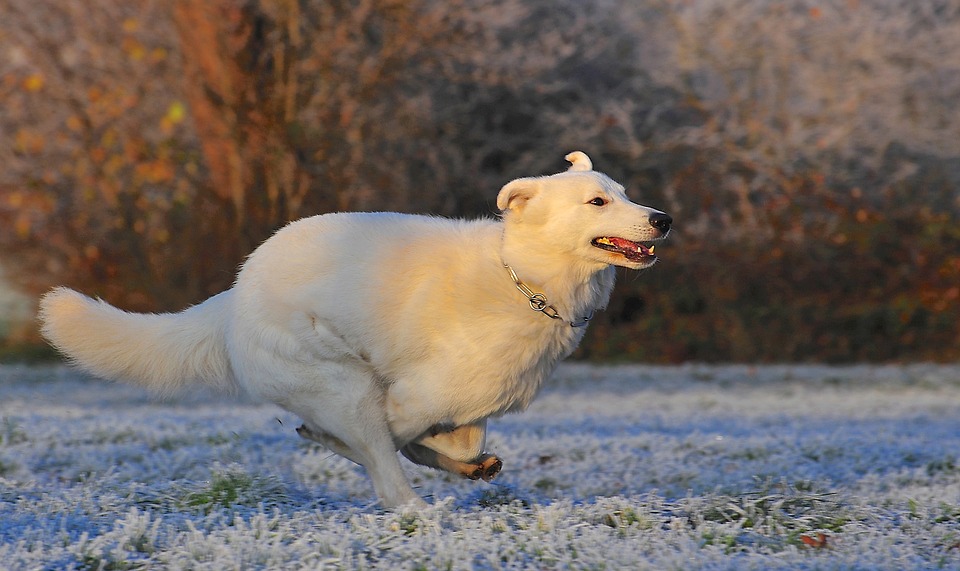
When a dog develops an allergy, the pain it goes through is unimaginable to humans.
You may have heard that humans "gradually get used to allergies," but what about dogs?
In this article, we'll discuss whether dog allergies can be cured, and what to do if they worsen.
Please use this information as a reference!
1. About Dog Allergies

Speaking of allergies that dogs can get:
・Pollen
'Allergic rhinitis' - Symptoms of sneezing and runny nose
'Allergic conjunctivitis' - Watery and itchy eyes
'Allergic dermatitis' - Redness and itching of the skin and ears
・Canine atopic dermatitis
Scratching, licking, hair loss, redness of the skin, scratches, dandruff, etc.
If the condition becomes chronic, the skin becomes dark and thick.
It is often seen in the ears, around the eyes and mouth, on the paws, between the paw pads, and in intertriginous areas.
Grain allergy
Itching around the mouth, ears, and skin, rash, fever, swelling, vomiting, diarrhea, tear stains, dandruff, hair loss, thinning hair, rough coat, etc.
・Ordinary scabies
Very severe itching, redness, dandruff, scratches, etc.
Often occurs on the ear margins, face, elbows, heels, and abdomen.
・Flea allergy dermatitis
Severe itching, redness, hair loss, bumps, etc.
These symptoms often occur from the base of the tail to the back.
There are a wide variety of allergy types and symptoms.
Also, as mentioned above, allergies in dogs often affect the skin.
2. Can you get used to allergies?

Can you actually get used to dog allergies?
It may be impossible to completely get used to them.
However, if you pay close attention to your dog's living environment, skin care, food, and pollen, and take appropriate measures, you may see some improvement, such as reducing the extent of skin itching and redness and slightly reducing symptoms.
For example, brushing and shampooing can remove many fleas, ticks, and pollen from your dog's body. Also, avoiding allergens in your dog's food can help prevent the onset of allergies.
The following are some of the measures you can take to prevent allergies.
3. Allergy Prevention Measures

So, how should you deal with the allergies mentioned at the beginning of this article? As we've discussed, allergies can have a variety of causes.
Let's take appropriate measures to address your dog's allergies.
Regular Shampooing and Brushing
_As briefly mentioned above, regular shampooing and brushing help keep your dog's skin healthy and maintain its protective function. Brushing not only removes allergens and unwanted hair from the body, but also has the effect of massaging the skin.
However, shampoos can be too harsh for dogs with sensitive skin. Consult your veterinarian about shampooing frequency and brand.
Also, moisturize after shampooing.
Removing pollen and house dust from the air
Keeping your living environment clean helps prevent allergies. Other measures you can take include washing your dog's bedding and clothes regularly, cleaning the room frequently, and using an air purifier.
You can also reduce the number of allergens you bring into your home by brushing your dog after walks and dusting off its clothes before entering the house.
Switch to Grain-Free Dog Food
Choose grain-free dog food that does not contain grains that can cause allergies. Also, choose nutritious dog food that contains high-quality protein.
Protein is important for dog health, and animal protein is especially recommended. Animal protein is ideal for dogs, which are naturally carnivores.
Avoid walking your dog on days and times when pollen counts are high.
Examples include days with high maximum temperatures, strong winds, low humidity, and the day after rain. Pollen tends to be more likely to spread around noon and around 6 p.m., so be careful.
Wear dog clothes when walking
Since your dog's fur is constantly susceptible to pollen, it's a good idea to protect it with clothes to prevent pollen from directly contacting it. When you return from a walk, remove your dog's clothes outside to avoid bringing pollen indoors.
4. What if my dog allergies get worse?

If your dog's allergies worsen instead of getting used to the allergy, please take him to your veterinarian immediately. Get accurate advice, address your dog's allergies seriously, and work to improve them.
There are also times when medication is necessary. In the early stages, a few medications are effective, but in severe, chronic atopic dermatitis, a mixture of up to 10 different medications may be needed over the long term.
By compounding multiple medications into powder, you can reduce the dosage of each medication, allowing for long-term medication without worrying about side effects.
As allergy symptoms improve, medication dosage can be reduced, allowing treatment to be maintained at less than one-third of the initial dose. For medication to be effective, it must be taken orally three times a day.
Most medications are broken down and excreted in the body within 6 to 8 hours, so to maintain their effectiveness, medication must be taken orally at least three times a day.
If your dog has a food allergy, immediately stop feeding it the allergen food. Changing dog food, for example, will often lead to better results than relying on medication.
If your dog has an allergic reaction, be sure to check carefully that the dog food you buy in the future does not contain any allergens.
5. Summary

What did you think?
Just like humans, dogs suffer from various allergies, and when they do, they struggle with itching and poor health. While it's difficult to completely cure an allergy, it's possible to make an effort to get your dog used to it.
However, please treat your dog with love, with the mindset of "curing" it, rather than "getting it used to" it.






![5 sites for finding foster homes for rescued dogs and cats [Basic information before rescuing]](https://with-my-dog.com/wp-content/uploads/2021/09/andriyko-podilnyk-M4NYOsSre6g-unsplash-150x150.jpg)








![[Recommended for males] Cool dog names](https://with-my-dog.com/wp-content/uploads/2022/07/image1-36-300x200.jpg)


![[Choosing dog food for health] 5 recommended low-fat dog foods](https://with-my-dog.com/wp-content/uploads/2022/07/image4-4-300x262.png)