
Explaining the ingredients needed for homemade dog food and foods that should not be made with it!


Many dog owners are probably thinking about making their own dog food.
Recently, more and more dog owners are making their own dog food, wanting to feed their dogs healthy and delicious food. However, dog food goes into your dog's mouth. Making homemade dog food requires proper knowledge.
In this article, we explain the nutrients necessary for homemade dog food and foods to avoid. Use this as a reference and make homemade dog food that you can safely feed your dog!
Pros and Cons of Homemade Dog Food
While commercially available dog food has the advantage of being formulated with a carefully calculated amount of nutrients your dog needs, it also has the disadvantage of not knowing what ingredients are used.
Homemade dog food is safe and secure, but there are some things you need to be careful of. Here, we'll explain the pros and cons of homemade dog food.
Benefits of Homemade Dog Food
The biggest benefit of homemade dog food is that you can feed your dog a diet tailored to its physical condition and age.
For example, you could use commercially available dog food designed to meet your dog's nutritional needs based on its age or to accommodate allergies. However, homemade food allows you to control the details, such as selecting ingredients and considering the nutritional balance that best suits your dog.
Another benefit of homemade food is that it provides ample fluid intake. Furthermore, by using natural ingredients and no additives, you can expect the following benefits:
- Restores shine to coat and improves coat condition
- Reduces bad breath and body odor
- Improves intestinal health and improves overall health
Just like humans, what we eat can affect our health.
Disadvantages of Homemade Dog Food
The disadvantage of homemade dog food is that it's extremely time-consuming. Even if you have a lovely dog, it can be a hassle to feed it every day.
However, homemade dog food needs to be fed fresh, so it generally cannot be prepared. Once made, it's best to feed it within a few hours. This difficulty in storing homemade dog food can also be considered a disadvantage.
Homemade dog food is also not suitable for transport. It's not recommended for travel. In particular, avoid storing or transporting it for long periods of time on hot days.
Furthermore, making homemade dog food requires knowledge of nutrition, such as whether dogs can eat the same food as humans. This is a health method that should be practiced by pet owners with ample free time.
Ingredients and Nutrients Needed for Homemade Dog Food

Just like humans, dogs also need to get enough nutrients.
You make your dog's homemade dog food with your dog's health in mind, but you also need to make sure it properly covers all the nutrients it needs. Here, we'll introduce the ingredients and nutrients needed for homemade dog food.
Carbohydrates Such as Grains
Grains such as wheat and corn are typical examples of carbohydrates.
In fact, for dogs, which are primarily carnivores, the plant protein found in grains places a heavy burden on the stomach and intestines. Furthermore, many dogs suffer from wheat allergies. Therefore, it's best to avoid using grains in homemade dog food.
The most commonly used carbohydrate-containing food is white rice. White rice is easy to digest and less likely to cause allergies. However, there's no harm in feeding brown rice or mixed grains, which are considered more nutritious than white rice. However, to make it easier to digest, it's best to soften it as much as possible before feeding it to your dog.
Another good option is to use potatoes. Sweet potatoes, in particular, are sweet and a favorite food for dogs. They'll be happy to eat them. However, be careful not to give them too much, as they contain a lot of sugar.
Animal Protein Sources
Dogs' staple diet is animal protein, such as meat and fish. Dogs are more likely to digest and absorb animal protein than plant-based sources like grains.
Based on these constitutions, typical dog food ingredients are formulated with a ratio of animal protein, carbohydrates, and vegetables of 6:2:2.
When it comes to animal protein, beef, chicken, and pork are probably the first to come to mind. These meats are typical foods that dogs enjoy eating. However, while meat is enjoyed by dogs, the saturated fatty acids contained in meat can worsen skin inflammation. Avoid meat if your dog has allergies.
If your dog has allergies such as dermatitis, we recommend using foods containing unsaturated fatty acids. Unsaturated fatty acids found in venison, horse meat, and fish such as salmon contain omega-3 essential fatty acids, which help reduce skin inflammation, making them safe for allergies.
In addition, omega-3 fatty acids such as EPA and DHA are said to boost the immune system. Encourage your dog to eat foods containing unsaturated fatty acids, such as venison, horse meat, fish, and fish oil.
Vegetables and Fruits
Vegetables and fruits are essential for consuming important nutrients such as vitamins, minerals, and dietary fiber. The following are recommended ingredients for homemade dog food.
- Foods rich in vitamins and potassium
Green and yellow vegetables (carrots, pumpkin, broccoli, etc.)
- Foods rich in dietary fiber
Potatoes, mushrooms, seaweed (wakame, hijiki, etc.)
Mushrooms are said to improve intestinal health and boost immunity. Their ingredients are also available as supplements. Be sure to include them in your dog's diet.
Fruits are essential for consuming vitamins, but they also contain a lot of sugar. They can also cause indigestion and diarrhea, so be careful not to give your dog too much.
The best part of homemade dog food is being able to provide your dog with the best possible diet. However, the most difficult part is creating a nutritionally balanced diet. You can't just feed your dog whatever they eat or like.
It's important to pay attention to the ingredients so your dog gets the nutrients it needs.
Don't use! Ingredients Not Recommended for Homemade Dog Food
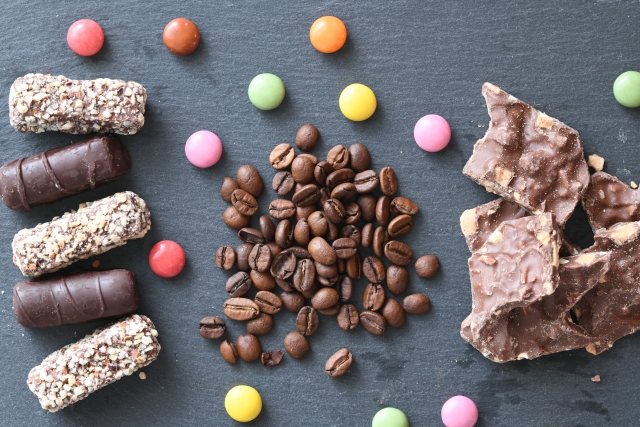
There are some ingredients that should never be given to dogs. What is delicious and appreciated by humans can be a life-threatening poison to your dog.
Here, we'll explain the foods you should avoid feeding your dog, even if they're not part of your homemade dog food.
【Foods to Avoid】Chocolate
Chocolate contains the bitter compound theobromine. Theobromine is believed to have health benefits for humans, including relaxing and anti-aging effects.
However, dogs have a low ability to break down theobromine, and ingesting it can cause severe poisoning. Initial symptoms, such as vomiting and diarrhea, appear within a few hours to half a day after eating chocolate. As symptoms progress, symptoms such as convulsions may develop, and in the worst case scenario, death may occur.
If your dog does eat chocolate, do not induce vomiting. Instead, check the amount ingested and immediately take your dog to the hospital.
【Xylitol: Foods to Avoid
Xylitol is a compound said to be beneficial for dental health. However, ingesting xylitol in dogs can cause severe symptoms of poisoning. Symptoms of poisoning include vomiting and weakness within an hour of ingesting xylitol. In severe cases, symptoms such as loss of appetite and jaundice due to acute liver failure may appear within a few hours to a few days.
Symptoms of xylitol poisoning appear relatively quickly after ingestion, so if your dog accidentally ingests it, please see a doctor immediately. Xylitol is also found in various foods and dental care products in addition to gum, so please be careful to avoid accidental ingestion.
【Foods to Avoid】Onions, Leeks, and Green Onions
Onions, leeks, leeks, and garlic are considered healthy foods for humans and may help prevent blood clots. However, eating them can cause toxic symptoms in dogs.
The flavoring component of green onions, called "allylpropyl disulfide," is an organic sulfur compound that can destroy red blood cells in dogs (hemolysis), potentially causing hemolytic anemia and potentially even death.
Symptoms of poisoning will appear after a few days. If symptoms such as blood in the urine, bleeding, or pale gums occur, take your dog to the hospital as soon as possible. Allylpropyl disulfide remains unchanged even when heated, so
it should not be given to dogs even if cooked. Soups containing onions are also dangerous.
【Foods to Avoid】Caffeine and Alcohol
Caffeine and alcohol are absorbed quickly by dogs' bodies and can easily cause poisoning, so caution is advised.
In the case of caffeine poisoning, symptoms such as increased heart rate and vomiting appear within a few hours, followed by seizures and epilepsy. Similarly, in the case of alcohol poisoning, symptoms such as lethargy, vomiting, and decreased breathing and consciousness appear within about 30 minutes. If the decrease in breathing and consciousness becomes severe, the situation can become life-threatening and extremely dangerous.
Caffeine and alcohol can be found in unexpected foods. Feeding dogs human food can actually be very dangerous for them.
Caffeine and alcohol are quickly absorbed by the body, so symptoms of poisoning appear quickly. If your dog eats or drinks something containing caffeine or alcohol, take him to the hospital immediately.
【Foods to Avoid】Shellfish
Dogs cannot digest shellfish well. Therefore, eating shellfish can cause indigestion, such as vomiting and diarrhea.
In addition, some raw shellfish are not only highly toxic, but consuming large amounts of the enzyme "thiaminase" contained in shellfish all at once or continuously can lead to a coma due to vitamin B1 deficiency. If your dog accidentally eats shellfish, seek medical help immediately.
Feeding your dog shellfish treats in moderation is a safe way to ensure it gets the nutrients it needs.
However, be careful not to give your dog too many of these treats or to mix them with human treats.
The Correct Way to Cook Homemade Dog Food
The first thing to consider when making homemade dog food is the size of the vegetables and meat you are giving them. When making homemade dog food, be sure to chop the meat and vegetables finely (you can also use a blender). Also, make sure to cut the food into bite-sized pieces so that it's easy for your dog to eat.
Leafy vegetables, fresh beef, and raw fish can be given raw. However, it's safer to cook them before feeding them to kill bacteria and parasites. Pork and chicken should always be cooked before feeding.
Also, avoid feeding your dog food immediately after cooking. It's best to feed your dog homemade dog food cooled. Even if it's warm, let it cool to body temperature before giving it to him. If you feed it hot, it could burn your dog's tongue. Be careful.
Dogs will eat raw food if given to them. They may also eat hot food. Therefore, owners should be very careful about how they cook and feed their dog.
Summary

Homemade dog food is one way that owners express their love for their dogs: they want their dogs to enjoy delicious food and live healthy lives.
However, foods that owners think their dogs will like are not necessarily safe for them.
Feeding your dog without proper knowledge could cause serious injuries or, in the worst case, death.
When feeding homemade dog food, first carefully check to make sure it does not contain any ingredients or nutrients that dogs should avoid, and then make it using menus and cooking methods that your dog will find easy to eat.



![[Latest] French Dog Names: A Guide to Cool and Stylish Names](https://with-my-dog.com/wp-content/uploads/2022/04/image1-150x150.jpg)

![[Shiba Inu Lovers Must-See] Why are Shiba Inu so cute? A summary of their cute points](https://with-my-dog.com/wp-content/uploads/2022/07/image2-26-150x150.jpg)
![[2022 Edition] What is the safest dog food? Survey of recommended popular products](https://with-my-dog.com/wp-content/uploads/2021/10/puppy-ged828c55e_1920-150x150.jpg)

![[Stupid dogs are cute] Introducing funny pictures and simple questions](https://with-my-dog.com/wp-content/uploads/2022/07/image4-18-150x150.jpg)




![[I love both!] Can you keep dogs and cats together? Here are some tips and tricks to keep in mind](https://with-my-dog.com/wp-content/uploads/2022/07/image3-18-300x200.jpg)