
I'm sure many owners are troubled by the fact that their puppy is long past the puppy stage, yet still has toilet accidents.
Also, for owners who have had to adopt an adult dog for some reason and are worried about training their adult dog, don't worry. Of course, toilet training and "wait" training are possible even for adult dogs. It's never too late to potty train. As long as you understand the process properly, you can master it at any age.
Is it difficult to train an adult dog?

Training an adult dog that has already acquired certain habits requires unlearning those old habits and replacing them with new ones. For this reason, training an adult dog takes more time and effort than training a fresh puppy. However, it's not impossible if you understand your dog's personality and are patient.
The first and most important thing is for the owner to demonstrate consistent leadership and build a trusting relationship with their dog.
Before You Begin Training
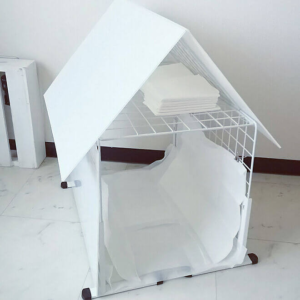
First, prepare a house, cage, or dedicated cushion bed to create a space just for your dog. Providing a private space with your dog's own scent will make toilet training go more smoothly.
Toilet training is an essential part of dog training and must be addressed immediately. In recent years, the idea that dogs are part of the family has become more common, making it common for dogs to be kept indoors, and many households have indoor litter boxes.
The litter box also serves to assert your dog's territory, so it's best to choose a place where your dog can rest in peace. Training your dog to use the litter box in a designated area will allow you to separate the space, allowing both you and your dog to live comfortably at an appropriate distance.
Place the toilet in a quiet, low-traffic area.
Some puppies are used to using the toilet outside, so if you're potty training indoors, take your time. A quiet, low-traffic area works best. However, avoid locations that are too far away or difficult to reach.
How to Potty Train

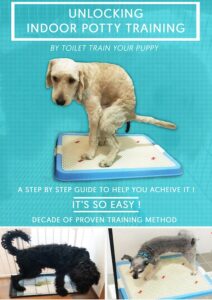
*Guiding your dog to the toilet
After eating, waking up, or sniffing the floor and circling around, it's time to go to the toilet. First, lead your dog to the toilet sheet.
When it's time to go to the toilet, keep repeating the words you've chosen to your dog. Simple words like "one, two, one" or "one, two, one, two" are fine. Once your dog gets used to this routine, they'll associate the words with the act of going to the toilet, and eventually they'll start going to the toilet on cue.
One thing to remember is to speak gently. Avoid putting pressure on your dog by yelling or other means. This will make your dog feel intimidated and stop him from going to the bathroom. The key is to use soft verbal cues, like background music, and to be subtle and direct your gaze away from your dog.
If you're having trouble guiding your dog, we recommend using a training spray. It's easy to use; just spray it on your dog's regular toilet sheets. It contains ingredients that help your dog recognize the area as a toilet spot, making training go smoothly. It's also subtle enough that it won't smell bad, so it won't make the room smell bad. If you're having trouble guiding your dog, why not try this?







![[Dog Diet] How to Adjust Your Diet? Introducing Healthy Foods](https://with-my-dog.com/wp-content/uploads/2022/08/image4-e1660552565726-150x150.jpg)