
Hello everyone!
It's getting really cold...
Snow has already fallen in Tohoku... This season is prone to illness for both humans and dogs. Please take care of yourself. Speaking of which, some areas spread snow-melting agents on roads to prevent freezing during this season.
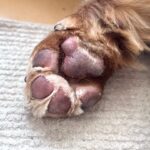
If your dog gets de-icing salt on its paws while on a walk, it can cause inflammation from potassium chloride, and if your dog licks its paws, it may develop food poisoning. So, when taking your dog for a walk in the winter, be sure to pay attention not only to your dog's temperature but also to the road conditions!
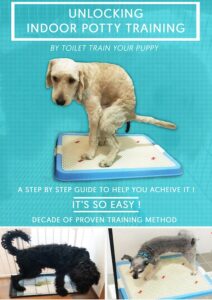
So, today's column is about "Toilet Training Adult Dogs." Is your dog toileting properly? We often hear people say things like, "He was able to do it as a puppy, but now he's having trouble with it," or, "I'm getting an adult dog, but can I still toilet train him?"
The bottom line is, it's okay! Even adult dogs can be toilet trained, and you can restart training!
Today, we'll introduce the reasons why adult dogs have toilet accidents and some tips on how to toilet train them!
Differences in Toilet Training Adult Dogs and Puppies
Basically, there's no difference in toilet training methods between puppies and adult dogs. Adult dogs can be trained in the same way as puppies.
However, first and foremost, it's important that the owner understands and practices proper toilet training. Also, unlike puppies, toilet training an adult dog takes time.
Puppies are generally toilet trained within two to three weeks, but this isn't the case for adult dogs. This is because they're "overwriting what they've learned," and in some cases, it can take more than a month.
So, the most important thing when toilet training an adult dog is to take your time and be patient.
Common Misconceptions About Toilet Training
I mentioned "the correct way to toilet train," but are you putting it into practice? Let's review the correct way to train your dog!
① Scolding your dog when it makes a mistake
This is the worst thing you can do.
Even if you think you're teaching your dog "this isn't the toilet!" when your dog has an accident somewhere other than the designated toilet, your dog will only remember the experience of being scolded for using the toilet.
If your dog repeatedly fails, it will begin to associate toileting with being scolded and fear. This is one of the reasons why your dog may not be able to go even after being encouraged or may have an accident, so never get angry at it even if it fails.
An effective strategy is to quickly clean up your dog's mess without reacting, even while making a "distressed" face. The key is to "not react."
Research has also shown that dogs can read emotions from human facial expressions. They interpret angry or confused faces as negative communication.
However, if you get angry and yell at your dog, he will become intimidated.
Therefore, it is important to show your face to let him know, "I don't know why, but this is not something he should do."
② Always in the same place, in a different environment
Are you still using the same toilet spot, or the same size, as when your dog was a puppy? "He used to do this perfectly when he was a puppy, but now he hates it."
If this is the case, it's possible that the space no longer fits him as he grows, or that it no longer feels comfortable there.
Dogs often use the toilet in circles, so they may fail in spaces the same size as when they were puppies.
Make sure your dog has enough space to accommodate his size.
Even if the toilet location remains the same, rearrangements can create obstacles in the path to the toilet, or change the light or airflow, making that place no longer a relaxing place for your dog.
Reconsider your dog's environment.
Make sure the environment is well-ventilated, free of reflective surfaces, and allows for free movement. Air conditioning, however, is a no-no!
Many dogs also dislike being in places where others can see them. Privacy is important, isn't it?
Training Tips

First, let's take a look at the environment.
As your dog grows, his personality will change. For example, he may develop a penchant for cleanliness, or become afraid of dimly lit or claustrophobic places. As the environment changes, your dog will also change, so be patient and approach him with an open mind.
Next, let's review the key points of toilet training.
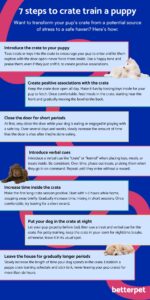
① Guide your dog to the toilet when it needs to go.
For small dogs, you can carry them there or lure them with their favorite treats. First, let them memorize the location and get used to the environment. You'll need to keep track of when they go to the toilet, so it's effective to keep a record of the time and other details.
It's even more effective to guide your dog to the toilet at set times to help establish a regular toilet rhythm.
② Praise your dog enthusiastically when he successfully uses the toilet
Praise your dog enthusiastically when he uses the toilet successfully. Praise him in a bright, high-pitched voice for best results. You can also give him his favorite treat. However, the effect of the treat only lasts for a few seconds after the praise, so if he goes off to get the treat, it will be too late!
③ Clean up the waste immediately after he's finished using the toilet
It's common for your dog to become very tidy as he grows. If your dog continues to leave feces behind, he may come to think of the toilet as a dirty place and dislike it.
Clean up immediately after use to keep the area clean.
④ Play with him after he's finished
Play with him properly after he's finished using the toilet. Letting your dog experience the reward of being praised and played with for using the toilet is the most important aspect of toilet training.
Summary

What did you think?
Whether you've already done it correctly or are concerned about it, you can toilet train even adult dogs by taking another look at your dog and changing the environment and how you interact with them.
Also, as I mentioned at the beginning, unlike with puppies, it may take longer, so it's important to take your time, be patient, and approach it with an open mind.
Please use this as a reference if you like♪





![[Latest] French Dog Names: A Guide to Cool and Stylish Names](https://with-my-dog.com/wp-content/uploads/2022/04/image1-150x150.jpg)