

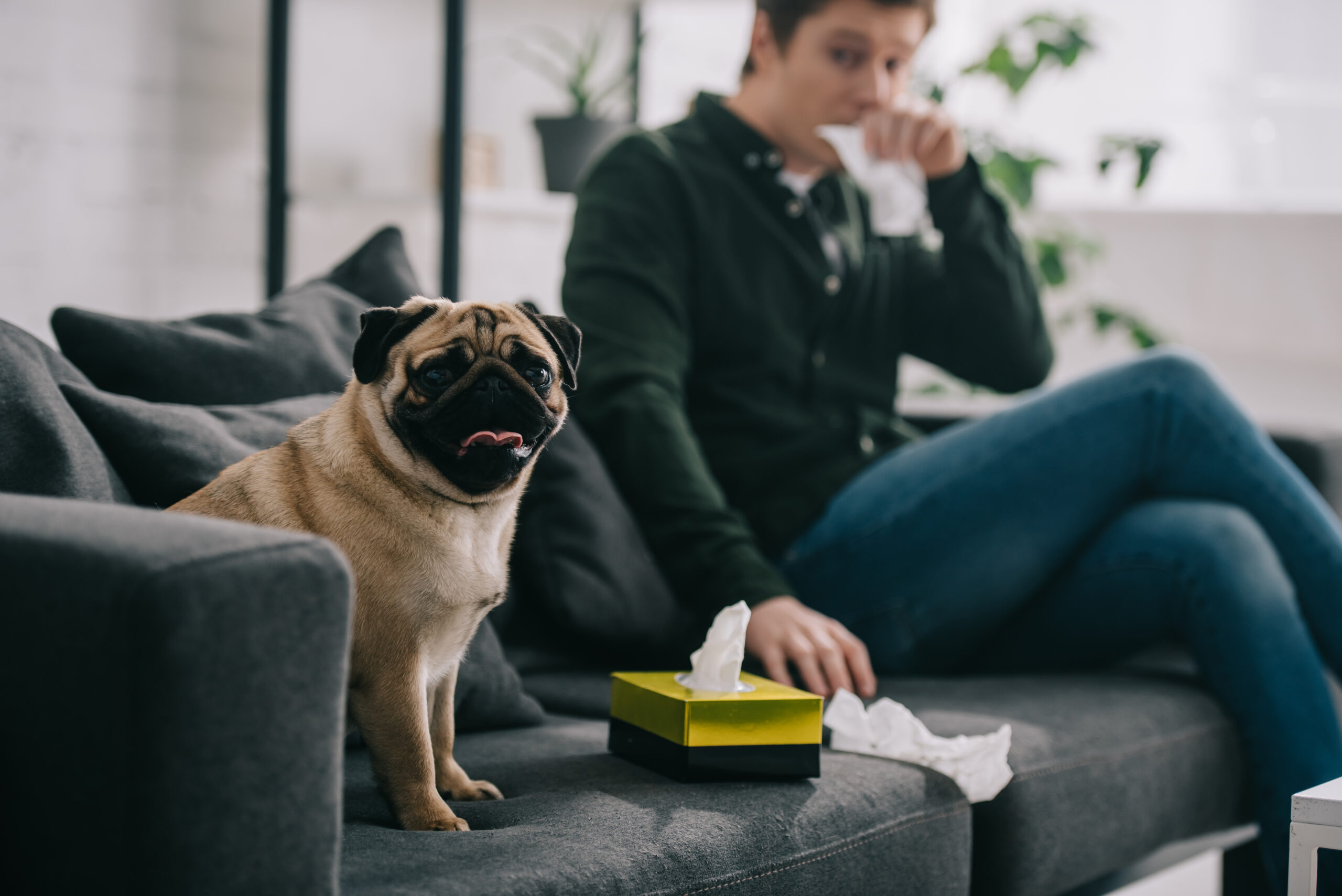
"My child keeps coughing and sneezing when we're with a dog."
"My eyes always seem to itch when we're with a dog."
You may be suffering from symptoms like these in your children.
If you're experiencing these symptoms, you may be suffering from a type of allergic disease called "dog allergy." Dog allergies are caused by dog hair and mites, and often cause asthma-like symptoms such as coughing and rashes. While dog allergies can be painful, keeping your dog's body and the room clean can help prevent the onset of symptoms.
In this article,
- Are you worried that your child may be allergic to dogs?
- Even if your child is diagnosed with a dog allergy, you can't give up living with your beloved dog.
To help those of you who feel this way, we'll introduce the symptoms of dog allergies and five things to be aware of so you can live with your dog with peace of mind. If you're wondering what you should be careful of, please refer to this article.
What are the symptoms of dog allergies?
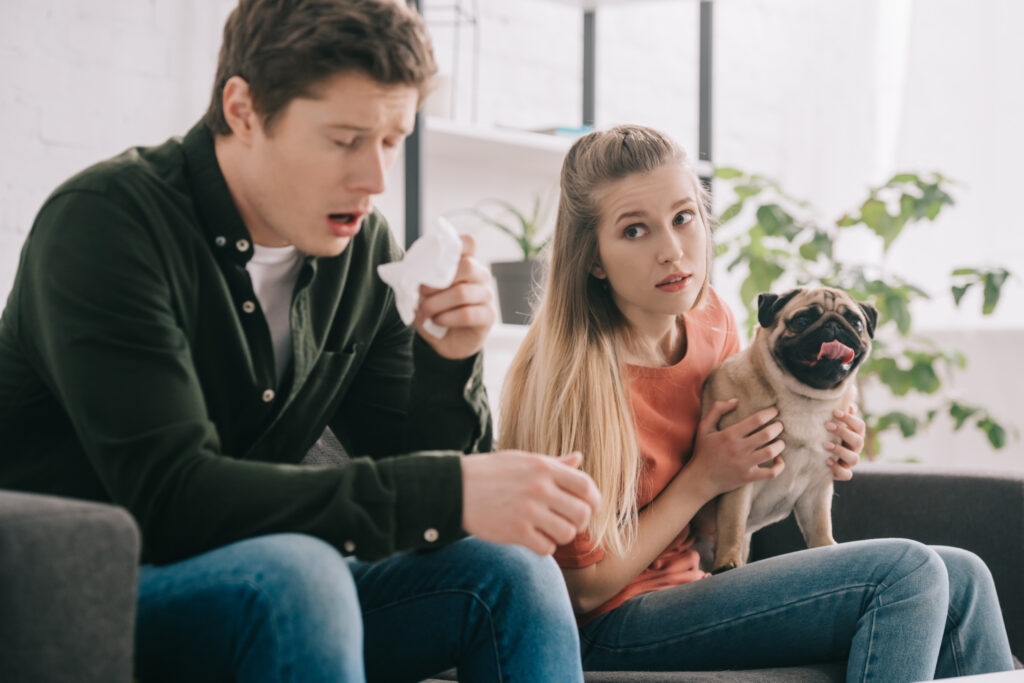
If you develop a dog allergy, you may experience the following symptoms:
- Cough
- Runny nose
- Sneezing
- Skin rash (hives)
- Itchy skin
- Itchy eyes
- Swelling eyes
- Bloodshot eyes
In particularly severe cases,
- Diarrhea
- Nausea and vomiting
- Difficulty breathing
- Dizziness
Symptoms such as these are said to occur.
If your child develops these symptoms after interacting with a dog, you should suspect a dog allergy. If symptoms are severe, take them to the vet immediately.
What Causes Dog Allergies in Children?

The causes of dog allergies in children are:
- Genetic factors
- Environmental factors
Two possible causes are possible:
If parents or family members have dog allergies, children are more likely to develop dog allergies. This is a genetic factor. It is also said that frequent exposure to dog-derived allergens increases the likelihood of developing a dog allergy.
These are the main dog-derived allergens.
- Dandruff
- Dog hair
- Saliva
- Dried proteins from urine that float in the air
Living with a dog increases your exposure to dog-derived allergens, increasing your chances of developing dog allergies. This is an environmental factor.
If environmental factors are the cause of your allergies, reducing your exposure to dog-derived allergens may help prevent the onset of your allergies.
Five Things to Keep in Mind If You Have a Child with Dog Allergies
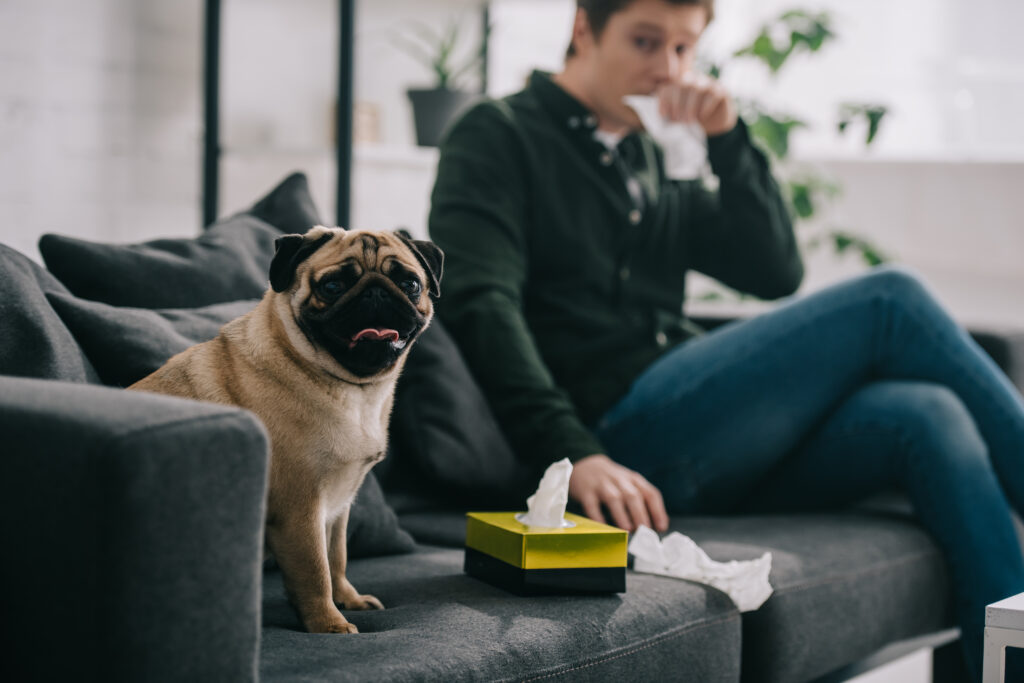
If your child is allergic to dogs, keep the following five points in mind when living with a dog.
- Keep your dog's body clean
- Clean thoroughly
- Make the bedroom a pet-free zone
- Use an air purifier
- Wash your hands and gargle frequently
The basic principle is to avoid contact with dogs, but there may be times when living together is difficult. In those cases, paying attention to the five points above can help prevent the symptoms from worsening.
Now, let's take a closer look at these five points.
Keep your dog clean
To prevent the onset of dog allergies, try to keep your dog clean as much as possible. Dog allergies, when caused by environmental factors, are triggered by dog-derived allergens such as dog hair and dander. Therefore, by frequently shampooing and brushing your dog, you can reduce the amount of airborne hair and dander.
As a general rule, shampooing and brushing your dog once a week can help reduce airborne hair and dander.
If you don't have time to shampoo your dog even once a week, simply wiping it down with a warm, wet towel can help reduce stray hair and dander. Make sure to keep your dog clean at all times.
Thorough Cleaning
Thorough cleaning of the room is also an important point.
Keeping your dog's body clean can help reduce the amount of stray hair and dander. However, it's difficult to prevent all hair and dander from floating around. It's also necessary to deal with existing hair and dander.
- Vacuum frequently
- Clean carpets
- Mop walls
- Reduce furniture that is likely to attract hair and dander
- Keep your dog's cage clean
By thoroughly cleaning in this way, you can remove existing hair and dander. Be sure to clean the floors and walls frequently, as these areas are particularly prone to hair and dander accumulation.
Make the bedroom a pet-free zone
Many families sleep with their beloved dog in the bedroom. You want to spend time with your beloved family dog, even when you're sleeping. However, if you have children who are allergic to dogs, it's best to avoid sleeping with them in the bedroom. We especially recommend making children's bedrooms a pet-free zone.
The best way to prevent the onset of dog allergies is to avoid contact with dogs. Sleeping with a dog is the same as exposing your body to dog-derived allergens all night long. It's sad not to be able to sleep with your dog, but to prevent the onset of dog allergies, try to keep your dog out of your bedroom.
Using an Air Purifier
Using an air purifier is also recommended for maintaining a clean room environment. Using an air purifier allows you to ventilate the air as much as possible. This is an effective method, as it prevents the adhesion and inhalation of allergens such as airborne hair and dander.
Using an air purifier with a particularly strong airflow will be even more effective.
Wash your hands and gargle frequently
Washing your hands and gargling are especially important for preventing the onset of dog allergies. Dog allergens may be on your hands and mouth, so wash them thoroughly by washing your hands and gargling.
In particular, be careful not to touch your face or eyes with your hands after touching a dog. This may increase the risk of developing allergic symptoms. To prevent unintentional touching, it is recommended that you wash your hands immediately after touching a dog.
Furthermore, gargling can help wash away allergens that may be stuck in your mouth before they can be inhaled. Be sure to wash your hands and gargle immediately after touching a dog, and make sure your children's bodies stay clean as well.
Dog Breeds Most Likely to Develop Dog Allergies
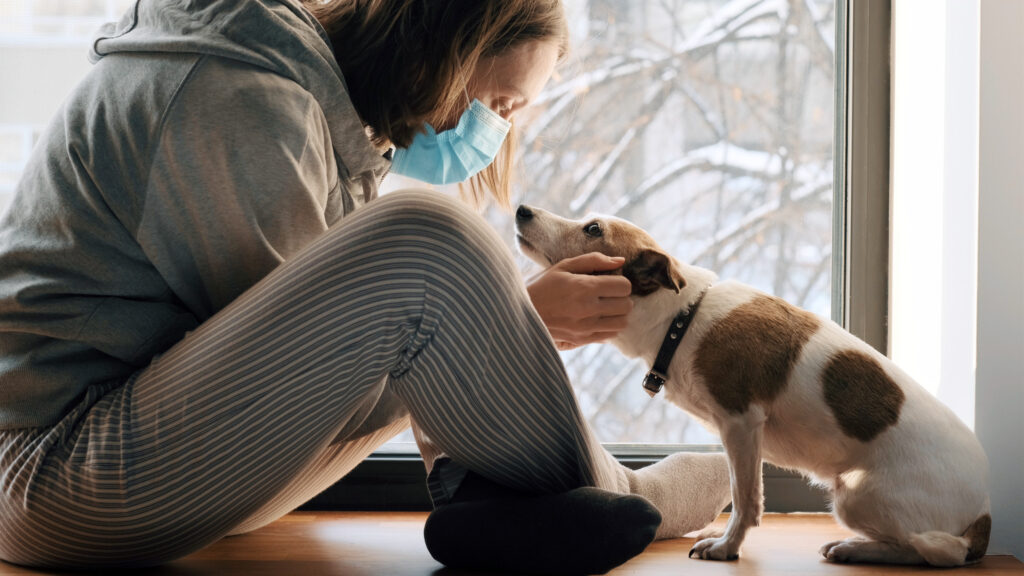
Are there any dog breeds that make people more susceptible to developing dog allergies?
In fact, there is no significant difference between dog breeds. This is because all breeds of dog contain dog-derived allergens. Therefore, regardless of the breed of dog you own, there is a chance that you could develop a dog allergy.
However, the ease of taking measures to prevent the onset of dog allergies may vary depending on the breed. For example, it's easier to shampoo and brush short-haired breeds regularly than long-haired breeds.
Since shampooing long-haired breeds is particularly difficult, many people leave it to professional groomers every time. Furthermore, frequent shampooing can be costly.
Though the ease of taking measures may vary, there is no difference in the likelihood of developing dog allergies depending on the breed. Rather than choosing based on breed, carefully consider the measures you currently take for your beloved dog. You're sure to find measures that are less stressful for both you and your dog.
Summary
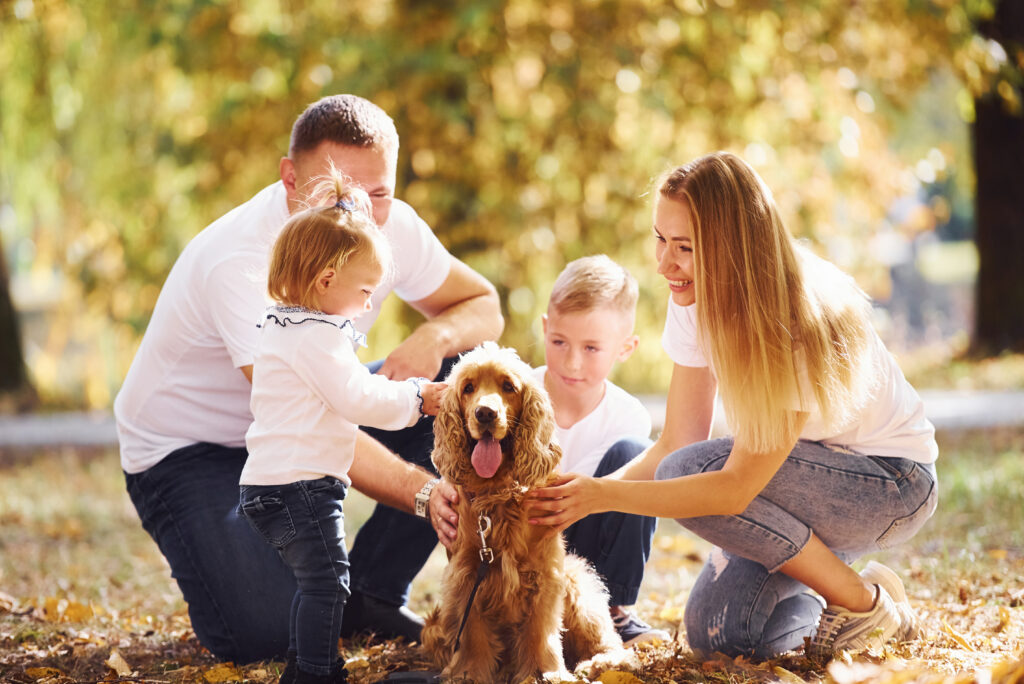
In this article, we introduced the symptoms of dog allergies and five points to be aware of. Dog allergies can cause unpleasant symptoms such as coughing and runny nose. Because these symptoms are similar to those of a cold, you may mistake them for a cold.
Therefore, if symptoms appear, be sure to check whether the symptoms worsen when your child interacts with a dog. In order to quickly recognize a dog allergy, it's important for your family to be knowledgeable and understand the symptoms of dog allergies.
Even if your child is diagnosed with a dog allergy, your beloved dog is still a cherished member of the family. Your child will still view your dog as a member of the family, and spending time with them likely brings them comfort, joy, and other valuable experiences.
Don't be so quick to give up your beloved dog just because your child has developed a dog allergy. Instead, create an environment where the whole family can enjoy spending time together, while taking measures to reduce allergens.
- Vacuum frequently
- Clean carpets
- Wipe walls
- Reduce furniture that may attract hair and dander
- Keep your dog's cage clean
Try these tips and find measures that are comfortable for your dog and children.











![[2022 Edition!] Popular Small Dog Names](https://with-my-dog.com/wp-content/uploads/2022/04/image2-1-150x150.jpg)
![[I love both!] Can you keep dogs and cats together? Here are some tips and tricks to keep in mind](https://with-my-dog.com/wp-content/uploads/2022/07/image3-18-150x150.jpg)








![[Dog Allergies] Do dogs have allergies? Explaining safe foods!](https://with-my-dog.com/wp-content/uploads/2021/10/3029373_m-300x200.jpg)