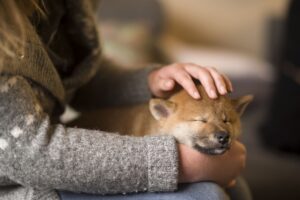

![What is a dog neuter? The contents and purpose of the surgery [For first-time owners]](https://with-my-dog.com/wp-content/uploads/2021/10/dog-g0fd92e32e_1920.jpg)
Neutering is often recommended when you first get a male dog.
Some owners may feel unsure about whether neutering is necessary or whether it's dangerous for the dog.
When you hear the word "surgery," you may think of the risks, but neutering has significant benefits that outweigh the risks.
When you get a dog, just like with humans, it's important to find a regular vet. Even healthy dogs should visit the vet regularly for vaccinations and health checkups. If your dog is a puppy, neutering is often recommended at that time.
This article is for those who have a general understanding of castration surgery but are still anxious. We will introduce the procedure, purpose, and risks of castration surgery.
If you are still anxious about castration surgery, this article will help you alleviate your fears.
What is Castration Surgery?
Neutering is a surgical procedure to remove a dog's testicles.
The dog is given general anesthesia, and the skin around the testicles is removed. Unlike spaying and neutering female dogs, spaying and neutering does not require an abdominal incision, so recovery is said to be quicker. Therefore, the procedure can generally be performed on an outpatient basis.
Although there are risks associated with inserting a scalpel and undergoing general anesthesia, we recommend neutering your dog if you have no plans to breed it. Neutering offers benefits such as preventing reproductive diseases, reducing marking, and reducing stress in dogs.
Purpose of Neutering
Neutering is generally performed to prevent reproductive diseases and control estrus behavior in dogs. Neutering removes a dog's testicles, rendering it incapable of reproduction. Once a male's reproductive ability is lost, he will no longer become aroused by the presence of a female in heat, which helps to curb problem behaviors caused by sexual arousal. Removing the testicles also helps prevent reproductive system diseases such as epididymitis and testicular tumors. Neutering may also be performed for therapeutic purposes in cases where a dog already has a testicular disorder. Neutering can be particularly effective in terms of disease prevention and treatment. As such, neutering is performed for a variety of purposes. While there are risks associated with general anesthesia and the surgery itself, undergoing the surgery offers many benefits, including disease prevention and treatment and the suppression of problem behaviors. If you're considering neutering, consider it carefully.
Castration Surgery Procedure
① Pre-examination
The pre-examination checks whether your dog is fit to withstand surgery and general anesthesia, and whether it has any medical conditions. Physical Examination Depending on the results of the examination, surgery may be postponed or canceled. If there are no problems with the pre-examination, general anesthesia will be administered. After general anesthesia, the dog's hair is shaved and disinfected before the actual surgery begins. Shortly after the neutering surgery, your dog will wake up from general anesthesia. Just because the surgery is complete doesn't mean you can relax. After surgery, your dog's health will be closely monitored by veterinarians and nurses. After a few hours of observation, if there are no problems, your dog can be sent home. After returning home, your pet will need to be cared for by the owner. Even if your dog's condition improves after discharge, it is important not to overexert yourself. The process and recovery process for your dog after castration. Just be careful and you'll be safe. When neutering a dog, multiple procedures may be performed simultaneously. Unlike humans, dogs cannot remain still during treatment. Baby teeth that should be removed but aren't can lead to periodontal disease. Treatment for cryptorchidism also requires general anesthesia, so it is recommended that it be performed at the same time as castration. Many pet owners feel anxious before neutering.
The following tests are mainly performed:
Blood Test
X-Ray Examination
Ultrasound Examination
Veterinarians thoroughly assess the dog's condition through a pre-examination and ensure the dog is in top condition before surgery. ②Anesthesia
There is not just one type of general anesthetic used during castration surgery.
Several medications are combined depending on the dog's health and age.
By carefully balancing the various medications, your dog will be able to undergo surgery without feeling any pain and while sleeping peacefully.
To maximize the effectiveness of general anesthesia, dogs must fast for at least 12 hours before anesthesia.
Fluid intake may also be prohibited, so please check in advance.③ Surgery
During surgery, the skin near the testicles is incised and the testicles are removed. The surgery takes approximately 30 to 40 minutes. During surgery, your dog's health is monitored in real time using an electrocardiogram monitor. Therefore, if any problems arise, your veterinarian can address them immediately. ④ Postoperative Care
If you are concerned about your dog's condition after surgery, some veterinary clinics will accommodate overnight hospitalization. If you are unsure about post-operative care at home, consult with your veterinarian.⑤ Discharge from the Hospital - Removal of Stitches
To avoid putting strain on your dog's body, it is important to control the amount of exercise and care for the wound.
For more information on post-discharge care and recovery, please see the article below. Things that may be performed at the same time as castration surgery
Dental treatments such as the extraction of baby teeth and procedures for cryptorchidism are often performed at the same time.
Since these procedures require general anesthesia, performing them at the same time as neutering reduces the stress on the dog. The Meaning and Risks of General Anesthesia
Performing procedures while a dog is still mobile could lead to serious injuries.
For this reason, general anesthesia is commonly used for dental treatments and examinations.
While general anesthesia is essential for dogs to receive treatment safely, it does carry the risk of side effects.
It's best to perform procedures that can be performed simultaneously together to minimize the number of times your dog needs general anesthesia.Baby Tooth Extraction
Baby teeth that remain after about 7 months of age rarely fall out naturally.
If your dog still has baby teeth, we recommend having them removed at a veterinary clinic.
Since baby tooth extraction requires general anesthesia, it's best to have it done at the same time as the neutering procedure. Treatment for Cryptorchidism (Undescended Testicles)
In male dogs, the testicles usually descend into the scrotum around 30 days after birth.
However, in rare cases, the testicles may not descend into the scrotum. This is called cryptorchidism.
Cryptorchidism has a high potential for future tumor development, so it is generally treated by surgical removal. Summary
Because of the risks associated with surgery and general anesthesia, some may be hesitant to have their pet neutered.
However, neutering prevents disease and eliminates unnecessary stress caused by sexual urges.
Furthermore, it is not healthy for males who are not planning to breed to be unable to release the stress of sexual urges.
Accumulated stress can increase aggression in dogs, creating a painful environment for the dog.
Therefore, neutering surgery can be said to have benefits that outweigh the risks.
Choose a reputable veterinary clinic and create a safe environment for both you and your dog by having your dog neutered.




![[Free] 5 dog foods you can try! Depending on your dog's growth and preferences](https://with-my-dog.com/wp-content/uploads/2022/07/image7-12-150x150.jpg)


![[Photos] Want to see cute lion-dog statues? Check out these popular shrines](https://with-my-dog.com/wp-content/uploads/2022/07/pexels-markus-distelrath-2832119-150x150.jpg)


![Feed your puppy softened dog food! [Feeding Tips]](https://with-my-dog.com/wp-content/uploads/2022/04/image1-300x200.jpg)