

Many owners consider neutering their pet when they welcome a male into their family.
Your veterinarian will provide a thorough explanation before neutering. Even if you know that neutering not only suppresses estrus but also helps prevent disease, you may still be unsure whether it's the best option, or you may be worried about the postoperative scars.
For owners considering neutering their pet for the first time, we'll provide detailed information about what to expect after neutering, including what to expect after surgery, and what to expect physically afterward.
Pros and Cons of Neutering

If you're not planning on breeding, it's natural to consider neutering your pet, and your veterinarian may even recommend it. However, when it comes to surgery, it's natural for pet owners to worry.
So, what are the advantages and disadvantages of neutering?
Benefits of Neutering
First, the benefits of neutering include the following:
- Preventing Behavioral Problems During Heat
If you're not planning on breeding your dog, have him neutered.
Being unable to mate despite being in heat is extremely stressful for your dog. Neutering reduces sex hormones (male hormones) and makes your dog less likely to become sexually aroused, which can help prevent the stress associated with heat and reduce aggressiveness.
- Disease Prevention
Another benefit is the reduced risk of disease. Neutering can prevent reproductive and sex hormone-related diseases, such as testicular tumors, prostate enlargement, and undescended testicles.
Disadvantages of Neutering
On the other hand, there are also the following disadvantages to neutering:
- Risks of General Anesthesia
Neutering surgery requires general anesthesia.
Risks associated with general anesthesia include impaired internal organ function, impaired liver function, decreased blood pressure, heart failure, and respiratory distress. Approximately 0.1-0.5% of cases result in death. Brachycephalic and small breeds, as well as dogs with respiratory or cardiac conditions, are at higher risk of these conditions.
Whether or not to undergo surgery should be decided after careful consultation with your doctor.
- Risk of Obesity
Neutering has the disadvantage of making your pet more likely to gain weight due to changes in hormone balance.
Therefore, after neutering, dietary management, such as feeding your pet special food, and sufficient exercise to prevent obesity are necessary. Hormonal imbalances can also cause changes in coat texture and color, as well as dull coat condition.
What happens during a castration?
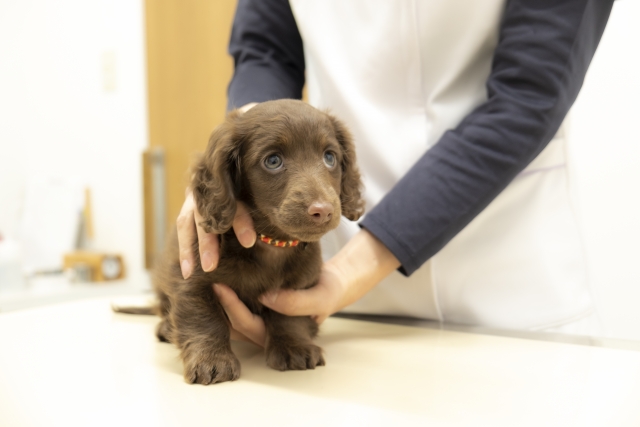
Neutering is performed under general anesthesia. A small incision of several centimeters is made between the scrotum and penis, and the testicles are removed.
The surgery takes approximately 30 to 40 minutes.
For more information on castration surgery, please see the following article.
What is canine castration surgery? Surgery Details and Purpose [For First-Time Pet Owners]
Please take a look.
Common Scrotal Appearance After Neutering
Neutering is often an outpatient procedure.
The post-operative process is explained in the next article.
The process and recovery process after your dog's castration. Just be sure to pay attention!
Please take a look.
After the surgery is completed successfully, your pet will be observed by a veterinarian and nurse for a few hours. If there are no problems, your pet will be sent home. From then on, the owner will be responsible for your pet's post-operative care.
Next, we'll introduce you to the wound and things to look out for during post-operative care after your pet goes home.
Scars will remain
On the day of the procedure, the wound may be red and bleeding may occur.
It is important to avoid licking or wetting the wound, especially until the redness subsides, and avoid exercise to avoid putting stress on the wound.
Also, because the incision is large enough to allow the testicles to be removed, scars will remain on the scrotum after surgery. Some owners may be concerned, but after the stitches are removed and the scabs fall off, the scars will become less noticeable over time.
Scrotum (Scrotum) Color Change
After surgery, bleeding or inflammation in the scrotum may cause the scrotum to change color or become swollen. Check the scrotum, and if you notice swelling or discoloration or your dog seems to be in pain, consult a veterinarian immediately.
No stitches in the scrotum
Saliva contains many germs.
Licking the wound can introduce bacteria and cause it to become infected, so be careful not to lick the wound, such as by using an Elizabethan collar.
Also, if the stitches you used are missing or the wound isn't closing properly, even the slightest pressure can cause the wound to reopen, slowing down the healing process. If this happens, you should immediately return to the doctor.
Cases requiring open surgery
At birth, the testicles are located in the abdominal cavity. They usually naturally descend into the scrotum around 30 days after birth, or at the latest around 8 months of age.
When the testicles do not descend into the scrotum and remain in the abdominal cavity, this condition is called "cryptorchidism." If a neuter is performed in this condition, depending on the location of the testicles, an open abdominal surgery may be necessary.
This article explains cryptorchidism and its treatment.
When Only One Testicle Is Visible
Undescended testicles, where only one testicle is visible within the scrotum, are called "hemitorchidism."
In the case of hemitorchidism, even if only the testicle remaining in the normal scrotum is removed, there is still a risk of pregnancy due to the remaining testicle. Therefore, it is common for both testicles to be removed during castration surgery. If the testicle remains in the abdominal cavity, an open abdominal surgery is required.
Undescended testicles are thought to be genetic, so even if they are capable of becoming pregnant, they are not suitable for breeding. Furthermore, the incidence of tumors due to undescended testicles is said to be approximately 13 times higher than that of normal testicles. Therefore, veterinarians recommend preventive removal.
When the Testicles Cannot Be Found
Undescended testicles, or those that cannot be found at all in the scrotum, are generally removed for castration and disease prevention purposes. If the testicles are located within the abdominal cavity, an open abdominal surgery is required. Testicles that are completely undescended are often difficult to remove. In such cases, surgical removal is often avoided and the patient is often monitored for the development of tumors.
Summary

In the event of a disaster, if you are evacuating with your pet, having your dog neutered may be a condition for admission to an evacuation shelter.
Neutering is considered by many pet owners not only for breeding reasons, but also for disaster preparedness and disease prevention. However, since neutering is a first-time experience for both pet owner and pet, it can be quite stressful.
The most important thing is to choose a hospital with a veterinarian you can trust. This is your precious dog's surgery. Ask any questions you may have about the surgery, and only proceed once you are satisfied.
Furthermore, even after neutering, if you have any concerns, please consult your veterinarian and keep in contact with them to ensure they receive adequate care.