
Did you know that there are foods that are just as likely to cause allergic reactions in dogs as in humans? Grains, dairy products, and meats are especially common, so you need to be careful when feeding them to your dog.
"I'm worried about my dog's allergies."
"I'm planning to get a dog, but what if my dog develops an allergy?"
Some of you may be worried or concerned about your dog's allergies.
Dog allergies can be prevented by having your dog tested in advance. Get tested and learn which foods your dog should avoid.
In this article, we'll explain the foods that dogs are prone to allergies, their symptoms, and how to deal with them. If you're worried about your dog's allergies, please refer to this article.
Common Symptoms of Dog Allergies
If your dog develops a food allergy, the following symptoms are likely to appear.
- Body itching (dermatitis)
- Dandruff
- Hair loss
- Diarrhea
- Vomiting
- Rhinitis, etc.
If your dog exhibits any of the above symptoms after eating a certain food, you may want to suspect a food allergy.
In some cases, it can be difficult to identify the food causing allergic symptoms. Dog food, in particular, contains a variety of ingredients, making it difficult to identify the allergen.
If your dog experiences allergic symptoms after eating dog food, consult your doctor and take immediate action, such as switching to a different dog food.
For more information on the symptoms of food allergies in dogs, please refer to the following article.
【Are dog allergy tests useless? Explaining the types and symptoms of allergies! 】
List of foods that are likely to cause allergies in dogs
The following six foods are commonly associated with allergies in dogs.
- Corn
- Wheat
- Soy
- Dairy Products
- Beef
- Eggs
Next, we'll explain in more detail the foods listed above that can cause allergies. While these foods don't necessarily cause allergies, you should still be cautious when feeding them to your dog.
Corn
Corn is a food often used as an ingredient in dog food. It has many benefits for dogs, including improving their intestinal environment and being rich in nutrients.
Therefore, corn is not a food that should never be given to dogs. However, some dogs may develop allergies to corn, so caution is advised.
Dogs who are prone to corn allergies are also likely to develop allergies to wheat, which is the same grain. This is called cross-reactivity, which means the body reacts to similar foods.
Wheat
Wheat is said to be the grain most likely to cause allergies. Not only dogs, but many humans also suffer from wheat allergies.
Wheat contains a lot of gluten, which is difficult for dogs to digest. If gluten accumulates in excess in the body through continued wheat consumption, dogs are more likely to develop allergies.
Wheat is also commonly found in dog food. If you are feeding dog food to a dog with a wheat allergy, be sure to carefully check the ingredients on the package.
Soybeans
Soybeans, like corn and wheat, are classified as a grain. However, it's said that soy is rarely an allergic reaction.
However, excessive soy intake can cause allergies, so be careful. Also, the defatted soybeans that remain after soy processing are difficult for dogs to digest and may cause indigestion, so be careful.
Dairy Products
Dogs with lactose intolerance are said to be more susceptible to ingesting dairy products. Lactose intolerance is a condition in which a dog is unable to properly digest the lactose found in dairy products, resulting in symptoms such as diarrhea.
Continued feeding of dairy products to a lactose-intolerant dog can not only make them sick, but also make them more susceptible to allergies, so caution is advised.
Beef
Beef is the meat most likely to cause allergies. Beef is also commonly found in dog foods.
The cause of beef allergies has not been identified, but it is thought that genetics, stress, and environmental factors may contribute to the development of beef allergies.
Chicken Eggs
It is best to avoid feeding raw chicken eggs to dogs.
The egg white contains avidin, and the yolk contains biotin. Avidin inhibits biotin absorption. If biotin is not absorbed for a long time due to this effect, it can lead to hair loss and a weakened immune system.
Furthermore, consuming large amounts of these two ingredients can cause diarrhea.
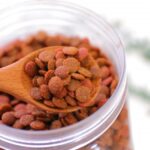
Dogs with allergies should avoid dog food containing these ingredients. So, what kind of dog food should you feed your dog?
The following article introduces dog foods recommended for dogs with allergies, so please take a look.
What dog food is recommended for dogs with allergies? What are the symptoms and treatments? 】
What You Can Do to Prevent Dog Allergies
To prevent allergies in dogs, owners need to support their pets. There are two main ways owners can support their pets.
- Get tested for allergies
- Make your own dog food
Let's take a closer look at each prevention method.
Get an Allergy Test
If your dog is showing allergic symptoms or you're unsure whether it has allergies, consider getting an allergy test. Allergy tests can be performed at your veterinarian.
Even if your dog shows allergic symptoms, it can be difficult to pinpoint the cause with foods that contain many ingredients, such as dog food. However, allergy testing can check for allergies to a variety of ingredients.
Testing can also help prevent allergies by detecting allergic reactions to foods your dog has not yet been exposed to.
The cost of an allergy test varies depending on the veterinary clinic, but the average price is around ¥20,000 to ¥30,000. The test typically involves taking a blood sample from your dog.
For more information on allergy testing, please see the following article.
How do I test for dog allergies? About Types, Costs, and Duration】
Make Your Own Dog Food
Making your own dog food is also an effective preventative measure.
Commercial dog food contains a variety of foods, making it difficult to identify allergens. However, once you've identified the allergens through allergy testing, you can make your dog homemade dog food by eliminating those specific ingredients.
When making homemade dog food, it's important to be aware of the foods that should not be fed to dogs. In some cases, these foods can be life-threateningly toxic, so be sure to understand them.
The following article explains in detail the foods that should not be fed to dogs when making homemade dog food.
【Ingredients needed for homemade dog food and foods that should not be given! 】
Summary
If you want to know if your dog has allergies or not, have them undergo an allergy test. This is the most reliable way to find out which foods they are allergic to.
Dogs love food. However, if they develop allergies, they can no longer enjoy eating.
To ensure your dog enjoys eating, be sure to take proper allergy prevention and precautions. If your dog shows any symptoms that may be an allergy, take him to the vet immediately.
As a pet owner, you want to do what you can to create an environment where your beloved dog can live in peace and security.






![[Recommended for males] Cool dog names](https://with-my-dog.com/wp-content/uploads/2022/07/image1-36-300x200.jpg)