

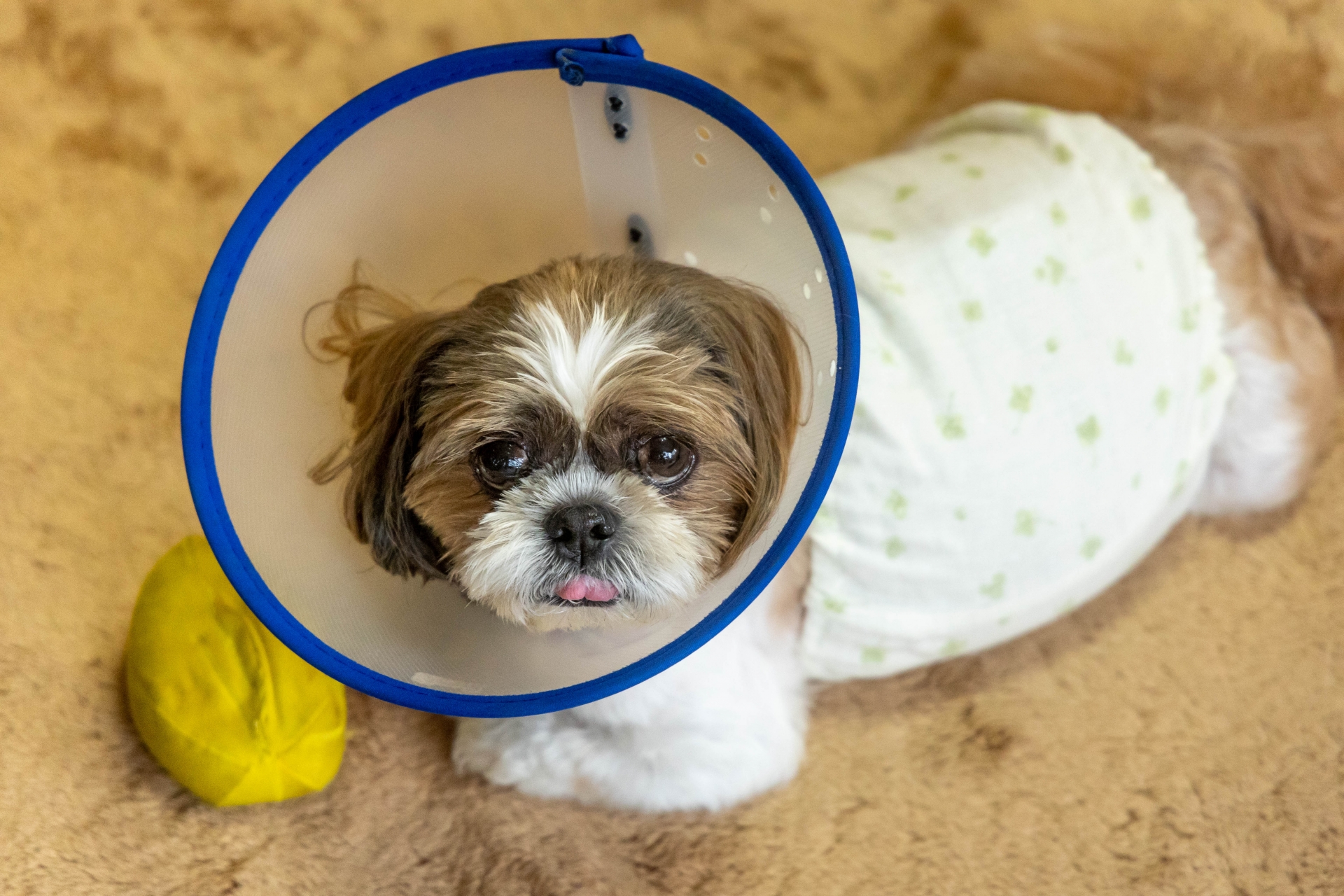
Hello dog lovers!
Today, following on from last time's article on dog itching, we'll be introducing some tips for dealing with itching!
The weather has been getting colder and drier lately. It's a good idea to consider skin problems not only in humans but also in dogs!
What causes itching in dogs?

First, let's discuss the cause of itching. Itchy skin is caused by damage to the stratum corneum. The skin's barrier deteriorates due to factors like the outside air and ultraviolet rays, and these irritants are perceived as itching by people and animals.
Dogs often suffer from ear itching in the form of otitis externa.
- Ear structure
- Foreign bodies
- Allergies
- Parasites
- Bacteria
- Fungi
Itching can be caused by factors such as:
In particular, dog breeds with droopy ears are more susceptible to otitis externa. It is said that young dogs are more susceptible.
According to Anicom's "Household Animal White Paper," the dog breeds most likely to be affected in Japan include:
- American Cocker Spaniel
- Labrador Retriever
- Cavalier King Charlie's Spaniel
- French Bulldog
- Pug
Statistics show that these include:
Now, let's delve into this article's main topic: "Itching Relief"!
Itching Relief for Dogs!
How to Detect and Treat Itchy Dogs
If your dog frequently shakes its head, it's likely experiencing problems around its ears. Not only is it itchy, but the accumulation of black earwax can also be a sign of ear mite infection (ear scabies or ear mite infection).
Because a dog's ears have a complex structure and poor ventilation, bacteria can grow in the earwax, causing inflammation and leading to otitis externa. If your dog has otitis externa, it will develop a distinctive odor. If you notice a foul odor when you flip its ears, immediately suspect otitis externa.
To detect and treat ear mites, dogs with drooping ears or lots of hair inside their ears are more likely to develop the condition, so it's important to regularly clean their ears to ensure there's no dirt or foreign objects inside. However, improper ear cleaning can also damage the ear canal, which can lead to otitis externa, so be careful! ♪
In addition, to prevent ear mite infections, you can use oral or spot-on medications with miticidal properties to prevent mite infestations!
How to Treat Itching in Dogs
The "Encyclopedia of Living with Dogs" summarizes it as follows:
Cleaning the Ear Canal
An important aspect of treating otitis externa is removing dirt from the ear canal. When administering ear drops to suppress infection and inflammation, the medication will not be 100% effective if the ear canal is dirty. However, in some cases, such as when the inflammation extends deeper than the ear canal or when the ear canal is severely swollen, it may be better not to actively cleanse the ears. Ear cleaning is done using ear cleaning solutions, but using them incorrectly can worsen the otitis externa, so be sure to seek veterinary guidance.
Ear drops
Medications are used depending on the symptoms and cause, including medications to suppress itching and inflammation, and antibiotics and antifungals to prevent secondary infections. There are various types, from those that require multiple doses per day to those that last for a week.
Anthelmintic Drugs
In cases of otitis externa caused by parasites, the underlying parasite must be eradicated. Since there's a high chance that the parasite is also infesting the skin outside the ear canal, systemic administration of an anthelmintic drug is required.
Allergy Treatment
If a food allergy or atopic dermatitis is suspected as the cause of otitis externa, treatment for the allergic disease will be administered in addition to treatment to suppress ear inflammation and infection.
How long will treatment last?

Treatment for otitis externa varies depending on the cause and severity of the symptoms, but typically requires two to four weeks of treatment. If you stop the medication early because the itching has subsided or earwax has decreased, symptoms may recur. Therefore, your veterinarian will check your dog every one to two weeks and determine the treatment period. Also, if the cause of otitis externa is an underlying allergy, it can take several months to diagnose and treat.
As mentioned above, it may be a good idea to choose a treatment plan tailored to the symptoms.♪
In addition, treating the cause properly can help build a stronger bond of trust with your dog!
In addition, a dog's epidermis is only about one-fifth the thickness of a human's, making it thinner and more delicate than a human's. Because their environment is weakly alkaline compared to humans, making it easier for bacteria to grow and for pathogens like bacteria to thrive, dogs are more susceptible to skin diseases than humans.
The basal layer at the bottom of the epidermis creates new cells, which are pushed up into the stratum corneum day by day and eventually shed. This process is called skin turnover, and in humans, it takes about 28 days. In dogs, the skin turnover cycle is shorter, at about 20 days. If the turnover cycle is shortened for some reason, the newly produced cells become incomplete and flake off, becoming dandruff. Bacteria that cause skin diseases feed on this dandruff, and a shorter turnover cycle increases the food supply, making it easier for bacteria to multiply.
Knowing how skin works can help prevent skin problems in your dog. ♪
Finally

Thank you for listening!
This time of year, skin problems are on the rise!
Check your dog's skin regularly and take good care of it♪

















![[Must-see for beginners] Introduction to potty training your dog. If you pay attention to these points, you'll be fine!](https://with-my-dog.com/wp-content/uploads/2022/07/image4-11-300x200.png)
![Want to see cute dog photos? A collection of popular sites [including free stock images]](https://with-my-dog.com/wp-content/uploads/2022/07/image4-11-300x200.jpg)