

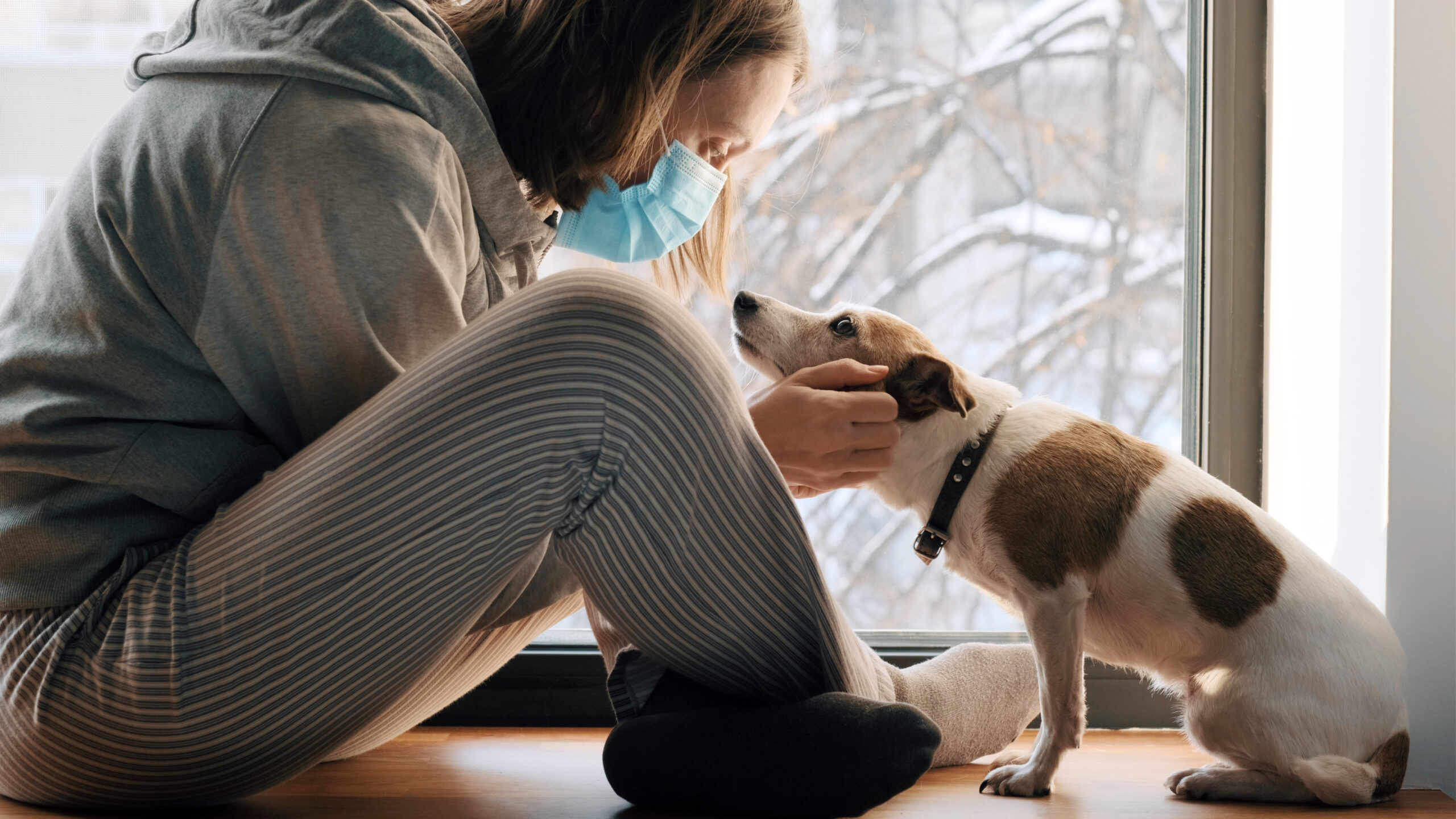
Hello!
Today, we'll introduce the causes of heavy breathing in dogs and possible illnesses.
When you see your dog breathing heavier than usual, you can't help but worry, right?
Knowing when your dog's breathing becomes heavy will help you take appropriate measures, so we hope this article is helpful!
Dogs normally breathe through their nose

Dogs generally breathe through their noses.
You often see dogs relaxing at home, breathing through their noses. So, when do they start breathing heavily through their mouths?
- Immediately after playing
- On a hot day
- When excited in an unfamiliar environment
- Illness
First, let's talk about the most worrying illness among these.
Possible illnesses when your dog is breathing heavily
- Heatstroke
- Bronchitis
- Pneumonia
- Pulmonary edema
These include:
Heatstroke
Beware of heatstroke not only in midsummer but also in early spring.
Heatstroke is a condition in which a dog's body temperature rises, causing oxygen deprivation in the brain and internal tissues. When a dog suffers from heatstroke, it will begin breathing rapidly and with difficulty. It will also produce more saliva. As a first aid measure, move the dog to a cool, shaded area, give it water, or spray water on its body and let it air out. Take measures to lower its body temperature, and immediately take it to a veterinarian.
Bronchiitis
Bronchiitis is an inflammation of the trachea. Dogs with bronchitis may experience coughing, loss of appetite, and loss of energy. While the cause may be a viral or parasitic infection, it can also be caused by allergies, such as house dust or cigarette smoke.
Pneumonia
Pneumonia is a lung disease caused by infection and inflammation caused by pathogens such as viruses and bacteria. The lungs, which take in oxygen and expel carbon dioxide, become inflamed, making breathing extremely difficult.
Pulmonary edema
Pulmonary edema is a condition in which fluid accumulates in the lungs, primarily due to heart disease, impairing pulmonary function. The alveoli, which exchange oxygen and carbon dioxide, become collapsed by the fluid, causing breathing difficulties.
As pulmonary edema progresses, coughing and breathing difficulties worsen, and the dog may adopt a posture with its mouth open and its front legs stretched out.
When the cause is obvious

Right after exercise or going outside on a warm day, your dog may start breathing through its mouth. In these cases, give your dog a little rest, and if it calms down, there's no problem.
If your dog's condition persists even after resting and adjusting the room temperature, or if it worsens, take your dog to the vet immediately.
If your dog exhibits any of the following symptoms, take him to the vet as soon as possible.
- Breathing with head up
- Unable to lie down
- Coughing uncontrollably
- Blue or purple tongue
- Whitish mucous membranes, such as the gums or inside of the cheeks
When going to the hospital, it's a good idea to bring any medications your dog is taking with you.
First Aid When Your Dog Struggles to Breathe
Try to keep the room temperature constant with the air conditioner, and place your dog face down with a towel or pillow under its chin. The easiest position for a dog to breathe is on its stomach.
Tracheal collapse may be a possibility in small or elderly dogs.
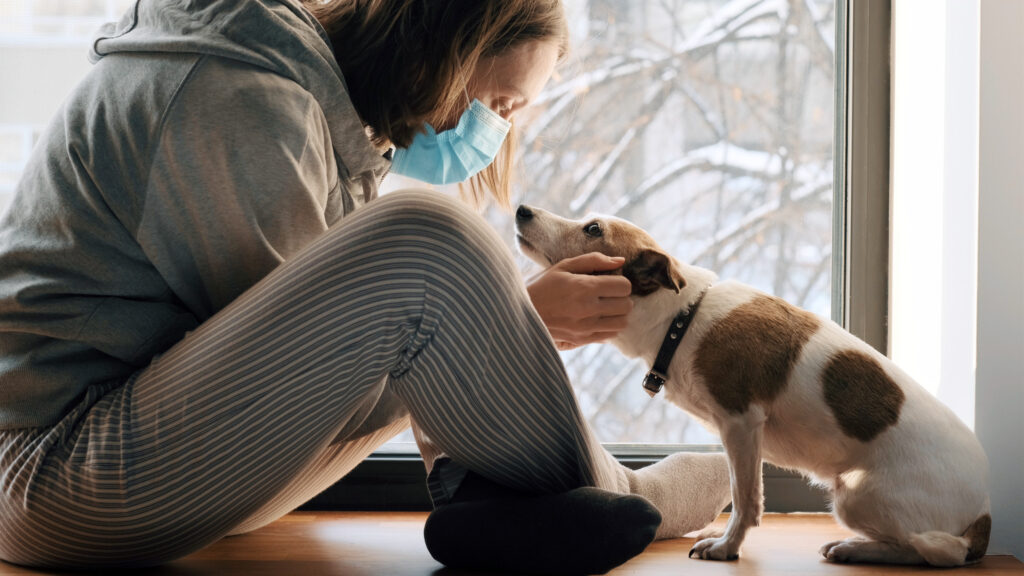
A dog's trachea is a tubular structure surrounded by cartilage and muscle.
However, when a dog suffers from tracheal collapse, the trachea becomes deformed and loses its normal stiffness and elasticity, blocking the air passage necessary for breathing.
This can lead to symptoms such as coughing and difficulty breathing.
Three Common Causes of Tracheal Collapse
Genetics and Diet
Dogs born with congenital tracheal abnormalities and dogs that have been fed meat-only dog food since puppyhood and have an unbalanced diet are at higher risk.
Obese Dogs and Brachycephalic Breeds
Obesity can cause the fat around the trachea to compress and deform the trachea. Brachycephalic breeds have naturally narrow nasal passages, which puts a lot of strain on the chest, just like obese dogs, and can cause the cartilage protecting the trachea to collapse.
Respiratory and Cardiac Diseases
Respiratory and cardiac diseases can weaken the tracheal cartilage and surrounding muscles, resulting in tracheal deformation.
Once a dog's trachea is deformed, it cannot be restored to its original shape. Medications are needed to prevent the condition from worsening. If a dog's trachea collapses, frequent visits to the vet will be necessary.
How to Prevent Tracheal Collapse
Tracheal collapse in dogs is often caused by genetic or congenital factors, so prevention can be difficult. However, respiratory and cardiac diseases and obesity, which can lead to tracheal collapse, can be prevented.
First of all, temperature control is extremely important during the hot and humid summer months, when the respiratory and cardiac systems are under strain. By improving ventilation and using air conditioning, you can create a comfortable environment for your dog, even in the summer.
If you wear a collar while walking, the collar may put direct pressure on the trachea, which can worsen coughing. This can also promote tracheal deformation, so we recommend using a harness instead of a collar for small or elderly dogs.
Summary
If your dog is breathing heavily and the symptoms persist or worsen even after keeping the room temperature constant with an air conditioner or other device and letting it rest, it may be suffering from an illness.
Common illnesses that cause heavy breathing in dogs
- Heatstroke
- Bronchitis
- Pneumonia
- Pulmonary edema
These include:
If your dog is tired or excited after playing a lot, resting it will improve the condition, so there's probably no need to rush to the vet.
Also, in small or elderly dogs, it may be a collapsed trachea.
In a collapsed trachea, the trachea becomes deformed as if crushed or loses its normal stiffness and elasticity, blocking the airway necessary for breathing. This can lead to symptoms like coughing and difficulty breathing. Complete recovery is difficult, so medication is the general treatment to prevent the condition from worsening.
It's difficult to generalize on prevention, as some conditions are congenital and others are age-related. However, it seems possible to prevent this condition in adulthood by using a harness instead of a collar and by feeding a balanced diet to puppies from an early age. Summer puts strain on the respiratory and cardiac systems, so it's a good idea to keep the room temperature constant and improve ventilation to reduce stress.
That concludes our introduction to the causes of heavy breathing in dogs and the diseases they may be susceptible to.





![[Bone fracture in dogs] Sometimes they don't show any pain? Explaining symptoms and treatment](https://with-my-dog.com/wp-content/uploads/2021/10/犬 アレルギー 薬 3枚目-150x150.webp)

![[What are the cutest dog breeds?] Introducing popular dog breeds!](https://with-my-dog.com/wp-content/uploads/2021/10/dog-g3ab76451a_1920-150x150.jpg)

![My puppy won't learn to use the toilet [Keep training simple!]](https://with-my-dog.com/wp-content/uploads/2021/12/dog-g33cd6bf6a_1920-150x150.jpg)


![[Free Only] 3 Sites Where You Can Download Dog Bone Illustrations](https://with-my-dog.com/wp-content/uploads/2022/03/947760_sのコピー-150x150.jpg)







![[Small dogs are very popular] Survey on cute dog rankings](https://with-my-dog.com/wp-content/uploads/2022/07/image4-26-300x225.jpg)