
Have you ever been told not to give your dog bones?
There's a lot of information out there about whether or not it's okay to give your dog bones. The answer becomes clear when we look back at the time of dogs' ancestors, the wolves. Wolves were hypercarnivores, munching on the meat and bones of their prey whole. Modern dogs, too, naturally love bones.
Some dog owners may worry that eating hard bones will cause indigestion or damage their internal organs. While there's a lot of information out there about giving dogs bones, it's important to sort out the facts, including both the health benefits and risks.
Giving bones to dogs can be extremely dangerous, but with proper knowledge and a few simple rules, it can be safe and has many benefits for your dog. This article explains why giving bones to dogs is not recommended and what to be careful of when giving them to your dog.
With proper knowledge, bones can be a valuable food for your dog's health.
Why Don't You Give Your Dog Bones?

Feeding bones to dogs has its pros and cons, but the negative image of it was sparked by the following statement by an American dog food manufacturer.
"If swallowed, bones can become lodged in the dog's internal organs or cause indigestion."
However, dogs have a long history of eating prey, including bones, dating back to the time of wild wolves. Eating bones is a natural instinct for dogs. However, in modern times, dogs are family pets, so they're no longer wild. Knowing the correct way to feed your dog while still satisfying their natural instincts will help protect your dog's health.
The Birth and Origin of Dog Food
Dog food first went on sale in the United States over 60 years ago.
At the time, most households fed their dogs bones, and dog food manufacturers took notice.
In order to popularize dog food, the image of bones being dangerous for dogs was created, citing issues with digestion and the idea that bones should not be given to dogs.
The intention was to promote processed dog food that was easy to digest and absorb. At the time, Japan was a less developed country in the pet industry, and knowledge about dogs was not as extensive as it is today, so people did not doubt the rumors. As a result, the perception that bones were dangerous because they could get stuck in a dog's mouth or internal organs and cause injury spread.
Today, there is a global consensus on accurate information regarding dog chewing on bones.
Feeding bones to dogs can be dangerous if done incorrectly, but with the right knowledge, you can provide them with the nutrients and enjoyment they deserve.
Are bones really impervious to bites?
Since the time of their ancestors, wolves, dogs have eaten their prey whole, bones included, so today's dogs have an excellent ability to digest meat and bones. Dogs' digestive powers are far stronger than humans', and their highly acidic gastric juices allow them to quickly and thoroughly digest bones.
However, swallowing bones whole can cause choking, internal damage, and indigestion.
However, chicken bones are the only type of bone that splits lengthwise when cooked, and if swallowed by a dog, can become lodged in their internal organs, posing a risk. The bones are also small enough that dogs can swallow them, so you need to be careful.
As long as you pay attention to the correct feeding method and prevent your dog from swallowing them whole, there should be no problem feeding them to your dog.
How to feed correctly
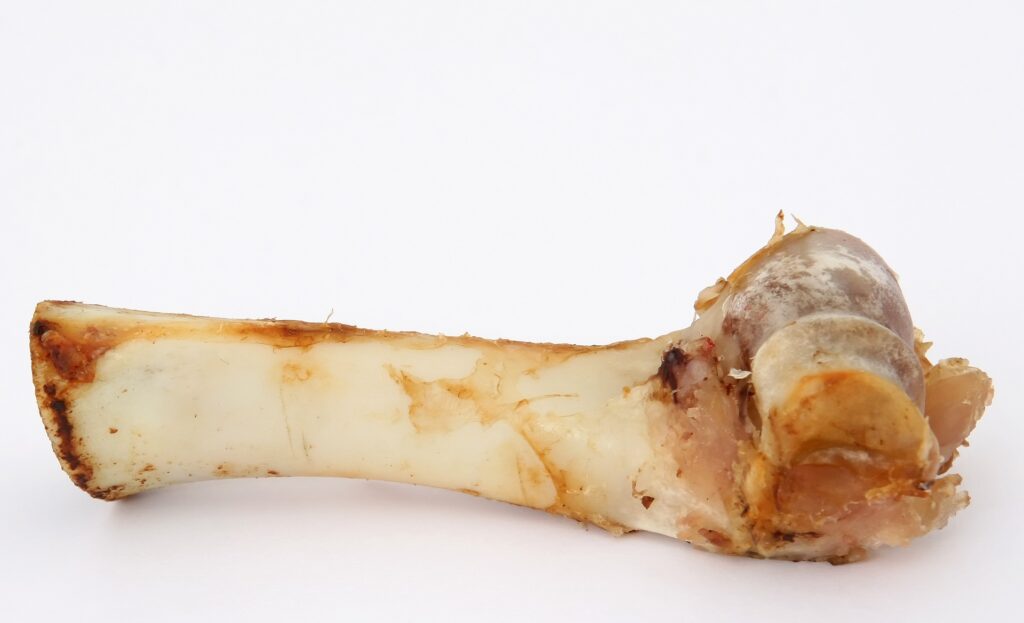
Make the bones easy to chew
If bones are too hard or too large, excessive force can damage tooth enamel, leading to dental problems such as cavities and chipped teeth. Even though dogs have strong digestive systems, they may swallow bones that are too small, which can lead to vomiting or intestinal blockage.
Hipbones and femurs from large animals such as cows, deer, and wild boars are safe because they are packed with marrow and large. Providing bones that are too small for your dog to swallow and allowing them to chew for extended periods of time will increase the effectiveness of teeth cleaning. However, limit chewing to 10 to 15 minutes to avoid damaging their teeth.
Raw bones are an excellent source of minerals and other nutrients. Bones are composed of calcium phosphate, a mineral that promotes proper growth and strengthens your dog's skeleton.
The calcium in bones is said to be four times more digestible than calcium supplements. Raw bones are especially important for large breed puppies, whose rapid growth requires calcium phosphate supplements.
Don't give too much at once
If your dog isn't used to bones, they may develop indigestion and diarrhea. Try giving small amounts of bones, such as soft cartilage, which are easier to digest. Commercially available dried bones are also recommended.
One good idea is to grind raw bones and add them to the food. If you choose to grind bones, choose soft, hollow parts, such as chicken wings or necks.
Once your dog's body gets used to bones, it helps maintain healthy digestion and prevent stomach problems. Raw bones are good for your dog's digestive tract and have a cleansing effect. They can also help with constipation and diarrhea.
Beware of Cooked Chicken Bones
Cooked chicken bones tend to crumble, split lengthwise, and become sharp.
If swallowed whole, chicken bones can cause damage to the stomach or intestines, leading to internal organ damage and perforations. Small dogs, in particular, can experience intestinal blockages from bone fragments.
Chicken bones are rich in calcium and collagen, making them highly nutritious for dogs. Cook the cartilage, rather than the hard bone, in a pressure cooker or similar to make them easier to eat and digest.
Chewing is a natural instinct for dogs. Even though they're dangerous, avoid cooked chicken bones and feed your dog high-quality raw bones instead of the nutritionally-deprived, factory-made plastic substitutes. Chewing on raw bones will satisfy your dog's bone-loving instincts and also strengthen their jaw muscles.
Keep an eye on your dog until he's finished eating
When giving your dog bones, make sure you can see that they're eating them safely and don't swallow them whole.
This will help prevent bone fragments from being swallowed or choking on. There is also a risk of choking, abrasions, and ulcers in the mouth.
It's also important to keep in mind that bones can be indigestible and can lead to intestinal blockages. Do not give your dog bones when you're away from home or when you're not nearby.
We recommend giving your dog raw bones as an after-meal snack. They are effective at removing plaque and also help clean their teeth.
Raw bones should be replaced regularly (every few days) to prevent bacterial growth.
If your dog is licking itself excessively, scratching itself, or engaging in other nervous behaviors due to stress, we recommend giving it a bone.
Summary
There are many benefits to giving your dog bones.
Hypoallergenic raw game (venison, wild boar) and beef bones are a healthy and safe addition to your dog's balanced diet.
Raw bones, with their nutritional, physical, and mental benefits, have been a necessary part of maintaining the health of certain breeds for thousands of years.
Raw bones clean your dog's teeth and provide essential nutrients. While often considered dangerous, raw bones, when given properly, can provide numerous benefits to your dog's health and well-being. Bones that are suitable for your dog are fully digestible, making natural raw bones an important part of their daily diet.
Dogs who don't brush their teeth need a way to remove tartar from their teeth (especially their molars) and keep them sparkling white. To do this, try letting them chew on a bone for 10 to 15 minutes every day.
Feeding your dog raw bones from a young age will help maintain healthy teeth for a long time. Puppies may chew and tear their owner's shoes and cushions, but if giving them bones helps them enjoy the benefits they deserve, it's a win-win for both of you. Be careful how you give your dog bones, and make sure they're eating high-quality bones!






![[Photos] Want to see cute lion-dog statues? Check out these popular shrines](https://with-my-dog.com/wp-content/uploads/2022/07/pexels-markus-distelrath-2832119-150x150.jpg)

![[Free Only] 3 Sites Where You Can Download Dog Bone Illustrations](https://with-my-dog.com/wp-content/uploads/2022/03/947760_sのコピー-150x150.jpg)