
If you have a male dog, do you ever find yourself urinating anywhere?
You may notice that this has become especially common since he started lifting his leg to pee.
We'll explain why male dogs lift their leg to pee and some tips for toilet training your dog.
Why Male Dogs Lift Their Leg to Pee
You may be feeling a little disappointed that your male dog used to sit properly to pee when he was young, but as he grew older, he started lifting his leg to pee.
There's a reason for this behavior, so it's important for owners to understand it properly before training their dogs.
Male dogs lift their legs to urinate because of marking behavior. Marking is done to mark their territory. When marking with urine, they try to raise their legs to urinate higher than other dogs to demonstrate their dominance.
Although individual differences exist, male dogs will begin to lift their legs to urinate at around 6 to 10 months of age.
How to Control Peeing by Raising Your Leg
Raising a leg to urinate is a behavior caused by sex hormones in males. Therefore, the most effective way to prevent this behavior is to neuter your dog. It's said that neutering reduces marking behavior by one-third.
If you're hoping to breed your dog in the future, you'll need to be patient, as marking behavior will decrease once the estrus period is over. While neutering your dog may seem cruel, it's worth considering for the sake of a stress-free life for both you and your dog.
Reasons why dogs won't potty train
If your dog, whether male or female, won't learn to use the toilet, it may be due to the way you're training it.
Here are some common reasons why your dog might not be able to use the toilet.
Learn the toilet not only by location, but also by smell and foot sensation
When toilet training your dog, some people may teach them by pointing or leading them to the toilet area. However, dogs may learn not only by location, but also by smell and foot sensation.
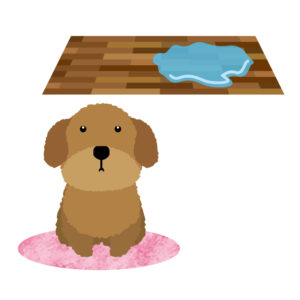
Have you ever urinated on carpet that feels similar to toilet paper? They may mistake this for the toilet because of the feel they get when they step on it, and urinate somewhere other than the toilet.
Don't pee in your room (cage, etc.)
If you're raising your dog in a cage, some people may have a litter box set up inside. However, clean-loving dogs may not want to pee in the place where they rest. Such dogs may be peeing somewhere other than the litter box in their cage.
Poor litter box environment
Even if you've prepared a place that you think is good, your dog may find it unpleasant.
For example, like humans, dogs prefer a toilet in a place where they can maintain privacy. Therefore, they generally do not like it if it's in a place where people are constantly present.
Other reasons include objects that reflect light and make them feel uneasy, or an unpleasant odor that only dogs can detect.
They mistakenly believe that peeing will get them scolded
Some people may scold their dogs when they pee in places other than the toilet as a form of discipline. However, dogs may mistakenly believe that peeing will get them scolded.
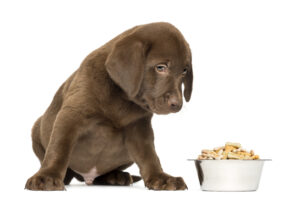
If your dog makes a mistake, it may stop urinating in front of you or in public. Observe whether it has a downcast expression after urinating.
Key Points for Toilet Training
Many people have trouble toilet training their children.
Here are some things to keep in mind when this happens.
Do not place items made of the same material as the toilet sheet in areas where your dog walks.
As mentioned in the previous chapter, your dog may mistake the toilet sheet for a toilet based on its sense of touch. Try to avoid placing items made of the same material in areas where your dog walks so that your dog will remember that toileting is done on the sheet.
If eliminating objects is difficult, restricting your dog's range can also be effective. Some people place a cage or other object in front of rooms they don't want their dog to enter. This method prevents your dog from entering rooms with carpet made of the same material and thus prevents them from mistaking the toilet sheet for a toilet.
If your dog won't use the toilet in its cage, change its location.
Dogs are clean animals, so they may not want to urinate in their cage, where they can relax. If you have a toilet in the cage and your dog is reluctant to urinate there, you might be able to get him to learn by placing the toilet outside the cage.
If you are installing a toilet outside the cage, try keeping the following points in mind.
- A place where your dog can move freely
- A place where there are not many people around
- A place where your dog does not feel insecure or pressured
- A place with enough space for your dog to turn around
If your dog urinates somewhere other than the toilet, clean it up immediately without getting angry
As mentioned in the previous chapter, if you scold your dog for urinating somewhere other than the toilet, he may mistakenly think that you are scolding him for urinating and may urinate in places other than the toilet. If your dog urinates somewhere other than the toilet, clean up the area immediately.
If the smell of urine lingers in areas other than the litter box, your dog may mistake that place for the litter box. If your dog goes to the wrong litter box, clean it up and guide him back to the litter box, rather than scolding him.
Summary
Dogs are not naturally creatures that use the toilet in one place.
It may take a while for your dog to learn to use the toilet, but please be patient and watch over him until he does.
It's also important to create a toilet environment that makes your dog feel comfortable urinating there. It's important to be mindful of this so that both dogs and humans can live stress-free lives.











![[2022 Edition!] Popular Small Dog Names](https://with-my-dog.com/wp-content/uploads/2022/04/image2-1-150x150.jpg)