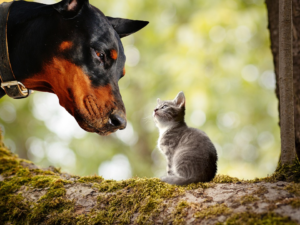

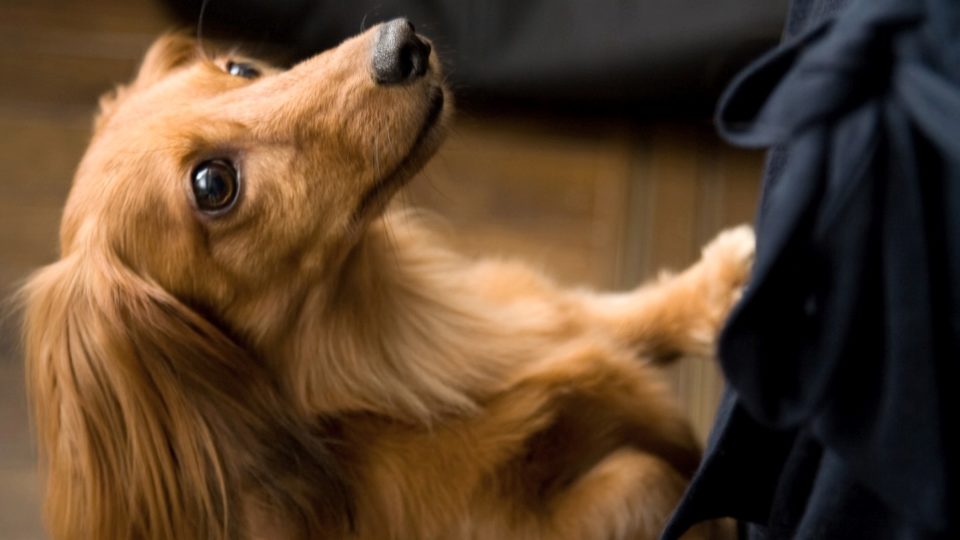
Like humans, dogs can experience jealousy. Dogs are often jealous of children, babies, and other dogs. Some even become jealous of stuffed dog toys.
In this article, we'll introduce some tips for living with a human baby and how dogs behave when they're jealous.
Do dogs get jealous of human babies?

When a baby is born, it's natural for the whole family to focus their attention on the newborn. And because it's a newborn, not only attention but affection is directed at the baby. The baby will steal the attention and affection that the dog previously had from its family.
For this reason, dogs can become jealous of babies and easily become hostile towards them. Also, dogs may suddenly become ill-behaved after the baby is born.
So, what can you do?
Keep the dog and baby in separate rooms
It's best to keep a newborn baby in a separate room. If your dog is very used to people, it may be okay to keep them together, but this is not recommended. It could be disastrous if the dog attacks or bites the baby.
Even a weak bite can cause deep wounds to an immature baby. It can also be disastrous if a dog's paw pokes a sleeping baby's eye. Babies have weak immune systems, and germs in a dog's mouth can cause illness or inflammation.
When to introduce your dog to your baby
When should you introduce your baby and dog to each other? The best time is after they can stand and walk properly. Once they can stand, their line of sight will be higher than the dog's, making it easier to establish a master-subordinate relationship.
However, this is not a general rule, so it's best to observe how your dog and baby interact with each other as you get them used to each other.
The most important thing is to keep your dog company, even after the baby arrives.
Make sure to give your dog the same attention and affection you might give to a baby. Even after your baby joins the family, it's important to continue caring for your dog and showing affection just as you did before.
Dogs are Jealous Creatures
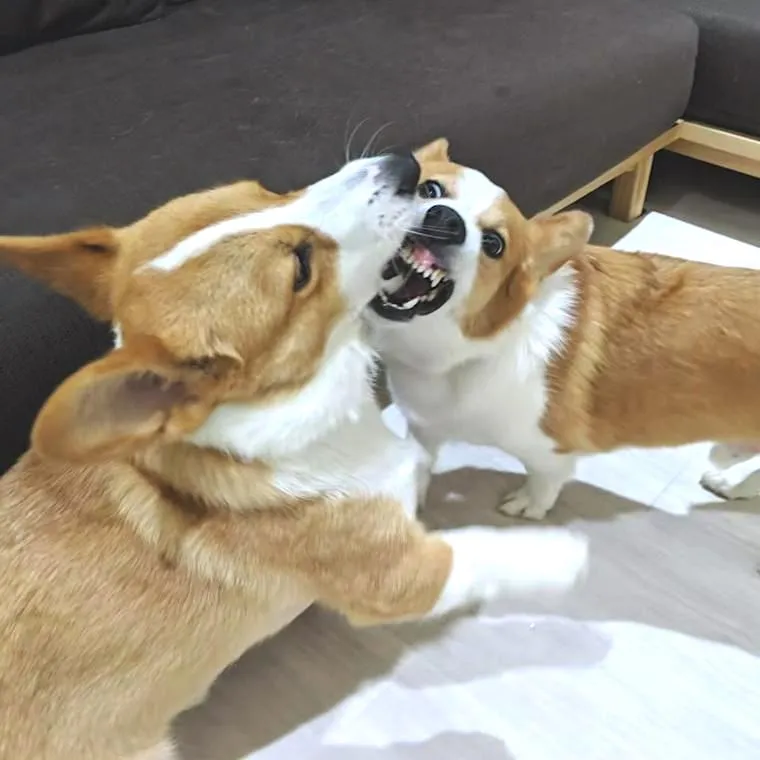
Jealousy in dogs has been scientifically studied, and psychology experts at American universities have conducted experiments. In experiments in which owners cuddled a stuffed dog in front of their dogs, many dogs displayed behaviors consistent with jealousy.
Many dogs approached their owners cuddling the stuffed dog, touching them and expressing their jealousy at their lack of attention. Approximately one-quarter of the dogs also attempted to bite the stuffed dog.
These experimental results reveal that dogs experience jealousy similar to humans, but canine jealousy appears to be slightly different in nature.
There are two types of jealous behavior in dogs
Jealous behavior in dogs can be broadly divided into two types: "spoiled behavior," in which the dog tries to get its owner's attention, and "aggressive behavior," in which the dog tries to eliminate something (a rival) that the owner strongly focuses on.
Sweet behavior
This is a behavior that cats use to get the attention of their beloved owners. Examples include:
- Staring
- Rubbing body against
- Getting in between owner's attention
- Licking
- Nuzzling
- Bringing a toy
- Inviting owner to play (assuming a play bow pose)
Aggression
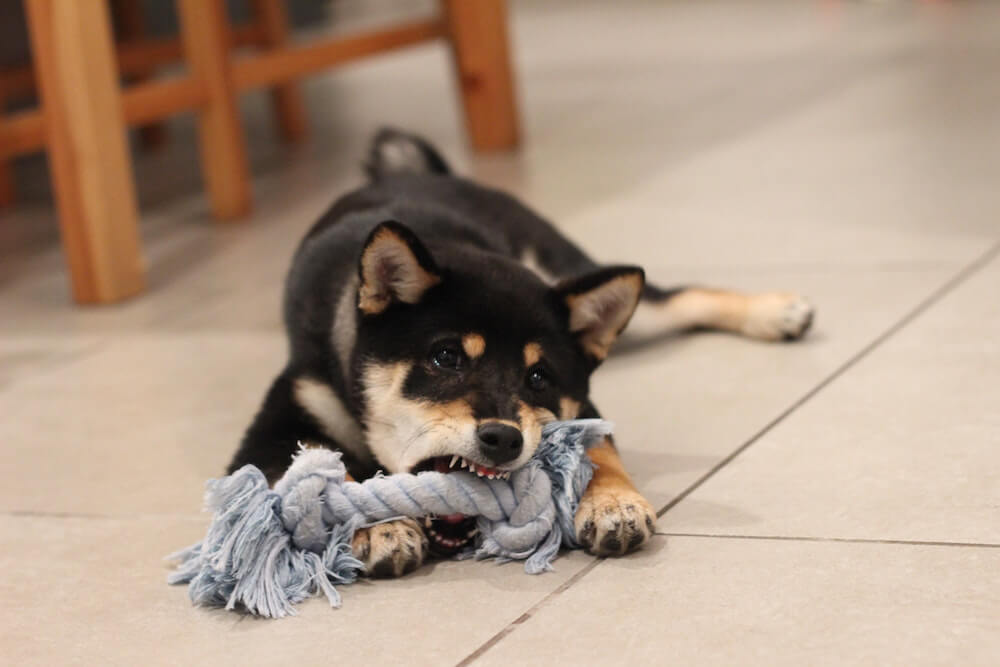
The following are examples of aggressive behaviors resulting from jealousy:
- Barking
- Growling
- Biting
- Destructive (toys, etc.)
- Chasing (chasing away)
If your dog continues to show affection and doesn't pay attention to you, its affectionate behavior can escalate into aggressive behavior. If your dog seems jealous, confront him and show him lots of love.
Summary

While it's cute to see your dog get jealous, it can lead to stress and anxiety for the dog. Furthermore, if your dog starts barking or biting, it can become a significant problem when living with a dog.
For pet owners, a new addition to the family, such as marriage, childbirth, or starting a multi-pet household, is a happy change. To ensure your dog is happy as a member of the family, make sure to act with consideration for your dog's feelings.





![[Free] 5 dog foods you can try! Depending on your dog's growth and preferences](https://with-my-dog.com/wp-content/uploads/2022/07/image7-12-150x150.jpg)






![[Small dogs are very popular] Survey on cute dog rankings](https://with-my-dog.com/wp-content/uploads/2022/07/image4-26-300x225.jpg)