

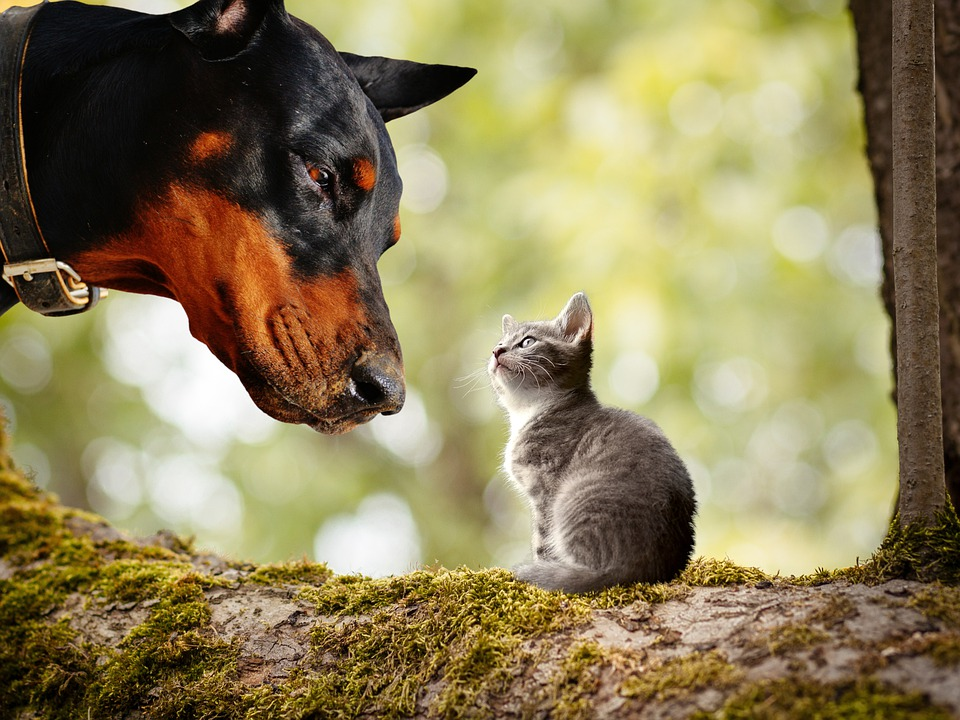
If you own a dog and a cat together, you may have witnessed them fighting.
If you're thinking of keeping a dog and a cat together, you may be worried about whether they'll get along.
To build a good relationship between a dog and a cat, you need to understand their respective personalities and exercise patience.
The initial introduction period may be difficult. However, as is often seen on social media, interacting with a dog and a cat can be rewarding for family members as you help them build a unique bond.
In this article, we'll explain the causes of dog and cat quarrels and the signs that a fight is imminent.
The key is for owners to understand the characteristics of dogs and cats and guide them in a way that fosters a good relationship.
Do dogs and cats not get along?
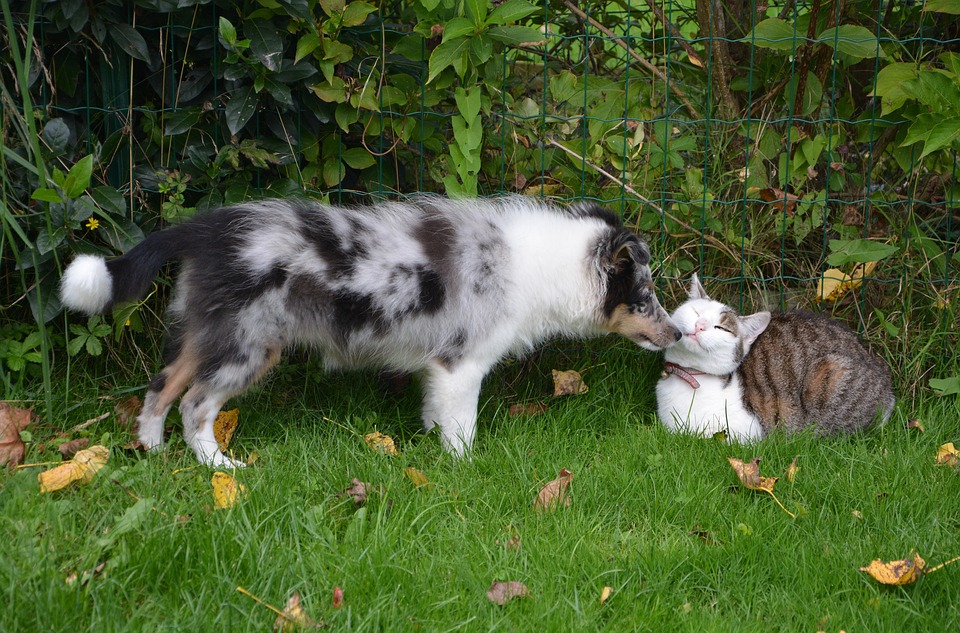
It has long been said that dogs and cats do not get along.
Just as people often divide into dog lovers and cat lovers, this is likely because, while both are popular pets, they are completely different species with completely different habits. However, if a puppy and a kitten are raised together, they are more likely to build a good relationship. The more they play together constantly, even as adults, the higher the chances of them becoming close friends.
If they've lived together since childhood, they won't be afraid of each other unless one of them has an overly aggressive and dominant temperament. Therefore, it's not certain that dogs and cats will always be unable to understand each other and will have a bad relationship.
Whether or not they get along also depends on the behavioral principles of dogs and cats. Dogs are primarily carnivores and have long been used by humans to support hunting. Therefore, their role was to chase things smaller than themselves, including cats.
However, this does not mean that dogs and cats cannot coexist peacefully. Temperament and past trauma play a role, and just like people, each animal has its own unique personality. Personality compatibility may also play a role.
Common Reasons Dogs and Cats Don't Get Along
Here, we'll look at common causes of dog and cat fights, broken down by category. Please use this as a reference and observe your dog and cat's behavior and expressions.
Not satisfied with playtime or toys with their owner, they start picking on each other
When a dog lifts its paw toward a cat, it may mean it wants to play, but the cat may interpret it as a sign of aggression. This can cause the cat to slap its paw at the dog, which can anger the dog and lead to a fight.
Similarly, a cat trying to rub against a dog may be acting friendly, but the dog may interpret it as threatening. This may cause the dog to growl or bark, especially if the cat is near its toys or food.
Invading Each Other's Territory
Both dogs and cats are territorial animals. Cats, in particular, are more territorial than dogs and prefer to be alone. Cats, who spend most of their time indoors, may often view a new animal as an intruder.
Cats also tend to have stronger preferences than dogs. While they tolerate some people, they often have personalities that they cannot tolerate. Male cats are particularly territorial, so neutering them increases the likelihood of this happening.
Eating the other cat's food
Dogs are omnivorous carnivores (meat, plants, and grains). Cats, on the other hand, are even more carnivorous than dogs. Therefore, the pungent aroma of meat-based cat food when opened is irresistible to dogs. Cat food is specially formulated for carnivorous cats, but its juicy meaty flavor also whets the appetite of dogs.
Also, many cats practice free feeding, leaving food out all day. Depending on your dog's appetite, your cat's food may become a target for your dog.
When they want to be alone, they can't be alone and feel stressed.
One reason cat owners are attracted to cats is because they prefer to be alone and have an air of independence. Cats groom themselves, play, and do whatever they want, without worrying about what others think.
On the other hand, dogs are pack animals, so they are curious about solitary cats and want to approach them. Dogs invite play without considering a cat's personal space, which can cause stress and keep the cat from being alone. However, that doesn't mean that cats want to be alone all the time. Cats that have lived with humans as pets for a long time can get lonely, just like dogs and people.
Three Signs a Dog and Cat are Fighting
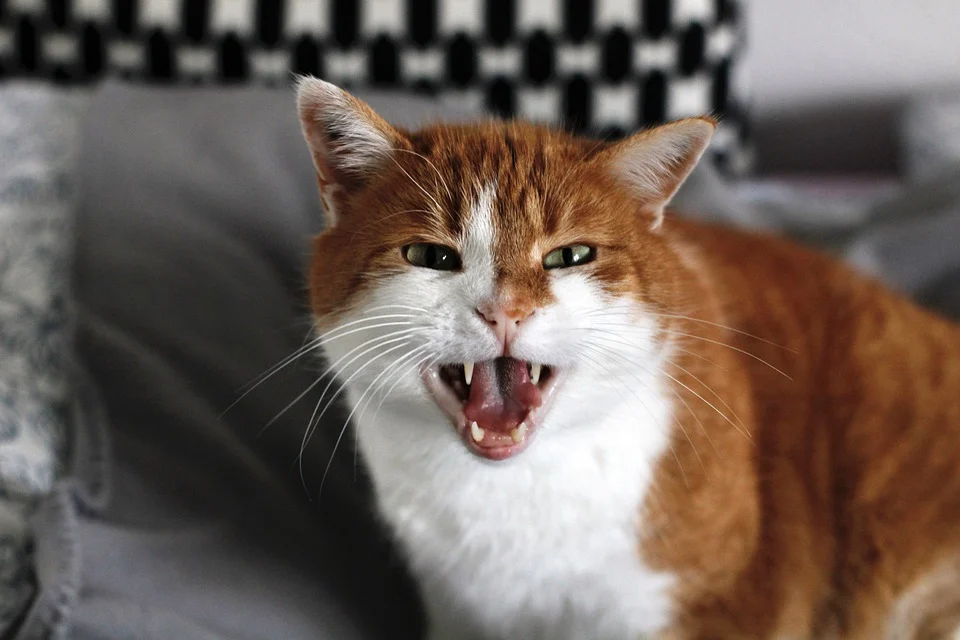
Here, we'll explain the body language (non-verbal communication using physical movements) that dogs and cats use when they're angry.
These are important signs given by animals that can't speak. Dogs and cats often express completely opposite meanings, whether they're threatening or open-minded.
Please make sure you understand your dog and cat's psychological state to avoid misunderstandings and making the wrong decisions.
Cat Eye Contact
When a cat makes eye contact, it can be interpreted as a sign of hostility or wariness. Conversely, a lack of eye contact can be interpreted as a sign of non-hostility. An angry cat's eyes are hard and focused. Their pupils may be constricted, but some cats may have wide eyes and not blink.
When a cat avoids eye contact with a dog, it can be a sign of trust.
Threatening/Growling
Dogs often growl softly, even when playing. However, if they growl softly at a cat or open their mouths and bar their fangs, it could be a sign of anger. This could lead to a fight.
When cats are angry, they may become silent, spit, growl, or behave in a way that is completely different from their usual calm demeanor. They will display a threatening posture by ruffling their fur, stiffening their front legs, or crouching and looking up at their prey.
Tail Changes
When a dog is angry, its tail will wag stiffly. If the tail moves from a neutral position to a vertical position or arches over its back, it may be indicating that the dog is becoming aggressive. The higher the tail is held, the more threatening it is.
A high tail also encourages the dog's anal glands to release more of its scent, signaling its anger.
When a cat is angry, its tail will appear bristling and puffy.
Its tail will also be stiff, either stiffened or tucked under its body. Its ears will be tense and pressed tight against its head, and its whiskers will be stiff and taut.
If your cat is sitting or lying down with its tail tucked around its body, it may be acting defensively or may be feeling unwell.
Summary
The question "Can dogs and cats get along?" is a common one. Dogs and cats are inherently different in many ways, making them difficult to get along with. However, with patience and the right environment, dogs and cats can become best friends.
Dogs are social animals and tend to be playful by nature.
Cats, on the other hand, are very independent.
A playful dog may appear aggressive and threatening to a cat. This can lead to the cat trying to defend itself against the dog's attack, even though the dog is actually just trying to play.
Similarly, dogs (especially young ones) love to chase. Chasing a cat can be just as fun as chasing a canine friend.
On the other hand, a cat may interpret the dog's playful behavior as a threat.
Even something dogs and cats have in common—their tails—can confuse things.
When a dog wags its tail, it's a sign of friendship and sends a gentle message to its mate: "I'm happy. Let's play."
However, cats wag their tails when they're angry.
When a cat and a dog wag their tails face each other, it can be confusing for their owners.
It's very sweet to see two cats getting along. However, don't rush into trying to get them to get along. If they're having trouble getting along, try to understand the cause and consider solutions.
To take action, refer to the methods explained in this article and identify the signs your dog and cat are showing.
And if the two cats seem about to get into a fight, please keep them apart and keep an eye on each other.












![[Dog Allergies] Do dogs have allergies? Explaining safe foods!](https://with-my-dog.com/wp-content/uploads/2021/10/3029373_m-150x150.jpg)