
[Treatment by a Groomer] How to Groom Your Dog? How to Do It Yourself and Why You Should Go to a Salon

![[Treatment by a Groomer] How to Groom Your Dog? How to Do It Yourself and Why You Should Go to a Salon](https://with-my-dog.com/wp-content/uploads/2021/09/alvan-nee-lvFlpqEvuRM-unsplash-1-scaled.jpg)
Once you get a dog, you probably have questions like, "Should I groom my dog myself?" and "Should I take him to a salon?"
This article is aimed at dog owners with such questions.
- The need for grooming
- How to groom your dog yourself
- The advantages and disadvantages of taking your dog to a salon
I'd like to explain these and other topics.
The needs of your dog will vary depending on the breed, so we hope you will use this information to compare it with your own dog.
Why should I trim?
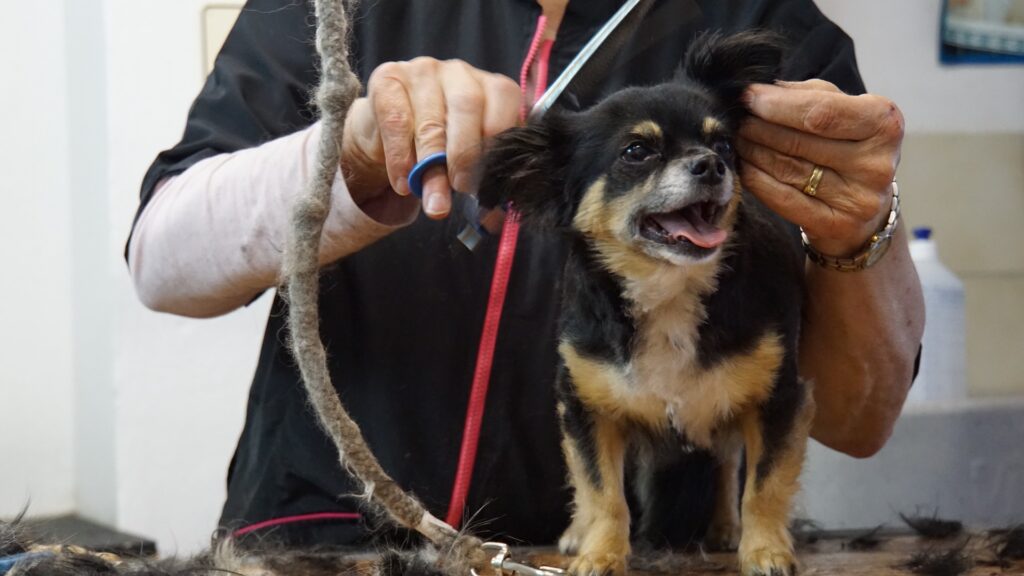
Why is it necessary to groom a dog?
There are many reasons for grooming. Here, I would like to introduce some of the reasons.
Maintaining Hygienic Coat
The purpose of grooming a dog is to maintain hygienic coat.
By thoroughly trimming overgrown coats, you can keep your dog's coat looking neat.
When you groom a dog, you also shampoo it at the same time, so grooming is essential for maintaining your dog's hygiene.
Preventing Injuries
Grooming also helps prevent injuries.
If a dog's hair grows too long, the hair between its paw pads will also grow, making it more likely for it to slip when walking.
If this condition continues, it can lead to dislocation and other problems, which is very dangerous.
Regular grooming can prevent this, so grooming is very important.
Preventing Fleas and Ticks
Grooming your dog can also help prevent fleas and ticks.
Grooming also includes brushing and shampooing, so even if your dog has fleas or ticks, you can thoroughly remove them.
Regular grooming can also help prevent the infestation of fleas and ticks.
Preventing Heatstroke
Shortening your dog's coat (summer cut) improves airflow through the coat, reducing the risk of heatstroke.
However, trimming your dog's hair too short can expose the skin to direct UV rays and alter the hair growth, so care must be taken when trimming.
For Beauty and Fashion
Grooming your dog also has the meaning of beauty and fashion.
Most dog owners seem to trim their dog's hair for beauty and fashion purposes. Transform your beloved dog into a cute character with a cut that brings out their unique personality.
Frequency and timing
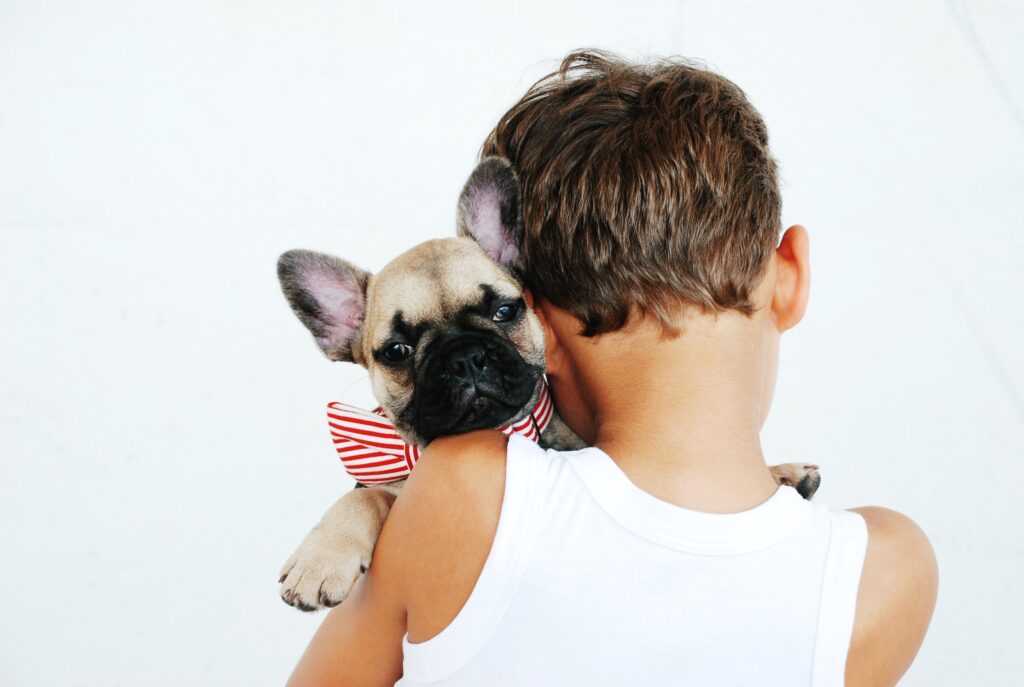
Generally, grooming is recommended once a month, but the timing and frequency vary depending on the breed.
For example, breeds with continuously growing hair, such as toy poodles, should be groomed about once a month.
On the other hand, breeds whose hair doesn't grow beyond a certain level, such as Chihuahuas, generally don't need to be groomed, but grooming is still recommended.
Grooming is best done when you notice body odor or want to trim your dog's hair.
What is Grooming?
- Nail clipping
- Ear cleaning
- Foot clipping
- Anal gland expression
Grooming is the process of grooming your pet's hair and finishing with shampooing and blow-drying.
Some grooming salons offer partial cuts and beard trimming for an additional fee.
Grooming is when a full body cut is added to the grooming service.
As such, grooming and trimming are times when your dog's hair grows long or when it starts to smell.
By the way, in Europe and the United States, they don't call it trimming; they just call it grooming.
For this reason, grooming salons in Japan are called grooming salons in Europe and the United States.
Grooming isn't just a stylish look; it also helps maintain your dog's skin health and helps detect illnesses early, making it an essential part of living comfortably with your pet.
If you trim it yourself
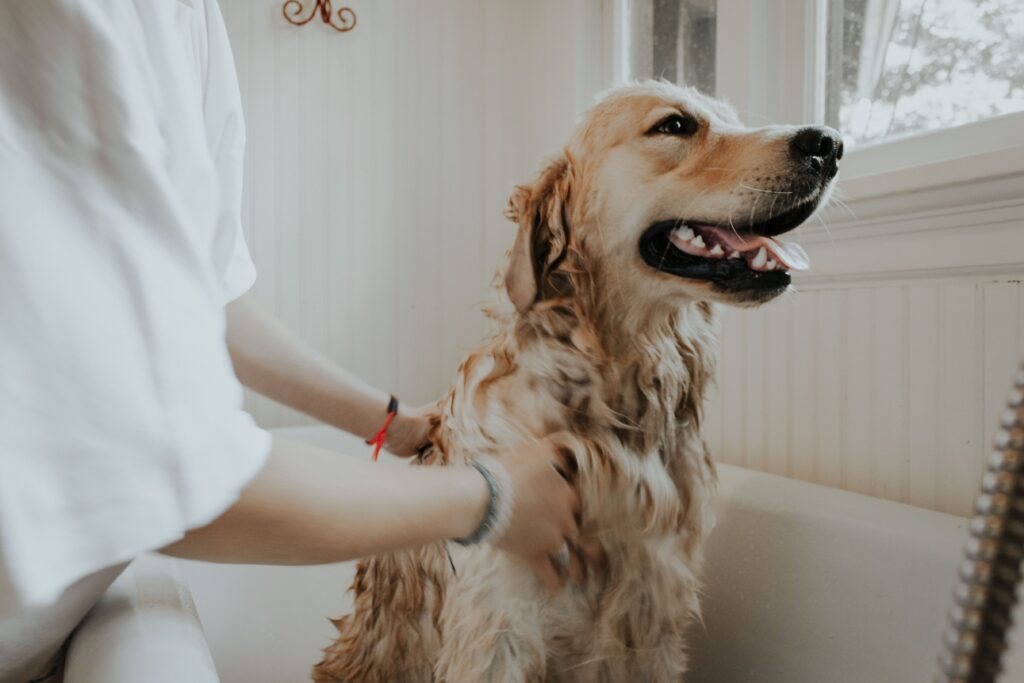
While it's common to have your dog groomed at a grooming salon, some breeds may be groomed by themselves.
In this article, we'll explain in detail how to do it.
Grooming and Grooming Breeds
Dogs are divided into two types:
- Grooming-required dog breeds
- Grooming-required dog breeds whose hair doesn't grow beyond a certain level
Here are some of the most commonly groomed and groomed dog breeds kept in Japan.
Grooming Dog Breeds
- Poodle
- Toy Poodle
- Miniature Poodle
- Medium Poodle
- Standard Poodle
- Schnauzer
- Miniature Schnauzer
- Standard Schnauzer
- Giant Schnauzer
- Terrier
- West Highland White Terrier
- Wirehaired Fox Terrier
- Bedlington Terrier
- Wirehaired Dachshund
- Bichon Frise
Grooming Dog Breeds
- Shiba Inu
- Papillon
- Dachshund (excluding wirehaired)
- Chihuahua
- Shih Tzu
- Maltese
- Yorkshire Terrier
- Golden Retriever
- Labrador Retriever
You may be able to groom some grooming breeds yourself.
For example, Chihuahuas and Dachshunds are small in size and easy to groom even for beginners.
On the other hand, breeds like Shih Tzus, Maltese, and Yorkshire Terriers don't grow hair beyond a certain point, but their hair grows almost to the floor and then stops growing.
This means that if you keep them in an average household, you'll need to trim their hair.
Cutting a dog's hair is extremely difficult, and there's a risk of accidentally injuring your dog with scissors.
You could try trimming with clippers, but this can also lead to injury if you're not used to it.
Therefore, even for breeds that require grooming, many are better off having their hair trimmed at a salon.
Also, grooming a Golden Retriever or Labrador Retriever yourself can be very hard work due to their large size.
Residual shampoo or dry hair can lead to skin problems.
For these breeds, it's best to have them groomed at a salon.
Groomed breeds require professional haircuts, so have them professionally groomed at a salon.
Key Grooming Tips
Next, we'll explain how to groom Chihuahuas and Dachshunds, which are relatively easy to groom.
If you find it difficult to groom a Chihuahua or Dachshund yourself, such as if they're aggressive, we recommend hiring a professional groomer.
For Chihuahuas and Dachshunds, many grooming salons offer relatively affordable trimming and grooming services. We recommend visiting one of these locations.
Start with the easy things
Start with the easy things.
Since grooming can tire your dog if it takes too long, it's best to gradually improve it over several days, rather than doing it all in one day.
● Ear Cleaning
First, gently clean the inside of the ear with a cotton swab or similar.
Do not insert the swab too deep, but focus on the edges of the ear, removing earwax as you clean.
If your pet's ears are too dirty or appear inflamed, it may be an ear problem, so we recommend taking them to the vet.
● Nail Clippers
Use nail clippers specifically designed for dogs.
Cut the nails little by little, starting from the tip. Be careful not to cut the nails too short, as this can cause bleeding.
As a general rule,
For dogs with white nails, the veins are faintly visible, so trim just before that.
For dogs with black nails, the veins are less visible, so don't trim too tightly, but trim just enough to avoid any danger.
If you then file the nails, they will no longer catch on anything, and the owner's nails will not hurt when holding the dog.
● Cut the soles of the paws and around the anus with clippers
First, trim the soles of the paws with dog clippers.
Shaving the hair that has grown out of the paw pads will result in a neater appearance. Use clippers with as fine a tooth as possible.
Shave the area around the anus in the same way.
Since feces tend to accumulate around the anus, trimming it will prevent it from getting on the fur.
Trim the hair around the anus, trimming it about 1 cm from the anus outward.
Move the clippers so that the blade points outward from the anus.
Again, use clippers with as fine a tooth as possible, and trim gently to avoid damage from the clippers.
● Brushing
Brush your dog's entire body thoroughly before shampooing.
If there are any hairballs, be sure to remove them thoroughly at this time.
Brushing your dog before shampooing removes excess dirt and makes its fur easier to run your fingers through, resulting in better lather. This step is very important.
● Shampoo and Express the Anal Glands
Before shampooing, use cotton wool to plug your dog's ears to prevent water from getting in.
Be careful not to push the earplugs too far in, or they may become impossible to remove.
Make sure to use shampoo designed for dogs. Human shampoos are too strong and can cause skin problems.
When shampooing, fill a basin or similar container with hot water in the bathroom and slowly pour it over your pet's rear. The water temperature should be lukewarm, about 36-38°C.
After pouring warm water over your pet's rear, squeeze its anal glands. There is a bulging area of skin under its anus. Lift its tail and gently scoop up the area to squeeze.
Squeeze gently, without using too much force. Anal glands have a strong odor, so rinse them immediately after squeezing.
Slowly pour hot water over your pet's bottom and neck. Be sure to wet their legs and belly as well.
When pouring hot water over their face, be careful not to get water into their nose.
If your pet seems resistant, gently pour hot water over them with a wet sponge.
Then, gently wash your pet's bottom and neck with well-lathered shampoo.
At this point, gently lather the shampoo with the pads of your fingers, as if massaging the area.
When shampooing your face, be careful not to get shampoo in your eyes or nose.
When rinsing, rinse your face from the head down, in the opposite direction to when you first rinsed it.
At this point, any shampoo remaining can cause skin problems, so be sure to rinse thoroughly.
Next, lightly rinse. Simply fill a bowl with warm water, add a small amount of rinse, stir, and then lightly rinse away any excess water from your face.
Then rinse thoroughly.
Finally, wring out the hair thoroughly and towel dry.
Drain thoroughly. Be sure to wipe under the arms and toes as well.
This will shorten the time it takes to dry your hair.
Please remove the earplugs after this.
● Dry with a hair dryer
When drying with a hair dryer, keep it about 20cm away and be careful not to let it get too hot.
This hair dryer step is also very important, so be sure to dry all areas thoroughly.
Switch between hot and cold air, carefully monitoring your dog's condition, and make sure to dry them completely.
At this time, be sure to also lightly wipe the inside of the ears with a cotton swab.
Finally, use the cold air to check if any areas feel cool.
The cooler areas are still not completely dry, so dry them thoroughly.
● Brushing
Finally, brush your dog's hair to complete the grooming routine.
Advantages and Disadvantages of Grooming Yourself
What are the advantages and disadvantages of grooming your own pet?
Here's a quick summary for reference.
Advantages
- Low cost
- Increases physical contact with your dog, deepening your bond
- Feels a sense of accomplishment
Disadvantages
- Worry about injury
- You can't see a doctor immediately if your dog gets sick
- The results won't be as clean as a professional's
- You can't respond if your dog gets violent or refusing
As you can see, it seems like there are more disadvantages than advantages.
In particular, owners will likely be troubled if their dog gets injured or becomes ill. You may find yourself panicking.
Please take these points into consideration when deciding whether to groom your dog yourself.
If done at a grooming salon

At a grooming salon, experienced groomers will give your dog a lovely grooming.
Each salon has its own unique features, so why not try searching for the perfect grooming salon for your dog?
If your favorite grooming salon is a little far away or busy, you can request transportation.
Also, most veterinary clinics and other facilities offer grooming services.
At a veterinary clinic, you can rest assured that even if your dog is diagnosed with an illness or injured, a veterinarian is always nearby.
If the cost is too high for your family, you may be able to have your dog groomed as a model dog for a grooming school.
Here, students from grooming schools practice grooming dogs and serving customers.
Even though students are grooming dogs, the teacher often handles the finishing touches.
If you can find a nearby grooming school by checking their website, they offer affordable grooming services, so if the cost is a burden, it might be worth considering.
Price Guide
Prices vary depending on the grooming salon, but the average prices are as follows:
- Small dogs like Chihuahuas and Dachshunds: From 3,000 yen
- Medium dogs like Shiba Inu: From 5,000 yen
- Large dogs like Golden Retrievers: From 10,000 yen
Prices vary depending on the grooming course.
The price for a full-body grooming session can be twice as much as a shampoo and grooming session.
Even if you only want grooming, there are options like partial haircuts and microbubble baths, and prices vary by region.
Prices will likely be listed on the grooming salon's website, so we recommend checking before visiting.
By the way, when getting your pet groomed at a salon, most salons will require proof of vaccinations received within the past year and a rabies vaccination certificate, so be sure to check carefully when making your reservation and don't forget any necessary documents.
Advantages and Disadvantages of Grooming at a Grooming Salon
So, what are the advantages and disadvantages of grooming at a grooming salon? We've summarized them below for your reference.
Advantages
- Safe and careful grooming
- You can trust your pet with professional groomers
- You can get the cute style you want
- If an illness or other condition is discovered, your pet will be examined immediately
- Transportation services are provided, so you can leave your pet in our care even when you're busy
- Doing it yourself can be a pain, but having a groomer groom your pet is a breeze
Disadvantages
- It's expensive.
- It's a little worrying if it's your first time at a grooming salon.
- You're worried about whether your dog will behave properly.
These are some of the reasons.
We recommend getting your dog groomed at a grooming salon, as they can generally ensure a safe and cute finish.
However, if you plan on going once a month, grooming fees can be quite expensive.
If your budget is a little tight, consider leaving it to the grooming school mentioned above, or consider a shampoo-only course depending on the month.
Summary

What do you think?
The world of grooming is complex, with many different types of grooming and different methods for different breeds.
You can do it yourself, but it's also a good idea to find a grooming salon you like, as long as you're not overdoing it.
Once you become a regular customer, the groomer will get to know your dog's personality and your preferences.
And if it becomes a fun place to communicate, going to the grooming salon will be fun.









![[Sheltie puppies] Check breeder information for baby dogs](https://with-my-dog.com/wp-content/uploads/2022/01/image1-150x150.jpg)







![[Latest] French Dog Names: A Guide to Cool and Stylish Names](https://with-my-dog.com/wp-content/uploads/2022/04/image1-300x200.jpg)