

During puppyhood, diet is very important. It's said that a puppy's diet during this period has a significant impact on its growth and even its health as an adult. It's important to provide a nutritionally balanced diet to ensure your puppy's health.
For the health of your beloved puppy, you'll want to carefully consider what they eat.
Recently, there are many dog foods specifically designed for puppies on the market. With so many varieties available, some owners may find it difficult to choose because they all seem so good.
This time, we'll introduce how to feed and choose puppy dog food for owners who are concerned about their puppy's diet.
Four Things to Keep in Mind When Feeding Your Puppy
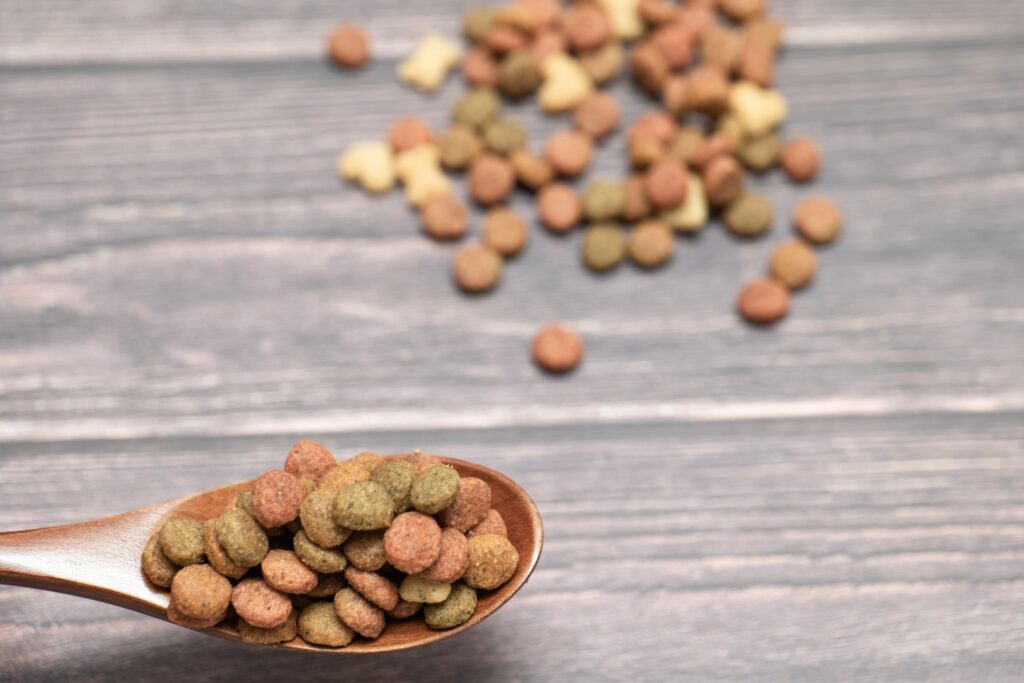
A puppy's diet plays a major role in their future development, so it's important to feed them properly.
When feeding a puppy, the following four points are very important:
- Puppyhood is very important
- Food frequency and quantity must be considered
- Avoid nutritional deficiencies and overfeeding
- Pay attention to the ingredients in dog food
Keep these four points in mind when feeding your puppy.
Puppyhood Diet is Very Important
Puppyhood diet is very important from the perspective of nutrition and discipline.
Puppies grow to adulthood in about a year, so a nutritionally balanced diet is important.
During this growth period, the body's immune system develops and the skeleton also grows. However, nutritional deficiencies can lead to problems such as poor immune system development and poor skeletal development.
Keep in mind that a balanced diet is very important for a puppy's proper development, so be sure to pay close attention to your puppy's diet.
In terms of training, a good diet during puppyhood is also very important to prevent your dog from becoming selfish.
Puppies can enter a rebellious phase between 4 and 9 months of age.
Although this varies from dog to dog, some dogs may become rebellious toward food during this phase.
At this time, you may be worried that your puppy won't eat its food and end up talking to it more than necessary.
However, if you give excessive attention to a puppy just because it won't eat its food, it may mistakenly learn that "if I don't eat, I'll get attention."
For this reason, you must be careful about how you feed it and the environment in which it eats.
Consider the frequency and amount of meals
When feeding a puppy, you must consider the frequency and amount of meals.
A puppy's stomach is still small, and its digestive system is not yet fully developed. To avoid stomach strain, it's ideal to feed your puppy nutritious, easily digestible foods in divided portions. Adjust the amount of food according to your puppy's weight.
Avoid nutritional deficiencies and overfeeding
When feeding your puppy, be careful not to overfeed or deficiencies. Puppy food is very important for building a healthy body. Nutritional deficiencies can prevent healthy growth, so be sure to feed your puppy a well-balanced dog food.
On the other hand, you should also be careful not to over-nutrition your dog.
For example, calcium is considered important for dog growth. While calcium is certainly essential for growth, if you have a complete, nutritious dog food, there's no need to give extra calcium.
Some dog foods, especially for puppies, already contain a high amount of calcium.
If your dog is eating such dog food, you can be sure that it is getting enough calcium.
In particular, if large dogs take in too much calcium, their growth rate will increase, which can put a strain on their bodies.
Large dogs grow more slowly than small dogs, so there's no need to rush their growth.
Avoid overfeeding your dog so that it can grow at its natural rate.
As for the amount of food, many puppies eat a lot, so you may end up giving them treats in addition to dog food.
Treats should only be used for training purposes, so be careful not to give too many.
Pay attention to the ingredients in dog food
Pay attention to the safety of additives and other ingredients in puppy dog food. In fact, until recently, there were no laws in Japan to ensure the safety of dog food, and even if it contained ingredients that were harmful to pets, no penalties were imposed. In June 2009, the "Act on Ensuring the Safety of Pet Food (Pet Food Safety Act)" came into effect in Japan, ensuring a minimum level of safety. However, there are still dog foods on the market that contain unsafe ingredients.
The Pet Food Safety Act now requires that all dog food ingredients be listed. Therefore, when choosing dog food, be sure to check the ingredients before purchasing.
Tips for Feeding Your Dog at Each Season
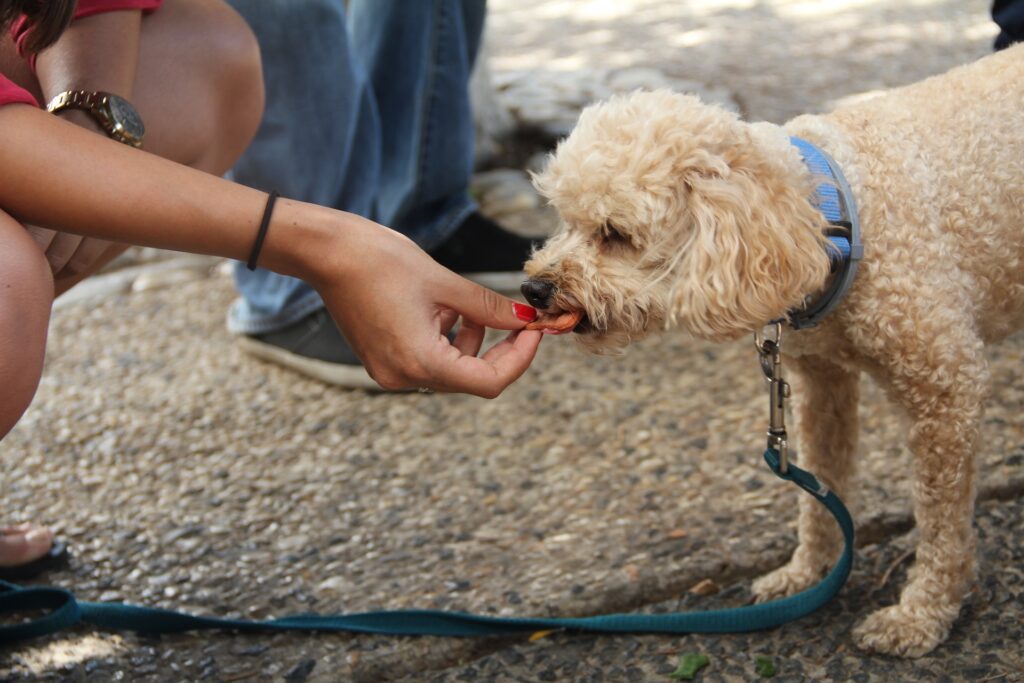
Here, we'll introduce some tips on feeding your puppy at different stages.
The frequency and amount of meals will vary depending on your puppy's development.
To properly support your puppy's growth, be sure to feed it in the appropriate way at each stage.
Weaning Period (Up to 2 Months)
From about 5 weeks old to about 2 months old, puppies enter the weaning period.
They gradually begin to show an interest in regular dog food.
At this stage, their teeth have not yet fully grown in, so it is best to feed them soft, moistened dog food.
Soaking dog food in boiling water can destroy the nutrients in the food, so we recommend soaking it slowly in lukewarm water.
During the weaning period, dogs cannot eat large amounts at once, so feed them in divided meals.
The recommended number of meals is about 3 to 5 times a day.
To ensure a balanced diet, feed dog food labeled as a complete diet.
Weaning Period to 1 Year (Around 3 Months to 1 Year)
The period between 3 months and 1 year of age is the period of most rapid growth for puppies.
For this reason, pay particular attention to feeding habits during this period.
After 3 months of age, you should transition your puppy from solid food to dry food.
Suddenly switching to dry food can put a strain on the digestive system, so gradually transition to firmer dog food by reducing the amount of lukewarm water used for soaking. As your puppy grows, its teeth will grow in and the amount of food it can eat will increase, allowing you to gradually reduce the number of meals. A good guideline for feeding your puppy during this stage is approximately 3-4 times a day.
Puppies' growth rate slows after about 6 months of age, so you'll need to adjust your feeding schedule accordingly. Some dog foods reduce the amount of food you give them after 6 months of age, so be sure to check the feeding amount on the label.
Adulthood (Around 1 Year Old and Up)
At 1 year of age, a dog enters adulthood. Since they are now fully grown in mind and body, it's time to switch to adult dog food. Switching to adult dog food suddenly can lead to a dog's refusal to eat, so it's best to gradually switch over over several days.
It's said that feeding an adult dog twice a day is the optimum.
Although the number of meals will be reduced, the amount of food at each meal should be larger than when they were a puppy.
However, it is not good to give them too much, so calculate the calories they need per day and adjust accordingly.
Top 5 Dog Foods
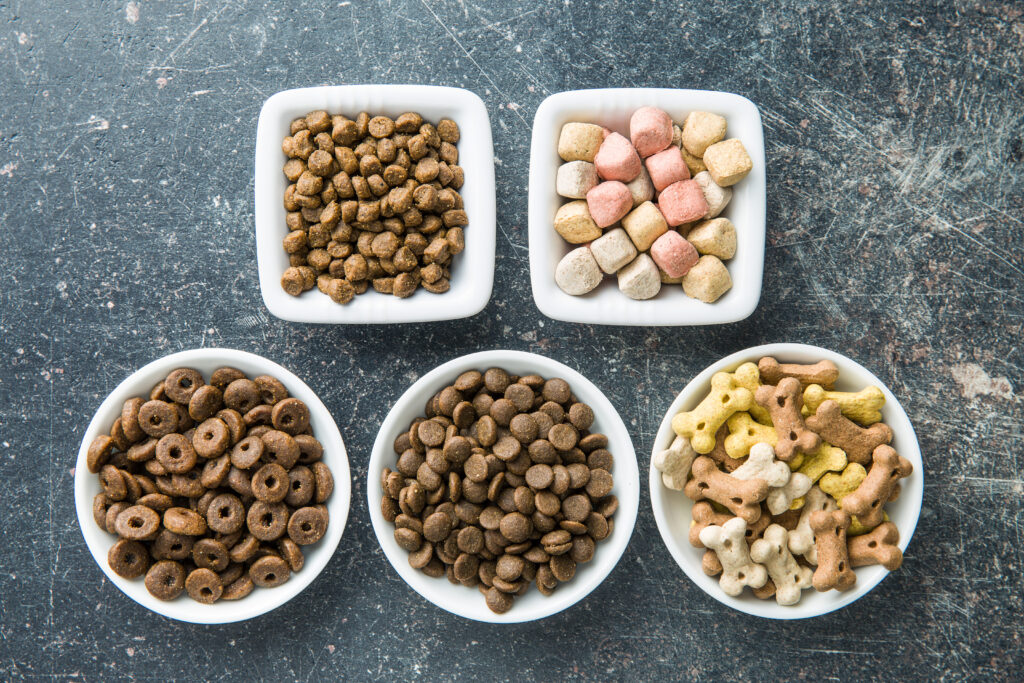
Here are five recommended dog foods for puppies.
If you're having trouble choosing a dog food for your puppy, please use this as a reference.
Royal Canin "Mini Indoor Puppy"
"Mini Indoor Puppy" is a dog food developed for small, indoor puppies.
This dog food is suitable for puppies up to approximately 10 months of age.
It contains unique antioxidant ingredients including vitamin E to support your puppy's immune system.
"Mini Indoor Puppy" is a complete food, so it contains a balanced blend of nutrients.
As it is dry food, it has a crunchy texture.
Although it is not a soft texture, chewing it well can help prevent tartar buildup in your puppy's teeth.
"Mini Indoor Puppy" uses potassium sorbate as a preservative, so those concerned about safety should use caution.
MARS Nutro "Supremo" and "Natural Choice" for All Breeds (Puppies)
"Supremo" and "Natural Choice" are dog foods developed by Nutro, a company with over 90 years of history.
"Supremo" is a small, easily soaked kibble that combines natural ingredients for optimal nutritional balance to support your dog's health.
"Natural Choice" is a crunchy dry food made primarily from high-quality animal protein, such as chicken and lamb, and is characterized by its exceptional flavor.
Neither diet contains any dangerous preservatives, making them highly safe.
Hill's Science Diet
Science Diet is available in small dog and large dog sizes, providing the optimal nutritional balance for each breed's health needs.
Both small and large dog sizes contain high-quality fish oil-derived DHA to support healthy brain and eye development and excellent learning abilities.
Available in two varieties: a crunchy dry food and a soft, moist food, allowing you to feed your dog the optimal formula as they grow.
Science Diet does not contain any artificial colorings or potentially dangerous preservatives.
Therefore, it can be said to be highly safe.
Moguwan
Moguwan is a dog food that combines the deliciousness of homemade food with balanced nutrition.
Although there is no puppy version, it is designed to be enjoyed by dogs of all ages and life stages.
Moguwan is characterized by its high protein content and grain-free diet, with over 50% animal protein.
It's a flat, crunchy dry food, but soaking it in warm water makes it easier for puppies to eat. Since it contains no synthetic preservatives or colorings, Moguwan is also highly safe.
Acana Puppy Large Breed
Puppy Large Breed is a complete, nutritionally-rich dog food for large breed puppies.
55% of the ingredients are made from nutritious meats, including fresh Canadian chicken, eggs, and fish, to support the growth of large breed puppies.
The dog food itself is high in protein and low in carbohydrates to help puppies maintain their weight.
As it is dry food, if your puppy's teeth are not yet developed and it is difficult for them to eat, it is a good idea to soften it in warm water.
"Puppy Large Breed" does not contain preservatives.
And the ingredients are sourced from trusted local farmers and ranchers, so it can be said to be highly safe.
Summary
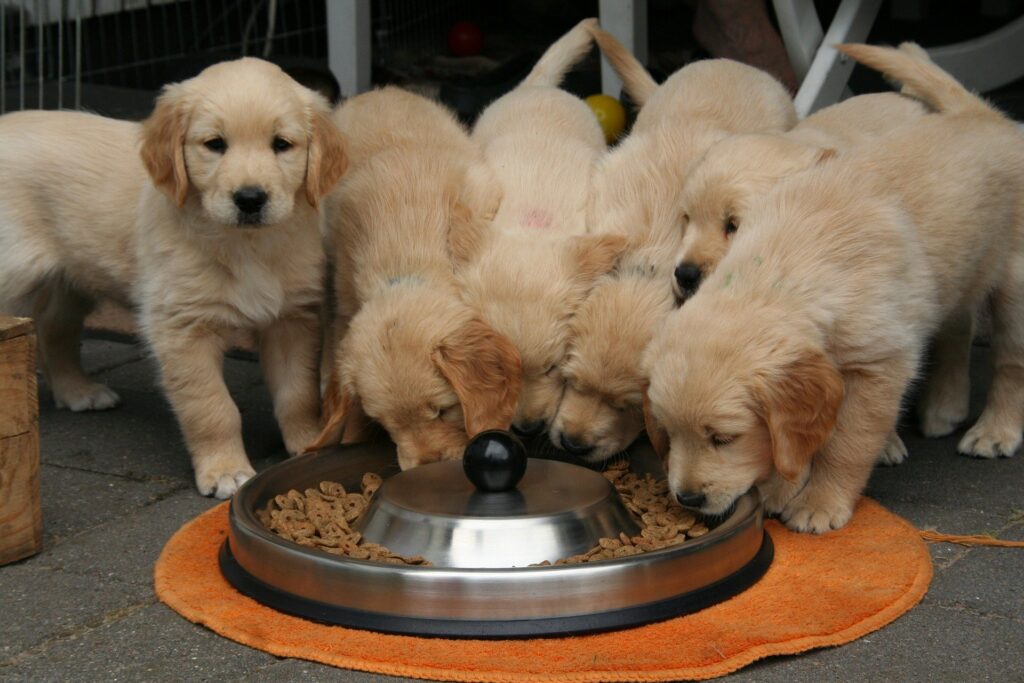
We've introduced how to feed a puppy and five recommended dog foods.
During puppyhood, the content of your puppy's diet is very important for its healthy growth into an adult dog. Feed your dog a complete, nutritious dog food and ensure it receives a balanced diet.
Also, when choosing dog food, you should pay attention to the ingredients. It's safest to choose dog food that doesn't contain preservatives or artificial colors whenever possible.
Feed your dog appropriately for each life stage to fully support its growth.


![[Chihuahua] How to choose dog food without making a mistake and 6 recommendations!](https://with-my-dog.com/wp-content/uploads/2022/07/image1-8-150x150.jpg)