


When you bring a dog into your home, one of the first things you need to think about is dog toileting.
"I want to potty train my dog, but I don't know how..."
"What kind of dog litter box should I get...?"
First-time dog owners often have no idea about litter boxes, and many are likely to be troubled.
And if litter box training isn't done properly, your dog will urinate and defecate in various places around the house. As an owner, you want your dog to use the litter box properly.
This time, we'll explain the steps and precautions for dog toileting for owners who are having trouble with their dog's toileting.
What to Do First About Dog Toilet
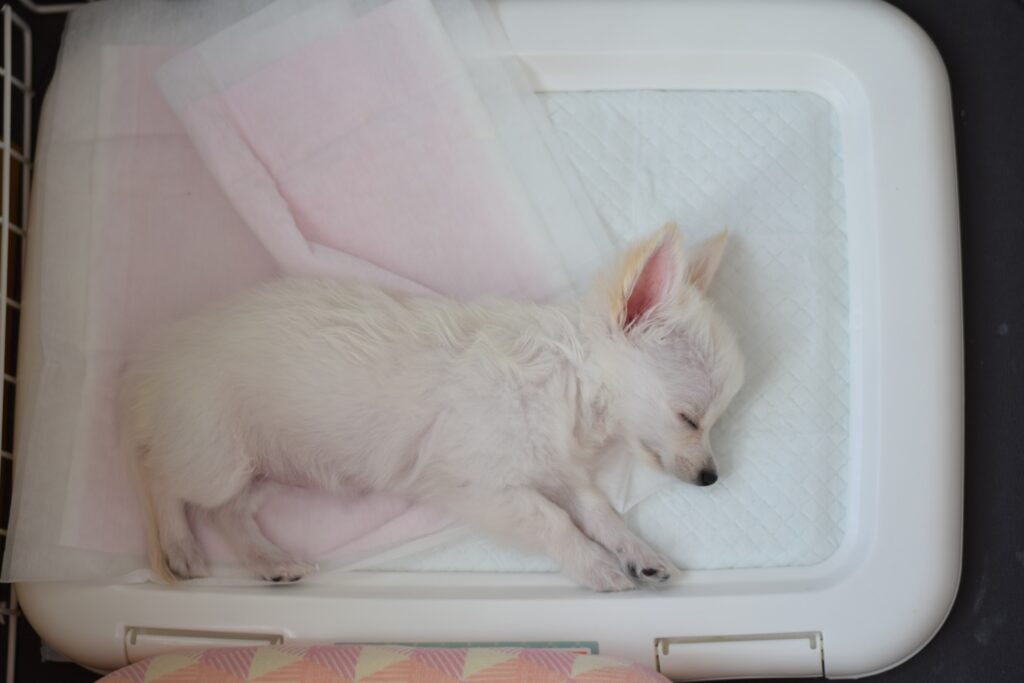
When you bring your dog home, the first thing you should do is prepare a litter box that very day.
Once the litter box is ready, the next step is to toilet train.
From here, we'll explain the different types of dog litter boxes and how to train them.
Preparing the Toilet
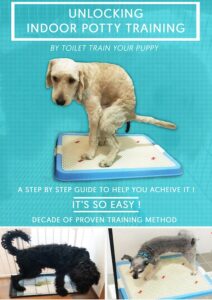
A dog's toilet is basically a combination of a "toilet tray" and a "toilet sheet".
The toilet tray is a tool used to hold the toilet sheet in place.
You can create a dog's toilet by simply laying the toilet sheet directly on the floor, but we recommend installing a toilet tray for easier cleaning and to prevent the toilet sheet from slipping.
When choosing a toilet tray for the first time, it's a good idea to choose a larger size. Using a larger size can help prevent accidents such as spillage.
There are many different types of toilet trays available, so be sure to choose one that's right for your dog.
- Mesh type
- Non-slip
- L-shaped (with walls)
For puppies, we recommend a fine-mesh toilet tray to prevent them from scratching the toilet sheet.
Also, since puppies tend to go to the toilet frequently, it's a good idea to place two smaller sheets in the toilet area.
By using two sheets, you only need to replace the dirty one, making it very economical.
Toilet Training
Once the litter box is ready, you can begin toilet training.
Dogs start to defecate from the day you bring them home, so training your dog should begin from the day you bring him home.
First, set up the litter box in the cage so that your dog can defecate whenever it wants.
Then, when your dog starts to get restless and want to defecate, guide him to the litter box.
When your dog properly defecates on the toilet, praise and reward him.
It's important to make your dog realize that "good things happen when you defecate in the toilet."
Dog Toilet Instructions

Now, let's explain the steps for using the toilet with your dog.
The basic steps for using the toilet with your dog are as follows:
- Set up a dog litter box
- When your dog is about to go to the toilet, take him to the litter box
- Praise him when he goes to the toilet properly
- Change the litter box sheet regularly
Set up a dog litter box
First, set up your dog's litter box.
Prepare a "litter box tray" and litter box sheets".
Both litter box trays and litter boxes are available in various sizes to suit different dog breeds. Choose the appropriate size based on the size and number of your dogs.
In addition to the litter box, it's also useful to have a pet deodorizing spray. We recommend a safe spray so that your dog won't lick the sprayed area. Choose one that doesn't have a strong smell, such as an unscented type.
When your dog needs to go to the toilet, take him to the toilet area
After installing the litter box, if your dog needs to go to the toilet, take him to the toilet area.
When your dog needs to go to the bathroom, he'll exhibit the following behaviors.
- Sniffing the floor
- Spinning around
- Fidgeting
If you notice any of these behaviors in your dog, it's a toilet sign.
To help your dog learn where the toilet is, you should first take him to the toilet.
Praise your dog for using the toilet properly
After taking your dog to the toilet, praise him if he uses the toilet properly.
When your dog is praised for using the toilet in the toilet area, it will develop a positive impression of the toilet, thinking, "Good things happen when I use the toilet here." By accumulating successful experiences like this, your dog will eventually go to the toilet area and use the toilet on its own.
It's also effective to reward your dog for using the toilet properly by giving him his favorite treat. However, giving too many treats can lead to obesity, so giving too many is not a good idea. Try tearing treats into small pieces before giving them to your dog. Instead of giving treats every time, use them as a reward every few times. This will encourage your dog to look forward to the treats and work hard at potty training.
Change the toilet sheet regularly
Toilet sheets should not be used forever; they should be replaced regularly.
Toilet sheets come in two types: "thin" and "thick." Thin ones should be replaced after your dog has used the toilet once. Thin toilet sheets are generally single-use, so they may not be able to absorb all of your pet's waste after the first use.
For thick toilet sheets, it's a good idea to replace them daily.
The replacement frequency is only a guideline, so replace the toilet sheet as soon as it becomes noticeably dirty.
Dogs love cleanliness, so if the toilet sheet is dirty, your pet may refuse to use the toilet.
In addition, to keep your room clean, it's important to replace the toilet sheet regularly.
Points to note
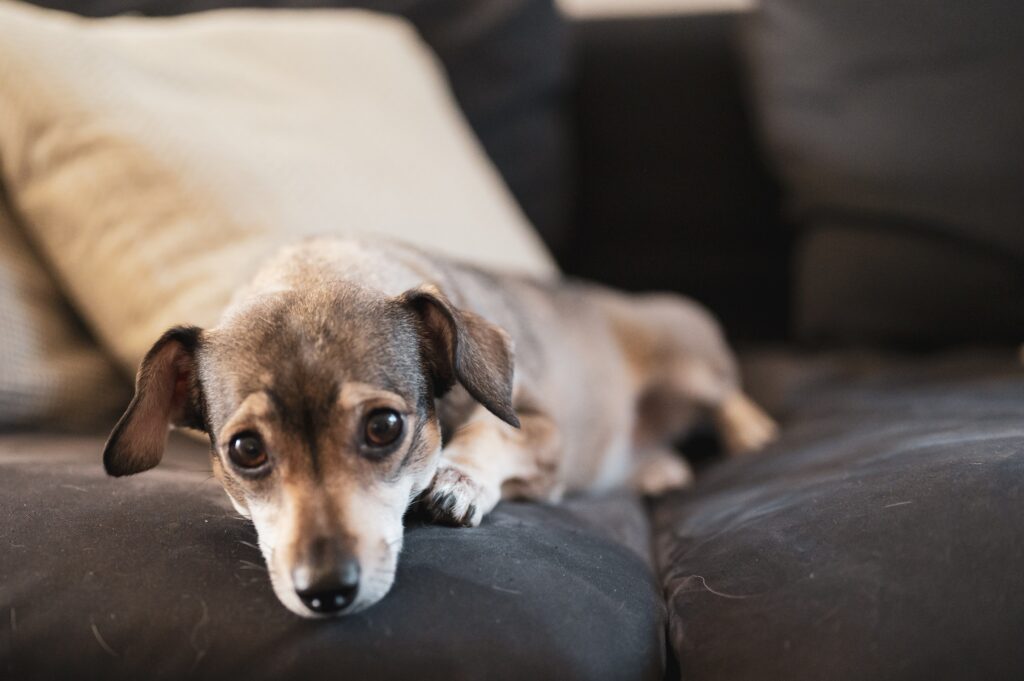
To ensure your dog can use the toilet comfortably, please pay attention to the following three points.
- If you have two dogs, separate their litter boxes.
- If you have a cat, make sure they separate their litter boxes.
- Identify when they're likely to need to use the litter box.
If you have two dogs, separate their litter boxes.
If you have two dogs, we recommend separating each dog's litter box.
Depending on the dog's personality, some dogs will not use the litter box where the other dog has used it.
If your dog's litter box is small, it may be soiled by other dogs' feces.
This is unhygienic, so if you have two dogs, you'll need to change the litter box sheets frequently.
However, changing the litter box sheets frequently can be a real burden for owners, so it's best to separate the litter boxes from the start.
This will make litter box management easier and ensure your dog uses a clean litter box.
Adjust the number of litter boxes to suit your dog's personality.
If you keep cats together, make sure they have separate litter boxes
If you keep a dog with a cat, make sure they have separate litter boxes.
Dogs and cats have completely different litter box shapes. Dog litter boxes are lined with litter sheets, while cat litter boxes are lined with cat litter instead.
Cats have a natural instinct to defecate on sand. Therefore, if you have cat litter in the room, they will recognize that place as their litter box. If you use a litter box, your cat won't recognize that place as a litter box. Because cats have a habit of hiding their waste, cat litter is the best choice. If a dog uses cat litter, there's a risk that they'll scatter or eat the litter. If you have a dog and a cat, be sure to keep them in separate litter boxes and maintain a clean environment so that both can easily use the litter box.
Determine When Your Dog is Likely to Go to the Toilet
As long as your dog can't go to the litter box on its own, you should determine when it's time for it to go.
If your dog becomes restless or starts sniffing the floor, this is a sign that it needs to go to the bathroom.
In particular, if you allow your dog to move around freely in the room, you should observe closely so as not to miss this sign.
Puppies go to the bathroom frequently, so there will be several times throughout the day when they need to go to the bathroom.
If your dog makes an accident, don't scold them, but respond calmly.
Summary
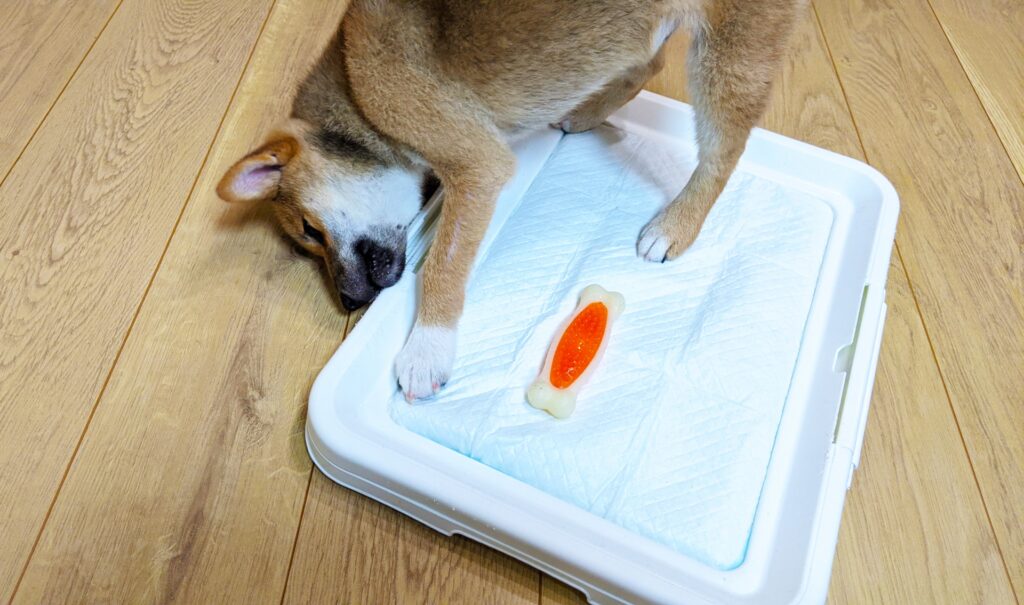
From the day you bring your dog home, you need to prepare its toilet.
Prepare a toilet tray and toilet sheet that fits your dog's body size.
At first, your dog may have trouble remembering where the toilet is, but you as the owner should gently guide your dog until he gets used to it.
And when he successfully uses the toilet, it is important to praise him well.
By accumulating successful experiences, your dog will learn where the toilet is.
If your dog can learn to use the toilet indoors, you won't have to go outside just to use the toilet on rainy or other bad weather days.
And in the unlikely event of a disaster, training your dog to use the toilet in a designated place is very important.
Even if your dog has trouble using the toilet, don't get depressed or angry. Instead, work at the same pace as your dog and gradually work towards success.





![[Dog Earwax] Detailed explanation of Malassezia and ear cleaning](https://with-my-dog.com/wp-content/uploads/2021/10/girl-gf2eb2c5be_1920-150x150.jpg)

![[Stupid dogs are cute] Introducing funny pictures and simple questions](https://with-my-dog.com/wp-content/uploads/2022/07/image4-18-150x150.jpg)
![[2022 Edition] What is the safest dog food? Survey of recommended popular products](https://with-my-dog.com/wp-content/uploads/2021/10/puppy-ged828c55e_1920-150x150.jpg)


![[Funny Dog & Cat Videos] Tips for Filming to Bring Out Their Charm and Make Your Dog Look Like That!](https://with-my-dog.com/wp-content/uploads/2022/04/3015452_s-150x150.jpg)

![[Dog Baths] Explaining the optimal frequency and how to bathe your dog!](https://with-my-dog.com/wp-content/uploads/2021/10/22107314_m-300x200.jpg)