
Crate training is an important step in creating a safe and secure "room" for your dog. When done correctly, it is said to be useful for preventing mischief while you're away, toilet training, and even evacuation during disasters. This article, themed "how to crate train a dog," explains in seven easy steps that even beginners can follow, making it easy to get your dog to like crates without stressing them out. This content will be useful not only for those who are about to welcome a puppy, but also for those who want to review the training of their adult dog.
Why Use a Crate for Your Dog
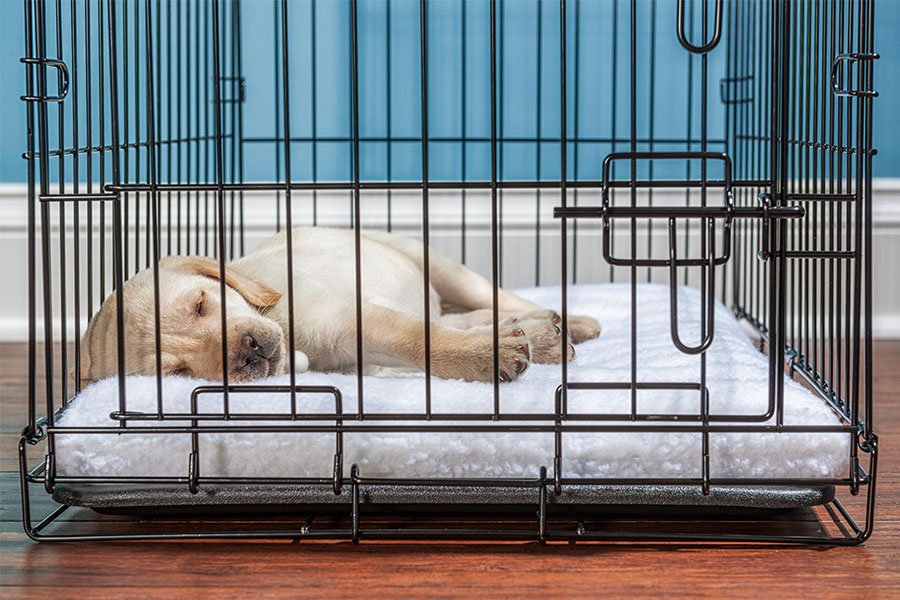
Crates are often misunderstood as cages, but for dogs they can become a safe, calm den when used correctly. Crate training helps with house‑training, prevents dangerous chewing or swallowing of objects, and offers a secure place to rest when life feels busy or overwhelming.
A crate is also very practical for daily life. Vet visits, grooming, travel, and emergencies are far less stressful when a dog is comfortable in a crate. In multi‑dog or busy households, a crate can provide structure and peaceful downtime, supporting good manners and overall wellbeing.
Benefits for your dog
A well‑used crate can significantly improve a dog’s sense of safety and routine. The enclosed space functions like a den, helping many dogs relax more easily and sleep more deeply. Clear boundaries also support house‑training, because most dogs avoid soiling their resting area.
Crates are useful for preventing over‑arousal and teaching calm behavior. Short, positive crate times allow puppies and energetic dogs to take breaks before they become overstimulated. For shy or nervous dogs, a covered, cozy crate offers a predictable retreat, which can reduce stress during visitors, storms, or loud household activity.
Benefits for you and your home
A crate benefits the whole household when used correctly. It helps with faster house‑training, because the dog learns where and when to toilet. A safe confinement area also protects furniture, wires, and belongings from chewing or digging, especially with young or energetic dogs. Many owners find it easier to welcome visitors, children, cleaners, or other pets when the dog can relax in the crate.
A crate also supports a calmer routine. Clear rules about when the dog rests reduce chaos at the door, during mealtimes, or when deliveries arrive. Travel becomes simpler, because a crate‑trained dog is usually safer and quieter in the car or in temporary accommodation. Overall, the crate works as a management tool that creates a more peaceful, tidy home.
Is Crate Training Right for Your Dog?
Crate training suits many dogs, but not every situation. The key question is whether the crate can be linked to safety, not punishment. Healthy puppies, most adult dogs, and many rescues benefit from a crate when training is slow and positive. On the other hand, dogs with severe separation anxiety, strong confinement fears, or a history of being caged harshly may initially find a crate very stressful. In such cases, careful assessment and professional guidance are strongly recommended before starting full crate training.
Puppies vs adult and rescue dogs
Puppies usually adapt to crates more quickly because crate training can align with toilet training and sleep routines. Short, frequent crate sessions help puppies learn to settle and prevent accidents. Adult and rescue dogs may already have habits or negative experiences, so progress often needs to be slower and more careful. For them, gentle introduction, high‑value rewards, and patient repetition are especially important to avoid fear and build trust in the crate.
When a crate may not be suitable
A crate is not ideal for every dog or every situation. Dogs with severe separation anxiety, past confinement trauma, or extreme fear may become more distressed in a crate, not calmer. Crates are also unsuitable for long‐term confinement; dogs must not stay crated for most of the day due to work or lifestyle. Dogs with certain medical issues (e.g., uncontrolled incontinence, breathing problems, orthopedic pain) may need a larger pen or safe room instead. If a dog panics, injures itself, or worsens over time, alternative management and support from a professional are recommended.
Choosing the Best Crate and Setup
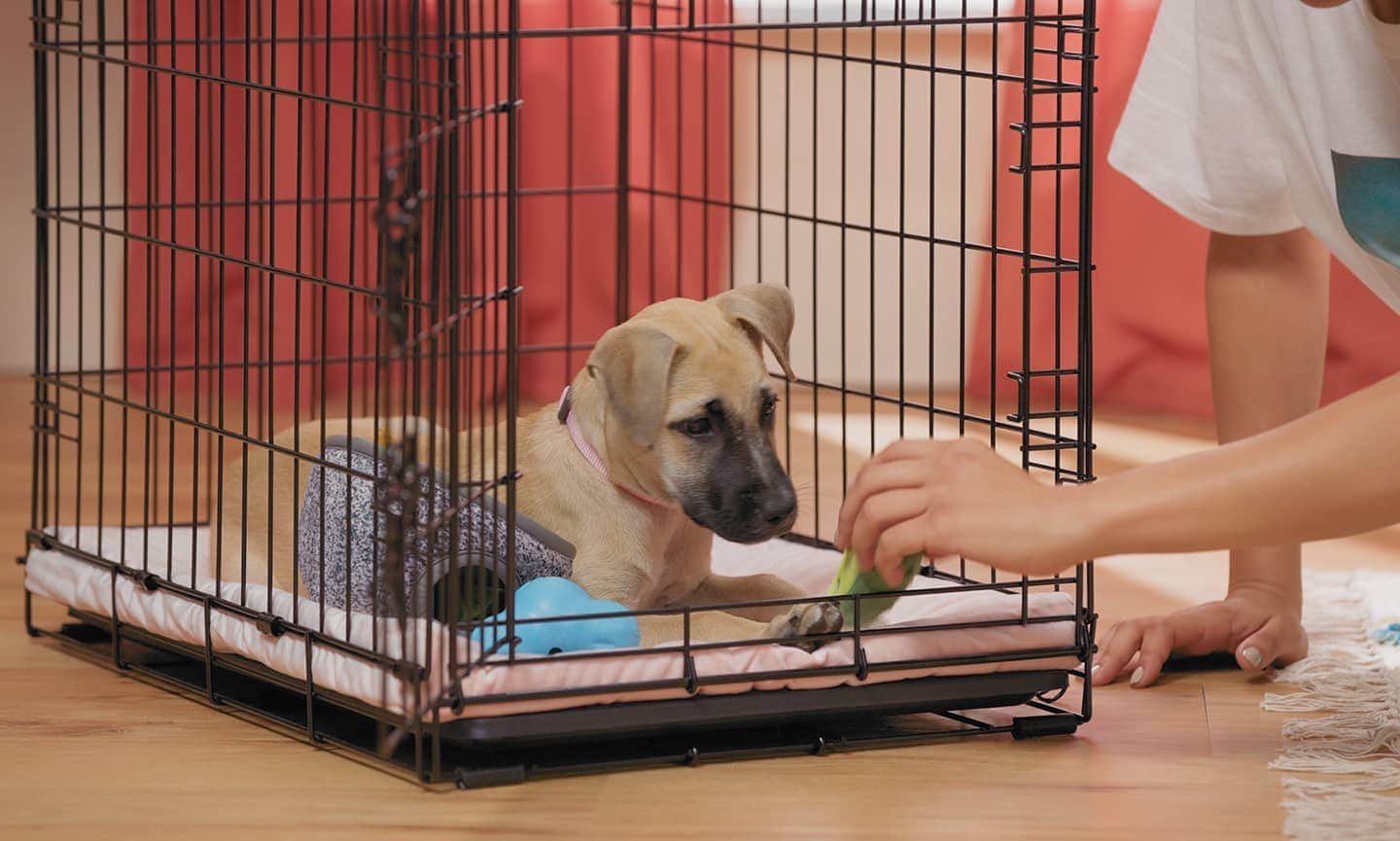
Choosing the right crate and setup is the foundation of successful crate training. A well-chosen crate feels like a safe, calm den rather than a cage. The ideal setup considers size, type, location, and comfort so the dog can relax, sleep, and enjoy quiet time. When the environment is prepared carefully from the start, training usually progresses faster and problem behaviors are reduced.
Crate types and sizes
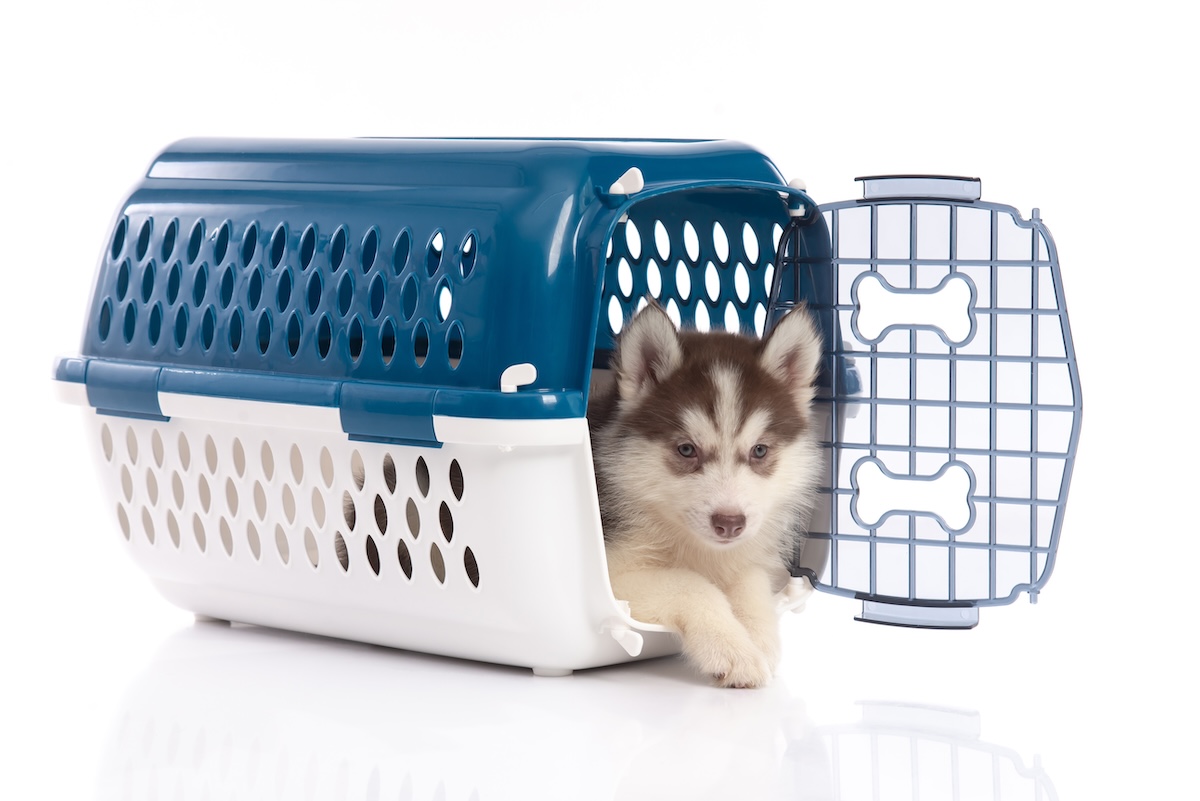
Choosing the right crate type and size is essential for safe, stress‑free training. Main types are wire, plastic, and soft crates. Wire crates offer airflow and visibility, and often include dividers for puppies. Plastic crates feel den‑like and work well for travel. Soft crates suit calm, already crate‑trained dogs.
Size should allow the dog to stand up, turn around, and lie stretched out, but not have excess space for toileting in a corner. Many owners use a larger wire crate with a divider panel and gradually expand the space as the puppy grows.
Where to place the crate at home
The crate should be placed where the family spends time, such as the living room or a corner of the bedroom. Dogs feel safer when they can see and hear their people. Avoid direct sunlight, drafts, or next to noisy appliances. For puppies, keeping the crate in the bedroom at night helps reduce anxiety and supports toilet training. Ensure the spot allows easy access to go outside and does not block walkways, so the dog can rest undisturbed.
Making the crate cozy and safe
A crate should feel like a soft, secure den, not a cage. Use a well‑fitting crate pad or bed that is firm enough to support joints but not so fluffy that a chewing‑prone dog can destroy it. Add a light blanket over part of the crate to create a sheltered feeling, while keeping at least one side open for airflow.
Keep the interior uncluttered: a bed, a safe chew, and perhaps a familiar toy are usually enough. Avoid collars with tags in the crate to prevent snagging. Check for sharp edges, loose wires, or broken latches regularly. For puppies or new dogs, consider a waterproof liner or tray under the bedding to keep the area clean, dry, and hygienic.
Before You Start Crate Training
Before starting crate training, it is important to prepare both the environment and the dog. A crate should never be used as punishment or a place of isolation. Instead, aim to create an association of safety, calm, and rewards. Prepare a quiet location, short training windows, and plenty of high‑value treats. Check that the dog has had a walk, play, and a toilet break before any longer crated period. Good preparation makes later steps smoother and less stressful for both owner and dog.
Setting the right mindset
A successful start to crate training begins with the right mindset. The crate should be viewed as a safe, cozy den, not a punishment. Dog owners are encouraged to focus on creating positive associations and to move at the dog’s pace, not a fixed deadline.
Frustration or pressure often leads to setbacks. Instead, small wins are important: choosing a relaxed moment, rewarding any interest in the crate, and ending sessions before the dog becomes stressed. Patience and consistency allow the dog to build calm confidence and willingly enjoy time in the crate.
Essential supplies and treats
Preparing the right supplies makes crate training smoother and more comfortable for a dog. At minimum, owners should have a correctly sized crate, a soft but washable bed or mat, and a light blanket or crate cover for a den‑like feel. High‑value treats are essential to reward entering and relaxing in the crate. A stuffed KONG, safe long‑lasting chew, or lick mat helps a dog settle. For puppies, puppy‑safe toys and cleaning supplies for accidents are also useful. Avoid leaving rope toys or anything easily shredded inside when unsupervised.
How long a dog can stay crated
How long a dog can safely stay in a crate depends on age, health, and crate training level. As a general guide:
| Dog type | Max daytime crate time* |
|---|---|
| Young puppy (8–10 wks) | About 1 hour at a time |
| 3–4 month puppy | 2–3 hours |
| 5–6 month puppy | 3–4 hours |
| Healthy adult dog | 4–6 hours |
| Senior dog | Usually less than adult, adjust to needs |
*Night sleep can be longer if the dog is calm and has toilet breaks as needed.
Crating should never replace walks, training, or affection. If a dog must be left longer, arranging a pet sitter, dog walker, or doggy daycare is strongly recommended.
How to Crate Train a Dog in 7 Steps
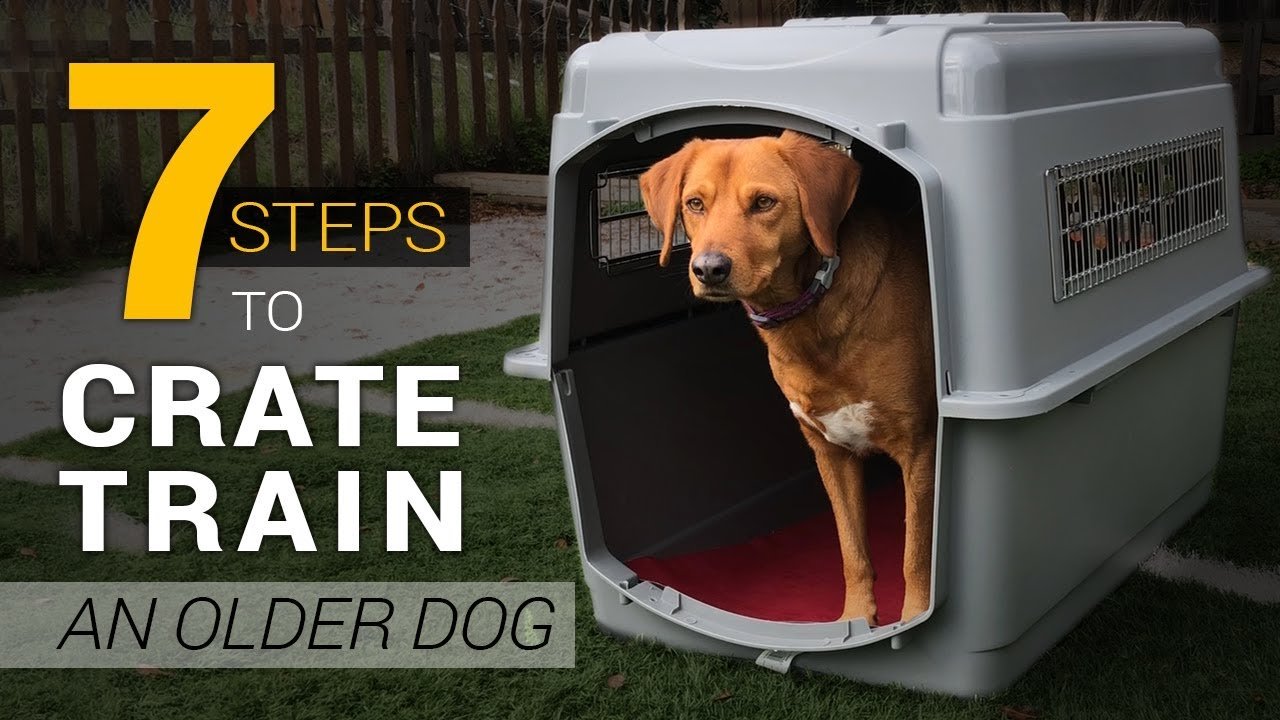
Crate training becomes much easier when owners follow clear, predictable steps. The goal is to help the dog see the crate as a safe resting place, not a punishment. In the following 7 steps, owners will:
- Introduce the crate and let the dog explore freely.
- Pair the crate with meals and rewards.
- Teach a cue so the dog happily goes inside on request.
- Close the door briefly and extend the time slowly.
- Practice calm alone time while the owner moves away.
- Use the crate at night for safe, settled sleep.
- Incorporate the crate in daily life for naps, breaks, and travel.
By moving at the dog’s pace and keeping experiences positive, owners can build long‑term confidence and avoid fear or resistance toward the crate.
Step 1: Let your dog explore the crate
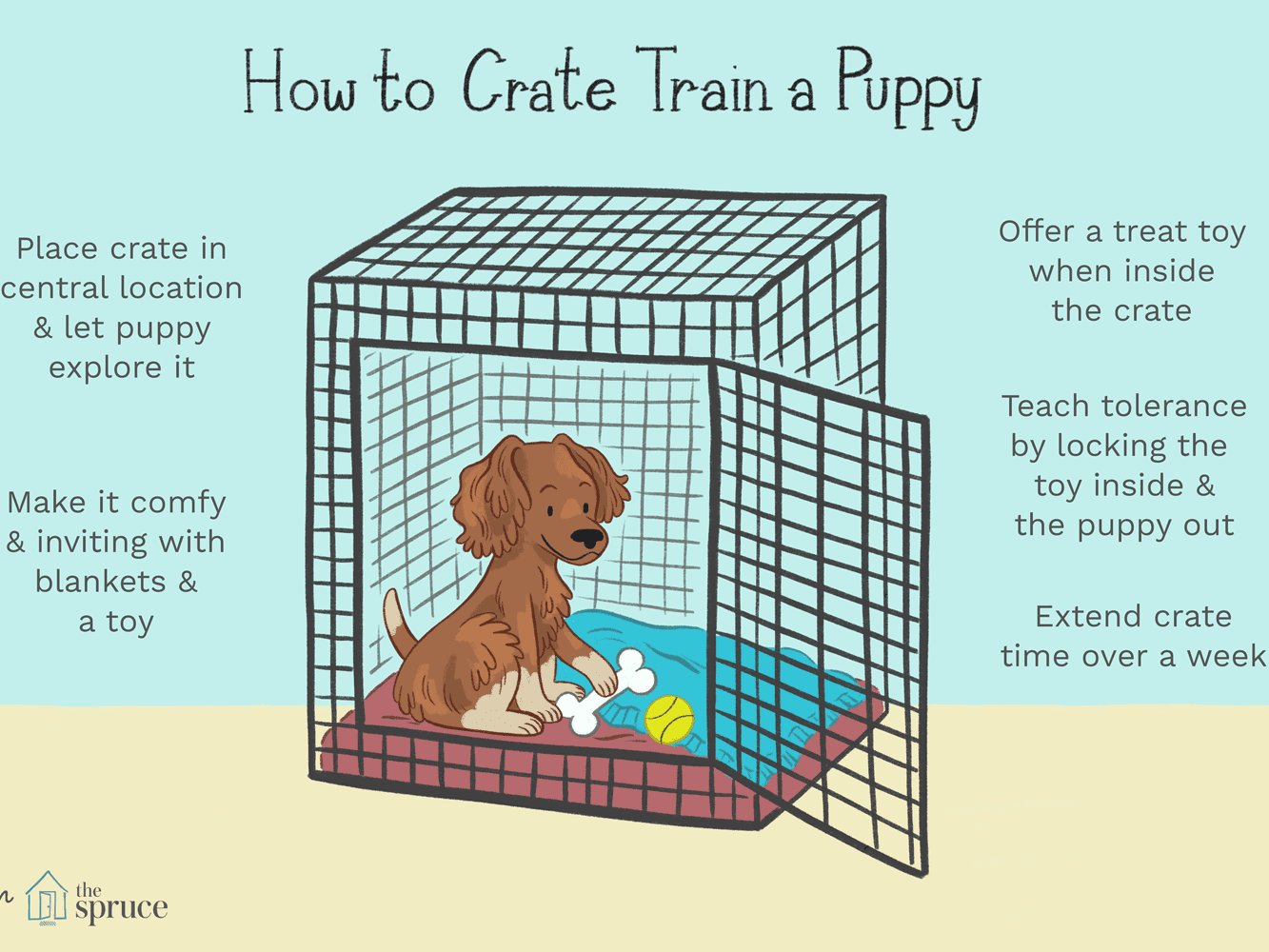
Allowing relaxed exploration helps a dog feel safe with the crate. First, secure the door open so it cannot swing and startle the dog. Place the crate in a quiet but social area and scatter a few tasty treats just outside the entrance and just inside the doorway. Let the dog approach at its own pace; avoid pushing or dragging. Praise softly for any step toward or into the crate, then end the session while the dog is still comfortable and curious.
Step 2: Feed meals inside the crate
Feeding inside the crate helps dogs build a strong, positive association with the space. Start by placing the food bowl just inside the doorway. When the dog eats comfortably, move the bowl gradually farther back over several meals. If the dog seems worried, slow down and move the bowl closer to the entrance again. The goal is for the dog to walk in willingly and finish meals calmly with the door open, before moving to short closed-door meals in the next step.
Step 3: Add a cue to go into the crate
Adding a verbal cue helps the dog understand what is being asked. Choose a short word such as “crate,” “bed,” or “kennel.” Say the cue in a calm voice just before tossing a treat or placing a meal in the crate. When the dog moves in, quietly praise and reward.
After many repetitions, start saying the cue first and wait a second. If the dog goes in, reward generously. If not, make it easier again by luring with a treat. Avoid repeating the cue many times or pushing the dog, so the word stays positive and clear.
Step 4: Close the door for short moments
Once the dog goes in on cue, start closing the door for a few seconds at a time. Begin after a short play or walk so the dog is relaxed. Close the door, drop a treat through, and praise calmly. Open the door before the dog whines or scratches, then let the dog come out quietly. Gradually extend the closed-door time by a few seconds each session, always keeping the dog calm and comfortable.
Step 5: Build up calm alone time
Once the dog is relaxed with the door briefly closed, begin very gradual alone-time practice. Start by closing the crate door, stepping just out of sight for a few seconds, then calmly returning and opening the door before any fuss starts. Slowly extend the time: seconds, then a minute, then several minutes. Vary the durations so the dog does not predict exactly when the owner returns. Keeping sessions short, ending on success, and pairing them with a safe chew or toy helps the dog learn that being alone in the crate is normal and safe, not something to fear.
Step 6: Crate training at night
Night-time crate training focuses on comfort, routine, and realistic expectations. Place the crate near the bed at first so the dog does not feel isolated. A recently toileted dog, light blanket, and safe chew help encourage sleep.
For puppies, expect 1–2 toilet breaks based on age; quietly take the puppy out, then return directly to the crate. Avoid long conversations, play, or feeding at night so the dog learns that night is for resting. If crying continues, check for real needs, then calmly ignore mild protest to avoid reinforcing it.
Step 7: Use the crate in daily life
Using the crate in everyday routines helps dogs understand it as a normal, safe part of life. Aim for short, regular crate sessions during calm times, not only when leaving home. Put the dog in the crate before meals, short naps, or when guests arrive, and reward quiet behavior. Rotate where the human sits (nearby, then in another room) so the dog learns to relax even when alone. Over time, the crate becomes a predictable place for rest, not a sign of punishment or separation.
Crate Training Schedules by Age
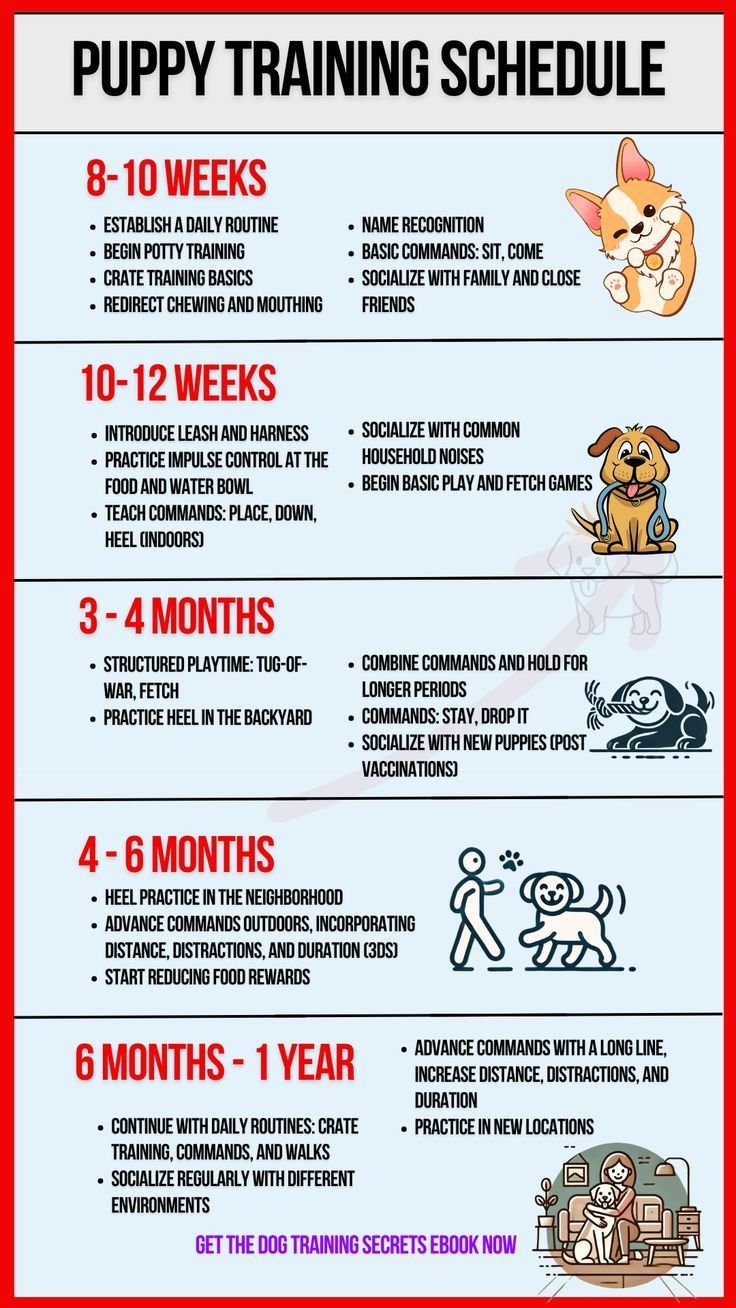
Crate training works best with a clear routine tailored to a dog’s age. Puppies need very short crate periods and frequent toilet breaks, while adult dogs can wait longer and nap more. A simple rule is: the younger the dog, the shorter the crate time and the more play and potty breaks are needed. Age‑appropriate schedules help prevent accidents, frustration, and barking, and make the crate feel like a predictable, safe place rather than confinement.
Sample schedule for puppies
Puppies need very short crate periods and frequent toilet breaks. As a guide, many trainers use age in months + 1 hours as the maximum time a puppy might hold their bladder when awake.
| Puppy age | Morning | Daytime (repeat pattern) | Evening & night |
|---|---|---|---|
| 8–10 wks | Out, breakfast, 30–60 min play → 30–45 min crate nap | 10–15 min potty → 30–60 min play/train → 30–45 min crate | Calmer play, last potty, 2–4 hr night stretches |
| 3–4 months | Same flow, with 45–60 min awake → 1–2 hr crate naps | Potty every 1.5–2 hrs, short walks, training, naps in crate | 1–2 potty trips overnight |
Young puppies should spend more time out of the crate than in it, with many short naps rather than long confinement.
Sample schedule for adult dogs
Adult dogs can usually stay crated longer than puppies, but regular breaks and mental stimulation are still essential. The following example suits a healthy dog with no bladder issues and some crate experience.
| Time | Activity |
|---|---|
| 7:00 | Wake up, toilet break, walk/play |
| 8:00–12:00 | Crate time while owner works |
| 12:00–13:00 | Toilet, walk, training, lunch |
| 13:00–17:30 | Crate or gated room (chew toy) |
| 17:30–19:00 | Walk, active play, training |
| 19:00–22:30 | Family time, short crate breaks |
| 22:30–7:00 | Night in crate or dog bed |
For new learners or anxious dogs, reduce single crate blocks to 2–3 hours and add more short breaks.
Balancing crate time, play, and walks
Balanced use of the crate helps prevent boredom, excess energy, and stress. A simple rule is crate time should never replace exercise or social contact. Aim for the following daily rhythm:
| Activity type | Goal per day (adult) |
|---|---|
| Walks/potty outings | 2–3 sessions, 20–40 min |
| Play and training | 2–3 short sessions |
| Relaxing time with family | Several hours, uncrated |
| Crate time | Short rest blocks between |
Use the crate after walks, play, and mental games, when the dog is naturally tired, so crate time feels like calm “nap time,” not punishment.
Games and Positive Crate Activities
Positive crate activities help dogs see the crate as a rewarding, safe place rather than a punishment. Short, upbeat sessions with games, chews, and calm-time practice make going into the crate feel natural. Varying activities also prevents boredom and frustration, so the crate becomes part of daily life: a spot for play, rest, and quiet chewing, not only for when owners leave the house.
Fun crate games to build confidence
Crate games help dogs enjoy going inside and build confidence. Keep sessions short and upbeat so the crate always feels safe.
- Treat toss game: Toss a treat just inside the crate entrance, then gradually farther in.
- Crate hide-and-seek: Ask the dog to sit, place a treat or toy in the crate, then release to find it.
- In–out game: Gently cue the dog to go in the crate, reward, then invite the dog out and reward again.
- Crate door practice: Reward calm sitting while the crate door opens and closes slowly.
End every game while the dog is still happy and relaxed to reinforce a positive feeling toward the crate.
Using chews and puzzle toys safely
Safe chews and puzzle toys help dogs relax in the crate and prevent boredom. Choose sturdy, size‑appropriate products with no small parts that can be swallowed. For unsupervised time, prefer long‑lasting chews and single‑piece rubber toys.
Avoid cooked bones, thin plastic, plush toys with squeakers, and anything that splinters. Introduce new items only when someone can watch the dog, then gradually extend use alone. Always remove chews if the dog guards them, gags, or chews pieces off.
Fixing Common Crate Training Problems
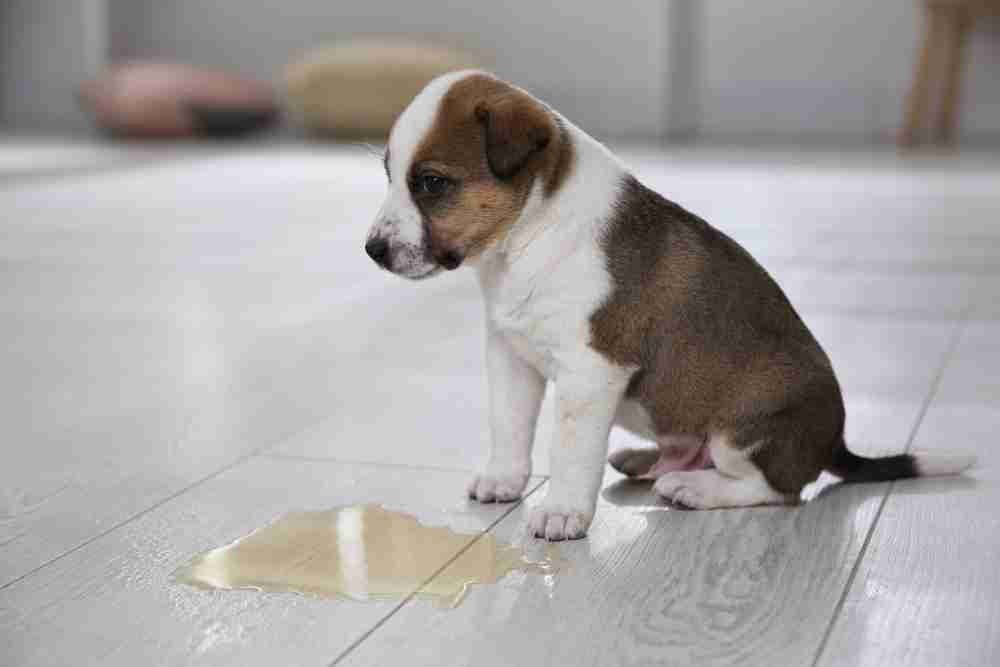
Crate training does not always go smoothly, but most problems have clear causes and solutions. Many issues come from moving too fast, using the crate as punishment, or crating for too long. Before changing methods, owners can check whether the dog’s physical needs are met: enough exercise, toilet breaks, and mental stimulation. Adjusting the pace of training, increasing rewards, and keeping experiences positive usually restores progress and helps the dog feel safe in the crate again.
Whining, barking, or crying in the crate
Many dogs whine or bark in the crate because they feel frustrated, lonely, or need a toilet break. First, check basic needs: have a short walk, toilet break, and some play before crating. If vocalizing starts immediately and escalates, the dog may be over threshold and training has progressed too quickly. In that case, shorten crate sessions and reward quiet moments with calm praise or treats, avoiding release while the dog is actively crying, so vocalizing does not become a learned strategy. For sudden intense distress, pause crate use and consult a trainer or vet.
Dog refuses to go into the crate
A dog that won’t enter the crate usually feels unsure or has had an unpleasant experience. Forcing entry often increases fear, so avoid pushing or dragging the dog inside.
Instead, keep the door open and make the crate rewarding. Place high‑value treats or favorite toys just inside the entrance, then gradually deeper. Feed meals right at the doorway, then with the bowl fully inside. Praise calmly whenever the dog chooses to step in, and end sessions before frustration appears.
Short, frequent sessions, using a cheerful cue such as “crate,” help the dog learn that going in predicts good things and no pressure.
Accidents in the crate
Accidents in the crate are common, especially during early training or with young puppies. The key is to avoid punishment and calmly review the routine.
Main checks include:
- Toilet schedule: ensure potty breaks right before crating and immediately after.
- Crate size: if too large, dogs may sleep on one side and toilet on the other. Use a divider to create a snug sleeping area.
- Bedding: temporarily remove thick bedding if it is repeatedly soiled and use easily washable pads.
Caregivers should clean with an enzyme cleaner to remove odor, adjust feeding and water timing (no large meals or big drinks just before long crating), and reduce crate duration to match the dog’s age and bladder capacity. Frequent successful trips outside build a habit of staying clean in the crate.
Dogs with separation anxiety
Dogs with separation anxiety often struggle most with crate training, because the core problem is panic about being alone, not the crate itself. For such dogs, forcing long crate sessions usually makes fear worse. Instead, crate work should be paired with a gradual, whole‑house alone‑time training plan.
Key points for separation‑anxious dogs include: keeping sessions extremely short at first, avoiding leaving the dog alone while distressed, and focusing on calm association with the crate using food, chews, and quiet relaxation. For some dogs, it is kinder to use a larger safe area instead of a closed crate until anxiety is under control, under guidance from a vet or qualified trainer.
When to seek help from a trainer
Seeking expert support is recommended when crate training causes ongoing distress for the dog or significantly affects family life.
Consider consulting a qualified trainer or veterinary behaviorist if:
- The dog shows intense panic (drooling, shaking, self‑injury) in the crate
- Whining or barking continues for weeks with no improvement
- The dog soils the crate regularly despite a careful schedule
- There is diagnosed or suspected separation anxiety
Choose a professional who uses reward‑based, force‑free methods, and share video of the dog’s behavior so a tailored plan can be created.
This article explains crate training for dogs in seven easy steps, covering the benefits and suitability of using a crate, the best crate selection and placement, age-appropriate schedules, positive usage methods incorporating play, and how to deal with common problems. It organizes and introduces points that even first-time dog owners can confidently implement.