
You can tell how your dog feels by looking at their ear movements. Is they angry? Are they happy?


A dog's ears can move in all sorts of ways, from tilting back to twitching. Watching your dog's ear movements is never boring and incredibly adorable.
Did you know that you can actually tell how your dog is feeling by watching their ear movements? In addition to their tails and facial expressions, dogs also communicate their emotions through their ears.
If you're curious about what your dog is trying to tell you, be sure to pay attention to their ear movements.
In this article, we'll explain what your dog's ear movements can tell you about.
Pay attention to your dog's ear movements to understand how he's feeling.
What Your Dog Is Feeling by Listening to His Ears

Dogs cannot speak like humans, so they communicate with their companions using their eyes, ears, and tails.
Dog ears can be broadly divided into three types.
- "Prick Ears" that Stand Up
- "Semi-Prick Ears" that Stand Up at the Base
- "Drop Ears" that Hang Flat
Which of these three ear types does your dog have?
It's interesting to see how different dog breeds have different ear types.
Dogs have well-developed muscles surrounding their ears, known as the auricular muscles, which allow them to move their ears freely.
That's why dogs can express their emotions through their ears.
So, what emotions does each ear gesture convey?
Ears Perked Up
When a dog's ears are perked up, it means they are interested in something.
- When your dog is paying attention
- When your dog senses your presence
- When your dog is bothered by a noise around them
At times like these, a dog's ears will stand up straight.
When your dog's ears are standing up straight, pay attention to its facial expression.
A calm expression often means your dog is in a happy mood.
Your dog is likely interested in something and excited.
On the other hand, if his face is stiff, he is sensing danger and is on guard.
For example, there may be another dog nearby, or something that makes your dog feel uneasy.
If your dog's ears are perked up and his expression is grim, you should check your surroundings.
If your dog is looking at you with its ears perked up, it's your chance to train it.
When your dog's ears are perked up, it's a sign that it's interested and focused on something, so training it at this time will make it easier for it to remember.
Take advantage of this opportunity to help your dog learn.
Ears tilted back
When your dog's ears are tilted back, it's likely that he's happy or relaxed.
If your dog's ears are tilted back, he's looking at you with a calm expression, wagging his tail from side to side, and he's wanting to be pampered by you.
If your dog's ears are tilted back, his mouth is open, and his tail is standing up, he's likely wanting to play with you.
Another common behavior seen in dogs is narrowing their eyes while tilting their ears back.
This is a sign that the dog is feeling safe.
When a dog is around another dog, tilting its ears back and narrowing its eyes conveys a friendly message to the other dog.
If a dog's ears are tilted back and it looks anxious, it means it is feeling fearful or anxious.
If you notice this behavior, you should pet your dog and speak to it gently to reassure it.
Ears pulled back and pointed out to the side
When a dog's ears are pulled back and pointed out to the side, it means it is warned by something.
If it's also raising its tail and wagging it slightly, it's likely that it senses something unpleasant.
If your dog suddenly stops while out for a walk, pulls its ears back, and points them out to the side, it's a sign that it's wary of something.
If this happens, change your walking route to make your dog feel safe.
Wiggling Ears
When a dog wiggles its ears, it's gathering information about its surroundings.
This behavior is often seen in situations where a dog is meeting another dog for the first time.
It often indicates interest or affection for something.
If a dog's ears twitch with an anxious expression, it is said to be feeling anxious or tense.
Observe other emotional expressions, such as facial expressions and tail movements, to understand what your dog is feeling.
Once you understand your dog's feelings, take the necessary action

A dog's ear movements can sometimes convey a dog's feelings better than its facial expressions.
As an owner, you might think your dog is happy, but it might actually be wary or scared.
By learning to understand your dog's feelings from its ear movements, you can act in a way that is more empathetic to your dog's feelings.
If your dog seems anxious or tense around other dogs, try to take appropriate measures, such as separating them immediately before it becomes a problem.
To avoid trouble, it's important to always observe your dog's emotional expressions and alleviate their anxiety.
Dogs are constantly expressing their feelings using their ears and other body parts.
It's important to understand your dog's feelings not only from ear movements, but also from their tail and facial expressions.
If you notice any concerning symptoms while examining your dog's ears
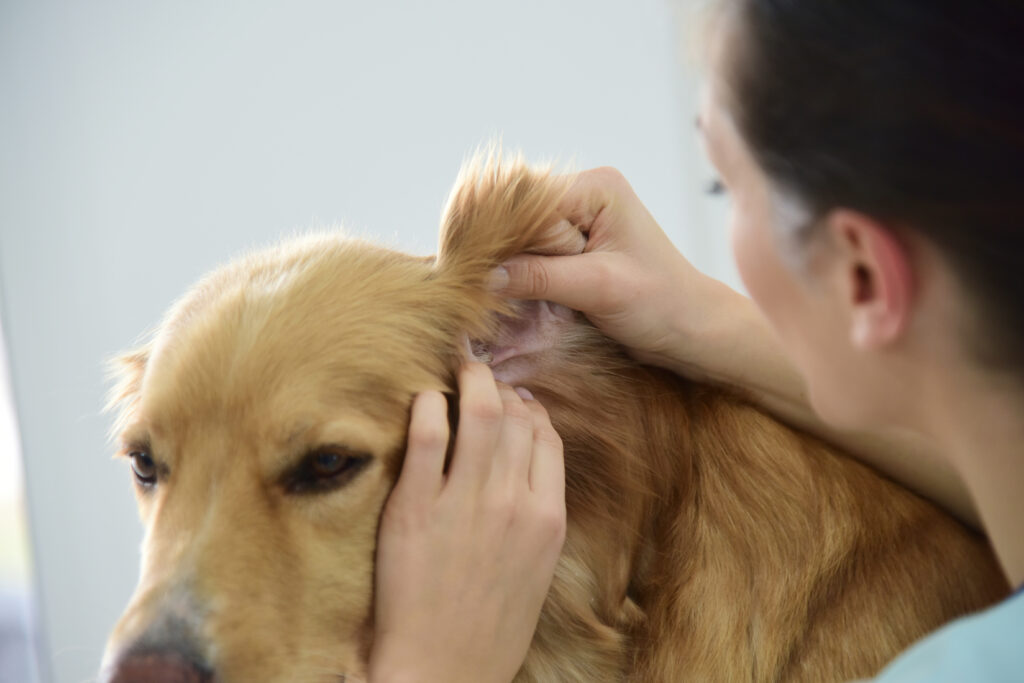
Paying attention to your dog's ear movements will naturally lead you to wonder about the condition of their ears.
If your dog scratches its ears repeatedly, or rubs them against the floor, these are also signs that your dog is expressing his feelings.
If your dog scratches its ears frequently, it may have ear inflammation.
If your dog's ears are itchy, there are three possible illnesses:
- Otitis externa
- Canine atopic dermatitis
- Ear hematoma
In addition to illness, dogs also scratch their ears when they have a large amount of earwax buildup.
If you notice anything unusual about your dog, take them to the vet as soon as possible.
Summary

Dogs can't speak, but they communicate their emotions using their entire bodies.
Their ears, in particular, are freely movable, allowing them to express a variety of emotions.
If you're having trouble reading your dog's emotions from ear movements alone, it's a good idea to also look at their facial expressions and tail movements.
The ear movements introduced here are a way of expressing emotions that applies to most dogs.
However, your dog may have a unique way of expressing his emotions.
Observe your dog's emotional expressions carefully and discover his unique behavior.
It's so satisfying to discover a behavior that's unique to your dog.
By using your dog's behavior as a clue to understand his feelings on a regular basis, you can communicate with him more smoothly.
Please try using the information introduced here to communicate with your beloved dog.