
If your dog isn't eating dry kibble well, or if senior dogs or puppies seem to have trouble chewing it, a simple trick to soften the dry food can be very helpful. This article clearly explains easy methods that pet owners can immediately implement, from simple ways to soften food using hot water, water, or wet food, to considerations for teeth and digestion, and points for safe feeding. It will be a helpful reference for making "easy-to-eat meals" tailored to your dog's age and health.
Why soften dry dog food at all?
Many dogs enjoy crunchy kibble, but there are situations where softer food is kinder and safer. Dry dog food can be hard to chew, especially for senior dogs, small breeds, or dogs with sore mouths. By adding moisture, owners can make the same food easier to bite and swallow, reduce the risk of choking, and support more comfortable mealtimes.
Softening kibble also helps dogs that do not drink enough water or struggle with digestion. Moist food is often more aromatic, so it can tempt picky eaters or dogs that feel unwell. In short, gently softening dry food allows owners to keep using a familiar diet while adjusting the texture to suit the dog’s age, health, and preferences.
Benefits for teeth, joints, and digestion
Softening dry dog food can reduce strain on teeth and jaws, which is helpful for dogs with worn, missing, or sensitive teeth. Gentler chewing also supports jaw comfort and joint health, especially in senior dogs or large breeds with arthritis. Softer kibble is easier to break down in the stomach, so nutrients may be absorbed more efficiently. Many dogs experience less gulping, fewer swallowed air bubbles, and potentially reduced gas or bloating when food is softened to a moist, porridge‑like texture.
When soft food may be a better choice
Soft food can be a better choice in several everyday situations. Dogs with missing teeth, sore gums, or jaw pain often struggle with hard kibble and may start eating less. Softer meals are also helpful for dogs with chronic digestive issues, recovering from surgery, or taking medications that upset the stomach. In hot weather or during illness, gently softened food can encourage picky or low‑appetite dogs to eat enough and stay hydrated.
Is softer food right for your dog?
Softer food can be helpful, but it is not automatically the best choice for every dog. The key is to look at age, teeth, chewing ability, weight, and stomach sensitivity. Dogs that struggle to chew, lose weight, or refuse hard kibble often benefit from softened food. On the other hand, healthy adults with strong teeth may do well staying on crunchy kibble and only using softened meals occasionally, such as during illness, stress, or after dental treatment.
Senior dogs and dental problems
Senior dogs often have worn, loose, or missing teeth, as well as sore gums and weaker jaw muscles. Crunchy kibble can be painful to bite and may even discourage eating, leading to weight loss and low energy. Softened food reduces chewing effort, so older dogs can keep enjoying balanced nutrition. Moisture also helps dogs with dry mouth or kidney issues stay better hydrated. If a senior suddenly drops kibble, chews on one side, or refuses hard treats, softer food is usually kinder and safer.
Puppies, small breeds, and picky eaters
Puppies, toy breeds, and picky eaters often struggle with hard kibble because of small mouths, sensitive teeth, or low appetite. Gently softened food reduces chewing effort and can make meals more aromatic and appealing, which encourages better intake. For tiny dogs, softer pieces also lower the risk of gulping and choking. However, owners should keep portions controlled, as highly palatable soft meals may lead to rapid overeating and weight gain if left unchecked.
Dogs with medical or recovery needs
Dogs with health issues often benefit from softer, easier‑to‑chew meals. Kibble softened with water or broth can help dogs with dental pain, missing teeth, or jaw injuries keep eating comfortably. Gentle textures are also useful for dogs with throat or esophagus problems, nausea, or after stomach surgery, because large hard pieces may be harder to swallow or digest. However, any sudden change in appetite, weight, or swallowing should be discussed with a veterinarian before adjusting food long term.
Safety basics before you add moisture
Before pouring anything over kibble, it is important to think about safety and freshness. Always use clean bowls and utensils so bacteria do not grow. Only soften the amount your dog will eat in one meal; leftover moistened food spoils much faster than dry kibble. Avoid very hot water or untested broths, and do not leave softened food at room temperature for long. For dogs with allergies or medical diets, check every added liquid or topper with a veterinarian.
Water temperature, timing, and hygiene
Before adding water, it's important to make the water slightly lukewarm, just above body temperature. Water that's too hot can destroy nutrients and burn your pet's mouth. A good guideline is around 40°C; it's safe if it doesn't feel hot to the touch.
It's also important not to leave the softened food out for too long. Bacteria multiply easily at room temperature, so it's safest to prepare only the amount your pet can eat within 30 minutes to an hour. Always clean up any leftovers.
Wash utensils and bowls thoroughly after each use, rinsing well with lukewarm water or a pet-safe detergent, and drying them completely. Maintaining a hygienic environment helps prevent problems such as diarrhea and vomiting."
How softened food changes calories
Softening kibble usually does not change the number of calories in the bowl, because only water is added. However, the food becomes bulkier and heavier, so it can feel like a larger portion. Owners sometimes accidentally over‑feed when adding broth or wet food, because those extras add calories. For accurate feeding, continue to measure the dry kibble amount first, then add liquid, and avoid “topping up” with extra soft food unless the vet recommends weight gain.
Simple ways to soften dry dog food
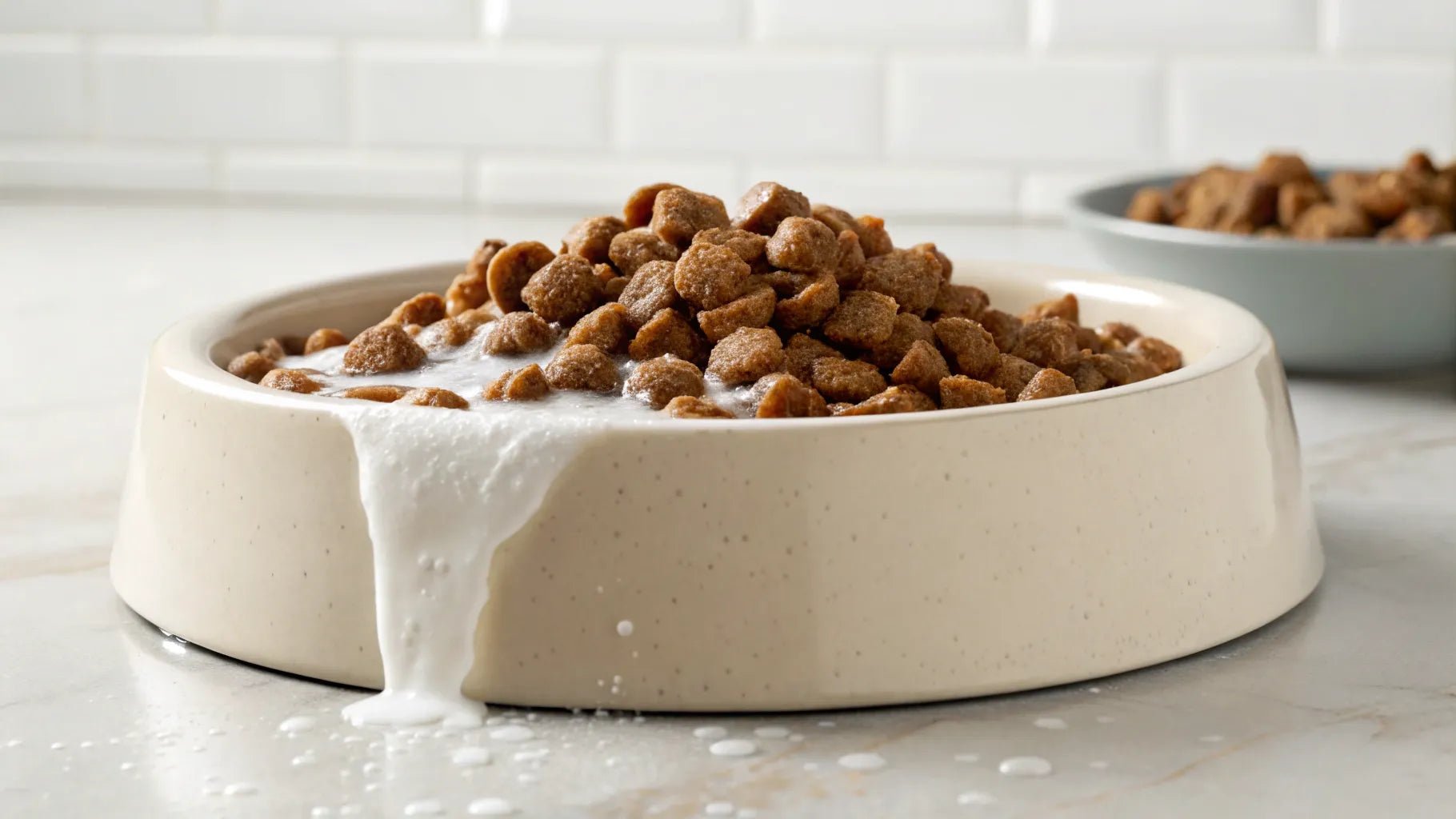
Softening dry dog food can be very simple. In most homes, only water, broth, or canned food are needed. The main goal is to add enough moisture so kibble becomes easier to chew and gentler on the stomach, while still keeping nutrients balanced.
Common easy options include:
- Mixing kibble with warm water to create a soft, porridge‑like texture
- Pouring low‑sodium broth over kibble for more aroma and flavor
- Combining dry food with wet food as a topper or 50:50 mix
- Letting kibble soak ahead of time for dogs that need a very soft mash
- Gently microwaving moistened kibble to warm and soften it
Each method can be adjusted in liquid amount and soaking time to match a dog’s age, teeth, and preferences.
Method 1: Mix with warm water
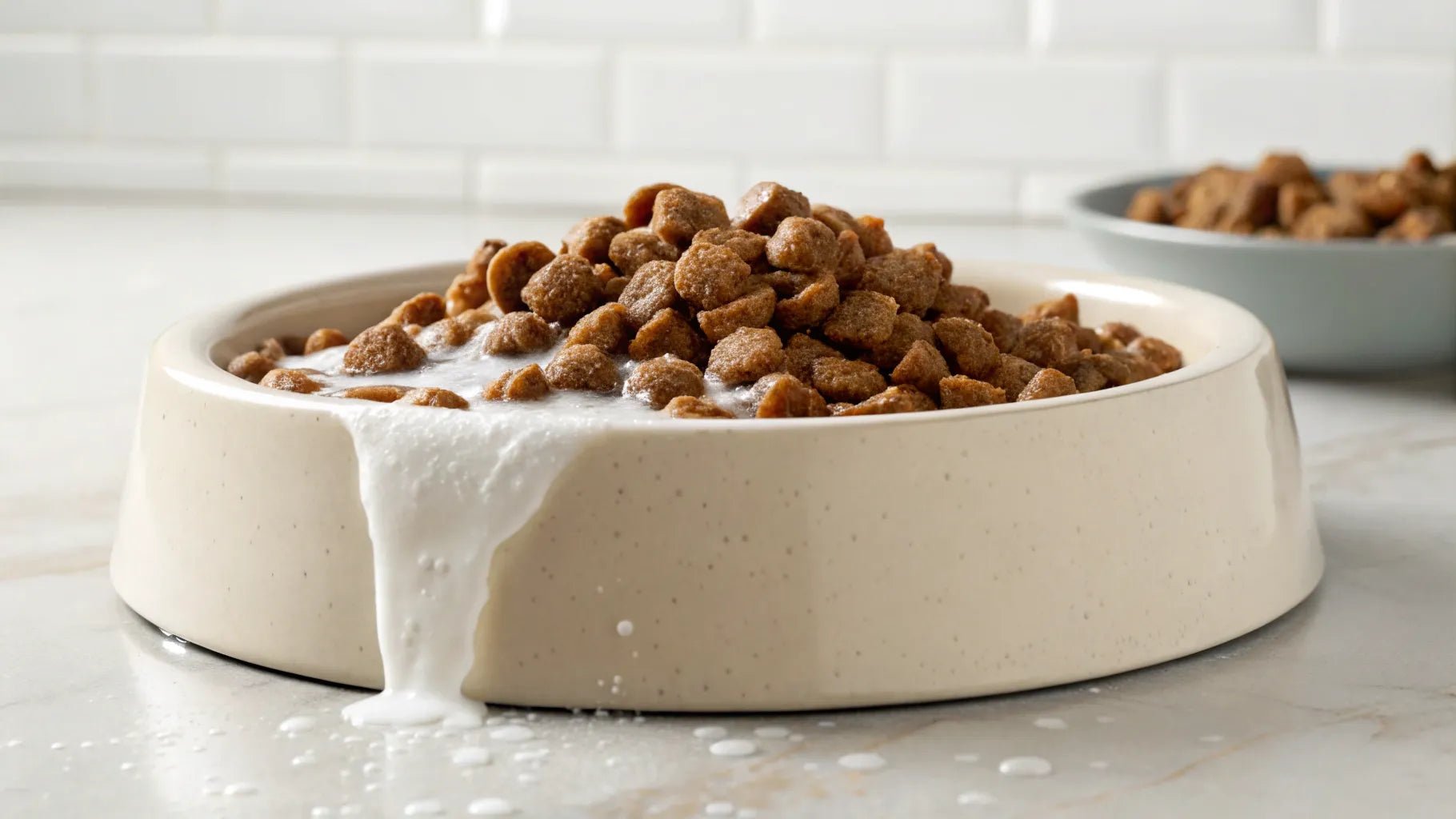
The simplest way to soften dry dog food is to add warm water directly to the kibble. Use lukewarm water (about body temperature) so it feels comfortable to the touch and does not damage nutrients. Pour in just enough water to reach the bottom of the kibble, then wait 5–15 minutes. Stir once or twice so all pieces soften evenly. Adjust the water amount to create a mash, stew-like texture, or lightly moistened kibble depending on the dog’s chewing ability and preference.
Method 2: Use low‑sodium broth
Low‑sodium broth adds both moisture and aroma, so it can entice dogs with poor appetite while softening hard kibble. Pour warm (not hot) chicken or beef broth over the food until it is lightly covered, then let it soak for 5–10 minutes. Choose unsalted or low‑sodium broth with no onion, garlic, or seasoning, because those can be harmful for dogs. Broth also contributes calories and salt, so owners should keep portions moderate and adjust total daily food intake if using broth regularly.
Method 3: Combine kibble with wet food
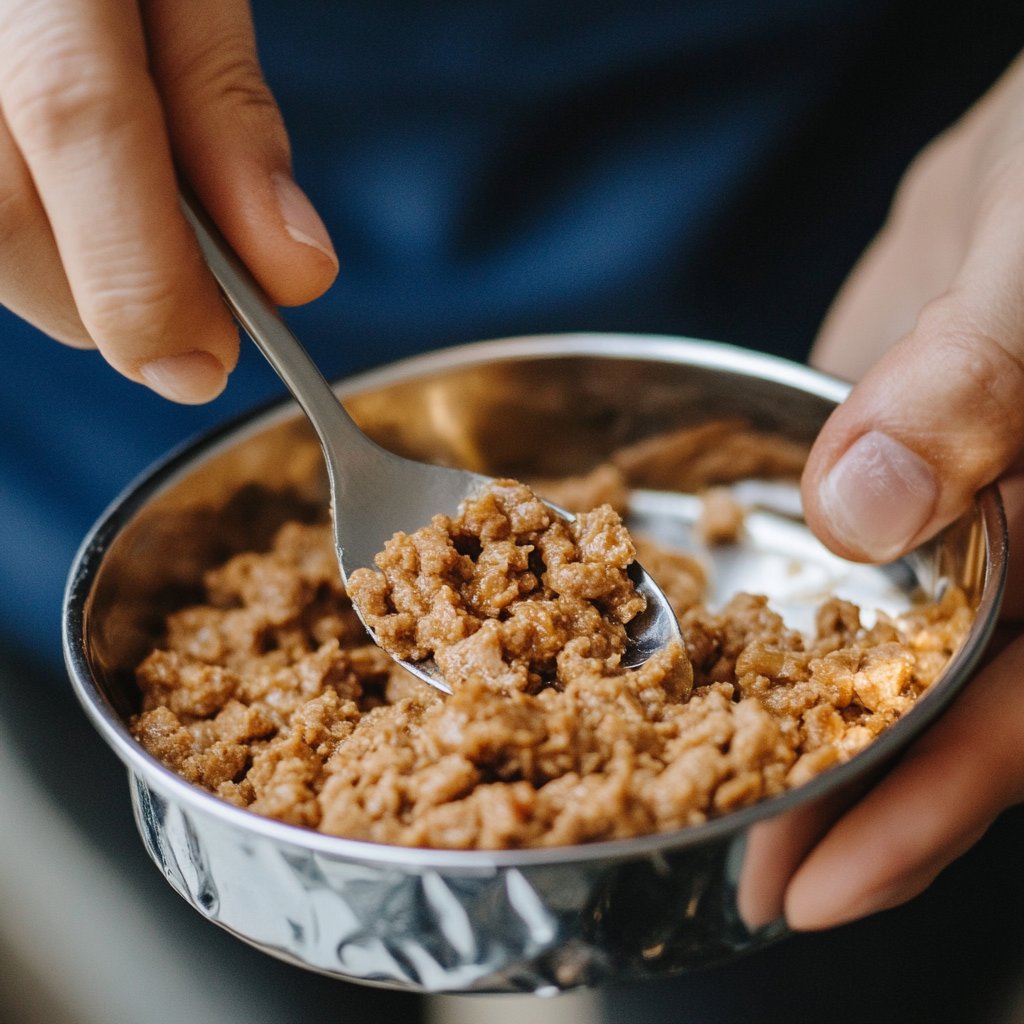
Combining dry kibble with wet food is a simple way to soften food while boosting aroma and taste. Mix the usual kibble portion with about 1/4–1/2 the amount of wet food, then add a splash of warm water if a softer texture is needed. Stir until the kibble is lightly coated and starting to soften, but not soupy. Choose a complete and balanced wet food to avoid nutritional imbalance, and count both kibble and wet food toward the daily calorie allowance to prevent weight gain.
Method 4: Let it soak overnight
Overnight soaking is convenient for busy owners and gentle on sensitive mouths. Place the usual amount of kibble in a container, add just enough water to cover the surface, then seal and refrigerate. By morning, the kibble becomes a uniform, pudding‑like mash that is easy to eat and digest. Adjust water slightly if the texture is too firm or runny. Always keep soaked food in the fridge and discard leftovers after 24 hours to prevent spoilage.
Method 5: Microwaving safely
Microwaving can speed up softening, but must be done carefully. Use a microwave‑safe bowl, add water or broth, and heat on low for only 10–15 seconds at a time. Stir well and check for hot spots by touching the food with a clean finger or spoon. The goal is lukewarm, never steaming. Overheating can burn a dog’s mouth and may damage some nutrients, so short bursts and thorough mixing are important for safe use.
Step‑by‑step: how to soften kibble
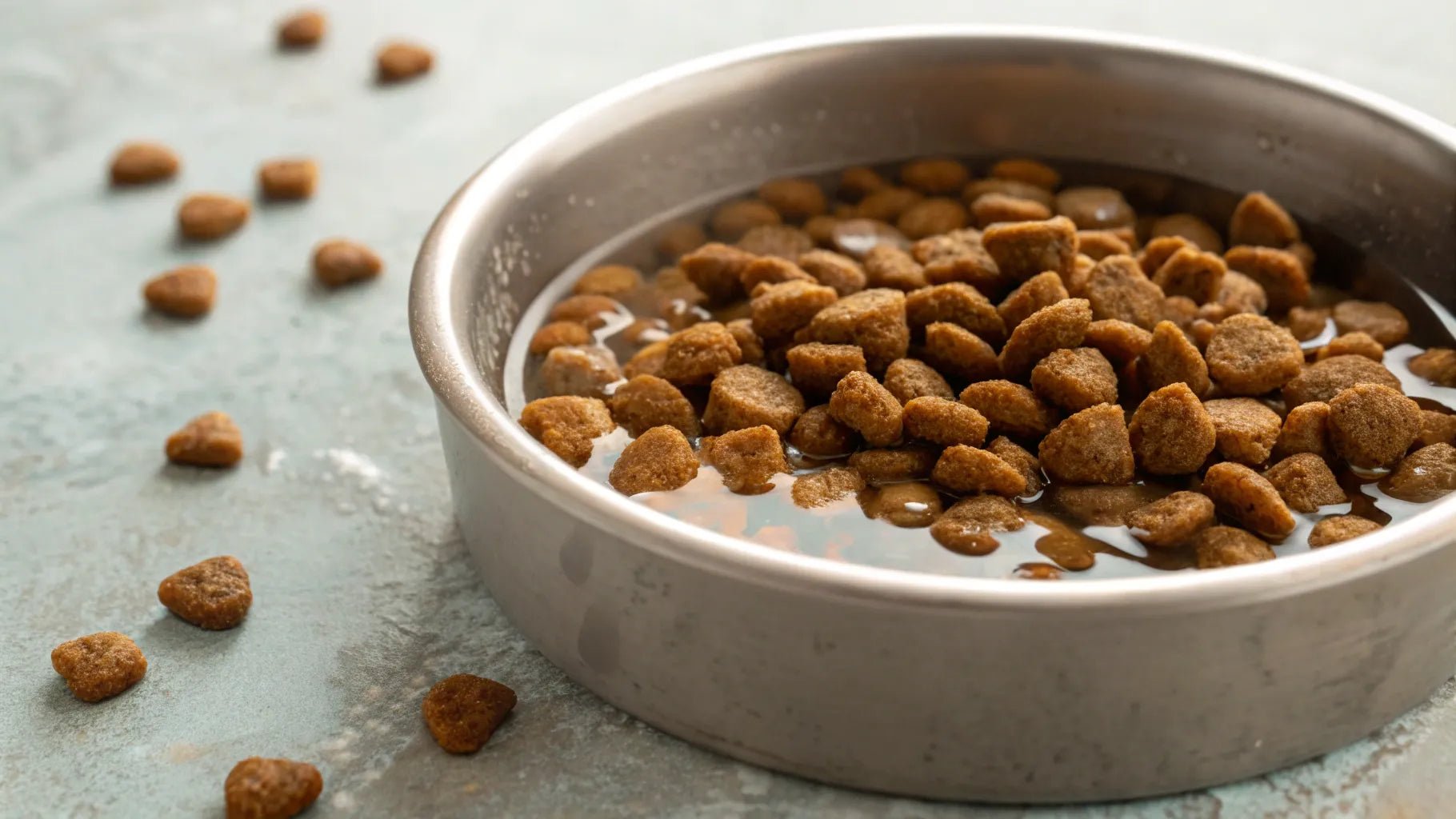
Softening kibble can follow a simple routine. First, measure the usual amount of dry food into a clean bowl. Next, add a small amount of warm water or broth around the edges, not directly in one spot, to help even soaking. Gently stir so every piece becomes slightly damp. Leave the bowl for a few minutes, then check and mash a few pieces with a spoon. If the center is still hard, add a little more liquid and wait again until the texture suits the dog’s chewing ability.
Portion sizes, ratios, and soaking times
Knowing the appropriate amount of water will make it easier to achieve the same softness every time. As a general guideline, 0.5 to 1 part water to 1 part dry food is common. Start with a small amount of water and add a little at a time if needed.
For puppies and senior dogs, a softer texture is safer, so use more water and soak for 10 to 20 minutes. For adult dogs, if you only want to lightly moisten the food, 5 to 10 minutes is often sufficient. Large kibble or hard-type foods will be easier to eat if soaked for a slightly longer time."
How the texture should look when ready
Ideal softened kibble should be soft enough to mash with a spoon, but still hold its shape. For most dogs, the center of each piece should be moist with no hard, crunchy core left. The food should look like a thick stew or oatmeal rather than soup, so it does not spill and is easy to lap up. If liquid pools at the bottom, too much water was added. If pieces are still tough, add a little more warm water and wait a few more minutes.
Switching from dry to softer meals
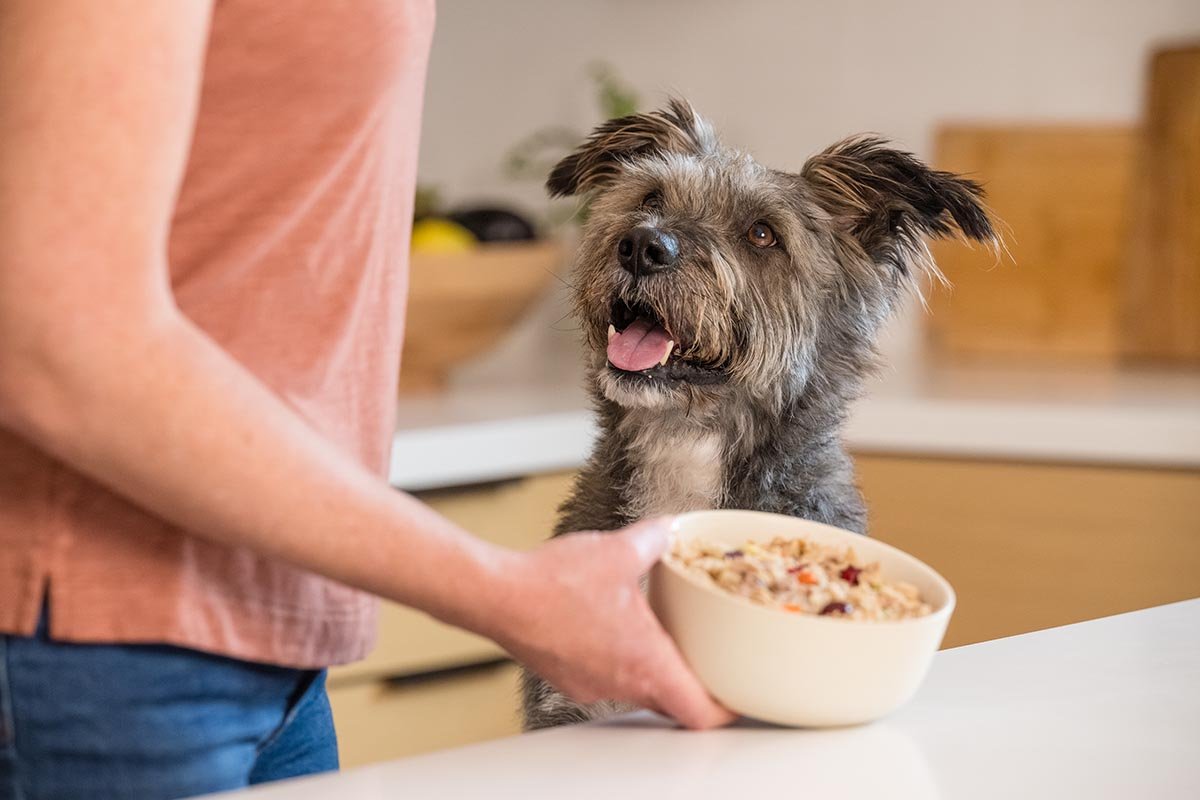
Switching from dry kibble to softer meals should be done with a clear plan rather than in one sudden change. The goal is to protect the stomach while helping the dog accept the new texture. Owners can adjust the ratio of softened food, check body weight and stool condition, and decide whether a partial switch or a complete switch is most suitable for the dog’s age, teeth, and activity level.
Making a gradual transition
A sudden change from crunchy kibble to fully softened food can upset a dog’s stomach. A gradual transition over 7–10 days is usually safest. Start by softening only 25% of the meal for 2–3 days, keeping 75% dry. If stool and appetite stay normal, move to a 50:50 mix for another few days, then 75% softened. Finally, offer 100% softened food. Adjust more slowly for dogs with sensitive digestion or past tummy troubles.
How much softened food to feed
The appropriate amount is based on the principle of ""adding only water without changing the original amount of dry food."" First, check the daily feeding amount indicated on the package, and while maintaining that gram amount, gradually add water or soup.
Since the calories are determined by the dry portion, there is little need to worry about excessive weight gain from adding water. However, if you mix in wet food or nutrient-rich soup, the calorie count will increase, so it is safer to adjust by reducing the amount by 10-20% from the original amount. It is important to fine-tune the amount while observing your pet's weight and body shape for 2-4 weeks."
Watching your dog for stomach upset
Mild stomach changes are common when feeding softened food, but sudden or strong symptoms need attention. Watch for vomiting, diarrhea, very soft or slimy stools, gas, bloating, decreased appetite, or unusual tiredness. A small change in stool during transition can be normal; however, bloody stool, repeated vomiting, or pain when the belly is touched are warning signs. If symptoms last more than a day, worsen, or your dog seems unwell, contact a veterinarian and return to the last diet that was well tolerated.
Storing softened dog food safely
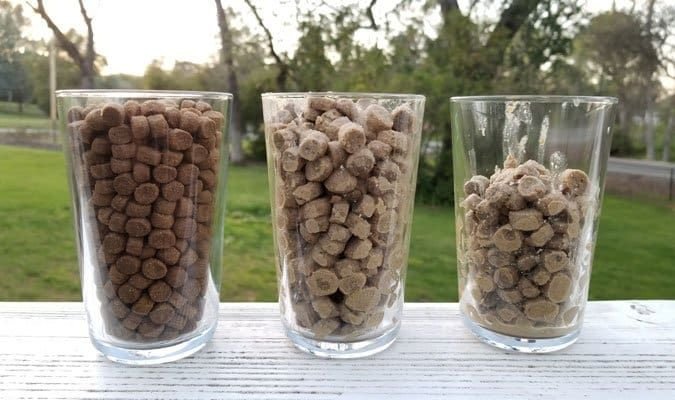
Softened dog food spoils faster than dry kibble, so safe storage is essential for a dog’s health. Once liquid is added, bacteria begin to grow more easily. Prepare only what a dog can eat within one meal when possible, and discard leftovers left at room temperature for a long time. For dogs that eat slowly, smaller, more frequent portions reduce waste and lower the risk of stomach upset or food poisoning.
Fridge, freezer, and room‑temp rules
Softened dog food is more prone to spoilage, so basic storage rules are important."At room temperature, only leave softened food out for about 20–30 minutes, then discard leftovers to avoid bacterial growth. In the refrigerator, use a sealed container and keep softened food for no longer than 24 hours. For larger batches, freezing in small portions is safer; defrost in the fridge, not on the counter, and do not refreeze once thawed.
How long softened food is safe to keep
Softened dog food spoils faster than dry kibble because added moisture helps bacteria grow. As a general guideline, softened food should be:
- Thrown away after 1–2 hours at room temperature
- Kept in the refrigerator for up to 24 hours in a sealed container
- Stored in the freezer for 1–2 months if portioned and well wrapped
If softened food smells sour, looks slimy, or your dog hesitates to eat, do not serve it. Preparing smaller, fresh portions is the safest option.
Special cases: puppies and seniors
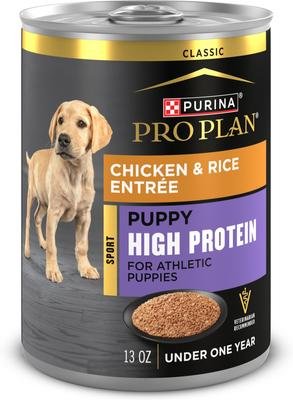
Puppies and senior dogs often benefit most from softened dry food, but for different reasons. Puppies have small jaws and delicate, changing teeth, so softer kibble supports eating and growth without pain. Seniors may struggle with worn teeth, dental disease, or weaker jaw muscles, and moist food is easier to chew and swallow. In both stages, softer food can also support hydration and kinder digestion, helping dogs keep a healthy weight and enjoy meals comfortably.
Softening food for teething puppies
Teething puppies often chew more because their gums are sore, so softened kibble can be kinder on the mouth while still offering balanced nutrition. Use warm (not hot) water and create a porridge‑like texture that puppies can lap easily. Dividing daily food into 3–4 small softened meals supports gentle digestion. Introducing a slightly firmer texture over time helps puppies transition smoothly to regular dry kibble as teeth fully emerge.
Helping older dogs keep eating well
Older dogs often eat less because of sore teeth, weaker jaw muscles, or reduced sense of smell. Softening dry food makes chewing easier and encourages steady calorie intake, which helps maintain weight and muscle. Using warm water or low‑sodium broth can also increase hydration.
For seniors, divide the daily portion into smaller, more frequent meals to support digestion and energy. Monitor body condition, stool quality, and appetite. If a dog suddenly avoids food, loses weight, or struggles to chew even softened kibble, consultation with a veterinarian is strongly recommended.
Common mistakes to avoid
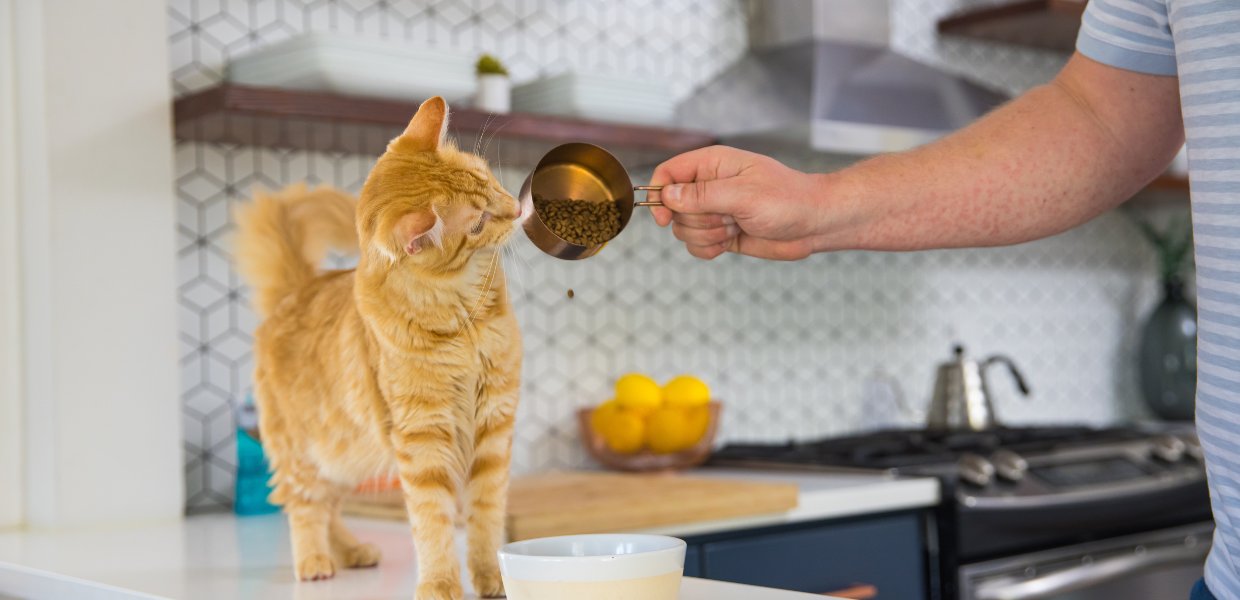
Softening dry dog food is simple, but some habits can cause digestive trouble or safety issues. The main risks are uneven nutrition, food spoilage, and mouth burns. Avoid the following:
- Suddenly changing from dry to very soft meals
- Leaving soaked kibble at room temperature for hours
- Adding salty broth, garlic, onion, or rich human foods
- Using water that is too hot
- Guessing portions instead of following the calorie guideline on the bag
Careful preparation helps dogs enjoy softer food without stomach upset or weight gain.
Too much liquid or very hot water
Using too much liquid can turn kibble into a watery soup that is hard for dogs to lap up and may lead to incorrect portion sizes. Start with a small amount of water and add gradually until the food is mashable but still holds shape. Very hot or boiling water can destroy nutrients and may create hot spots that burn the mouth. Use warm, skin‑temperature water instead, stir well, and always check with a clean finger before serving.
Broths, toppers, and unsafe extras
Flavorful add‑ins can make softened kibble more appealing, but some are unsafe. Safe options include plain low‑sodium chicken or beef broth, a spoon of dog‑safe wet food, or a small amount of plain pumpkin. Avoid broths with onion, garlic, strong seasoning, or high salt, as well as human gravies, butter, oil, and fatty meat scraps. Sugar, xylitol, and alcohol are also dangerous. When unsure, choose simple, single‑ingredient toppers or ask a veterinarian for guidance.
When to ask your vet about soft food
Softened food can usually be offered at home, but certain situations require veterinary guidance first. A vet should be consulted when a dog suddenly refuses dry food, has ongoing weight loss, or shows chewing pain, drooling, or bad breath. Professional advice is also important for dogs with kidney, heart, or pancreas disease, as extra fluid or richer toppings may be risky. Before making permanent diet changes, a vet can confirm whether softer food alone is suitable or if a prescription diet is needed.
Red flags that need a checkup
Softened food is convenient, but it's safer to seek veterinary attention early if you notice any of the following signs:
- Little or no appetite even when food is placed in front of them, lasting for several days or more
- Squeaking when chewing, constantly touching their mouth, increased drooling
- Sudden worsening of bad breath, swollen or bleeding gums
- Nausea or diarrhea lasting for 1-2 days or more, with blood in the stool
- Sudden weight loss, becoming thin
This may not simply be a matter of preference; it could be a sign of underlying dental or oral pain or an internal organ disease. If you notice any concerning changes, it's important to consult a veterinarian rather than continuing on your own."
Questions to discuss with your vet
Before changing to mainly soft food, it is helpful to prepare clear questions. Examples include:
- “Is softened food suitable for my dog’s age, weight, and activity level?”
- “Could dental pain, nausea, or another illness be causing reluctance to eat dry food?”
- “How much softened food should be given per day, and in how many meals?”
- “Are there medical diets or prescription foods that should not be soaked?”
- “Which broths or toppers are safe with my dog’s health condition and medications?”
Bringing photos of stool and the kibble label supports more precise advice.
This article provides a detailed explanation of why you should soften dry food, the benefits for senior dogs and puppies, safe ways to use water and broth, specific methods for softening and the appropriate amount, storage methods, precautions, and even when to seek veterinary attention, all to help you create a safe and suitable diet for your dog.







![[Photos] Fat dogs are cute! Be careful not to get too fat](https://with-my-dog.com/wp-content/uploads/2022/07/image10-5-150x150.jpg)