

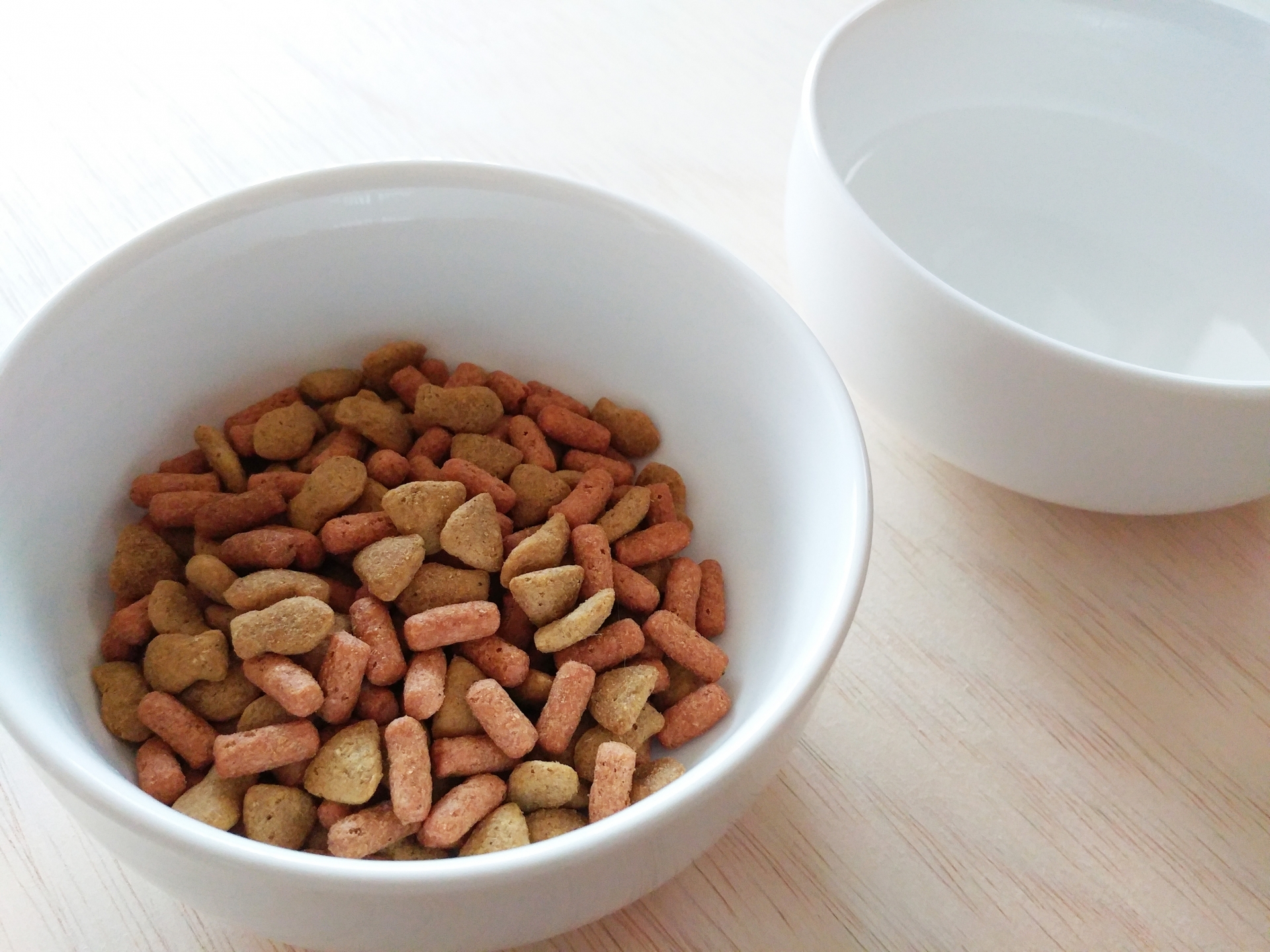
Did you know that eating from a bowl placed on the floor can actually be very difficult for large or senior dogs?
If the bowl is too low, they have to lower their head and lean forward while eating, putting strain on their lower back, legs, and stomach. It can also cause the bowl to slip or tip over while eating.
A food stand that can hold a food bowl can solve these problems.
Simply changing the height of the bowl slightly reduces strain on the body and makes eating easier. Furthermore, using a food stand that can securely hold the bowl in place prevents the bowl from slipping or tipping over while eating, and reduces the unsanitary effects of spills. Providing a feeding station that fits your dog's size will also contribute to its health.
Why not reconsider your dog's eating environment for the sake of your beloved pet?
We'll show you how to choose the right feeding station for your dog.
Three Benefits of Putting Your Dog's Food on a Stand
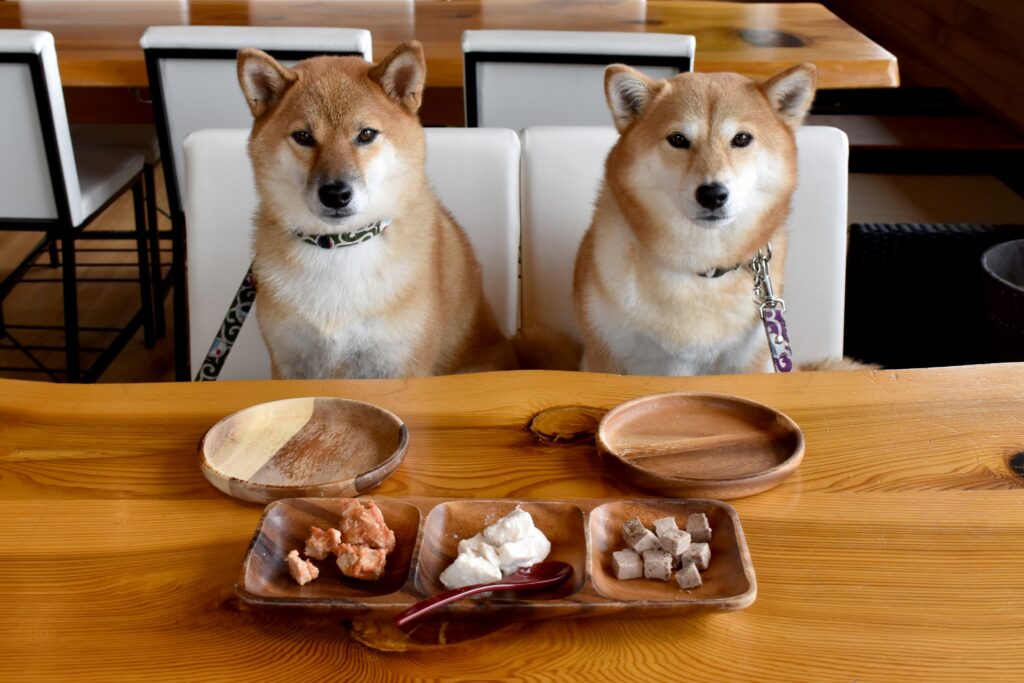
What does a comfortable eating environment for your dog look like?
Here, we'll introduce the benefits of providing your dog's food on a feeding tray.
【Benefits】Easy for Dogs to Eat
Using a food tray can create an environment that's easy for your dog to eat.
For example, if the bowl is low, your dog will have to lower its head and neck and lean forward while eating. This posture, especially for large and extra-large dogs, can put strain on their hips, legs, and joints, as well as their gastrointestinal tract, preventing food from flowing smoothly into their stomach.
Also, if the bowl repeatedly shifts or tips over while your dog is eating, your dog may become reluctant to eat. This can affect your dog's nutritional status. A feeding table can help improve this situation. Simply use the table to raise or secure the bowl at the appropriate height, allowing your dog to eat without stress.
【Benefits】 Prevents aspiration and regurgitation in dogs with weak tracheas.
Using a feeding table can prevent aspiration and regurgitation, creating a safe eating environment for dogs with weak tracheas.
Eating vigorously from a low bowl, with your head and neck lowered and leaning forward, can cause choking or regurgitation. This position is especially dangerous for puppies and dogs with weak tracheas, as it can easily cause coughing, leading to food reflux and spitting. Using a feeding tray can help prevent coughing, suction, and regurgitation in dogs with weak tracheas, allowing them to eat with peace of mind.
【Benefits】Reduced stress on senior dogs
A feeding tray is an especially recommended item for creating a comfortable eating environment for senior dogs.
As their hips, legs, and joints weaken, bending over and lowering their heads can be very stressful. Additionally, as dogs reach senior age, their muscle strength decreases and their tracheal function weakens, so more care must be taken to prevent vomiting and aspiration than with younger dogs. Using a feeding table and having them eat while standing will help the food travel smoothly to their stomachs. In particular, for senior dogs, who tend to lose their appetite, it is important to be mindful of providing a comfortable eating environment.
Three Tips for Choosing a Dog Food Stand
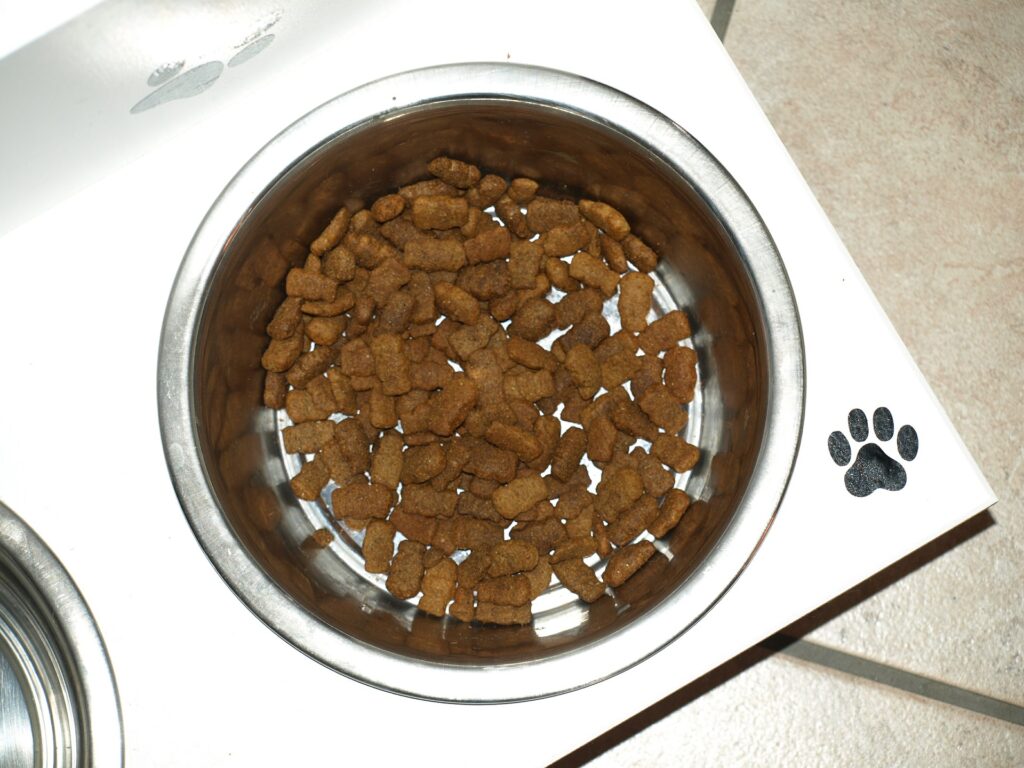
- An "integrated type" with a tray that fits perfectly with the stand.
- A "separate type" that lets you choose your favorite tray just for the stand.
There are two types.
You can also choose the height and size.
How do you choose the right feeding station for your dog?
Here, we'll introduce how to choose a feeding station.
Choose a dish that suits your dog's size and breed
The best position for a dog's food bowl is one where it reaches a height where the dog's mouth is slightly lowered from a standing position. It's roughly shoulder height.
However, please note that the length of the muzzle (from the tip of the nose to the area around the mouth) varies depending on the breed. Also, the perceived height will change depending on whether the bowl is fitted into a stand or placed on a stand, so be careful when measuring and deciding on the height. For short-nosed breeds (such as pugs and French bulldogs), we recommend a shallow dish on a slightly angled platform.
Note: If your dog eats with its mouth pointing upwards, air may be trapped inside the food, which could lead to other problems. Therefore, be careful about the height of the platform.
Choose a Platform That's Easy to Maintain
Choose a platform that's easy to maintain.
Since it's a place where your dog eats, you'll want to pay particular attention to hygiene.
The material should be easy to wipe and wash, so that spilled food or water can be quickly cleaned. It's also important to choose one that doesn't have any parts or sections that can make food or other spills difficult to retrieve.
Furthermore, for puppies and dogs still growing, or those entering senior years, it's a good idea to choose one with an adjustable height and angle, or even create your own custom platform by combining inexpensive parts so that it's easy to replace.
The most important thing is to choose one that's easy to use for both you and your dog.
Consider the number and size of dishes that can be placed and choose the optimal size.
Of course, the number of dishes that can be placed will vary depending on the size of the feeding station.
Whether you choose a stand that can only hold food dishes or a stand that can hold two dishes (one for water and one for food) will depend on how your pet has been eating up until now.
Also, make sure the dishes are non-slip and can be fixed in place. It's especially important to choose a separate feeding station that has a non-slip surface.
Many dogs eat vigorously, so a stable feeding station is essential. It's pointless if the feeding station moves or wobbles. If the station is unstable, take measures such as attaching a non-slip surface to the station itself.
How to choose tableware
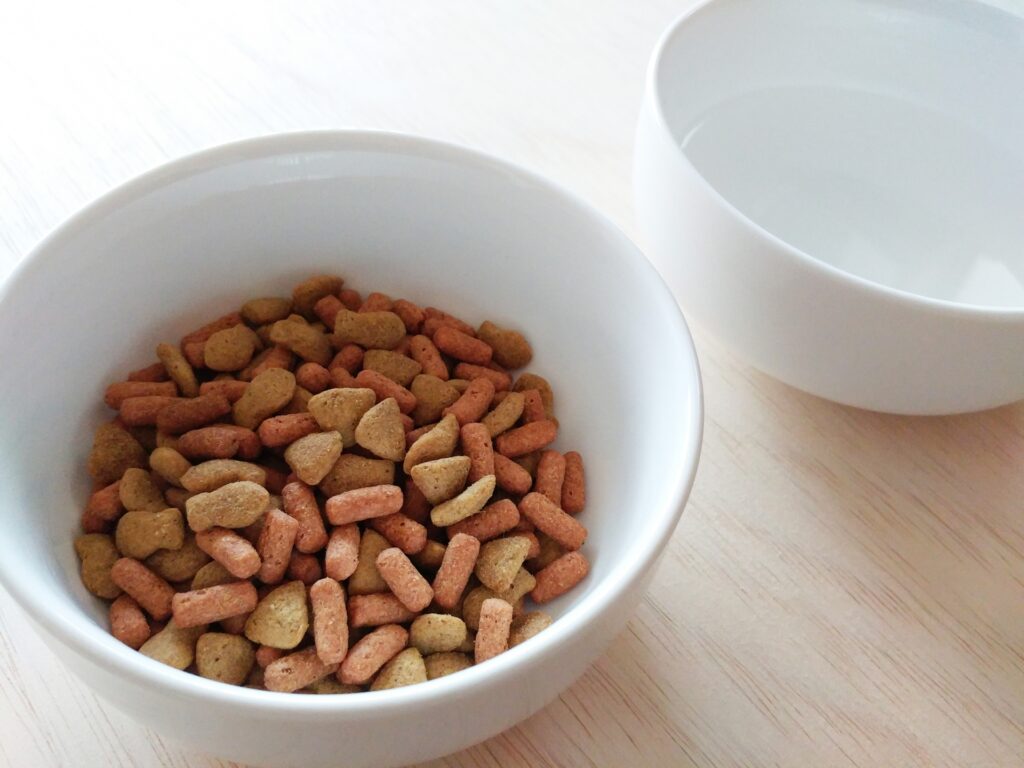
When it comes to bowls, different dogs have different preferences, and different breeds have different ideal bowl shapes.
For example, for short-nosed breeds (such as pugs and French bulldogs), shallow bowls are recommended.
Furthermore, for breeds with long, drooping ears (such as dachshunds and cocker spaniels), taller bowls are recommended.
As you can see, observe your dog's behavior and decide what's best for you.
Dish Bowl Materials and Effects
Typical materials used for dog bowls include plastic, stainless steel, and ceramic.
Each material has its own unique characteristics, so choose one that's easy for both you and your dog to use.
Plastic
Plastic is easy to handle and relatively inexpensive compared to other materials.
However, it is prone to scratches, which can easily lead to bacterial growth and odor retention.
It won't break if dropped, but it's light and therefore prone to tipping over. Be careful, as your pet may chew on plates and break them, or even swallow the broken pieces.
As such, plastic is a material that is meant to be replaced regularly.
Stainless Steel
Stainless steel is easy to clean, hygienic, and resistant to cracks and scratches.
However, some pets seem to dislike the texture of this material.
Even if your pet has a tendency to chew, stainless steel is resistant to breakage and relatively stable, making it the easiest material for owners to handle. However, some lightweight or shaped stainless steel toys can be unstable, so we recommend choosing one with a non-slip surface.
Ceramics
Ceramics are often beautifully designed. They're also scratch-resistant, resistant to bacterial growth, and odors, making them a hygienic material. However, compared to other materials, they're heavy, prone to breakage, and often expensive.
Even if your dog has a habit of chewing, ceramics are a good material for them because they're sturdy and heavy enough to be stable.
Summary
You may be surprised to learn that eating from a low position can be a burden for dogs.
Dogs generally love to eat.
And getting enough nutrition is a very important factor for a long and healthy life.
To keep your dog healthy and happy, it's essential to provide a comfortable eating environment where they can enjoy their food to their heart's content.
If you're worried about your dog's poor appetite, it's not just that he doesn't like eating or doesn't like the food. It could also be that the feeding environment is not comfortable.
First, check whether the current feeding environment is the best for your dog.
Then, please create a good feeding environment.






![[Popular dog food rankings] Recommended dog food and how to choose it](https://with-my-dog.com/wp-content/uploads/2021/10/入れ替え_5枚目-150x150.jpeg)












![[Dog Names] Is the Japanese name boom here?! Ranking of Japanese dog names!](https://with-my-dog.com/wp-content/uploads/2021/10/adtDSC_0871-300x199.jpg)