

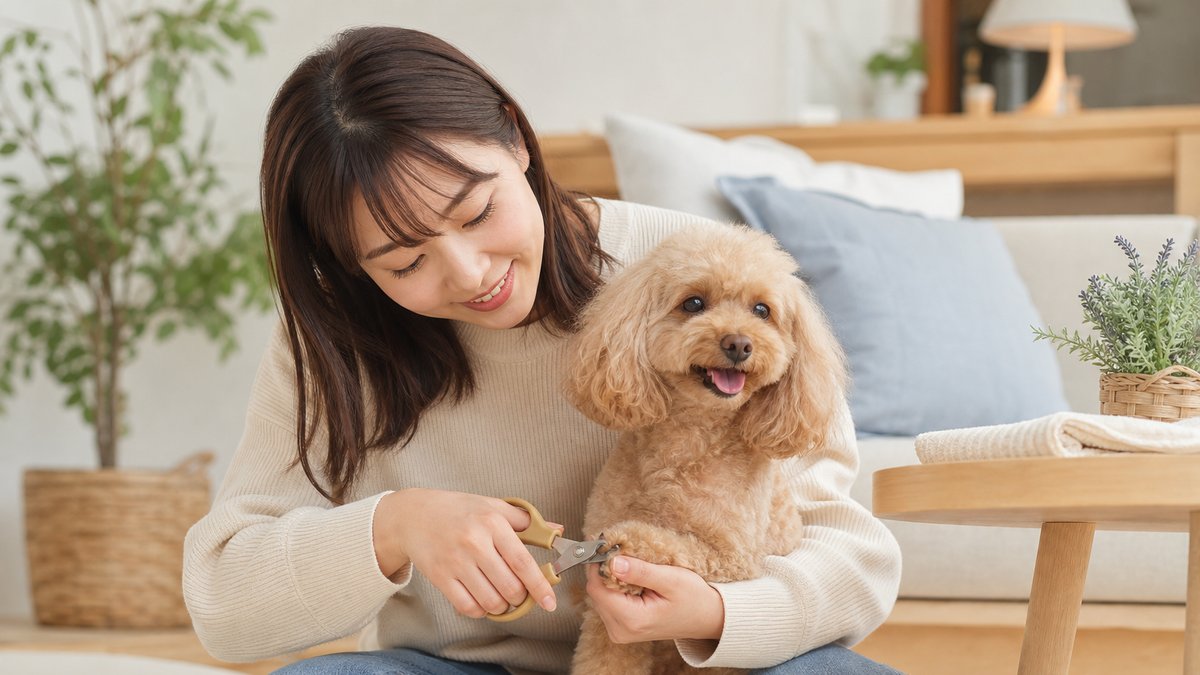
Even though trimming your dog’s nails is important, many owners struggle with concerns such as “my dog hates it and thrashes around” or “I can’t cut them properly.” This article introduces lifestyle-friendly tips for trimming your dog’s nails in a way that can be continued without stress in everyday life. From preparation and trimming methods to what to do when your dog resists, it summarizes helpful points for reducing stress for both dogs and their owners. It is a useful guide for anyone who wants to feel more confident with at-home care.
Why Regular Nail Care Matters
Short, well‑kept nails are about much more than appearance. Regular nail care supports a dog’s comfort, posture, and joint health in everyday life. When nails stay at a healthy length, dogs can walk, run, and play without pain or slipping on floors. Trimmed nails also protect furniture and skin from accidental scratches. Making nail trims part of a normal grooming routine helps prevent stress, because the process becomes familiar instead of frightening.
Health problems caused by long nails
Overgrown nails change how a dog places weight on each paw. The toes spread, the paw tilts, and joints in the wrist, elbow, and shoulder compensate. Over time, long nails can contribute to joint pain, arthritis, and posture problems. Nails that touch the ground easily snag and tear, leading to cracks, bleeding, or infections. Curled nails can even grow into the paw pad, which is extremely painful and may require veterinary treatment.
How often most dogs need trims
Many dogs need a nail trim about every 3–4 weeks, but the ideal interval depends on lifestyle and nail growth. Active dogs who walk on pavement may need less frequent trims, while indoor or small dogs often need more.
A simple guide is the sound and shape of the nails. If nails click on hard floors or touch the ground when the dog stands, they are usually too long and trimming is recommended soon.
Get Set Up for Calm Home Grooming
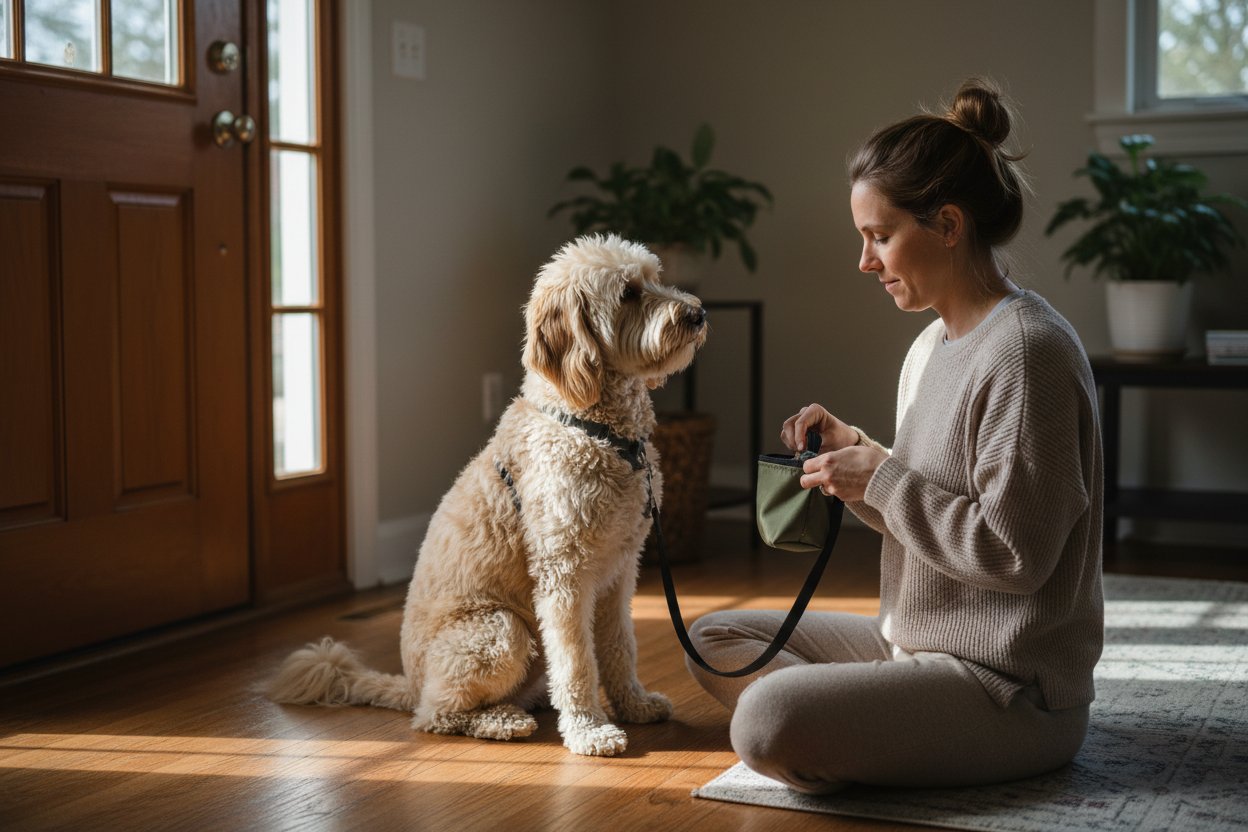
A calm environment is the foundation of stress‑free nail care. Before trimming, prepare a routine setup: a quiet spot, non‑slip mat, good lighting, and all tools within reach. When the owner moves confidently and does not need to hunt for items, the dog senses less tension. Over time, repeating the same peaceful setup helps the dog learn that nail care is a normal, safe part of everyday life, not something to fear or avoid.
Choose a quiet, well‑lit space
A calm environment helps dogs accept nail care more easily. Choose a quiet, well‑lit room with a non‑slip surface such as a rug or yoga mat. Turn off loud TVs, avoid busy doorways, and keep children or other pets in another area. Good lighting makes the quick easier to see, which reduces mistakes. Prepare the space in the same way each time so nail trimming feels like a familiar, safe routine.
Pick the right nail tools for your dog
The ideal nail tool depends on size, nail hardness, and temperament. Small dogs with fine nails often do well with lightweight scissor clippers or gentle grinders. Large breeds with thick nails need sturdy, sharp clippers designed for big dogs. For nervous dogs, quiet grinders or manual files reduce sudden sounds and pressure. Non‑slip handles, sharp blades, and a comfortable grip help owners work quickly and safely, lowering stress for both dog and human.
Clippers vs. grinders vs. files
Clippers, grinders, and files all shorten nails, but suit different dogs.
| Tool type | Features | Best for |
|---|---|---|
| Clippers | Fast, quiet, inexpensive | Most dogs used to nail care |
| Grinders | Gradual filing, rounded edge | Dogs needing precision or with dark nails |
| Files | Very gentle, slow | Puppies, very nervous dogs, or finishing work |
Sensitive or noise‑shy dogs often accept manual files or low‑vibration grinders more easily than standard clippers.
Must‑have safety items on hand
Having a few safety items nearby makes nail trimming calmer and safer for both dog and owner.
- Styptic powder or pencil: Quickly stops minor bleeding if the quick is nicked.
- Clean gauze or cotton pads: Used to apply pressure and styptic.
- Small towel: Helps with gentle restraint or wiping dust and blood.
- Good lighting or headlamp: Essential to see the quick, especially on dark nails.
- High‑value treats: Keeps nail care positive even after a small mistake.
Preparing these items in advance reduces stress and allows calm handling of unexpected problems.
Lifestyle Dog Nail Trimming Tips That Work
Lifestyle dog nail trimming means fitting nail care naturally into everyday life, rather than treating it as a rare, stressful event. The aim is to keep nails short enough for comfortable movement while protecting the bond between dog and owner.
Instead of a monthly “big trim,” many owners find success with short, frequent mini‑sessions linked to daily routines such as walks or evening relaxing time. Gentle handling, tasty rewards, and calm repetition gradually teach dogs that nail care is safe and predictable. As a result, grooming becomes easier, safer, and far less tiring for both dog and owner.
Turn nail care into a relaxed routine
Nail care becomes far easier when it feels like a normal part of life, not a rare “event.” Aim to link trims to calm, predictable moments, such as after a walk or in the evening when the household is quiet. Use the same mat, tools, and order every time so the dog learns the routine. A short paw touch, one or two nails, then a reward helps the dog expect comfort and treats, not surprises, during nail care.
Use short, frequent sessions
Many dogs tolerate nail care better when it is broken into short, frequent sessions. Instead of trying to trim all nails at once, aim for just a few nails per day. Keep each session under five minutes and end while the dog still feels calm. Repeating brief, easy trims several times a week helps the dog learn that nail care is routine, predictable, and nothing to fear.
Pair trims with walks, play, and rest
Pairing nail care with pleasant daily activities helps dogs relax and accept grooming more easily. After a walk, many dogs feel calmer and nails are slightly softer, so trimming becomes smoother. A short play session before grooming can release excess energy and reduce fidgeting. Ending with quiet cuddle time or a nap spot teaches that nail trims are just one small, normal part of a nice routine, not an event to fear.
Tip 1: Start Handling Paws Early
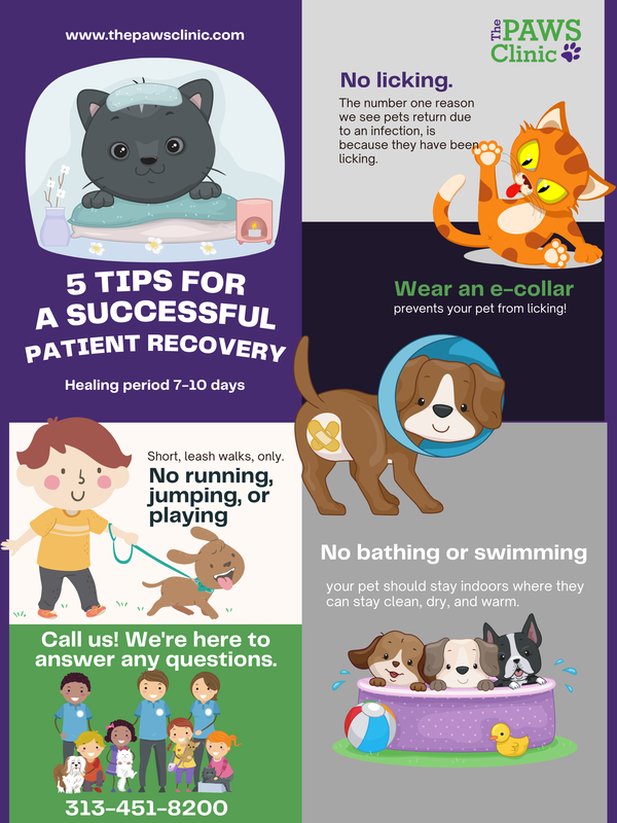
Many dogs dislike nail trims because their paws are rarely handled in daily life. Early, gentle paw handling makes nail care feel normal, not scary. Pet guardians are encouraged to include short paw touches in everyday routines such as cuddling on the sofa or drying after walks. Calm, positive experiences now reduce future resistance, struggling, and fear, and also make veterinary and grooming visits smoother and safer for everyone.
Puppy paw training made simple
Many puppies accept paw handling easily when it feels like a game. Start with very short sessions when the puppy is calm, such as after play or a walk. Gently touch a shoulder, then slide a hand down the leg and briefly hold a paw for one second, reward, and release. Repeat often, increasing time and pressure little by little. Pair every touch with soft words and high‑value treats, so the puppy learns that paw handling always predicts something pleasant, not restraint or discomfort.
Helping adult dogs learn to accept touch
Adult dogs can learn to enjoy paw handling, but progress is often gradual. Begin away from nail tools and simply pair gentle touches with rewards. Briefly touch a leg or paw, give a treat, then release. Over time, move to holding each toe, spreading the paw pads, and lightly pressing nails. Stop before the dog pulls away so confidence grows. Short, daily sessions help even nervous dogs accept touch as a normal part of life together.
Tip 2: Go Slow and Stay Patient
Nail trimming is easiest when it is treated as a slow, calm process rather than a task to finish quickly. Rushing often leads to cutting too short or scaring the dog, which makes future trims harder. Aim to trim one small piece at a time, pausing often for praise or treats. If the dog looks unsure, simply stop, let the dog relax, and continue later. A gentle voice, relaxed breathing, and unhurried movements help the dog feel safe and build long‑term confidence with nail care.
Reading your dog’s body language
Understanding body language helps prevent stress during nail care. A relaxed dog shows soft eyes, normal breathing, and a loose tail and body. Early stress signs include lip licking, yawning, turning the head away, and lifting a paw. Stronger fear signals are trembling, tucked tail, growling, or trying to escape. When early signs appear, reduce pressure, slow down, and reward calm behavior before continuing.
When to pause and try again later
If a dog starts to stiffen, pull paws away, yawn, lick lips, or tuck the tail, nail trimming should pause. Continuing in that state increases fear and makes the next session harder. End on a small success, offer a reward, and switch to a calm activity such as gentle petting or play. Trying again later, when the dog is relaxed, helps keep nail care positive and safe over the long term.
Tip 3: Use Treats, Praise, and Distraction
Nail trims become far less stressful when dogs earn something wonderful during every session. Prepare tiny, soft treats and offer one for calm behavior, paw handling, and each nail touch. Add gentle praise in a low, relaxed voice to build positive associations. For worried dogs, combine treats with distractions such as a stuffed Kong, chew, or lick mat so focus shifts away from the clipping sound and sensation.
Rewarding every small success
Positive reinforcement helps dogs learn that nail care is safe and rewarding. Start by marking every tiny step: letting a person touch a paw, hearing the clipper sound, or tolerating one nail. Offer a small, high‑value treat and calm praise each time. End the session after a success, not a struggle, so the dog remembers the trim as a pleasant, predictable routine.
Lick mats, chews, and other helpers
Lick mats, long‑lasting chews, and food‑stuffed toys can turn nail trimming into a built‑in reward. Spread a soft treat on a lick mat or fill a puzzle toy before grooming. The steady licking or chewing helps many dogs relax and stay focused on something pleasant instead of the sound or feel of the trimmer. Always supervise to keep chewing safe and remove any small, broken pieces.
Tip 4: Position Your Dog Comfortably

A comfortable position makes nail trimming safer and less stressful for both dog and owner. Before clipping, help the dog relax with a short walk or calm play. Use a non‑slip surface such as a rug or mat so paws do not slide. Support the dog’s body gently and avoid forcing movement. Many dogs feel calmer when allowed to lean against a leg, sofa, or cushion. Prioritize stability and relaxation over speed to build a positive grooming habit.
Standing, lying down, or in your lap
Many dogs accept nail trims more easily when the body position fits their size, age, and personality. Small dogs often relax in a secure lap or on a non‑slip table. Medium and large dogs usually feel safer standing on the floor with good traction or lying on one side on a mat or bed. Senior dogs and puppies tend to prefer a supported side‑lying position, which reduces strain on joints and makes it easier to take short breaks.
Safe ways to gently hold each paw
A secure but gentle hold helps dogs feel safe. Support the paw from underneath, letting the toes rest on the handler’s fingers, and place the thumb lightly on top. Avoid squeezing toes or twisting joints. Hold one toe at a time when trimming, guiding the nail rather than pulling the paw. Pause often so the dog can relax, and release the paw briefly if the dog pulls away to prevent a power struggle.
Tip 5: See the Quick and Trim Safely
Seeing the quick clearly is the foundation of safe nail trimming. The quick is the pink, living core of the nail that contains blood vessels and nerves. Cutting into this area causes pain and bleeding, so the goal is always to trim close to the quick without touching it. By learning how to spot the quick and removing only a small amount of nail at a time, owners can keep nails comfortably short while protecting the dog’s comfort and confidence during grooming.
Finding the quick on light and dark nails
Finding the quick is the key to safe, low‑stress nail trimming. In light-colored nails, the quick appears as a pink core inside the nail; trim only the clear tip in front of that pink area. In dark nails, look from underneath and trim tiny slivers, stopping when a moist-looking gray or pale circle appears in the center of the cut surface. Good lighting and slow, small cuts greatly reduce the risk of cutting too far.
How much nail to remove each time
For safe trimming, only remove a small amount at a time. As a guide, aim to take off 1–2 mm per cut, keeping the blade at a slight angle so the nail tapers naturally. Stop as soon as the cut surface shows a pale circle or becomes slightly softer, which signals closeness to the quick. For overgrown nails, trim a little every 5–7 days so the quick slowly recedes rather than trying to reach the ideal length in one session.
Tip 6: Be Ready for Small Mistakes

Small slips during nail trimming are normal, especially when owners are still learning. The important point is to stay calm and respond quickly. Preparing in advance reduces stress for both dog and owner. Keep styptic powder, cotton pads, and a towel nearby before starting. Plan for short sessions and expect occasional uneven edges. When minor mistakes occur, pause, comfort the dog with a treat or praise, and only continue if the dog appears relaxed.
What to do if a nail bleeds
Minor bleeding during nail trims can look alarming, but staying calm and prepared is most important. First, gently hold the paw and apply firm pressure with clean gauze or tissue for several minutes to help blood clot. If available, use styptic powder or a styptic pencil; cornstarch is a useful backup. Keep the dog still and avoid walking on hard floors until bleeding stops. Seek veterinary advice if bleeding continues for more than 20 minutes, the dog shows pain, or the nail is damaged or cracked high up.
Keeping nail trims positive afterward
A small bleeding accident can easily turn nail care into something scary for a dog, so the minutes afterward are very important. Stay calm, speak softly, and pause all trimming for the day. Offer high‑value treats, gentle petting, and a relaxing activity such as a walk or cuddle time. On another day, restart with very short, easy steps—only touching paws and rewarding—to rebuild trust and keep future nail trims positive.
Tip 7: Match the Routine to Your Lifestyle

Nail care should fit naturally into daily life, not feel like a big event. Matching the trimming schedule and style to each family’s routine reduces stress for both owner and dog. Highly active dogs may need quick touch‑ups more often, while quiet companions might do better with less frequent, longer sessions. Owners can also combine at‑home maintenance with periodic professional grooming to keep nails at a healthy length without overwhelming anyone.
Active dogs vs. couch‑loving companions
Active dogs often wear nails down naturally on pavement or trails, so they may only need light trims every 3–4 weeks, mainly to round sharp edges and check for cracks. In contrast, couch‑loving companions, toy breeds, and senior dogs usually move less, so nails grow longer and faster. Indoor or low‑activity dogs often benefit from weekly to bi‑weekly checks and small trims. Tailoring the schedule to exercise level keeps nails short without over‑clipping.
When to mix home care with a groomer visit
For many households, combining basic at-home care with a groomer when needed can help reduce the burden. At home, lightly trim the tips at short intervals, and think about the options as follows:
| Situation | When At-Home Care Is Suitable | When Using a Groomer Is Reassuring |
|---|---|---|
| Personality | Your dog stays calm and allows handling | Your dog dislikes having their paws touched or tends to resist |
| Nail condition | Nails are straight, white, and easy to see | Nails are black, deformed, or thick |
| Owner’s experience | You are used to handling the tools | You are a beginner and feel very anxious |
This way, it becomes easier to decide what to do. Having a professional trim the nails every other time or every few sessions also makes it easier to check the proper length and helps prevent problems.
Helping Anxious or Sensitive Dogs

Many dogs feel anxious about nail care, especially after a past scare or painful trim. The goal is not to “get the nails done at any cost,” but to protect the dog’s emotional safety first. Short, calm sessions, plentiful rewards, and stopping before the dog panics help rebuild trust. Sensitive dogs benefit from a predictable routine, very gradual progress, and tools introduced slowly, such as letting the dog sniff clippers or hear a grinder from a distance before using it.
Desensitization in tiny, easy steps
Many anxious dogs need very small, predictable steps to feel safe. Start away from the paws: calmly offer a treat just for sitting near the grooming spot. Next, reward brief touches to shoulder, then leg, then a quick tap on the paw. Stop before the dog pulls away.
Gradually add tiny challenges: holding a paw for one second, showing the clipper, touching nail with clipper, then a single trim. Repeat each step over several short sessions until the dog remains relaxed before moving on.
When to ask your vet about anxiety help
Dogs who panic, freeze, or growl around nail care may need veterinary support for anxiety. A consultation is recommended when desensitization, treats, and calm handling do not reduce fear, or nail trims become impossible or unsafe. Vets can rule out pain, suggest behavior plans, and, if needed, prescribe situational anxiety medication or supplements to make grooming more comfortable and humane.
Signs It’s Time to Call a Pro

Many owners manage most nail care at home, but some situations are safer in professional hands. A visit to a groomer or veterinarian is recommended when the dog becomes highly stressed or aggressive around nail tools, the nails are very overgrown or curling into the pads, the quick is difficult to see on very dark or thick nails, or the owner feels unsure despite trying calmly. Professional help prevents injury and keeps nail care from becoming a bigger fear.
Nail issues that need a veterinarian
Certain nail problems should be checked by a veterinarian rather than managed only at home. Sudden limping, constant licking of paws, or yelping when a paw is touched can signal injury or infection. Nails that are cracked to the base, growing sideways into the pad, or very overgrown and curling can also need professional care. Signs such as redness, swelling, pus, a foul smell, or a nail that turns black or discolored are urgent reasons to seek veterinary advice.
How groomers can support your routine
Professional groomers can be relied on not only for regular salon nail trims, but also as partners who make it easier to continue at-home care. It is reassuring to ask them to teach you the proper nail length for your dog or demonstrate how to hold the paw and angle the tool at home. For dogs with a strong dislike of nail trimming, another option is to “share the task,” such as having the salon trim only a few nails and finishing the rest at home. By regularly visiting the same groomer, your dog can become more familiar with them and is more likely to accept nail trimming calmly.
This article clearly explains nail-trimming tips tailored to your dog’s lifestyle. It covers the health importance of nail care, how to choose tools, how to use gentle words and rewards to reduce resistance, what to do when mistakes happen, and how to decide when to leave the task to a professional, helping owners learn low-stress care methods.











![[Ticks and Sarcoptic Mange] Symptoms and Treatment of Ticks that Harm Dogs](https://with-my-dog.com/wp-content/uploads/2022/01/4ab096d074c35f99ad05687eccf70c28-500x332-1-150x150.jpg)