

When it comes to protecting your dog's health, the correct way to store dog food is an often overlooked point. Even if you choose high-quality food, poor storage conditions can not only diminish its flavor but also lead to oxidation and mold growth. This article will clearly explain the basics of keeping dry dog food fresh for as long as possible, as well as storage methods to avoid, covering everything a pet owner should know about safe dog food storage.
Why Proper Dog Food Storage Matters
Proper storage is not only about convenience; it directly affects a dog’s health, safety, and enjoyment of meals. Dog food contains fats, proteins, and vitamins that can break down when exposed to air, heat, light, or moisture. Poor storage can lead to faster spoilage, loss of nutrients, and even mold or bacterial growth. In contrast, sealed containers, cool temperatures, and clean handling help keep food fresher for longer, support stable digestion, and reduce the risk of stomach upsets or foodborne illness.
Health risks of poorly stored food
Poorly stored dog food can grow bacteria, mold, and toxins that are invisible but dangerous. Warmth, moisture, and air let Salmonella and other germs multiply, which may cause vomiting, diarrhea, or more serious infection.
Rancid fats from oxidized kibble can irritate the stomach and may damage organs over time. Mold can produce mycotoxins, which are especially risky for puppies, seniors, and dogs with weak immune systems. Proper storage greatly reduces these health risks.
How storage affects freshness and taste
Proper storage directly affects whether dog food smells and tastes appealing to dogs. Exposure to air, heat, and light speeds up fat oxidation, which causes a stale or rancid odor. Dogs often refuse food once flavor changes, even if it still looks normal. Moisture and temperature swings also soften kibble, reduce crunch, and can create an unpleasant, dusty texture. Keeping food sealed, cool, and dry helps maintain the aroma and texture that encourage stable appetite and enjoyable mealtimes.
Nutrient loss and oxidation explained
Dog food contains fats, vitamins, and delicate nutrients that gradually break down when exposed to air, light, heat, and moisture. Fats react with oxygen in a process called oxidation, which causes rancid smells and flavors and can irritate a dog’s stomach. At the same time, vitamins A, E, and some B vitamins slowly lose potency. Even if kibble still looks normal, poor storage can mean less nutrition and higher risk of upset digestion for the dog.
How to Store Dry Dog Food (Kibble)
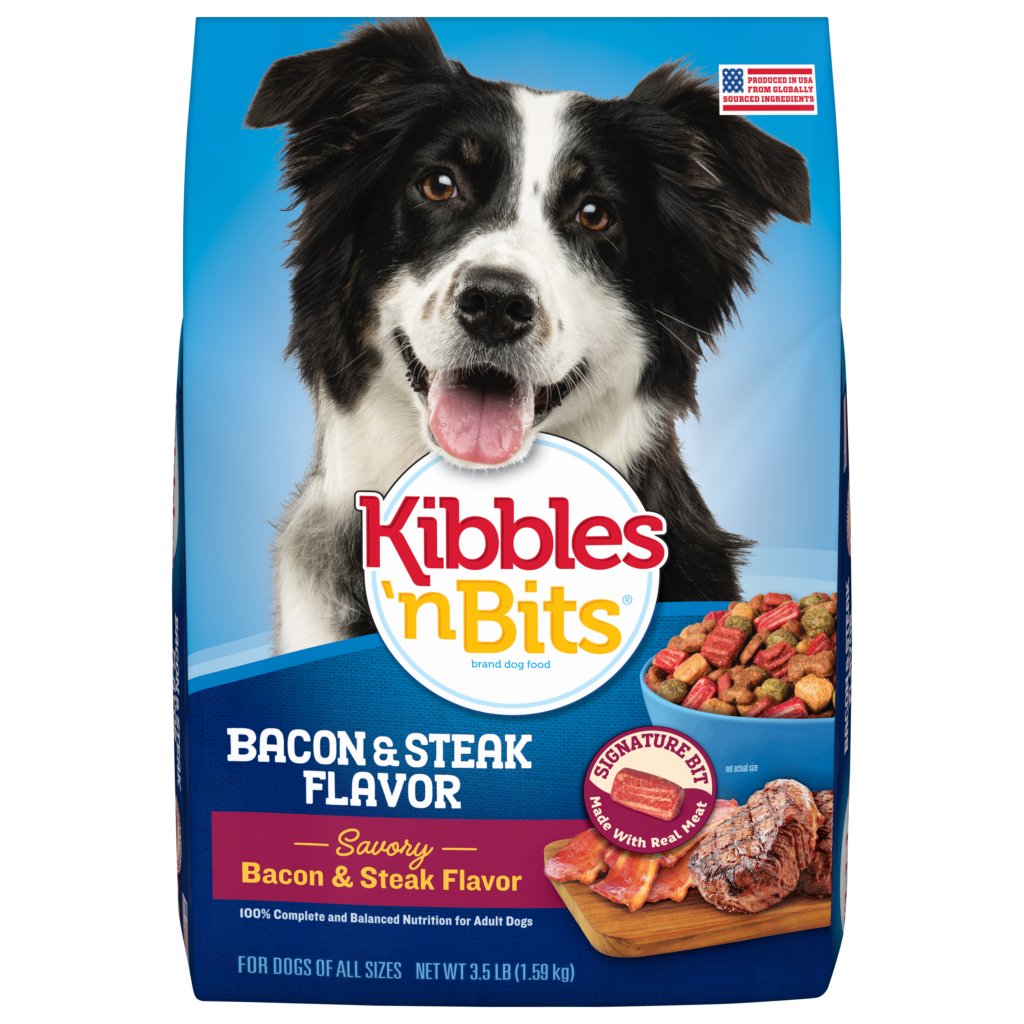
Dry dog food is relatively stable, but incorrect storage quickly shortens its shelf life. The goal is to protect kibble from air, moisture, heat, light, and pests. After opening, roll or clip the bag tightly and place it in an airtight container in a cool, dry, dark place such as a pantry. Avoid garages, balconies, or areas with big temperature changes. Do not mix new and old kibble for long periods, and always use clean scoops to prevent contamination.
Keep food in its original bag
Many owners pour kibble straight into a bin, but keeping food inside the original bag is safer. The bag is designed as a barrier to air, light, and moisture, which helps protect fats and vitamins from breaking down. It also clearly shows the best‑by date, batch number, and feeding guidelines, which are important in case of recalls or stomach troubles. For best results, place the entire sealed bag into a storage container rather than emptying the kibble directly.
Choosing an airtight storage container
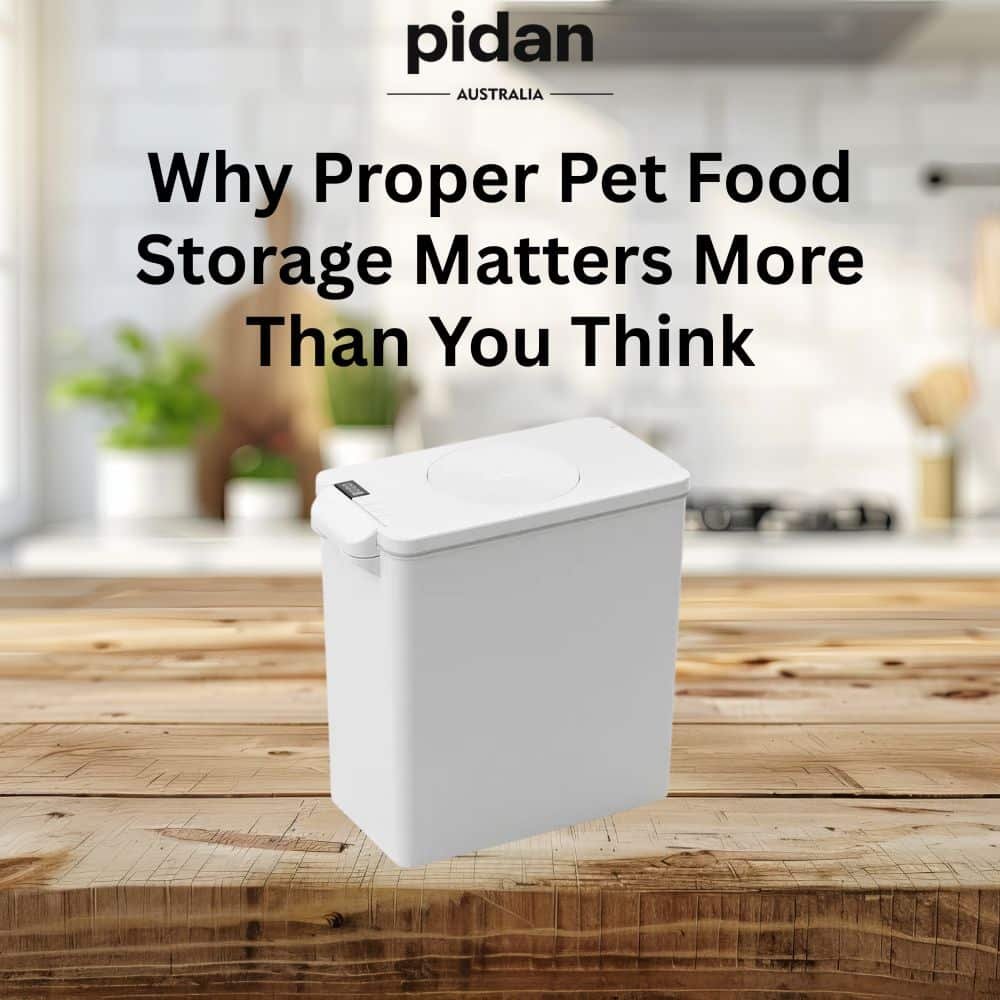
An airtight container protects kibble from air, moisture, pests, and odors, which all speed up spoilage. Choose a size that fits the whole bag with little extra space, so less air remains inside. Flat sealing lids or screw‑top lids tend to keep a tighter seal than flip caps. Look for sturdy, food‑grade plastic, stainless steel, or glass that is easy to wash and dry fully. For best protection, place the entire original bag inside the container before closing the lid.
Where to keep dry food in your home
Dry dog food should be kept in a cool, dry, and dark place away from temperature changes. Ideal spots are a pantry, cupboard, or closet on an interior wall. Avoid garages, balconies, laundry rooms, and near ovens or windows, where heat and humidity rise. High places or closed cupboards also help keep bags safe from curious dogs, insects, and rodents, reducing contamination risk and preserving freshness.
How much kibble to store at one time
How much kibble to keep at home depends on how quickly a household can use it before quality declines. As a guideline, aim to buy only what the dog can eat within 4–6 weeks of opening. Large bags may seem economical, but once opened, fats begin to oxidize and flavor and nutrients slowly decrease. For small dogs or single‑dog homes, a smaller bag is often safer. Multi‑dog homes can choose larger bags if the food is consumed quickly and stored correctly. When changing formulas or brands, avoid bulk buying until the dog’s tolerance is confirmed.
Cleaning and rotating storage containers
Proper cleaning and rotation keep kibble fresh, safe, and tasty. Always finish the older bag before opening a new one, and note the opening date on each bag or container. When a container is emptied, wash and dry it completely before refilling, instead of topping up old food. Avoid mixing different brands or batches in one bin, because it becomes harder to track freshness and spot problems if a recall or quality issue occurs.
How often to wash bins and scoops
Food bins and scoops should be kept as clean as human dishware, because they touch food every day. As a basic rule, wash scoops daily or every few uses, and wash storage bins every time a bag is finished before refilling. Use hot water and dish soap, rinse well, and dry completely to prevent mold. If a bin looks greasy, smells odd, or has crumbs stuck inside, clean it immediately regardless of schedule.
Using labels and dates to track freshness
Using labels and dates helps avoid serving stale or unsafe dog food. A simple system is enough.
- Write the purchase date and bag opening date on the original bag.
- Add a “use by” date based on the maker’s guideline (for example, within 4–6 weeks after opening for many kibbles).
- If food is moved into a container, place the bag label or a piece of the bag with the batch / lot number and expiry date on the lid.
For households with multiple pets or foods, color labels or short notes such as “Senior – chicken, use by 5/10” reduce mix‑ups and support safer feeding.
How to Store Wet and Canned Dog Food
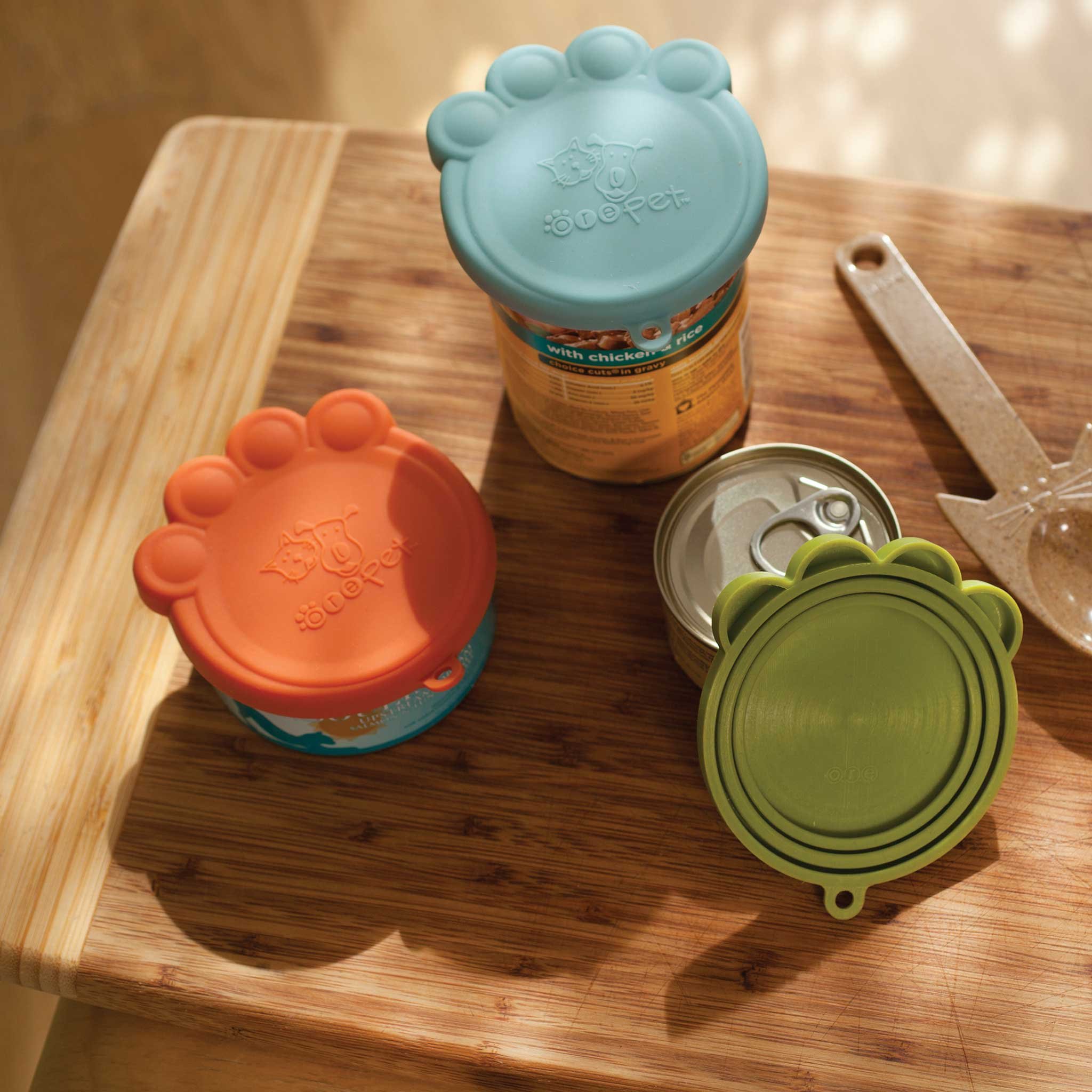
Wet and canned food spoil more quickly than kibble, so temperature control and sealing are especially important. Unopened cans and pouches should be stored in a cool, dry place away from direct sun and heat sources. Once opened, food must be covered tightly and refrigerated, and any leftovers should be used or discarded within the recommended time to protect the dog from bacteria and mold.
Unopened cans and pouches
Unopened wet food is comparatively stable, but only when stored correctly. Keep cans and pouches in a cool, dry place away from direct sunlight and heat sources; high temperatures speed up fat oxidation and spoil flavor. Avoid humid areas like bathrooms or near dishwashers, where rust and packaging deterioration can occur. Store packages off the floor, and always use food before the printed best‑by date for optimal safety and nutrition.
Storing opened wet food in the fridge
Once a can or pouch is opened, refrigeration is essential to slow bacterial growth and keep the food palatable. Transfer any unused portion to a clean, airtight container or cover the original can tightly with a silicone lid or cling film to limit air contact and odors. Place the container on a refrigerator shelf, not in the door, where the temperature stays more stable. Aim for a fridge temperature of 4°C (40°F) or below to maintain food safety and nutrition.
How long opened wet food is safe
Once a can or pouch is opened, wet dog food should generally be used within 2–3 days when stored in the refrigerator at or below 4°C (40°F). Cover the food tightly and return it to the fridge as soon as possible after serving. If any leftovers develop a sour smell, color change, or dry crust on the surface, discard the food even if it has been less than 2 days. When in doubt, throw it away rather than risk stomach upset or food poisoning for the dog.
Freezing leftovers safely
Freezing is a useful way to extend the life of leftover wet dog food, but it must be done safely. Only freeze food that is freshly opened, has been refrigerated promptly, and shows no signs of spoilage. Transfer leftovers into a clean, airtight, food‑grade container or freezer bag, remove as much air as possible, and label with the date and type of food. Spread food in thin, flat portions so it freezes and thaws evenly.
For best quality, aim to use frozen wet food within 1–2 months. Thaw in the refrigerator, never on the counter, to limit bacterial growth. Once thawed, do not refreeze and use within 1–2 days. If any unusual odor, color change, or ice crystals with mushy texture appear, discard rather than risking a stomach upset for the dog.
Storing Fresh, Raw, and Homemade Food
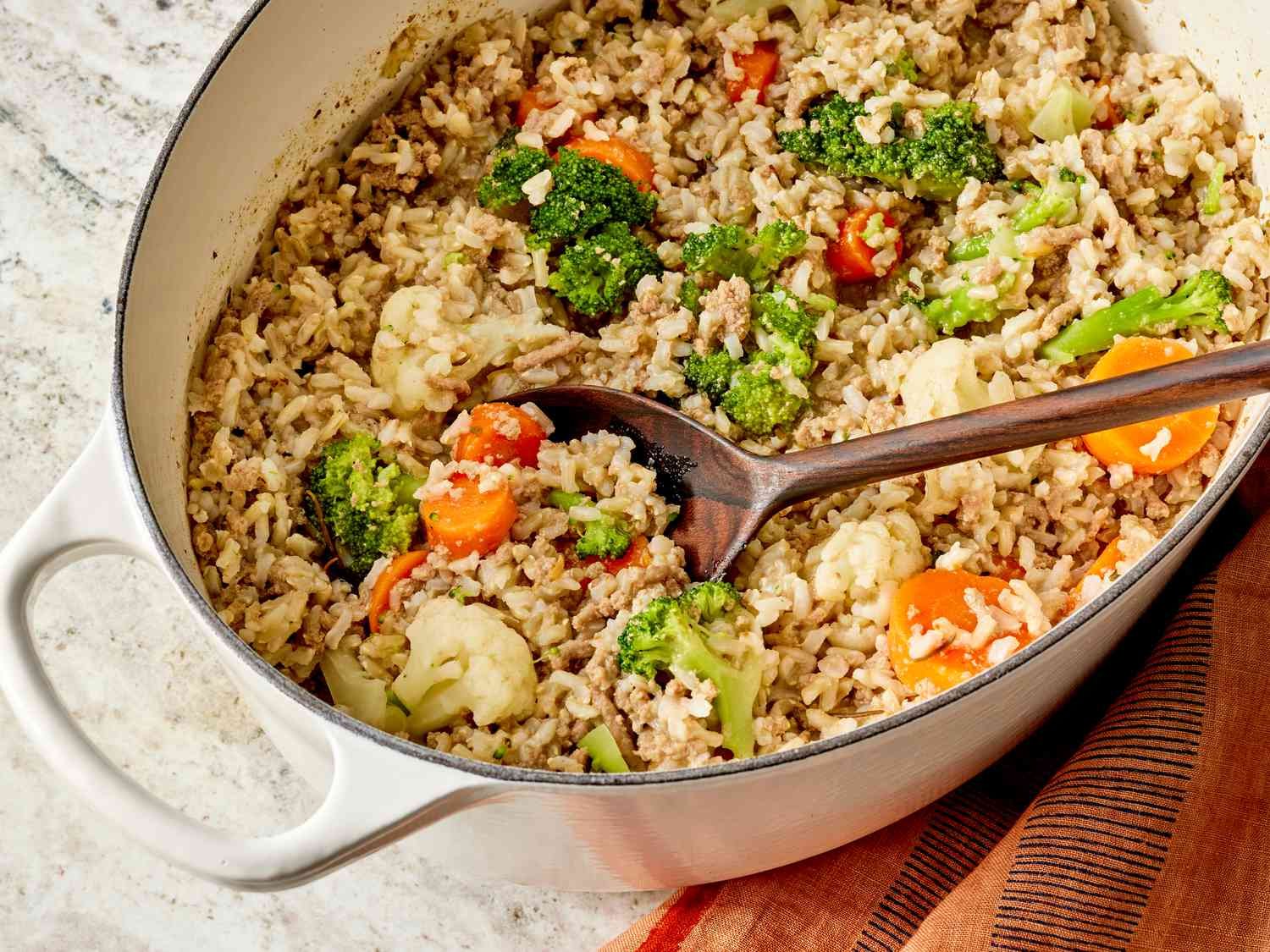
Fresh, raw, and homemade dog food is highly perishable, so safe storage is as important as recipe choice. Treat such food like human raw meat. Divide meals into single portions before chilling or freezing to avoid repeated thawing. Use shallow, airtight containers or freezer bags, press out excess air, and label with the food type and date. Always keep raw and cooked dog food separate from human food, and store on lower shelves so juices cannot drip onto other items.
Fridge and freezer temperatures
Fresh, raw, and homemade dog food should be kept at safe refrigerator and freezer temperatures to slow bacterial growth.
| Storage type | Recommended temperature | Notes |
|---|---|---|
| Refrigerator | 0–4℃ (32–40°F) | Store up to 2–3 days, in sealed containers |
| Freezer | -18℃ (0°F) or colder | For longer storage and better nutrient preservation |
Use an appliance thermometer to confirm temperatures regularly, especially in crowded or older fridges.
Portioning and safe thawing tips
Portioning food before freezing makes mealtimes easier and helps keep it safe. Divide raw or homemade food into single‑meal portions, flatten in freezer bags or use small containers, and label with the date and amount. Smaller, flat packs freeze and thaw faster and more evenly, which reduces time in the “danger zone” where bacteria grow.
For safe thawing, avoid room‑temperature defrosting. Use one of the following methods:
| Method | How to Thaw | When to Use |
|---|---|---|
| Fridge thawing | Move portion to fridge for 12–24 hours | Daily meals, best for safety |
| Cold‑water bath | Sealed bag in cold water, change hourly | When faster thawing is needed |
| Direct from frozen | For some cooked diets, follow brand guide | Small, thin portions only |
Always keep food in a sealed container or bag while thawing to avoid drips. Use thawed food within 1–2 days and never refreeze food that has been left at room temperature or that looks or smells unusual.
Preventing cross‑contamination at home
Raw, fresh, and homemade dog food often contains raw meat, blood, and juices, so careful handling is essential. Use separate cutting boards, knives, and bowls from those used for human meals. Wash hands, tools, and countertops with hot soapy water after preparation. Store dog food on a dedicated fridge shelf or box, away from human food. Use sealed containers, prevent drips in the fridge, and clean spills promptly to reduce bacteria spread and keep the whole family safe.
Shelf Life: How Long Dog Food Lasts
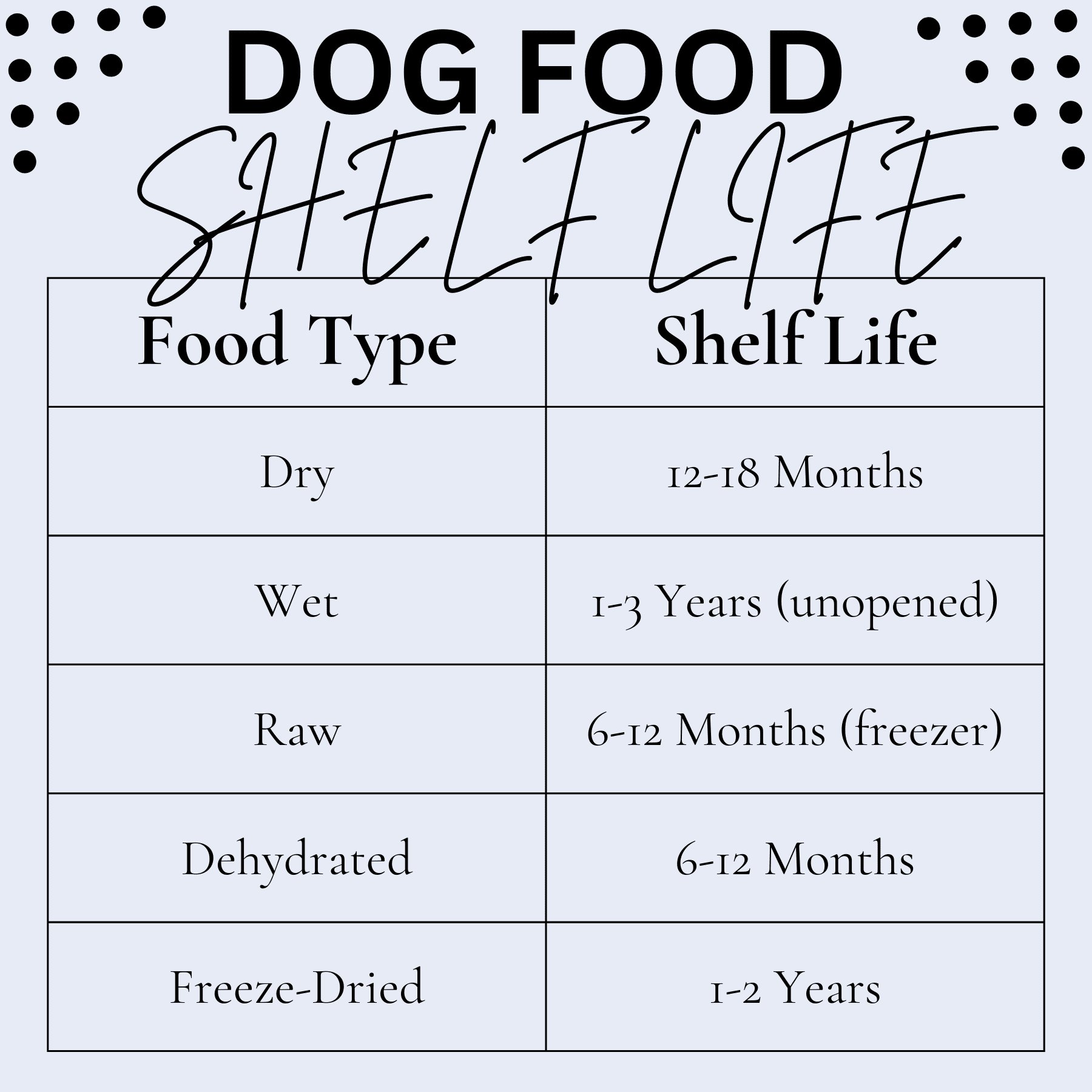
Dog food shelf life depends strongly on food type, packaging, and storage conditions. Even unopened food gradually loses freshness from the day it is made. Exposure to air, heat, light, and moisture speeds up fat oxidation and vitamin loss, and also raises the risk of mold and bacteria. Understanding typical shelf lives for kibble, wet, and fresh foods helps owners buy sensible amounts, store food correctly, and reduce both waste and health risks for dogs.
Reading best‑by and expiration dates
Dog food labels usually show a “best‑by” date and sometimes an “expiration” date. The best‑by date indicates how long the food should stay at peak flavor and nutrition if unopened and stored correctly. An expiration date is stricter and signals the last day the manufacturer considers the product safe. Always check the date before buying and before opening to avoid keeping old or degraded food at home.
How long dry kibble stays fresh
Dry kibble stays fresh only for a limited time after opening, even with good storage. As a general guide, most manufacturers recommend using an opened bag within 4–6 weeks. Smaller bags are often safer for single‑dog households because they are finished faster. Kibble kept in a cool, dry, dark place and sealed in its original bag inside an airtight container will stay palatable longest; heat, light, and humidity shorten its usable life.
How long wet and fresh foods keep
Wet and fresh dog foods have a much shorter safe period than dry kibble. As a general guide, unopened cans and pouches last until the printed date when stored in a cool, dry place. Once opened, wet food kept in the refrigerator at around 4°C is usually safe for 24 hours (up to 72 hours at most) if covered tightly. Fresh or lightly cooked refrigerated diets often keep 2–3 days after opening. Always follow the manufacturer’s directions and discard any portion that smells odd, changes color, or has been left at room temperature for more than a couple of hours.
Does dog food go bad after expiry?
Dog food can go bad after the printed date, but not always immediately. The best‑by date mainly guarantees peak flavor and nutrient levels, while a true expiration date signals a stronger safety limit. Once past either date, fats may oxidize, vitamins degrade, and contamination risks increase. If the bag or can is open, stored poorly, or shows any spoilage signs, the food should be discarded even if only slightly past date. When in doubt, do not feed it to a dog.
How to Tell If Dog Food Has Spoiled
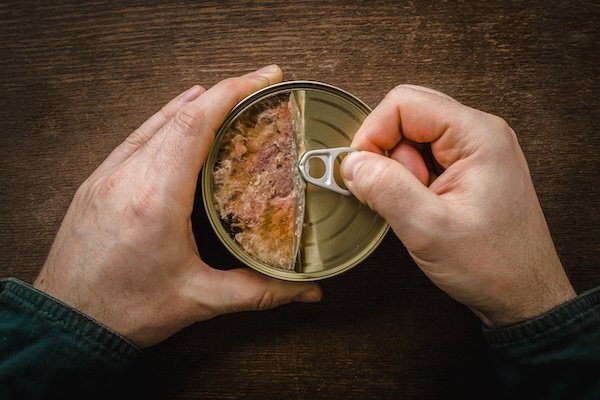
Dog food can spoil before or after the printed date, depending on storage conditions. Owners should regularly check both the food and the packaging rather than relying only on the expiry date. Spoiled food may lead to stomach upset or more serious illness, so when in doubt, it is safer to discard and open a fresh package. The next sections explain concrete signs to look for and how to judge safety.
Smell, color, and texture changes
Dog food that has gone bad often shows clear smell, color, and texture changes. A sour, rancid, or chemical-like odor indicates fat oxidation or bacterial growth. Faded color, dark spots, or mold on kibble or wet food also suggest spoilage. In terms of texture, kibble may feel unusually soft, oily, or dusty, while wet food can separate, become slimy, or develop a filmy surface. When in doubt, discard the food and offer a fresh portion to protect the dog’s health.
Package damage and insect pests
Package condition and pests are important clues to unsafe dog food. Avoid feeding food from bags or cans that are torn, punctured, swollen, rusty, or have broken seals, because air and moisture may have entered. Check for webbing, tiny beetles, moths, or larvae in dry food; small holes in the bag often indicate insect entry. If any insects, droppings, or fine dust are found, discard the entire bag and clean the storage area thoroughly before refilling.
Signs your dog may feel unwell
Recognizing signs of illness early is just as important as safe food management. If unusual behavior persists, seeking veterinary attention promptly will provide peace of mind.
| Signs | Specific symptoms |
|---|---|
| Changes in appetite | Sudden loss of appetite / Conversely, excessive eating |
| Diarrhea/Vomiting | Vomiting immediately after eating, loose stools or bloody stools |
| Decreased energy | Not playing, refusing walks, sleeping all the time |
| Changes in skin and coat | Dandruff, greasiness, increased hair loss, itching |
| Stomach problems | Increased flatulence, bloating, loud gas |
Especially if vomiting or diarrhea continues repeatedly, the pet is lethargic, or there is blood in the vomit, it is recommended to consult a veterinarian as soon as possible, as spoiled food may be the cause."
Safe Storage for Treats and Chews
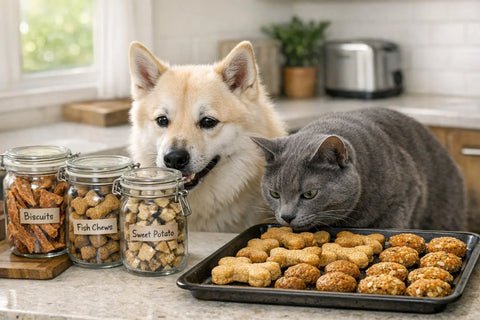
Snacks also require careful storage to stay safe and tasty. Treats are often higher in fat, sugar, or meat content, so spoilage and mold can develop quickly in warm, humid conditions. Poorly stored chews may become rancid, attract insects, or grow bacteria, which raises the risk of stomach upset or infection. By organizing a separate, cool, dry storage area for treats and chews, owners can protect their dog’s health and keep rewards appealing during training.
Dry biscuits and training treats
Dry biscuits and small training treats are relatively low‑moisture, so they keep well when stored correctly. The key is protecting them from air, heat, and humidity. Reseal original bags tightly after each use, or transfer treats to an airtight, food‑grade container. Store in a cool, dry cupboard away from sunlight and the stove. Avoid keeping large tubs by the door or in the car, where temperature changes cause condensation and faster spoilage. Check for stale smell, softening, or mold before offering treats.
Jerky, rawhide, and natural chews
Natural chews such as jerky, rawhide, Achilles tendons, and dried meat are susceptible to moisture and fat oxidation, so airtight sealing and temperature control are important. Store unopened chews in a cool, dark place away from direct sunlight, and after opening, be sure to close the zipper or transfer them to an airtight container. For types with a high fat content, refrigeration is recommended to maintain quality.
If mold, white powder, stickiness, or a sour or oily smell appears, it is safer to discard the chews and not feed them to your pet. Also, if you buy large bags, dividing them into smaller portions for storage will reduce the number of times you open and close them, making them less likely to deteriorate."
Dog Food Storage Safety at Home
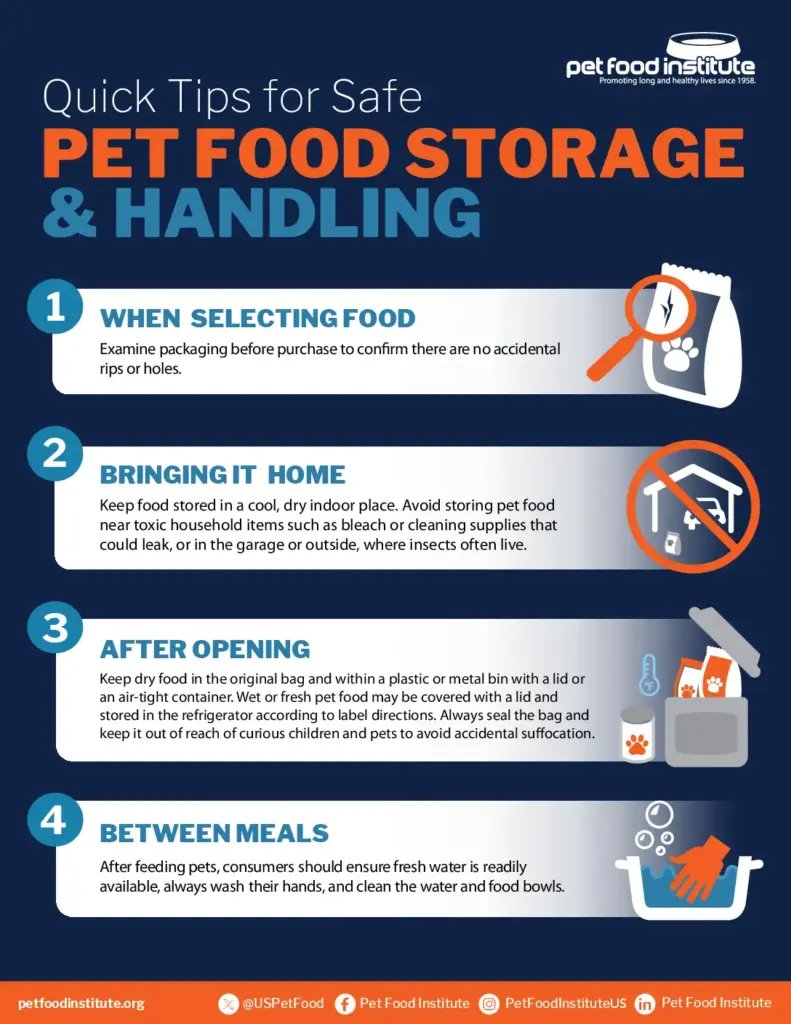
Safe dog food storage at home means protecting both dogs and family members from bacteria, mold, and accidental overeating. Store all dog food off the floor, in sealed containers, and away from direct sunlight or heat sources. Avoid keeping bags where wild animals, insects, or rodents can reach them, such as garages or balconies. Keep storage areas clean and dry, and wipe up spilled kibble promptly to avoid attracting pests and prevent contamination of human food areas.
Keeping food away from kids and pets
Dog food should be stored where children and pets cannot reach it. Curious dogs can chew through bags or open lids, leading to overeating and dangerous bloating or vomiting. Children may handle food with dirty hands, spreading bacteria, or accidentally eat it.
Ideally, keep bags and containers in a closed cupboard, pantry, or high shelf. Use containers with tight‑fitting lids or locks. Avoid leaving scoops inside open bins where pets can nose in. Careful storage protects both pet health and family safety.
Why you shouldn’t leave food out
Leaving dog food out for long periods invites bacteria, mold, and insects, especially in warm or humid rooms. Wet food becomes unsafe within a few hours at room temperature, and even dry kibble absorbs moisture and odors, losing flavor and nutrients. Constant exposure to air speeds up fat oxidation, which can lead to stomach upset and refusal to eat. Free‑feeding also encourages overeating, obesity, and makes it harder to notice changes in appetite that might signal illness.
Hygiene for bowls, scoops, and surfaces
Clean tools and feeding areas are essential for safe dog food storage. Dirty bowls, scoops, and counters allow bacteria, mold, and old fat to build up, which can contaminate fresh food.
Wash food and water bowls daily with hot, soapy water, and disinfect regularly if raw or wet food is used. Clean scoops every few days, especially after refilling containers. Wipe counters and storage-area shelves after each handling of food, and dry everything thoroughly to prevent moisture, which accelerates spoilage and bacterial growth.
Best Containers for Dog Food Storage
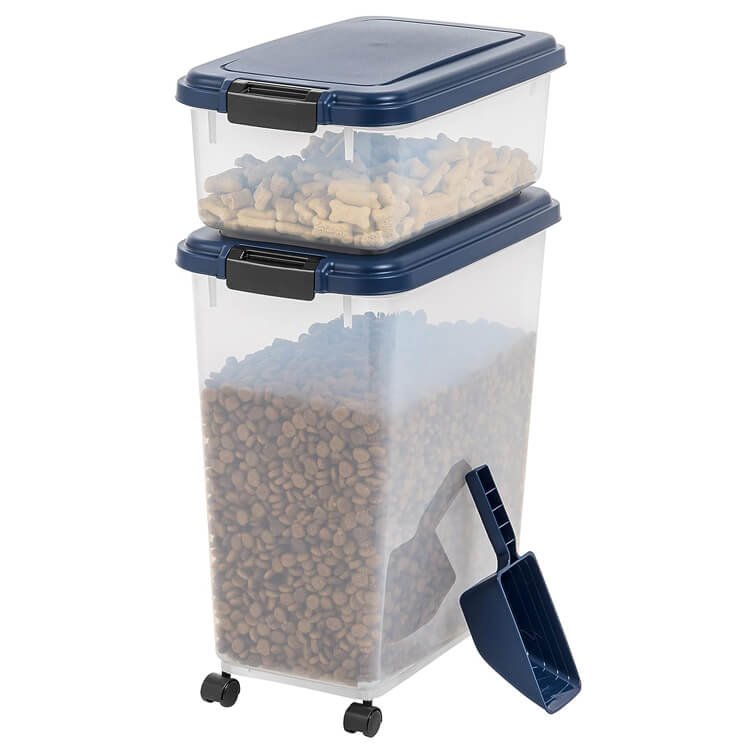
Choosing the right container helps keep dog food fresh, safe, and tasty for longer. The ideal storage has three key features: airtight sealing, food‑grade materials, and easy cleaning. Look for containers with a tight gasket lid, sturdy latches, and smooth inner surfaces so no crumbs or grease remain. Stackable designs are convenient for multi‑pet homes, and transparent sides allow quick checks of remaining food without constantly opening the lid.
Plastic, metal, and glass compared
Container material influences freshness, safety, and convenience.
| Material | Pros | Cons | Best for |
|---|---|---|---|
| Plastic | Light, inexpensive, many sizes, easy to pour | Can absorb odors, may scratch and harbor bacteria, quality varies | Short‑term storage, travel |
| Metal (stainless/steel bins) | Very durable, blocks light, resists odors, hard for pests to chew | Heavier, can be noisy, higher cost | Long‑term kibble storage at home |
| Glass | Inert, does not absorb smells, easy to see contents, easy to sanitize | Breakable, heavier, limited very‑large sizes | Small dogs, treats, or topping portions |
For large bags of kibble, airtight metal bins often keep food most stable. For treats or small amounts, clear glass jars help owners monitor freshness easily.
Using food‑grade and BPA‑free options
When choosing containers, selecting food‑grade and BPA‑free products helps keep dog food safer and tasting better. Food‑grade plastics or silicones are designed not to leach harmful chemicals into food, even during long storage. BPA‑free labels reduce the risk of hormone‑disrupting substances moving into fats in kibble or wet food. For extra safety, owners can look for containers marked as food contact‑safe, avoid damaged or scratched plastic, and replace old containers regularly.
Travel and small‑space storage ideas
For travel or small homes, prioritize airtight, compact containers. Use stackable, rectangular tubs or screw‑top canisters that fit in cupboards, under benches, or in drawers. For trips, pre‑portion kibble into zip bags or small jars, then keep all portions in one sealable bag.
Choose lightweight plastic or stainless steel for travel, and keep food out of hot cars or sunny windows. In shared or tiny spaces, store food off the floor and away from cleaning supplies to prevent contamination and curious pets from breaking into the bag.
Common Dog Food Storage Mistakes
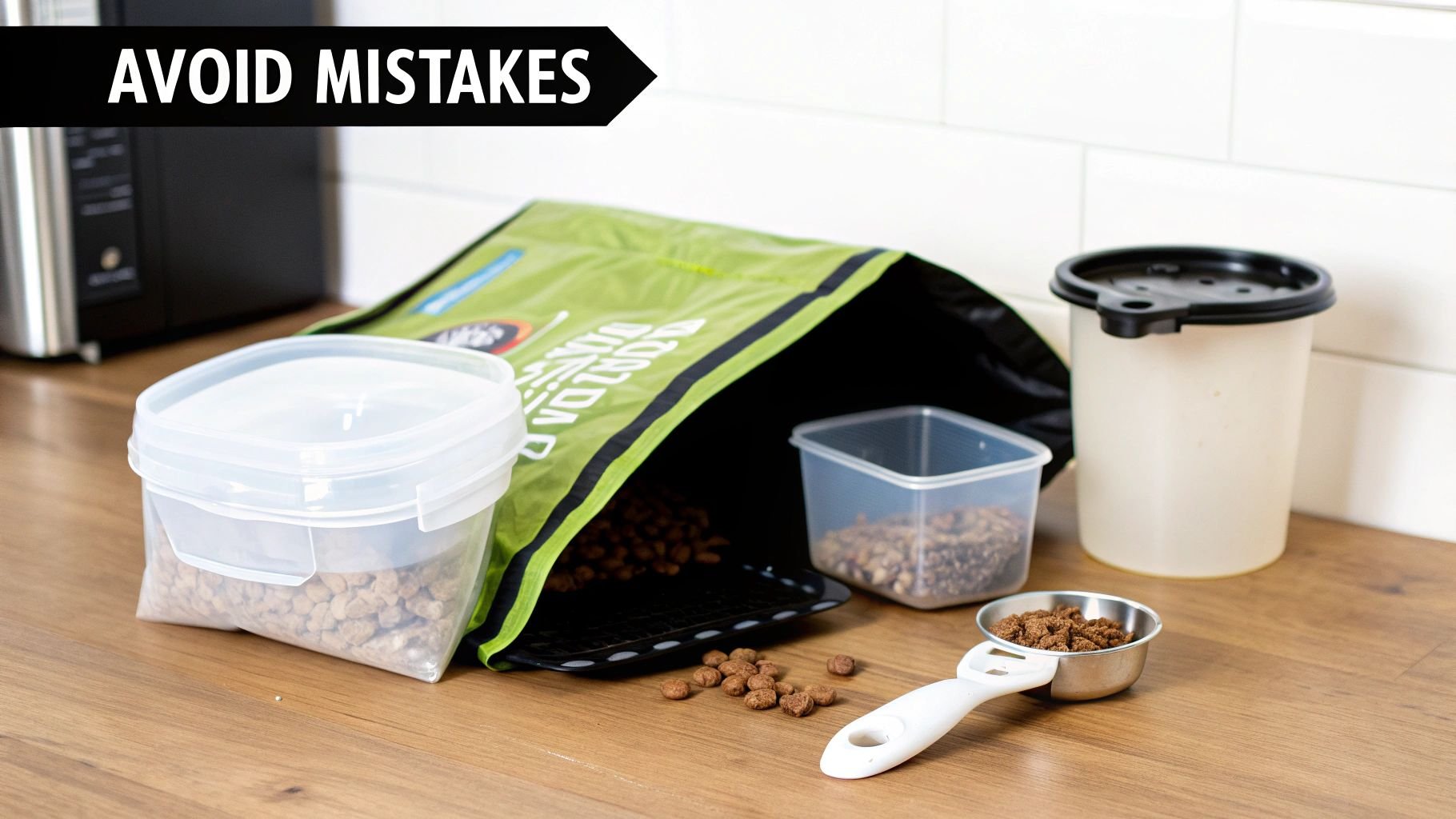
Many owners handle dog food in ways that shorten its life without noticing. Common mistakes include pouring kibble directly into a bin and throwing away the original bag, leaving bags half‑open, storing food in hot places such as garages, and buying more than a dog can finish before the best‑by date. Using non‑food‑grade containers, skipping regular cleaning, and leaving wet food out for hours also increase the risk of spoilage, pests, and food‑borne illness.
Habits that make food spoil faster
Dog food often spoils faster due to a few everyday habits. Common problems include rolling the bag down instead of sealing it airtight, leaving scoops or hands unwashed, and mixing fresh kibble with old crumbs in the container. Storing food in warm areas, in direct sunlight, or near the stove also speeds up fat oxidation. Frequently leaving food bowls out for hours, or opening more cans and pouches than needed, further increases the risk of spoilage and bacterial growth.
How to fix bad storage routines
Even small adjustments to your storage habits can significantly improve safety. First, avoid buying large quantities and aim for an amount your dog can finish in 1-2 months to reduce the risk of oxidation. Next, switch to tightly rolling up bags, sealing them with clips, and then placing them in airtight containers. Review your storage location as well; avoid direct sunlight and high temperatures and humidity, and move to a cool, well-ventilated room to prevent deterioration. Finally, make it a habit to regularly wash containers and scoops, and manage rotation by noting the opening date and expiration date to maintain good storage conditions without difficulty.
This article organizes the correct storage methods for different types of dog food (dry, wet, raw, etc.), how to choose storage containers, how to read expiration dates, how to identify spoiled food, and common mistakes and solutions, explaining practical points for keeping your dog's food safe and delicious for a long time."





![[When to Neuter a Dog] Is it too late for an adult dog? Risks, advantages and disadvantages](https://with-my-dog.com/wp-content/uploads/2022/05/cocker-spaniel-g0d3ad5651_1920-150x150.jpg)
![Feed your puppy softened dog food! [Feeding Tips]](https://with-my-dog.com/wp-content/uploads/2022/04/image1-150x150.jpg)