

Many dog owners are unsure how much food to give their dogs. It can be surprisingly difficult to determine whether to simply follow the recommended amount on the package, or to adjust it based on age, weight, and activity level. This article, based on veterinary expertise, clearly explains the concept of "how much to feed a dog." We'll introduce guidelines and adjustment points for food amounts to prevent obesity and nutritional deficiencies, and extend your dog's healthy lifespan, in a way that's easy for beginners to understand.
Quick answer: daily dog food amounts
Many dog owners want a quick number for how much to feed. As a rough daily guide for a healthy adult on a standard dry food:
- Tiny dogs (2–5 kg): ½–1 cup per day
- Small dogs (5–10 kg): 1–2 cups per day
- Medium dogs (10–25 kg): 2–3½ cups per day
- Large dogs (25–40 kg): 3½–5 cups per day
- Giant dogs (40 kg+): 5+ cups per day
Amounts must be adjusted for age, activity, body condition, and the calories in the specific food, so always check the package guide and your dog’s shape.
Typical cups per day by weight
The following chart gives a rough daily amount of dry food for a healthy, moderately active adult dog eating a standard kibble (≈350–380 kcal per cup). Always compare with the calorie info on the actual bag.
| Dog weight | Cups of dry food / day* |
|---|---|
| 5 kg (11 lb) | 3/4 – 1 cup |
| 10 kg (22 lb) | 1 – 1 2/3 cups |
| 15 kg (33 lb) | 1 2/3 – 2 1/4 cups |
| 20 kg (44 lb) | 2 1/4 – 2 3/4 cups |
| 25 kg (55 lb) | 2 3/4 – 3 1/4 cups |
| 30 kg (66 lb) | 3 1/4 – 3 3/4 cups |
| 40 kg (88 lb) | 3 3/4 – 4 1/2 cups |
| 50 kg (110 lb) | 4 1/2 – 5 1/4 cups |
Amounts apply to adult, neutered dogs with average activity. Puppies, seniors, very active, or overweight dogs need different portions*, which are explained in later sections.
Example daily menus by size
Below are sample daily menus for healthy dogs at a normal weight, using a typical dry food with about 350–380 kcal per cup. Always adjust portions to your dog’s body condition and the calories on the package.
| Dog size & weight | Morning meal | Evening meal | Notes |
|---|---|---|---|
| Toy (2–5 kg) | 1/8–1/4 cup dry + a few kibbles as reward | 1/8–1/4 cup dry | Ideal for very small appetites |
| Small (5–10 kg) | 1/3–1/2 cup dry | 1/3–1/2 cup dry | Split evenly to avoid hunger |
| Medium (10–25 kg) | 3/4–1 cup dry | 3/4–1 cup dry | Add 1–2 tbsp wet food if desired (reduce dry slightly) |
| Large (25–40 kg) | 1–1.5 cups dry | 1–1.5 cups dry | For active dogs, increase by 1/4–1/2 cup total |
| Giant (40 kg+) | 1.5–2 cups dry | 1.5–2 cups dry | Divide into 2–3 meals to protect digestion |
Treats, chews, and table scraps should provide no more than about 10% of daily calories, so meal portions may need to be slightly reduced when many treats are used.
Key factors that change food needs
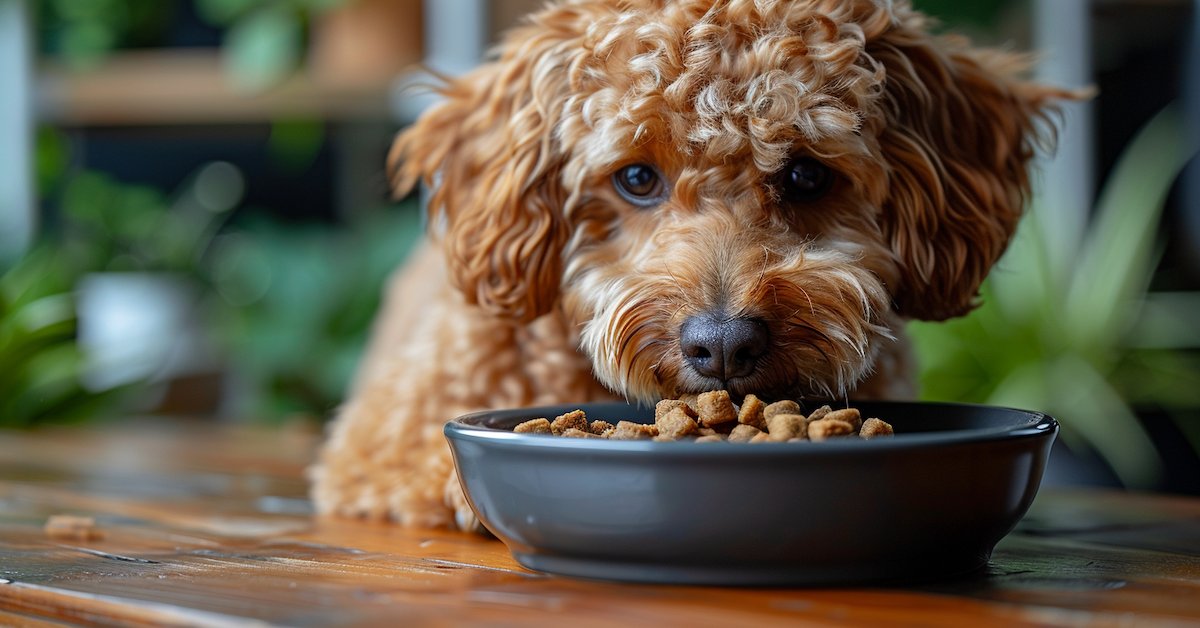
Dogs do not all need the same amount of food, even at the same weight. Daily portions change with age, body condition, breed size, activity, neuter status, health, and the calories in the chosen food. A calm, neutered indoor dog usually needs far less than an intact, very active dog of the same size. Health problems (for example kidney disease, gut issues, allergies, diabetes) and high‑ or low‑calorie formulas also strongly affect how much should go in the bowl. Understanding these factors helps prevent both overfeeding and underfeeding.
Age and life stage
Age strongly changes calorie needs. Puppies need far more energy per kilogram than adults, because they grow rapidly and play a lot. They usually eat more food relative to body weight and require puppy‑specific formulas.
Healthy adult dogs have steadier needs. Amounts depend more on size and activity, so maintenance portions are usually lower per kilogram than in puppies.
Senior dogs often move less and their metabolism may slow, so many seniors need fewer calories but higher‑quality protein to protect muscles. Some elderly dogs lose weight from illness, so they may actually need more energy‑dense food under veterinary guidance.
Body weight and body condition
A dog’s current body weight is only a starting point. The more important indicator is body condition—how lean or padded the dog is. Even at the “right” weight on paper, a dog can be over‑ or underfed.
A simple check is the ribs and waist:
- Ribs: should be easy to feel with a thin fat layer, not sharp, not buried
- Waist from above: should tuck in slightly behind the ribs
- Tummy from the side: should slope up, not hang down
If ribs are hard to feel and the waist is lost, reduce food by 5–10%. If ribs are very sharp and the waist is extreme, increase food and speak with a vet.
Breed size and body type
Breed size and body type greatly affect how much dog food is appropriate. Small, lean breeds (like Italian Greyhounds) burn energy quickly and often need more calories per kg of body weight. In contrast, large and giant breeds are more prone to joint problems and obesity, so they usually need fewer calories per kg and carefully controlled portions.
Deep‑chested or long‑back breeds (Dachshunds, Corgis) benefit from staying slim to protect the spine and joints. Muscular breeds (Pit Bulls, Boxers) may need more food than a same‑weight but slim dog. Always start with the feeding guide for your dog’s ideal weight category (small, medium, large, giant), then fine‑tune using body condition: if the waist disappears, reduce portions; if ribs are too prominent, increase slightly.
Activity level and lifestyle
Dogs that run, hike, or work daily burn far more calories than dogs who mostly relax indoors. As a目安, very active dogs may need up to 2–3× the calories of quiet, low‑activity dogs of the same size. On the other hand, many indoor family dogs need slightly less than the bag’s “average dog” guide. When deciding amounts, always consider: daily walk time, play intensity, training, and working roles. Then adjust the label amount up or down by 10–20% and monitor body condition.
Neutered vs intact dogs
Neutering changes hormones that control metabolism and appetite. Most neutered dogs need about 10–20% fewer calories than intact dogs of the same size and activity.
Intact males and females often burn more energy and may stay lean on higher portions. After spay or neuter, owners should:
- Recheck the feeding guide
- Reduce daily food slightly
- Watch body shape closely for 2–3 months
Early adjustment helps prevent post‑surgery weight gain and joint stress.
Health issues and medications
Health problems and medications can dramatically change a dog’s calorie needs. Dogs with arthritis, heart disease, or low thyroid often move less and may need 10–30% fewer calories. In contrast, cancer, chronic gut disease, or recovery from surgery can increase energy needs. Some drugs (like steroids) boost appetite and weight gain, while others reduce appetite. Whenever a new long‑term diagnosis or medicine appears, the safest option is to ask a vet to review food amount and ideal weight.
Type and calories of the dog food
Dog foods vary widely in energy density. The same cup of different foods can differ by more than 50% in calories, so the package feeding guide always refers to that specific product. High‑protein, high‑fat, or working‑dog formulas, puppy food, and some fresh or raw diets are usually more calorie‑dense. Senior, light, or weight‑management foods are often lower.
Always check the label for kcal per cup, can, or gram and calculate portions from calories, not volume alone. When changing brands or switching between dry and wet, adjust the measured amount rather than keeping the same number of cups.
Dog food math: how much to feed a dog

Feeding the right amount is like doing a small calculation. The goal is to match calories eaten with your dog’s calorie needs, then fine‑tune based on body shape.
In practice, owners can follow a simple four‑step flow:
- Check the feeding guide on the package.
- Adjust the suggested amount for age, activity, and health.
- Measure food accurately with scales or a proper cup.
- Monitor weight and body condition, then increase or decrease by 5–10% as needed.
Understanding that the key unit is calories per day helps avoid both overfeeding and underfeeding.
Step 1: check the feeding guide label
The feeding guide on a dog food bag or can is the starting point for how much to feed. First, find your dog’s weight range and life stage on the chart (puppy, adult, senior). Next, note the daily amount given in grams or cups, and check how many calories (kcal) are in 100 g or per cup. Use the daily total as a guideline, then divide it by the number of meals per day. The label amount is an average; later steps will fine‑tune it for each dog.
Step 2: adjust for your dog’s lifestyle
A feeding guide is only a starting point. Next, adjust the amount to match your dog’s daily life. As a guideline, many veterinarians recommend:
| Lifestyle / body type | Adjust from label guide |
|---|---|
| Very lazy, indoor, easily gains weight | −10–20% |
| Typical pet, short daily walks | Around label amount |
| Very active, long runs, hiking, dog sports | +10–30% |
| Still hungry and losing weight | Gradually increase |
| Often begging and gaining weight | Gradually decrease |
Make only small changes (5–10%) every 1–2 weeks, and keep the same food during adjustments so changes in weight or energy are easy to understand.
Step 3: measure food the right way
Using a proper measuring tool greatly reduces overfeeding. Avoid using mugs or guessing by eye. Instead, use:
- A standard 8 oz measuring cup for dry food
- The can’s line markings or a small kitchen scale for wet food
- A digital scale (grams) for the most accurate portions
Fill the cup or weigh the food level, not heaped. If the label shows grams and cups, follow grams whenever possible for more precise control of calories.
Step 4: track weight and body shape
Monitoring weight and body shape is the most reliable way to fine‑tune portions. Check weight every 2–4 weeks using the same scale, then compare the result with the ideal weight advised by a veterinarian.
Use a body condition score chart: you should feel ribs easily but not see most of them, see a waist from above, and an abdominal tuck from the side. If the dog gains or loses more than about 5–10% of body weight, adjust food by 5–10% and recheck in a few weeks, or ask a vet for guidance.
How much to feed an adult dog
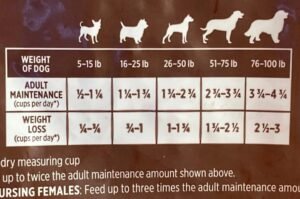
For an adult dog, the right amount of food depends on weight, body condition, activity level, and calorie density of the chosen food. As a starting point, follow the package feeding guide for the dog’s ideal weight, then adjust by watching body shape and weight over 2–4 weeks. Many healthy adults maintain on about 2–3% of body weight per day in food (by weight) or roughly 25–30 kcal per pound (55–65 kcal per kg), but individual needs vary greatly. Regular monitoring and small, gradual changes are essential for long‑term health.
Adult dog feeding chart by weight
An adult dog feeding chart offers a starting point, not a final answer. Amounts vary by brand, so always compare with the package.
| Adult dog weight | Dry food per day* |
|---|---|
| 2–5 kg (4–11 lb) | 55–115 g / ½–1 cup |
| 5–10 kg (11–22 lb) | 115–190 g / 1–1.6 cups |
| 10–20 kg (22–44 lb) | 190–320 g / 1.6–2.7 cups |
| 20–30 kg (44–66 lb) | 320–435 g / 2.7–3.6 cups |
| 30–40 kg (66–88 lb) | 435–540 g / 3.6–4.4 cups |
| 40–50 kg (88–110 lb) | 540–640 g / 4.4–5.2 cups |
For an average‑calorie dry food (around 360–380 kcal per cup) and a healthy, moderately active, neutered adult. Always adjust up or down based on body condition* and the specific kcal per cup shown on the label.
Small vs medium vs large adults
Adult dogs of different sizes burn energy in different ways, even at the same weight. Small breeds often need more calories per kg than large breeds, because they have faster metabolisms.
| Adult size (ideal weight) | Typical energy need* | Common pattern |
|---|---|---|
| Small (up to ~10kg/22lb) | High kcal per kg | Small stomach, may suit 2–3 meals |
| Medium (10–25kg/22–55lb) | Moderate kcal per kg | Most standard feeding guides fit well |
| Large (25–45kg/55–99lb) | Lower kcal per kg | Prone to joint issues, avoid excess weight |
| Giant (over 45kg/99lb) | Lowest kcal per kg | Very energy‑dense food can cause rapid gain |
Small dogs usually eat less volume but more calories for body size. Large and giant adults need careful portion control to protect joints and prevent obesity, often with foods designed for large breeds.
Working, sport, and very active dogs
Working, sport, and very active dogs may need up to 2–3 times more calories than relaxed house pets of the same weight. Sled dogs, agility dogs, running partners, and herding breeds often require high‑energy formulas with more fat and digestible protein. Start with the label’s “active dog” range, then increase food by 10–20% at a time while monitoring weight, stamina, and stool quality. Adequate water and rest are also essential for performance and recovery.
Overweight adults on a diet
For overweight adult dogs, the key is to feed for the target weight, not the current weight. Use the feeding guide for the ideal weight range, then start with about 80–90% of that amount. Split food into 2–3 meals to reduce begging, and measure with a proper cup or scale. Treats should be under 10% of daily calories, and table scraps are best avoided. Aim for 1–2% body‑weight loss per week and adjust every 2–4 weeks based on body condition and vet advice.
How much to feed a puppy
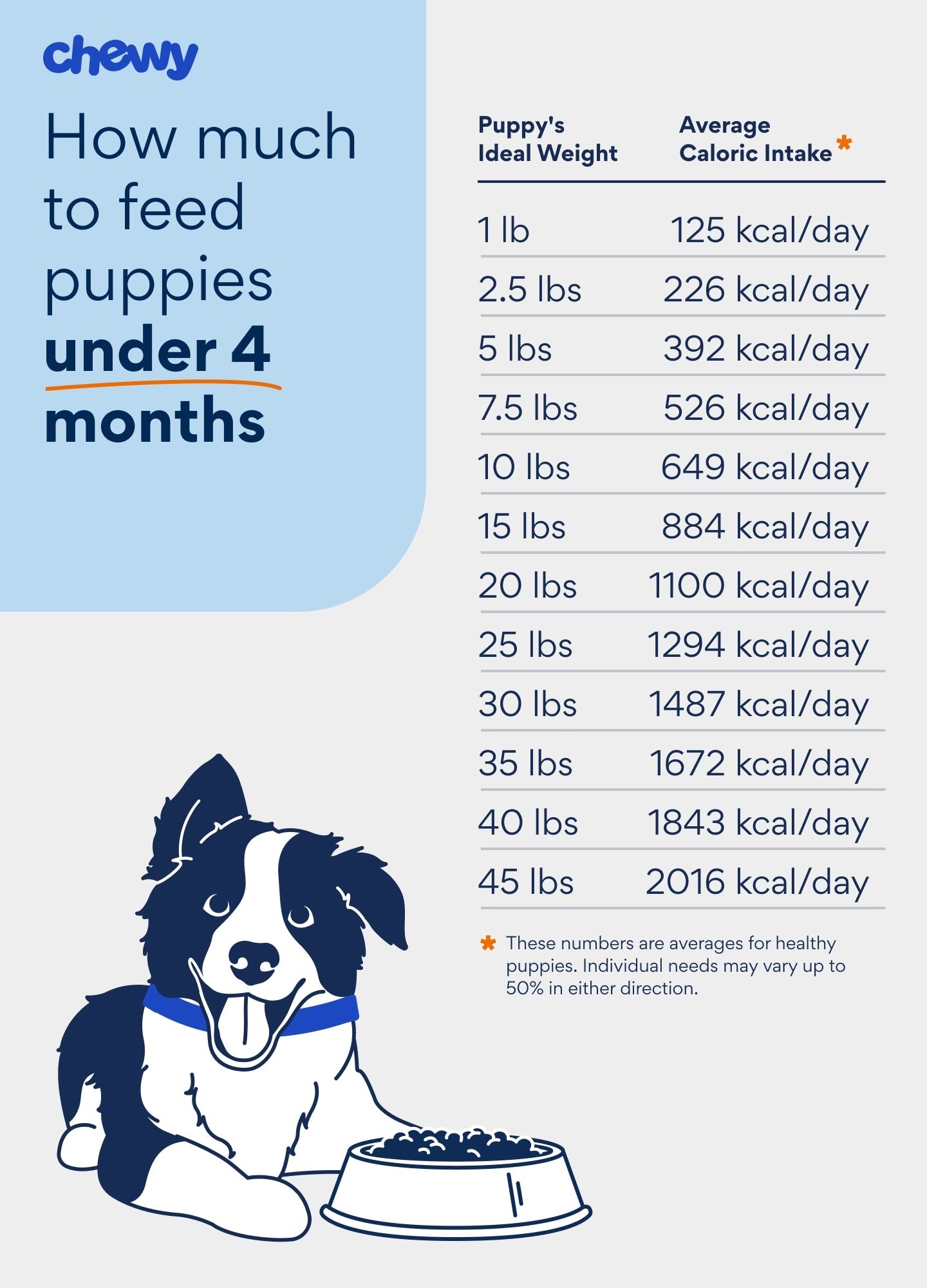
Puppies need more calories per kilogram than adult dogs, because they grow rapidly and play a lot. At the same time, their stomach is still small, so each meal must be energy‑dense and easy to digest. As a guideline, owners should choose a complete puppy formula, follow the package feeding chart for current weight and expected adult size, then adjust every 1–2 weeks based on body condition and growth speed. Sudden big changes in amount are best avoided.
Puppy calorie needs by age
Puppies need far more calories per kilogram than adult dogs because they are growing fast and very active. In general, the younger the puppy, the higher the calorie need per body weight. Energy needs peak around 3–4 months, then slowly decrease.
As a general guideline, a good indicator is that puppies should consume about twice the amount of calories they eat as adults from weaning to around 3 months of age, 1.6 to 1.8 times that amount at 4 to 5 months, and 1.2 to 1.5 times that amount at 6 to 12 months. Larger breeds continue to grow longer, so the high-calorie period also lasts longer. It is important to regularly weigh your puppy and check their body to ensure there are no sudden weight gains or losses.
Puppy feeding chart by weight
A puppy feeding chart offers a starting point, not a fixed rule. Always use the chart printed on the specific puppy food package first, then fine‑tune based on body condition.
| Puppy weight (adult size) | Daily amount of puppy kibble* |
|---|---|
| 2–5 kg (4–11 lb) | 55–115 g (⅜–¾ cup) |
| 5–10 kg (11–22 lb) | 115–190 g (¾–1¼ cups) |
| 10–20 kg (22–44 lb) | 190–320 g (1¼–2 cups) |
| 20–30 kg (44–66 lb) | 320–430 g (2–2¾ cups) |
Values are examples for typical dry puppy food (around 3,700–4,000 kcal/kg). Divide the daily amount into 3–4 meals and adjust by 10–15%* if the puppy becomes too round or too lean.
Large and giant breed puppies
Large and giant breed puppies grow for a long time and are prone to joint problems, so steady, slow growth is more important than rapid weight gain. Choose a large‑breed puppy food with controlled calories, calcium, and phosphorus. Follow the package guide for the puppy’s expected adult weight, not the current weight, and check body condition every 1–2 weeks. Sudden growth spurts, a round belly, or very rapid weight gain are reasons to reduce portions and consult a veterinarian.
When and how to change to adult food
Most dogs change from puppy to adult food between 12–18 months, but timing depends on size. Small breeds often switch around 10–12 months, medium at 12–15 months, and large or giant breeds at 18–24 months once growth has slowed and adult weight is near stable.
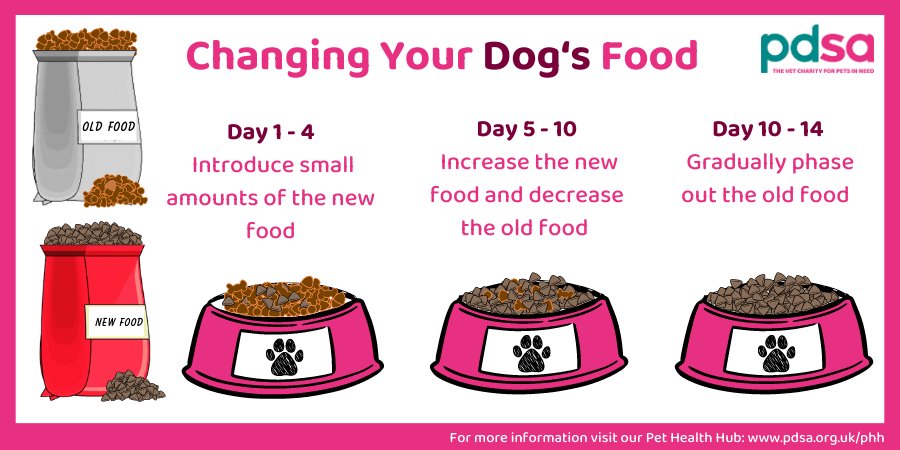
To change safely, transition gradually over 7–10 days. Start with about 75% puppy food and 25% adult food, then increase the adult portion every few days:
| Day | Puppy food | Adult food |
|---|---|---|
| 1–3 | 75% | 25% |
| 4–6 | 50% | 50% |
| 7–9 | 25% | 75% |
| 10+ | 0% | 100% |
Monitor stool, appetite, and energy. If loose stool or vomiting appear, slow the transition and ask a veterinarian, especially for large-breed puppies where correct nutrition protects joint health.
How much to feed a senior dog
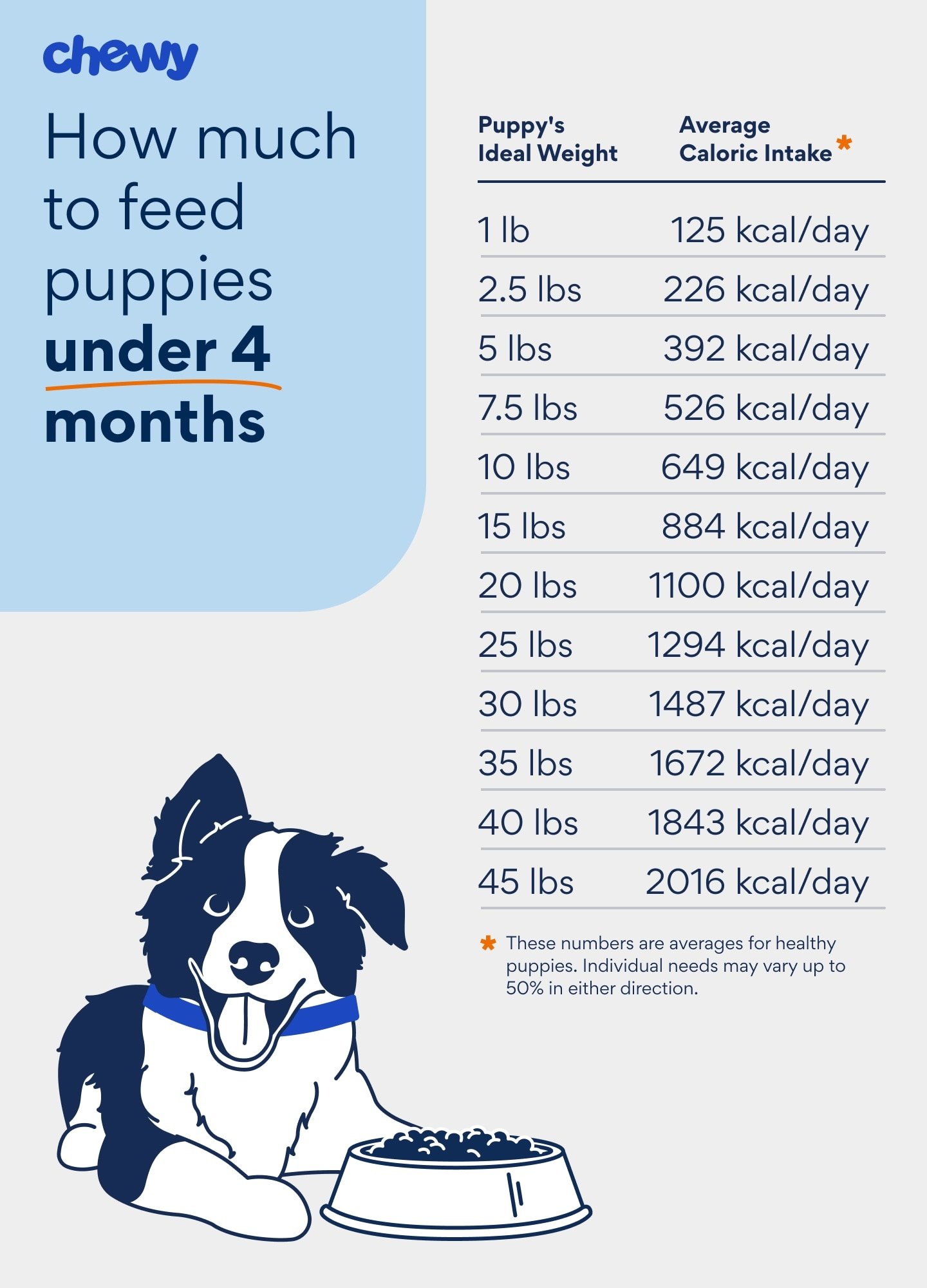
Senior dogs often need fewer calories but more nutrient‑dense food. Metabolism slows, muscle mass may decrease, and some dogs move less, so feeding the same amount as in adulthood can lead to weight gain. Conversely, very thin or ill seniors may need more calories.
Aim to:
- Maintain a steady, healthy weight
- Choose senior‑appropriate food when advised
- Monitor body shape and energy closely
Any sudden weight change in an older dog should prompt a vet check.
Older dog calorie needs
Senior dogs often burn 10–30% fewer calories than in adulthood because of lower activity and slower metabolism. Many also lose muscle, which further reduces calorie needs. As a rough guide, healthy seniors usually need about 80–90% of the calories they ate as younger adults, unless they are very active. However, some thin or ill seniors may actually need more calories. Regular weighing and body condition checks are essential before changing food amounts.
Managing weight loss or gain in seniors
Senior dogs often gain or lose weight more easily, so small, planned changes are important. For weight loss, many vets aim for about 1–2% of body weight per week by reducing daily calories by 10–20% and increasing gentle exercise if joints allow. For underweight seniors, meals can be split into 3–4 portions with slightly higher‑calorie food or toppers and regular health checks, because sudden weight change may signal hidden disease.
Feeding dogs with age‑related disease
Age‑related diseases often change how much and what a senior dog should eat. Kidney, heart, liver, dental, and joint disease, as well as cancer and diabetes, all have specific nutrition needs. In many cases、veterinarians recommend a prescription senior diet with adjusted protein, phosphorus, sodium, or fat.
For safe feeding, dog owners should:
- Ask the veterinarian whether a therapeutic diet is needed
- Confirm exact daily grams or cups, not only “small/medium/large”
- Divide food into smaller, more frequent meals if appetite is low
- Monitor weight, muscle mass, thirst, and stool closely
Any sudden change in appetite, vomiting, or rapid weight change in a senior dog requires prompt veterinary advice before adjusting food at home.
How many meals a day a dog should eat
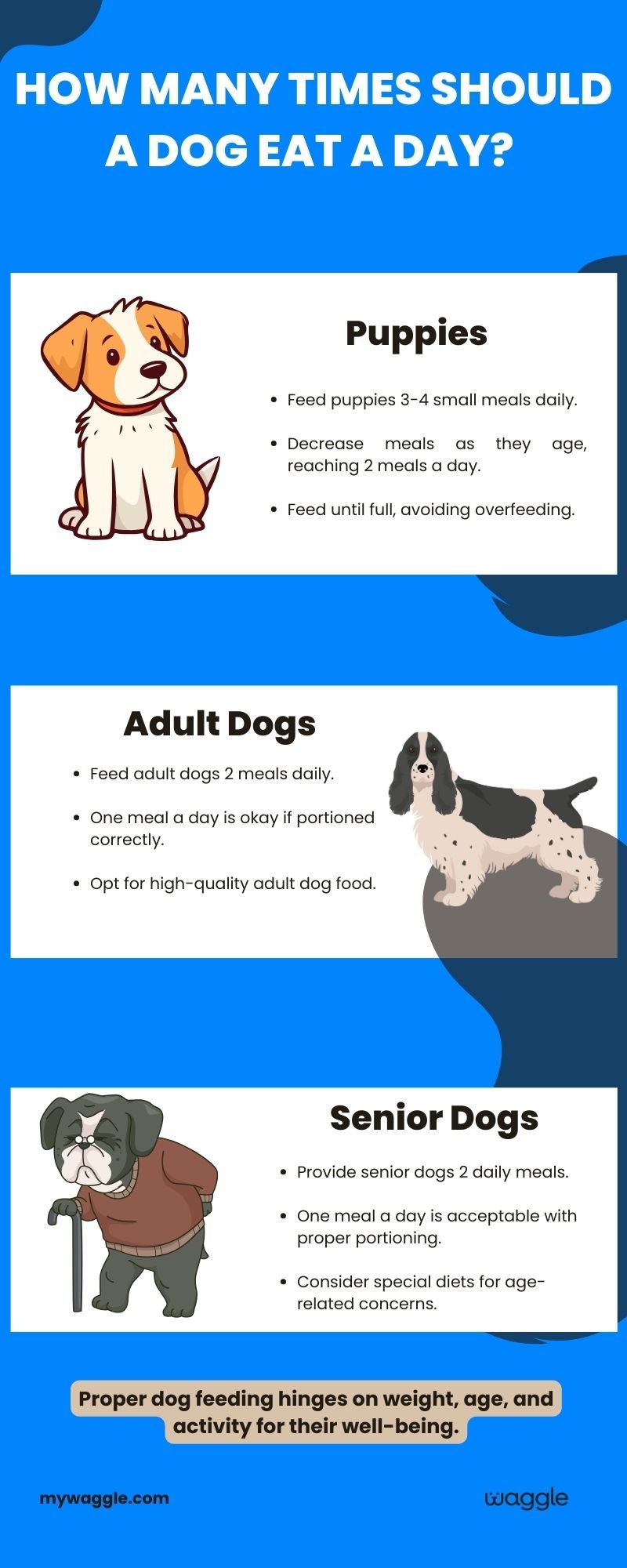
How many meals a dog should eat depends mainly on age, health, and daily routine. In general, puppies need several small meals, while most healthy adult dogs do best with 2 meals per day. Some seniors or dogs with medical conditions benefit from 3 or more smaller meals to ease digestion and keep blood sugar stable. Splitting the daily food amount into set meals also helps prevent overeating, begging, and stomach upset.
Meal frequency by age
Puppies, adults, and seniors need different meal schedules. In general, younger dogs eat smaller meals more often to keep energy and blood sugar stable.
| Age & stage | Meals per day | Notes |
|---|---|---|
| 8–12 weeks (young puppy) | 3–4 | Very small, frequent meals |
| 3–6 months | 3 | Spread evenly through the day |
| 6–12 months | 2–3 | Many can move to 2 meals by 9–12 months |
| Adult (1–7 years) | 2 | Most dogs do best with morning & evening meals |
| Senior (7+ years) | 2–3 | 3 meals can help thin or sick seniors |
Very small breeds, dogs with medical issues, or pregnant dogs may need more frequent meals, so a vet’s individual advice is important.
Free feeding vs scheduled meals
Free feeding means leaving food out all day so dogs can eat whenever they want. Scheduled meals mean offering measured portions at set times and removing leftovers after about 15–20 minutes.
Free feeding is convenient, but it often leads to overweight dogs, makes toilet timing harder to predict, and is unsafe in multi‑dog homes where fights or unequal eating can occur. For most dogs, scheduled meals are healthier, support weight control, and make it easier to notice appetite changes that may signal illness.
Timing meals around walks and sleep
Walking or intense play immediately after meals can increase the risk of gastric torsion or regurgitation. As a guideline, it is safest to wait 1 to 2 hours after eating before going for a walk. In the morning, giving breakfast after the walk, and in the evening, feeding dinner after your dog has returned from an evening walk and rested for a short while, can help reduce the burden on digestion.
It is also best to avoid feeding right before bedtime. Finishing the last meal 2 to 3 hours before sleep can reduce nighttime potty breaks and make it easier for both your dog and the owner to sleep. Since puppies and senior dogs have shorter intervals between potty needs, securing time for a light meal and a potty break before bed can help maintain a good routine.
Dry, wet, and mixed feeding amounts
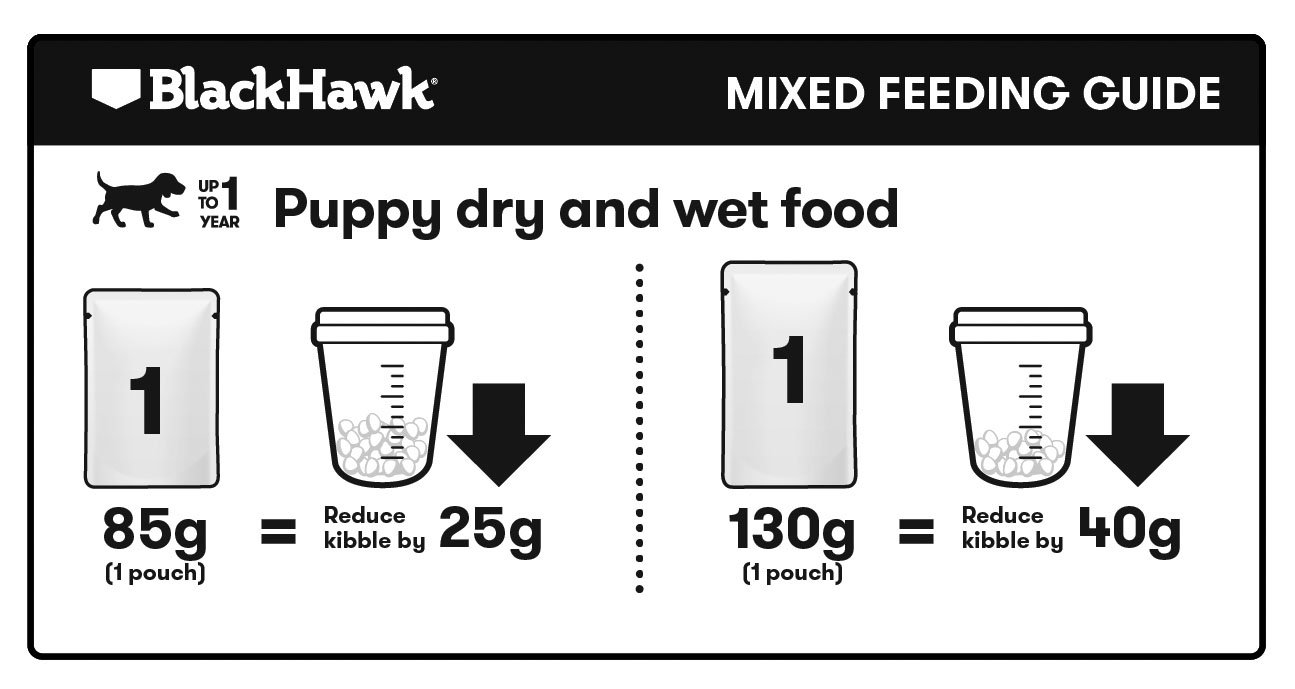
Dry food, wet food, and mixed feeding all require different portion sizes. Wet food contains far more water, so the weight or volume looks larger for the same calories. Always follow the feeding guide for the exact product used, then adjust based on body condition. When mixing types, reduce each portion so the total daily calories still match the dog’s needs, not each label’s full amount.
How wet and dry foods differ in calories
Wet and dry foods can have very different calorie densities. Dry kibble is usually more calorie‑dense, often around 320–450 kcal per 100 g, because it contains little water. Wet or canned foods contain much more moisture, so the same weight often has only half to two‑thirds the calories.
A simple guide:
| Type of food | Typical calories |
|---|---|
| Dry kibble | 320–450 kcal/100 g |
| Wet/canned | 80–120 kcal/100 g |
Always check the kcal per cup, per can, or per 100 g on the label before deciding how much to feed.
Combining dry and wet without overfeeding
Many owners mix dry and wet food, but the total daily calories must still match the dog’s need. First, decide the full daily amount using only the dry-food guide. Next, choose a split, for example 70% of calories from dry, 30% from wet. Check kcal per cup (dry) and per can or pouch (wet), and calculate each portion. If using many toppers, slightly reduce the dry food to avoid slow, unnoticed weight gain.
Homemade, fresh, and raw diet portions
Homemade, fresh, and raw diets are very calorie‑dense or highly variable, so portion errors occur easily. As a rough guide, many fresh or raw plans use 2–3% of the dog’s ideal body weight per day, split into meals. However, recipes should come from a veterinary nutritionist, and amounts must be adjusted using body condition. Use a kitchen scale rather than cups, monitor weight every 1–2 weeks, and consult a vet if the dog gains or loses quickly.
Treats, table scraps, and extras
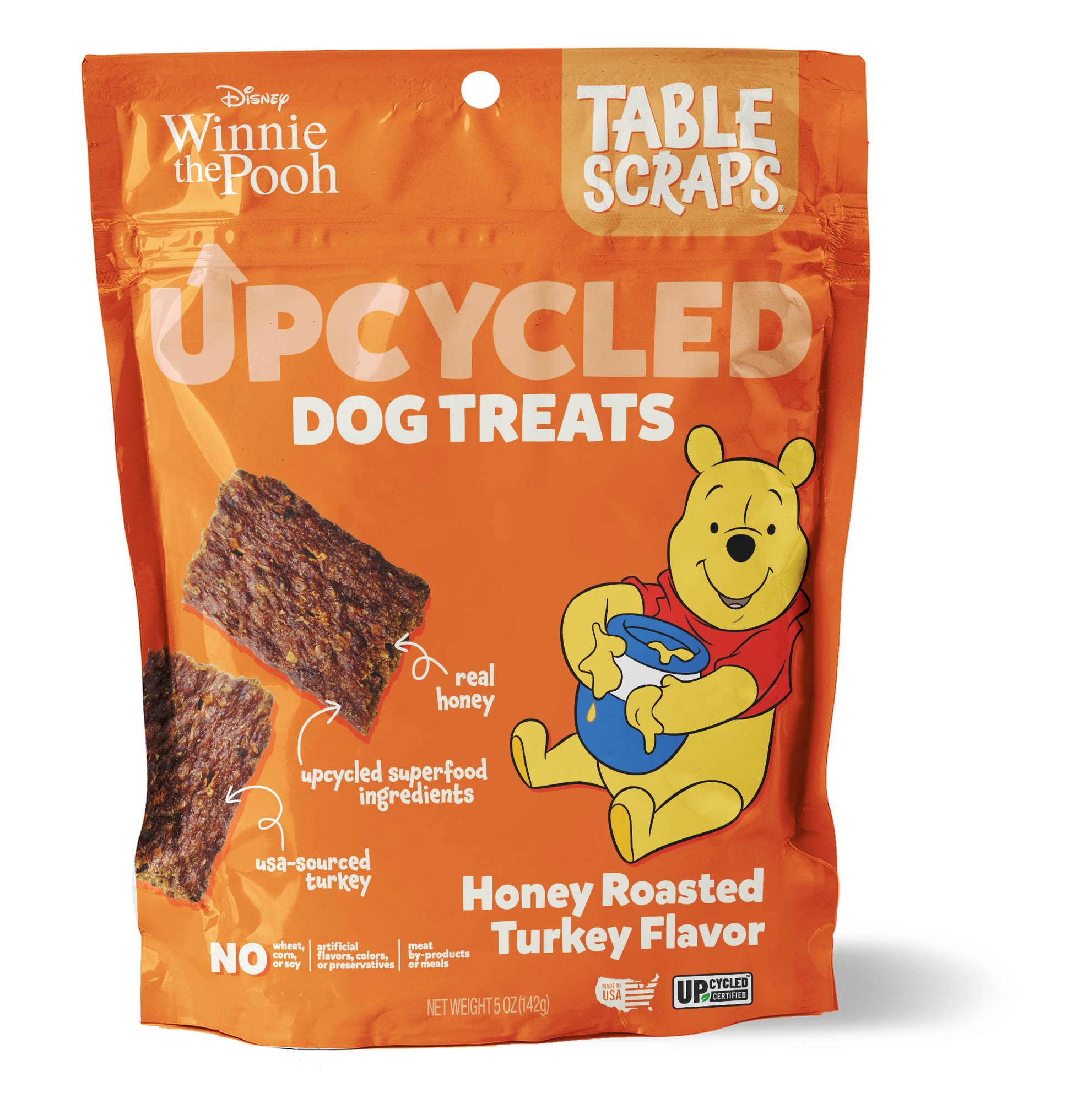
Treats, table scraps, supplements, chews, and dental sticks all add calories on top of regular meals. Even a few extras can quietly push a dog into weight gain or stomach upset. Aim for no more than about 10% of daily calories from extras, including training treats. Before offering human food, check if it is safe for dogs and avoid seasoned, fatty, or sugary items. When extras are used regularly, the main meal amount should be reduced slightly to keep total intake balanced.
How many treats are too many
Treats should generally provide no more than 10% of a dog’s daily calories. For many pets, this means only a few small treats per day. As a rough guide:
| Dog size | Daily food calories* | Max treat calories (10%) |
|---|---|---|
| Small (5–10 kg) | 300–500 kcal | 30–50 kcal |
| Medium (10–25 kg) | 500–900 kcal | 50–90 kcal |
| Large (25–40 kg) | 900–1300 kcal | 90–130 kcal |
*ltypical neutered indoor dogs on normal adult food.
If the waist disappears, ribs become hard to feel, or weight rises, treat amounts are already too high.
Adjusting meals when using treats
If you use treats on a daily basis, it is important to subtract the calories from treats from your dog’s total calorie intake. As a general guideline, treats should be kept within 10% of your dog’s daily calorie needs, with the remaining 90% coming from their main food. For example, if your dog needs about 500 kcal per day, treats should be limited to 50 kcal, and the amount of food should be reduced to 450 kcal. On days when you use more treats for training, choosing small, low-calorie treats and slightly reducing meal portions can make weight management easier.
Human foods that are unsafe for dogs
Many familiar foods are dangerous for dogs even in small amounts. Especially important are:
| Unsafe food | Why it is dangerous |
|---|---|
| Chocolate, cocoa | Causes heart and nerve problems |
| Grapes, raisins | Can trigger sudden kidney failure |
| Onions, garlic | Damage red blood cells → anemia |
| Xylitol sweetener | Severe low blood sugar, liver failure |
| Alcohol, raw dough | Affects brain and breathing |
| Cooked bones | Splintering, blockage, perforation |
If accidental ingestion occurs, contact a veterinarian or poison hotline immediately.
Signs you are overfeeding or underfeeding
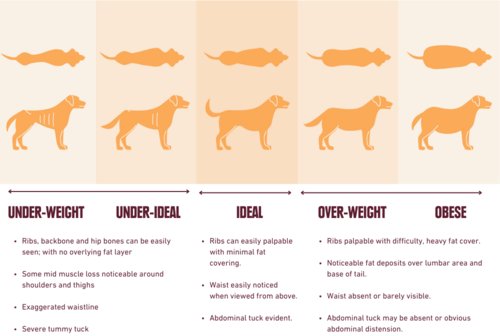
Feeding too much or too little often shows up in a dog’s body and behavior. Typical signs of overfeeding include rapid weight gain, ribs that are hard to feel, low energy, heavy panting with mild exercise, loose stools or very large poops, and begging even after meals because the dog has learned food appears. Typical signs of underfeeding include visible ribs or spine, poor coat, low muscle, restlessness, scavenging, and hard, small stools.
If appetite, weight, or poop change suddenly, or a dog seems unwell, consultation with a veterinarian is recommended.
Using a body condition score chart
A body condition score (BCS) is an index that allows you to assess your dog’s body condition in 10 to 15 seconds based on appearance and touch. In general, a 9-point scale is commonly used, with 4 to 5 considered ideal.
The general guideline is as follows:
| BCS | Body Condition Guide | Main Checkpoints |
|---|---|---|
| 1–3 | Too thin | Ribs, spine, and hip bones are clearly visible |
| 4–5 | Ideal body condition | Ribs can be lightly felt, with a slight waist visible from above |
| 6–9 | Overweight to obese | Ribs are difficult to feel, and there is little to no visible waist |
It is reassuring to check your dog’s BCS at least once a month, and if there is a change of one level or more, consider adjusting the food amount or consulting a veterinarian.
Behavior and stool changes to watch for
Stool and behavior offer quick clues about whether a dog food amount is appropriate. Healthy dogs usually have 1–2 well‑formed, easy‑to‑pick‑up stools per day and normal energy. Overfeeding often causes large volumes of soft stool, gas, frequent pooping, begging despite recent meals, or weight gain. Underfeeding may lead to low energy, restlessness around food times, scavenging, hard or very small stools, or weight loss. Sudden diarrhea, constipation, vomiting, blood in stool, or rapid behavior changes require prompt veterinary advice.
How fast weight should change
Healthy weight change for most pet dogs is slow and steady. As a目安, aim for about 1–2% of body weight per week when adjusting food for weight loss or gain. Faster loss can risk muscle loss or health problems, while faster gain may add only fat.
Check weight every 2–4 weeks and adjust the daily amount by about 5–10% at a time. Sudden, unexplained weight change despite stable feeding is a reason to consult a veterinarian promptly.
Special feeding situations
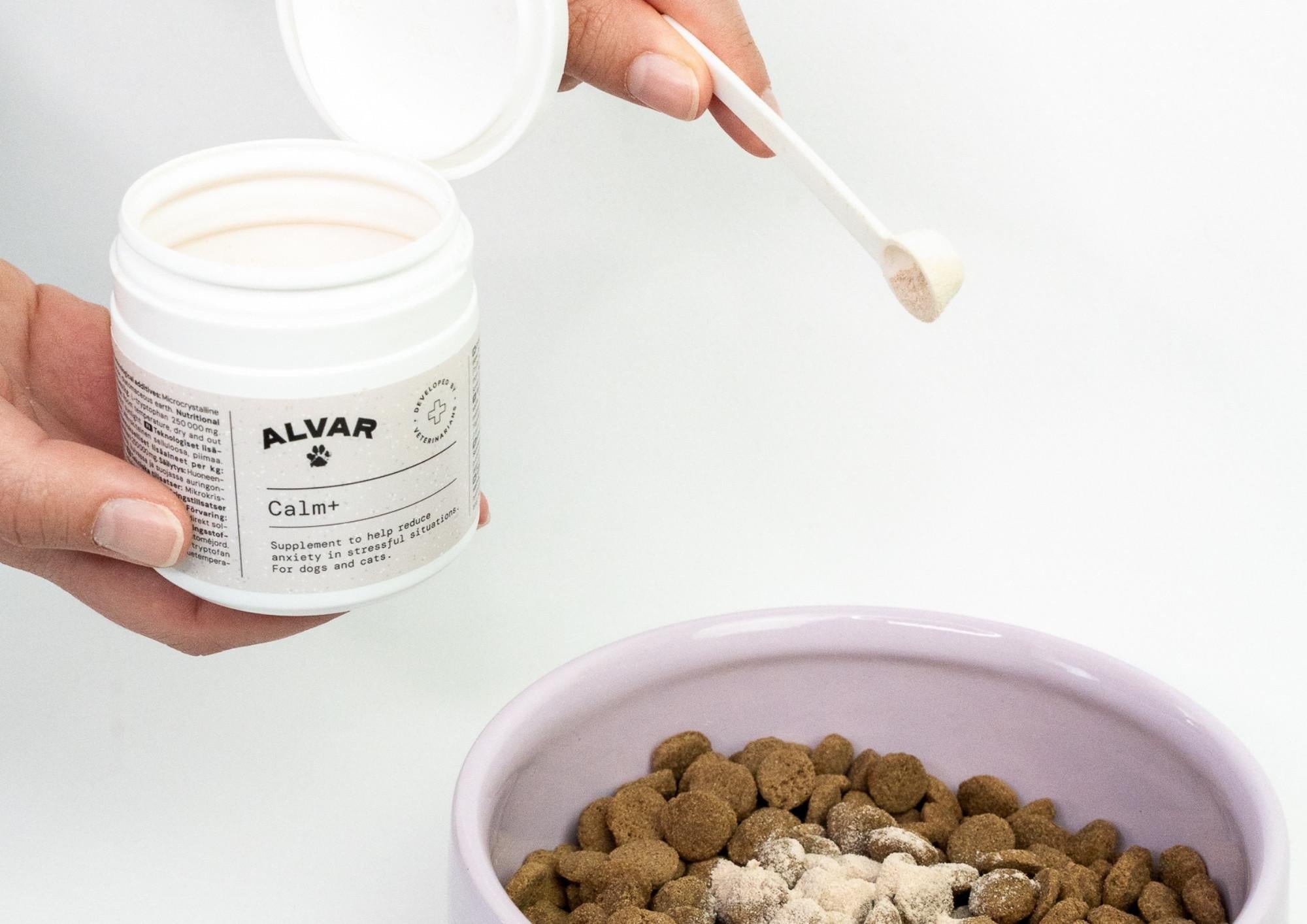
Special situations often require very specific feeding plans and veterinary guidance. Amounts may differ greatly from standard charts, so owners should avoid guessing. In any unusual case, monitor weight, appetite, and stool closely and contact a veterinarian promptly if changes occur.
Common special situations include:
| Situation | Feeding point |
|---|---|
| Pregnancy / nursing | Much higher energy needs, pregnancy or puppy food often required |
| Chronic disease | Veterinary prescription diets with strict portions |
| Very small or giant breeds | More frequent checks and precise measuring |
In all special cases, do not change food suddenly without professional advice unless there is an emergency such as suspected poisoning.
Pregnant and nursing dogs
Pregnancy and nursing greatly increase calorie needs. Many mothers require up to 2–3 times their normal calories by peak lactation. In early pregnancy, most dogs can stay on their regular complete diet with a small increase after the first month. From the last third of pregnancy until weaning, a high‑quality puppy or “all life stages” food is recommended.
Feed several small meals per day, and allow controlled free‑choice feeding for heavy milk production if the dog does not overeat. Fresh water must always be available. Sudden appetite loss, rapid weight loss, or poor milk production are warning signs; a prompt veterinary check is strongly advised.
Dogs with diabetes, kidney, or gut disease
Dogs with chronic diseases often need precise, vet‑guided feeding plans. In diabetes, consistent meal size and timing are crucial; vets usually match insulin doses to a stable diet, often a high‑fiber or diabetic‑specific food. Kidney disease diets are typically lower in phosphorus and adjusted in protein and sodium to protect remaining function. For chronic gut problems, highly digestible, low‑fat, or hypoallergenic diets may reduce vomiting and diarrhea. Owners should never change food, home‑cook, or fast a sick dog without veterinary advice, because sudden shifts can destabilize blood sugar, kidney workload, or digestion.
Very small or giant breeds
Toy breeds and giant breeds sit at opposite extremes for feeding.
Very small dogs (under 4–5 lb) have tiny stomachs but high energy use. They often need 3–4 small meals and calorie‑dense food to avoid low blood sugar. Missing meals or sudden diet changes can be dangerous.
Giant breeds grow and age differently. To protect joints and the heart, they usually need controlled calories, slow steady growth in puppies, and food formulated for large or giant breeds. Sudden weight gain puts strong strain on bones and ligaments.
When to ask your vet about food amounts
Feeding amounts often feel confusing, so consulting a veterinarian is very helpful. A vet should be asked whenever a dog’s weight, appetite, or health has noticeably changed. Sudden weight gain or loss, long‑term loose stool, vomiting, itchiness, or lethargy can all mean the current feeding plan is not suitable. For puppies, seniors, and dogs on long‑term medication, regular checks of body condition and diet with a vet are strongly recommended.
Red flags that need a vet visit
Sudden change in appetite is a major warning sign. A vet visit is recommended if a dog:
- Refuses food for more than 24 hours (or skips two meals in a row)
- Loses weight without a diet, or gains weight quickly
- Has vomiting, diarrhea, or very black, bloody, or pale stools
- Is very thirsty or urinates far more or less than usual
- Seems weak, painful, or unusually tired around mealtimes
Any puppy, senior dog, or dog with chronic disease showing these signs should be seen as soon as possible.
What info to bring to a nutrition consult
Before a nutrition consult, preparing information helps the veterinarian give more precise feeding advice.
- Current food: brand, exact product name, flavor, and how many grams/cups per meal
- Treats and extras: types, amounts, and any table scraps
- Feeding schedule: meal times, number of meals, who feeds the dog
- Weight history: current weight, past weights, and any recent changes
- Medical background: diagnoses, medications, supplements, allergies
- Activity level: usual walk duration, play, work or sports
- Stool and vomiting history: frequency, consistency, any problems
A short food diary for 3–7 days (photo or written) is especially helpful.
Simple feeding checklist for every day
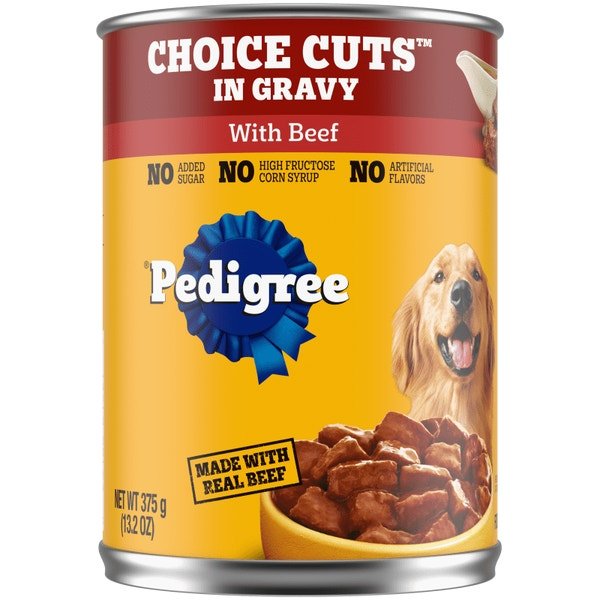
A simple routine makes feeding easier and safer every day. Use the following checklist:
- Same food, same bowl, same place and time
- Measure every meal with a proper measuring cup or scale
- Check that total food (plus treats) stays within daily calorie target
- Offer fresh water and quickly clean any spoiled leftovers
- Glance at body shape and ribs once a week
- Monitor stool quality and appetite
- Note sudden changes in weight, thirst, or energy and contact a vet if needed
This article clearly explains the recommended amount of food to give your dog, broken down by weight, age, activity level, and type of food. It covers feeding charts for adult dogs, puppies, and senior dogs, as well as information on preventing obesity, special considerations for certain illnesses and during pregnancy and lactation, signs of overfeeding or underfeeding, and when to consult a veterinarian. This article compiles information to help you manage your dog's diet appropriately every day.






![[Sheltie puppies] Check breeder information for baby dogs](https://with-my-dog.com/wp-content/uploads/2022/01/image1-150x150.jpg)
![[Dog Baths] Explaining the optimal frequency and how to bathe your dog!](https://with-my-dog.com/wp-content/uploads/2021/10/22107314_m-150x150.jpg)