

Is your dog constantly scratching its ears or shaking its head? It might be due to ear mites. If left untreated, ear mites can not only cause severe itching but also lead to problems such as otitis externa. This article clearly explains the checkpoints for ear mite symptoms in dogs and the signs that indicate you should take your dog to the vet. We have compiled and presented essential information that pet owners should know as basic knowledge for early detection and treatment.
Quick facts about ear mites in dogs
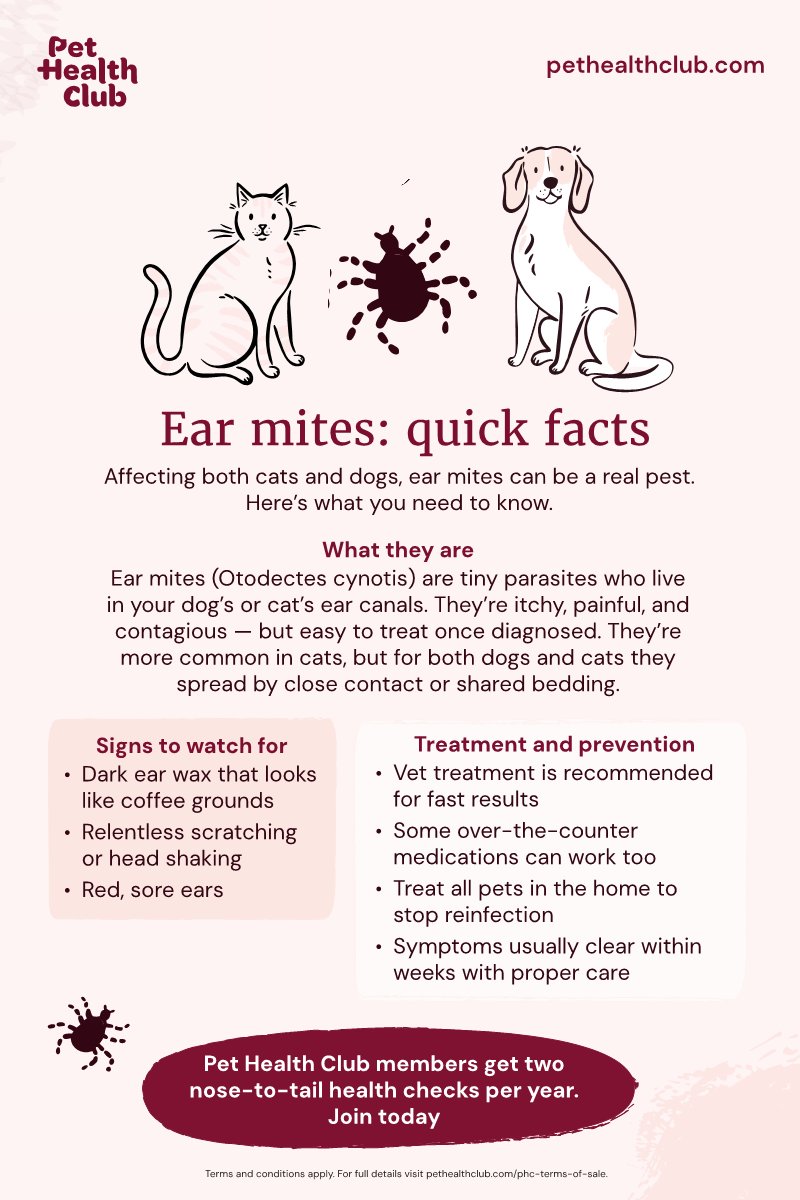
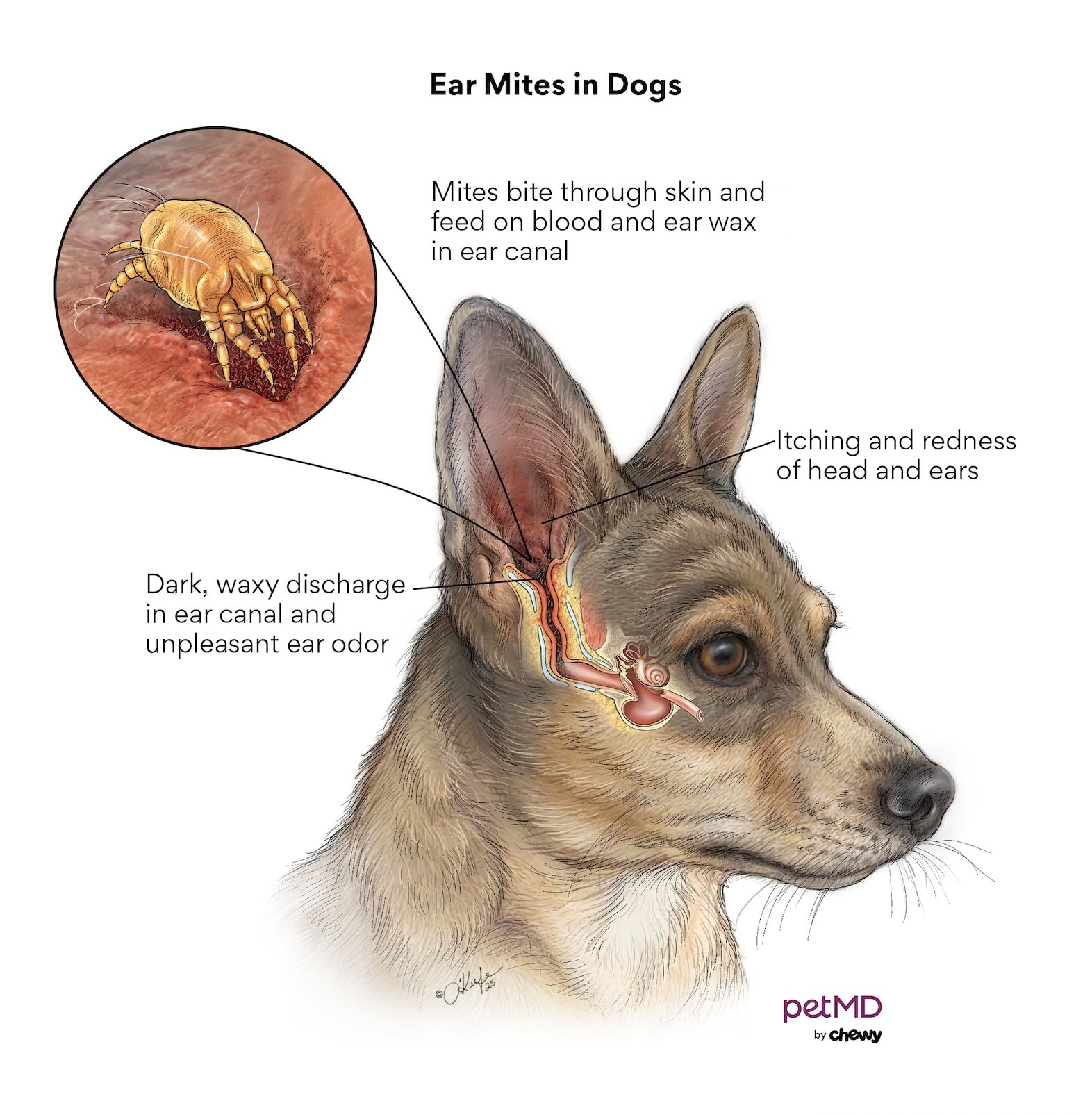
Ear mites are tiny parasites that live mainly in the ear canal and feed on skin debris and ear wax. They are highly contagious between dogs and can also spread to cats and other small pets. Typical signs include intense itching, frequent head shaking, and dark crumbly debris in the ears. Ear mites are uncomfortable but can lead to painful infections if ignored, so early detection and proper treatment are very important for your dog’s health.
What exactly are ear mites?
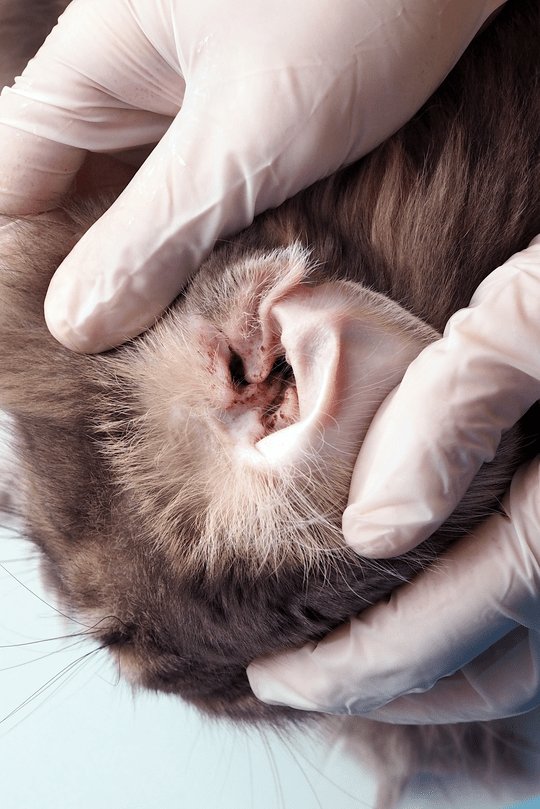
Ear mites are tiny parasites that live on the surface of the skin inside a dog’s ear canal and sometimes on surrounding skin. They feed on skin debris and ear wax, causing intense itching and irritation. Ear mites spread very easily between animals through close contact. Without treatment, they can trigger secondary ear infections and long‑term ear damage.
The tiny parasite in your dog’s ears
Ear mites are tiny, spider‑like parasites that live mainly in the outer ear canal. Most are Otodectes cynotis, barely visible as white moving dots against dark ear debris. They feed on ear wax, skin oils, and tissue fluid, causing intense irritation. Their life cycle is short—around 3 weeks from egg to adult—so numbers can grow quickly, leading to heavy infestations if not treated promptly.
Ear mites vs normal ear wax
Ear wax is a normal, pale yellow to light brown material that is slightly sticky and usually has only a mild smell. It protects the ear by trapping dust and moisture. Ear mites often cause thick, dark brown or black debris that looks like coffee grounds and can smell quite bad. Ear wax builds up slowly and usually does not cause pain, while mite debris appears more suddenly and is often linked with intense scratching and head‑shaking.
How dogs catch ear mites
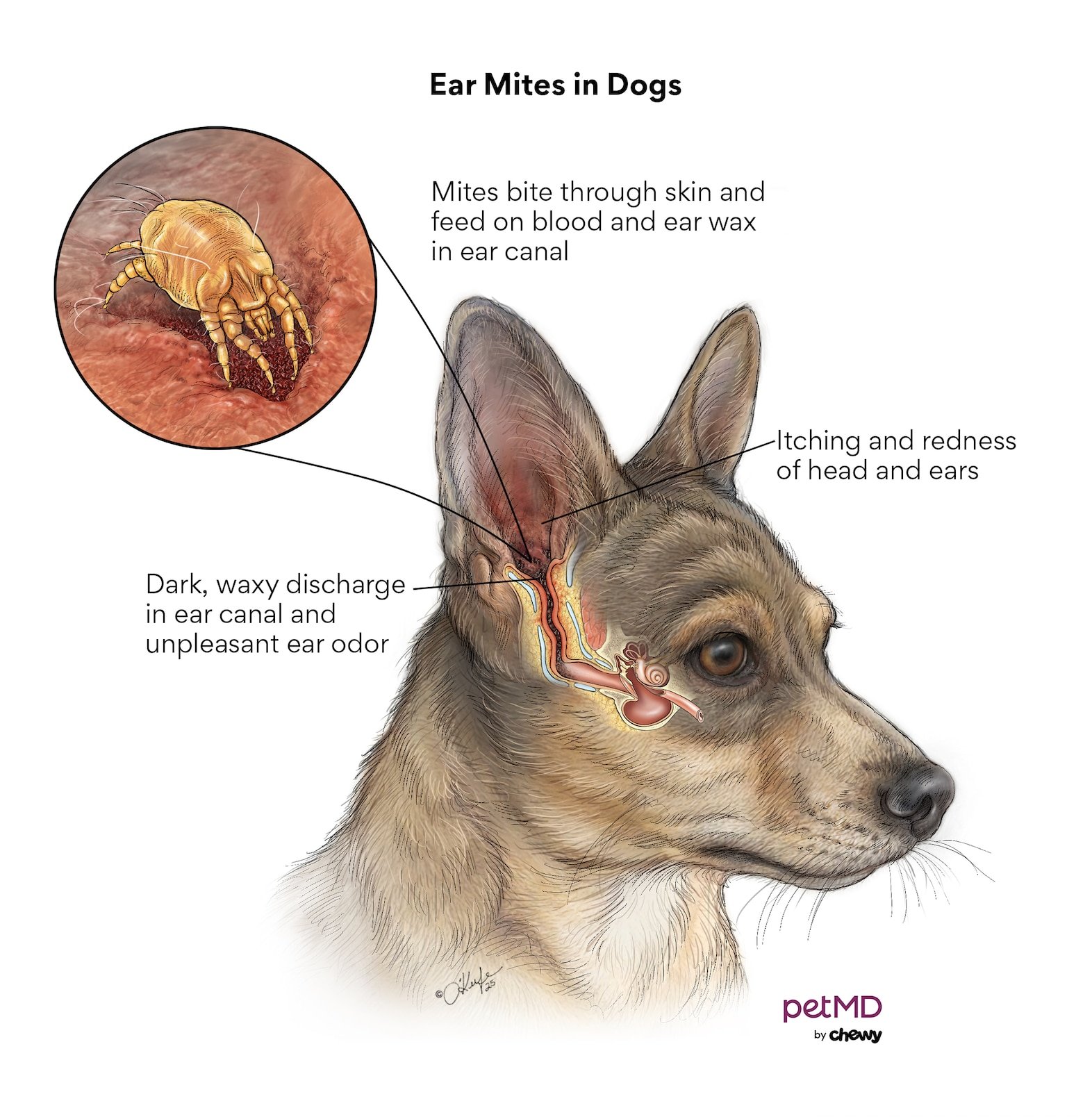
Ear mites spread mainly through direct contact with an infected animal. The mites move from ear to ear when dogs play, sleep close together, or share bedding.
They can also pass indirectly. Mites may survive for a short time on blankets, brushes, or soft furniture, so dogs can be infected at kennels, grooming salons, shelters, or dog parks. Indoor dogs are not completely safe; contact with an infected visiting pet or foster animal is often enough for ear mites to appear.
Common sources of infection
Ear mites spread mainly through direct contact with an infected animal. Dogs often catch them when playing, sleeping, or grooming with another dog or cat that already has mites. Shelters, kennels, dog parks, and grooming salons can be common sources, especially where many animals mix. Bedding, blankets, and shared brushes may harbor mites for a short time, so unwashed fabric and equipment can also pass on infection.
Are puppies at higher risk?
Puppies are generally more likely to suffer from ear mites than healthy adult dogs. Their immune systems are still developing and they often come from environments such as shelters, breeders, or pet shops where many young animals live close together. Puppies also groom poorly, so mites spread and multiply easily. Any puppy with head‑shaking, ear scratching, or dark debris in the ears should be checked by a veterinarian promptly.
Common dog ear mite symptoms
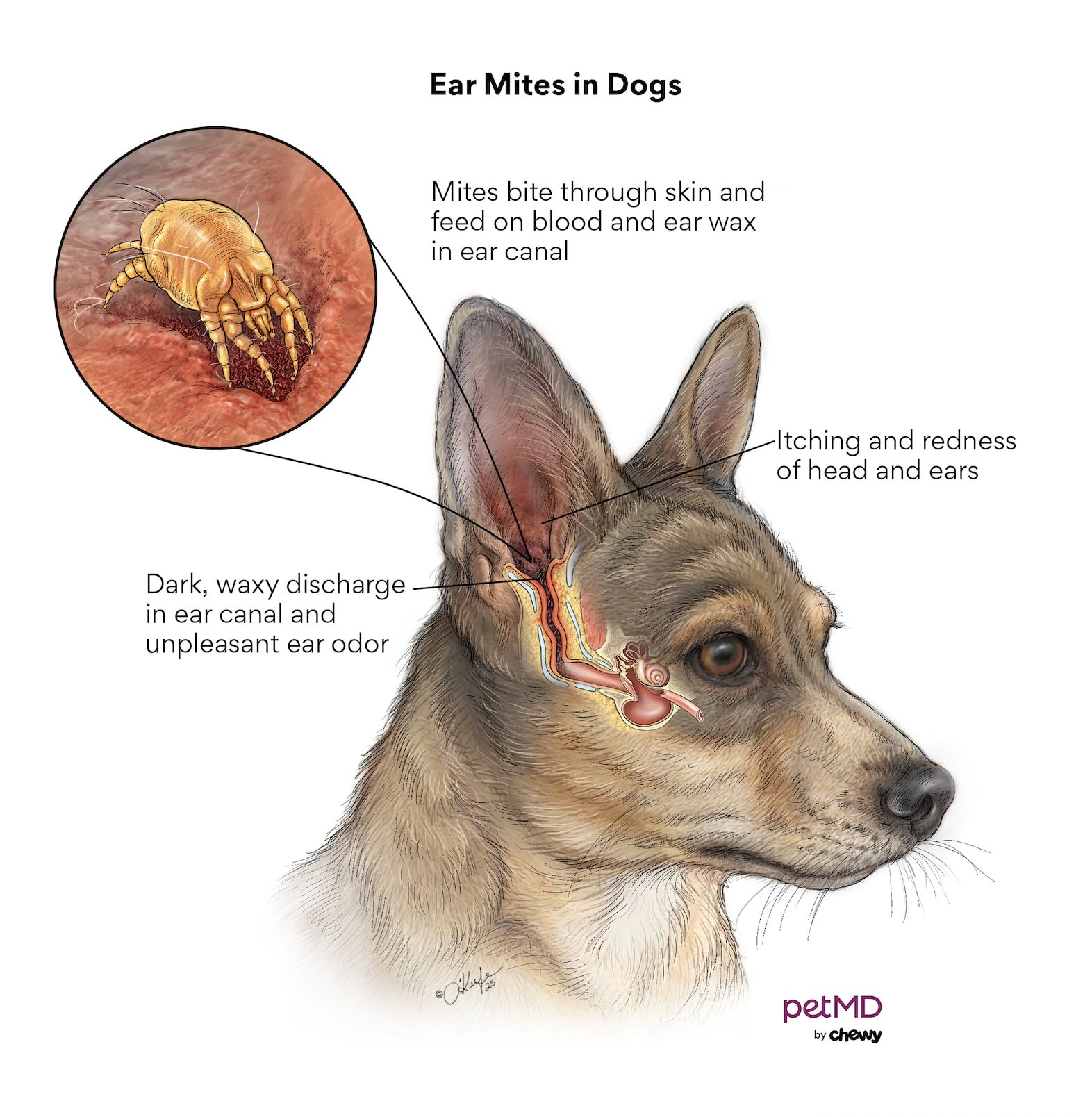
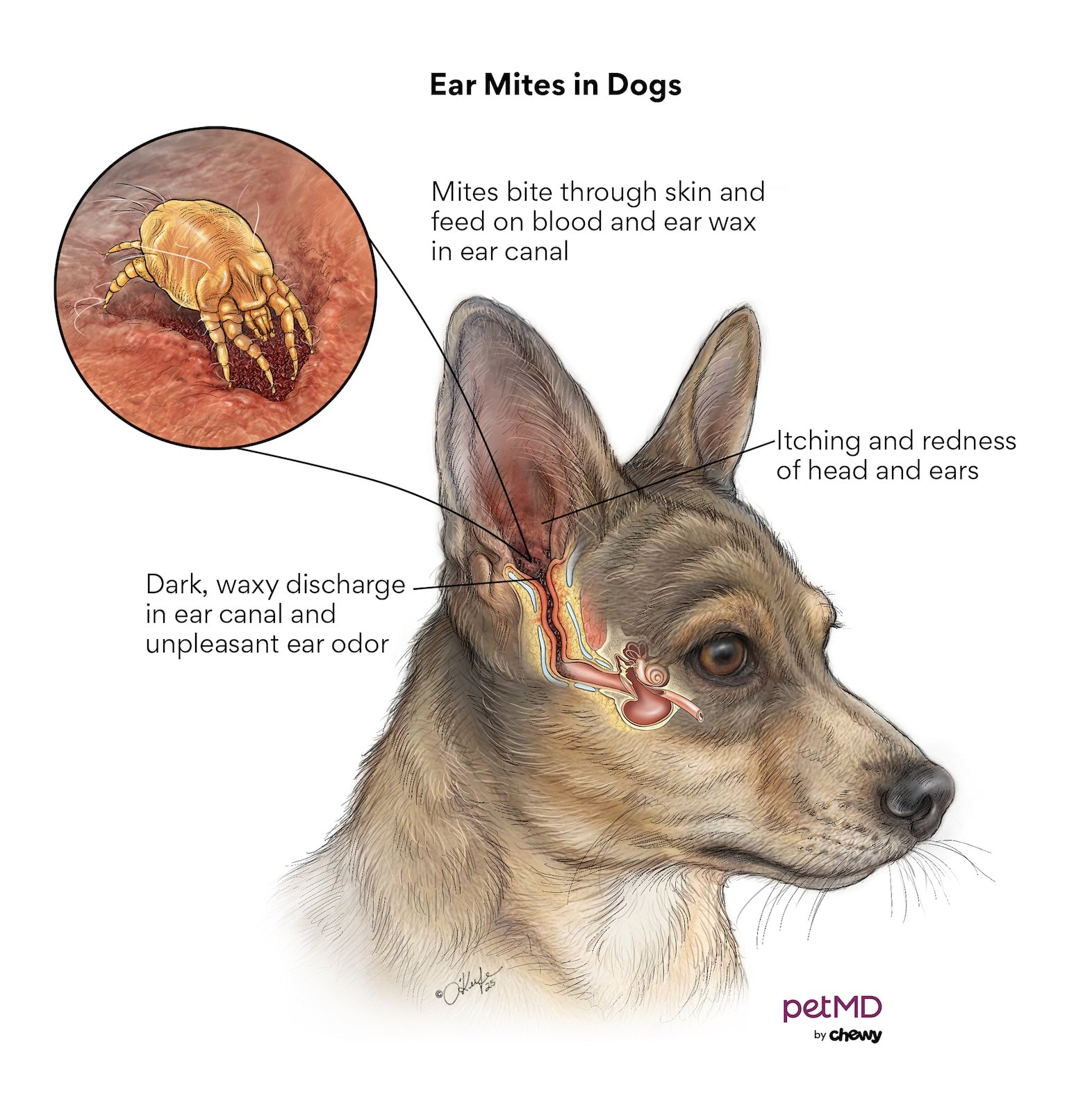
Dog ear mite symptoms usually start around the ears and head. The most typical signs are intense itching, frequent head shaking, and rubbing the ears on furniture or the floor. Many dogs develop dark brown or black crumbly discharge that looks like coffee grounds, often with a strong odor. The ear flap and canal may become red, warm, and slightly swollen. Some dogs become more irritable or sensitive when their ears are touched, and in severe cases may scratch so hard that the skin around the ears becomes sore or scabby.
Early signs many owners miss
Many ear mite problems start with subtle, easily overlooked changes. Early signs include more frequent head shaking, gentle ear rubbing on furniture or the floor, or occasional pawing at one ear. Some dogs become slightly restless or cranky when the ears are touched. A mild brown, grainy discharge or a faint musty smell can appear before redness, pain, or heavy scratching develop.
More serious warning signs
More advanced ear mite problems often cause constant head shaking, strong ear odor, and intense, nonstop scratching. The ear canal may look very red and swollen, and dogs may cry out when the ear is touched. You might see bloody or pus‑like discharge, scabs around the ear, or your dog holding the head to one side. In severe cases, balance problems or walking in circles can appear, which needs rapid veterinary attention.
Health risks of dog ear mite symptoms
Untreated ear mites are more than a nuisance; they can seriously damage a dog’s ears and overall health. Constant scratching often leads to painful sores, scabs, and secondary skin infections around the head and neck. Inside the ear, long‑term inflammation may cause thickening of the ear canal, chronic ear infections, and even partial hearing loss. In severe cases, a ruptured eardrum can trigger balance problems or head tilt. Quick treatment greatly reduces these risks and helps protect a dog’s long‑term ear health.
Ear mites or ear infection?
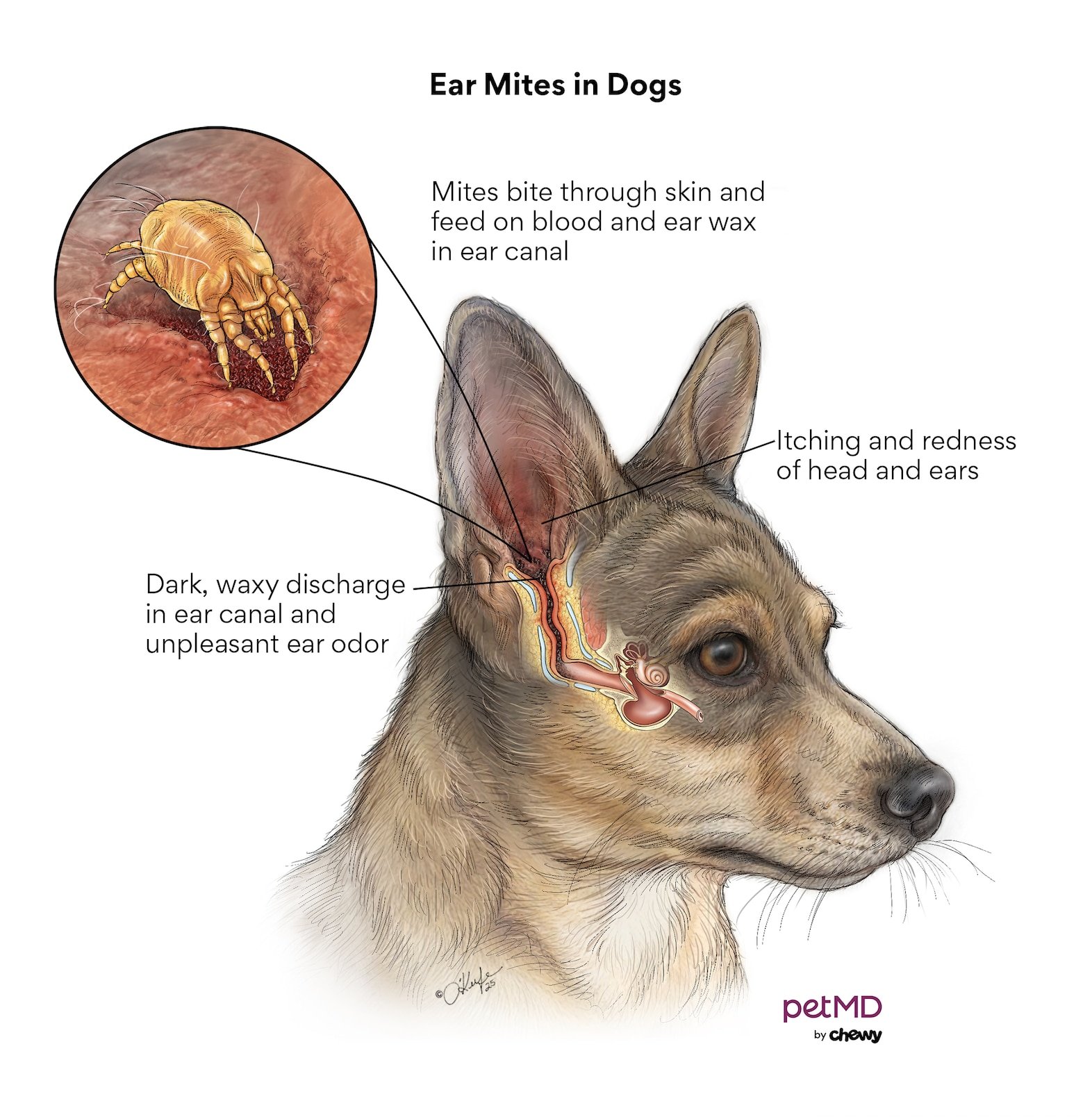
Ear problems in dogs often look similar, so many owners wonder “ear mites or ear infection?” Ear mites are parasites that live on the skin in the ear canal and cause intense itching. Ear infections are usually caused by yeast or bacteria and may follow allergies, moisture, or ear mite damage. Because symptoms overlap, only a vet can reliably tell the difference and choose the right treatment. Ignoring either problem can lead to chronic pain and hearing loss.
Key differences to look for
Ear mite symptoms and ear infection symptoms can look very similar, but some points help owners tell them apart.
| Point to check | More common with ear mites | More common with ear infection |
|---|---|---|
| Ear discharge | Dry, crumbly, dark brown/black, like coffee grounds | Wet, sticky, yellow, brown or bloody |
| Smell | Mild or none | Strong, unpleasant odour |
| Itch level | Very intense itching, constant scratching | Can be itchy or painful, scratching may be less constant |
| Pain | Often mild unless severe | Stronger pain, dog may yelp or avoid touch |
| Where problem starts | Usually in ear canal only | Can start deep in ear or after allergies, swimming |
Any sudden change in the ear, especially with discomfort, should be checked by a vet to confirm the cause.
When both problems happen together
Ear mites and bacterial or yeast ear infections often occur together. Mites damage the ear canal, allowing germs to grow easily. In that case, a dog may show both intense itchiness and strong smell, thick discharge, or swelling. Treatment usually needs two parts: a product that kills mites and separate medication for infection. Delayed care can lead to long‑term pain or hearing problems, so early veterinary attention is very important.
When to call the vet

Many ear problems look similar, so ear mites should always be confirmed by a vet rather than guessed at. In general, contact a clinic if ear scratching, head‑shaking, or dark debris lasts longer than a day or two, suddenly gets worse, or affects your dog’s mood, appetite, or sleep. A vet visit is also recommended for puppies, senior dogs, or dogs with repeat ear trouble, even when symptoms appear mild. Early diagnosis prevents painful complications and long‑term ear damage.
Urgent signs that need help now
Some ear mite problems become emergencies. Seek urgent vet care immediately if any of the following appear:
- Head tilted to one side or loss of balance
- Walking in circles, stumbling, or falling over
- Continuous crying, yelping, or clear pain when the ear is touched
- Fresh bleeding from the ear or a large swelling like a soft “balloon” on the ear flap
- Green or foul‑smelling discharge, fever, or your dog seems very unwell
Sudden behaviour change such as hiding, refusing food, or aggression when the head is handled also warrants rapid veterinary attention.
What to tell your vet
Before the consultation, it is helpful to make a simple memo. Sharing the information below allows the veterinarian to judge ear mite symptoms more accurately and quickly.
| Information to share | Helpful details |
|---|---|
| Main symptoms | When itching, head shaking, or odor started, whether symptoms are getting worse |
| Ear discharge | Color (brown/black), amount, whether discharge is dry or wet |
| Pain level | Whether the dog cries when ears are touched, scratches until bleeding |
| Other changes | Appetite, sleep, behavior, balance problems |
| Home care so far | Ear cleaning methods, use of over‑the‑counter drops or home remedies |
| Environment | Contact with other animals, new pets, visits to shelters, grooming, or boarding |
Bringing photos of the ears and information on all medications and preventatives currently used is also very useful.
How vets diagnose ear mites
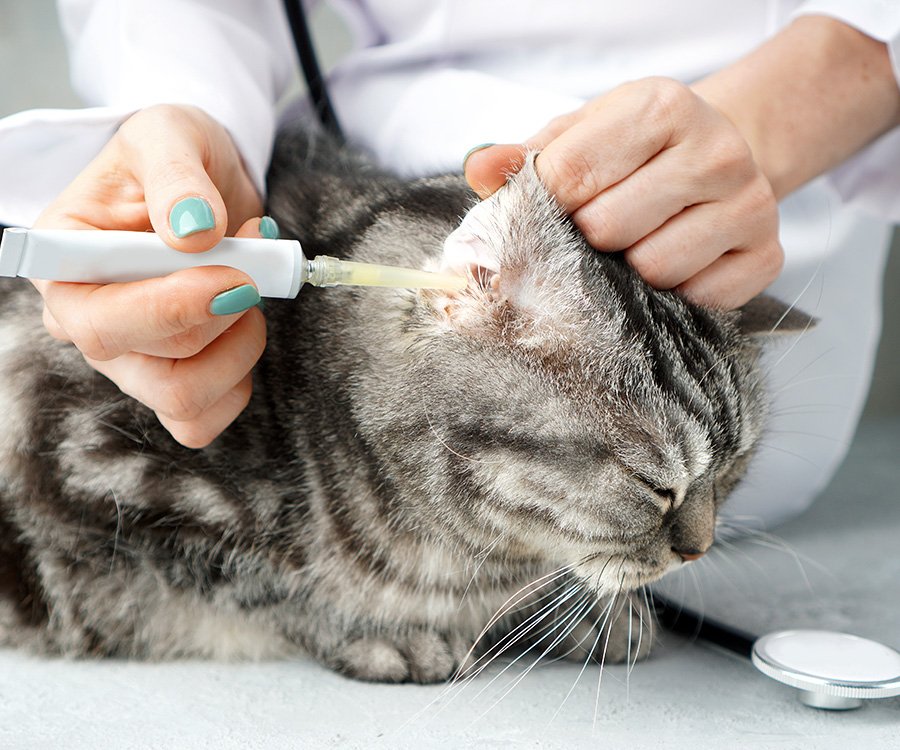
Veterinarians combine symptoms, ear examination, and simple tests to confirm ear mites. First, they ask about scratching, head shaking, and any recent contact with other animals. Next, the vet inspects the ear canal using an otoscope to look for dark debris and moving mites. In many cases, material from the ear is examined under a microscope to directly identify mites or their eggs, which helps rule out other ear problems.
Physical exam and ear check
During a physical exam, the vet first asks about your dog’s ear mite symptoms and history. Next, the vet inspects the outer ear and ear flap for redness, scabs, or hair loss from scratching. An otoscope (lighted scope) is then used to look deep into the ear canal, checking for dark crumbly discharge, swelling, moving mites, and any damage to the eardrum before treatment starts.
Microscope tests and other tools
To confirm ear mites, veterinarians often take a small sample of the debris from inside the ear with a cotton swab. The sample is placed on a glass slide and checked under a microscope. Live mites, eggs, or mite droppings make the diagnosis clear. If mites are not seen, vets may use an otoscope for a deeper view, run skin scrapings, or perform an ear culture to check for bacteria or yeast. These tools help rule out other ear problems and guide the safest treatment.
Treating ear mites in dogs
Ear mite treatment focuses on killing the mites, easing discomfort, and preventing a new outbreak. Core care usually includes medicated ear drops or spot‑on products, gentle ear cleaning, and treatment of all pets in the household if advised. Human medicines, leftover antibiotics, or random home remedies should not be used, because inappropriate treatment can worsen pain, damage the ear, or hide problems such as deeper ear infections. Early, correct treatment usually leads to a fast and comfortable recovery.
Prescription drops and spot‑ons
Veterinarians usually prescribe ear drops or spot‑on treatments that kill mites and their eggs. Modern products often also treat fleas and other parasites, which helps prevent re‑infestation. It is important to follow the exact dose, frequency, and duration given by the vet, even if symptoms improve quickly. Stopping too soon can leave surviving mites, causing ear problems to return and sometimes become worse.
Cleaning your dog’s ears safely
Ear cleaning is important to enhance the effectiveness of medication and avoid damaging the inside of the ear. It is best to first have your dog's ears checked and the cleaning method confirmed at a veterinary clinic. The basic procedure is to put an appropriate amount of specialized dog ear cleaner into the ear canal, gently massage the base of the ear, have the dog shake its head, and then gently wipe away the dirt that comes out with cotton or gauze. It is advisable to avoid inserting cotton swabs deep into the ear or using human medications or alcohol, as this may damage the eardrum or skin.
Treating all pets and the home
Ear mites spread very easily between animals. All dogs and cats in the home usually need treatment, even if only one shows clear symptoms. Otherwise, parasites hide on untreated pets and reinfect the treated one.
Household cleaning also supports recovery. Wash bedding, blankets, soft toys, and washable covers on a hot cycle. Vacuum carpets, sofas, and car seats where the dog rests. Regular cleaning reduces stray mites and helps break the itch–scratch–reinfect cycle.
How long treatment usually takes
Ear mite treatment usually needs at least 3–4 weeks to break the life cycle of the mites. Many modern spot‑on or oral products kill adult mites quickly, so itching can improve within a few days. However, medication must continue for the full course your vet prescribes so that newly hatched mites are also eliminated. Stopping treatment early often leads to symptoms returning and a new infestation.
Home care and natural options

Many owners hope for gentle, natural ways to help a dog with ear mites. Home care can support comfort and healing, but it should work alongside proper veterinary treatment, not replace it. The main goals are to keep the ears clean, reduce itch and pain, and prevent further damage from scratching. Safe home care focuses on vet‑approved cleaners, a calm environment, and careful monitoring for any worsening signs.
What you can do at home safely
At-home care can support treatment but should never replace vet-prescribed ear mite medication. Safe options include gently wiping the outer ear flap with vet-approved ear cleaner and soft cotton pads, following the veterinarian’s instructions. Keep nails trimmed to reduce self-scratching damage, and use an Elizabethan collar if the dog keeps pawing or rubbing the ears. Regularly wash bedding and vacuum floors to reduce environmental mites, and give all medicines exactly as directed until the course is finished.
Home remedies to avoid
Some “natural” ear mite cures on the internet are unsafe and may damage a dog’s ears. Avoid using:
- Oils such as tea tree, undiluted essential oils, vinegar, alcohol, or hydrogen peroxide in the ear canal
- Cotton buds pushed into the ear (risk of injury and deeper impaction)
- Strong homemade mixtures with garlic, onion, or spicy ingredients
Harsh products can burn the delicate ear skin, worsen infection, and delay proper treatment. Always ask a vet before putting anything into a dog’s ears.
Recovery and ongoing ear care

Recovery from ear mites does not end when the scratching stops. The ear canals may stay sensitive for several weeks. Regular gentle cleaning and finishing the full course of medication are crucial to prevent a return of symptoms. Owners should watch for renewed head‑shaking, bad smell, or new discharge and contact a veterinarian early if any signs reappear. Ongoing ear care, once or twice a week for prone dogs, helps keep the ears dry, clean, and comfortable.
Helping your dog heal comfortably
Gentle care helps ears recover faster. Keep the ear area clean, dry, and calm. Use medicines and cleaners exactly as prescribed and avoid over‑cleaning, which can delay healing. Prevent scratching by trimming nails and using a cone if the vet recommends it. Offer a quiet resting space and use treats and praise so ear handling feels positive. If pain, smell, or discharge worsens, contact a vet promptly.
Preventing flare‑ups and damage
Repeated ear mite problems can lead to chronic ear damage, so prevention during recovery is very important. Follow the full treatment course, even if the ears look better, to avoid surviving mites causing a flare‑up. Keep ears dry and gently cleaned with vet‑approved solution only. Stop scratching and head‑shaking by using cones or soft collars as advised, because constant trauma can cause ear thickening and hearing loss. Regular vet checks help spot lingering inflammation early.
Preventing ear mites in the future

Preventing ear mites focuses on early detection, clean ears, and parasite control. Regular checks catch mild irritation before it becomes painful. Keeping ears clean reduces the warm, waxy environment mites love. In multi‑pet homes, coordinated prevention for all animals limits re‑infection. Year‑round flea and mite preventatives are very effective, especially for social dogs and puppies that meet many other animals.
Routine checks and cleaning
Regular checks and gentle cleaning help spot ear mite symptoms early and prevent painful flare‑ups. Aim to look inside the ears once a week in good light. Healthy ears are pale pink, with little smell and only a small amount of light wax.
Use a vet‑approved ear cleaner and cotton pads or gauze, never cotton buds, which can push debris deeper. Gently fill the ear canal with cleaner, massage the base of the ear, then let the dog shake and wipe away loosened wax. Stop and seek veterinary advice if the dog shows pain, strong odour, or dark, coffee‑ground discharge.
Parasite preventatives that help
Modern parasite preventatives can stop ear mites before symptoms appear. Many monthly flea and tick products also kill ear mites, working through the skin or bloodstream. Options include spot‑on treatments, chewable tablets, and some long‑acting collars. The most suitable product depends on the dog’s age, weight, health, and lifestyle, so owners should ask a veterinarian to recommend a broad‑spectrum preventative that covers mites as well as fleas and ticks.
Protecting multi‑pet households
In homes with several pets, ear mites often spread quickly through direct contact and shared spaces. Treat all dogs and cats at the same time, even if only one shows symptoms. Wash bedding, blankets, soft toys, and collars on a hot cycle, and vacuum carpets and sofas thoroughly. Separate pets with obvious ear problems until treatment starts to reduce scratching, fighting, and re‑infestation.
Can people or homes get ear mites?
Ear mites mainly live on animals, but owners often worry about spread to people and the home. In most cases, ear mites stay on pets and do not survive long in the environment. Soft furnishings, bedding, and carpets can hold stray mites for a short time, so untreated animals may become reinfested. Simple hygiene, regular washing of pet bedding, and prompt treatment of all affected pets usually prevent problems for the household.
Risk to humans and children
Ear mites mainly prefer animal ears, so serious problems in humans are rare. However, mild, itchy rashes can occur if mites briefly crawl on human skin, especially on the arms, neck, or where the dog sleeps. Children may scratch more intensely and risk skin infection.
If anyone in the family develops persistent itching, a rash, or ear discomfort after close contact with an affected dog, medical advice from a doctor is recommended.
Stopping mites spreading in your home
Ear mites spread easily in enclosed spaces, so thorough cleaning is important during treatment. Wash all dog bedding, blankets, soft toys, and washable covers on a hot cycle. Vacuum carpets, sofas, and car seats regularly, then dispose of the bag or empty the canister outside. Wipe hard floors and surfaces where the dog rests. Limit contact between infected and healthy pets until the vet confirms recovery.
This article provides a clear explanation of everything from the basics of ear mites in dogs, common symptoms, how to distinguish them from ear infections, examinations and treatments at veterinary clinics, to home care and prevention methods. It summarizes practical points for owners to notice abnormalities early and protect their dog's ear health.


















![[Ticks and Sarcoptic Mange] Symptoms and Treatment of Ticks that Harm Dogs](https://with-my-dog.com/wp-content/uploads/2022/01/4ab096d074c35f99ad05687eccf70c28-500x332-1-300x199.jpg)