
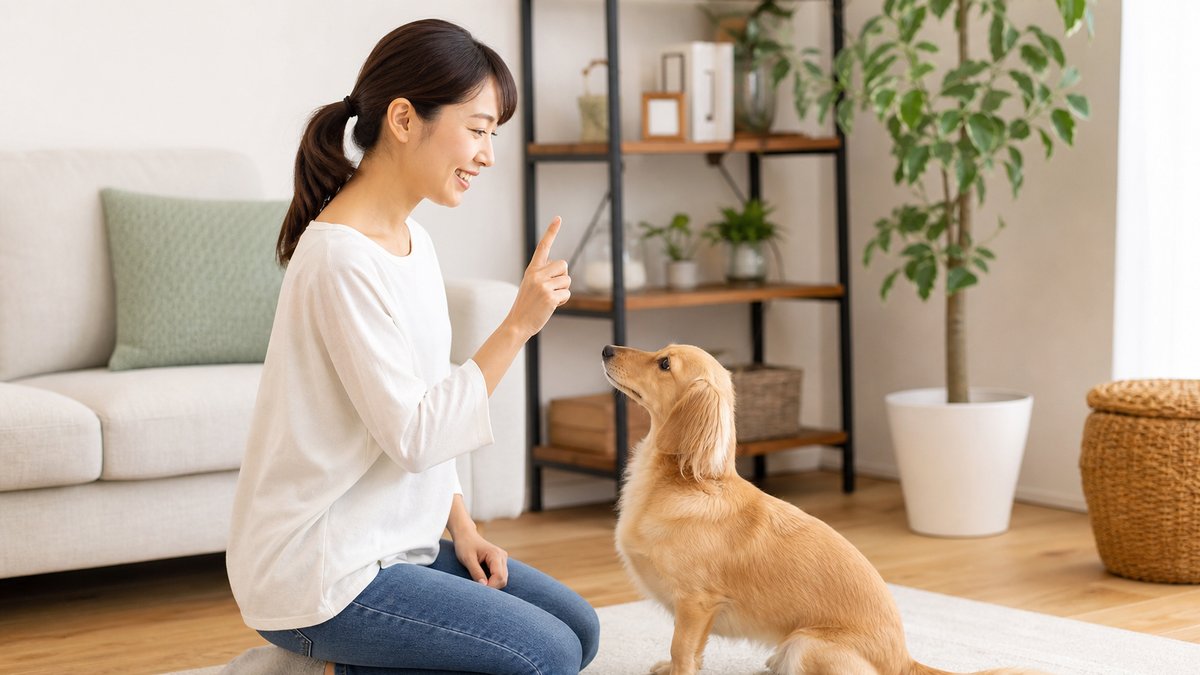
Even teaching your dog to "sit" can make everyday life much smoother. This article features 21 essential dog commands that are useful for training at home, clearly explaining their roles and key points. It's designed to be easy to implement, even for first-time dog owners, making it a helpful guide for home training.
Why Teaching Basic Dog Commands Matters

Basic dog commands are more than tricks; they form a shared language between humans and dogs. Clear cues help dogs understand what is expected in everyday life, which reduces confusion and stress.
A dog that knows reliable commands is safer, easier to handle, and more confident in new situations. For owners, basic training means fewer accidents, calmer walks, and smoother vet visits. In multi‑person households, common commands also prevent conflicts over rules and routines.
Benefits for your dog
Basic commands give a dog predictability and security. Clear rules help dogs understand how to earn rewards and approval, which reduces anxiety and frustration. Daily training also provides mental stimulation, preventing boredom‑related problems such as chewing or excessive barking.
Learning to respond to cues builds confidence, especially for shy or nervous dogs, because they practice making good choices and being praised. Training also strengthens communication with the owner, creating a more trusting, cooperative relationship that supports long‑term emotional and physical wellbeing.
Benefits for you and your family
A well‑trained dog simplifies daily life for everyone in the household. Clear commands reduce chaos at doors, meal times, and during walks, so family routines run more smoothly. Reliable cues such as “come,” “stay,” and “leave it” also prevent accidents, protecting children, visitors, and the dog. When family members can communicate effectively with the dog, stress decreases and shared activities, such as outings or trips, become safer and more enjoyable for all.
How Many Commands Should a Dog Learn?

Many owners wonder how many cues a dog really needs. In practice, a solid foundation of 10–20 well‑trained commands is enough for everyday life. The exact number matters less than how reliable each behavior is.
Puppies and adult dogs both learn best when new words are added gradually. Once core safety and manners cues are strong, additional tricks or fun commands can be introduced. A smaller, consistent vocabulary is easier for the whole family to remember and for the dog to respond to under distraction.
Start with the essentials
For most family dogs, a small set of core cues is enough to start. Focus first on commands that improve safety and daily life: “Sit,” “Down,” “Stay,” “Come,” “Leave it,” and a potty cue. Adding “Watch me” for attention and “Off” for jumping control is also very useful.
Beginning with 5–8 essential commands keeps training clear for the dog and manageable for the owner. Once the dog responds reliably at home and on walks, more specialized or fun cues can be added without causing confusion.
Adding fun and advanced cues
Incorporating fun and advanced cues makes it easier to maintain your dog's concentration and motivation for longer periods. Once your dog is somewhat familiar with basic commands, you can add tricks such as "spin," "high five," and "roll over," as well as long-distance recall and play with toys. Playful challenges help relieve stress and can also deepen the bond of trust between you and your dog.
How to Choose Clear Command Words
Clear command words help dogs learn faster and avoid frustration for everyone. Dogs respond to sound and consistency, not meaning. A clear cue should always sound the same, be easy to say in daily life, and have only one meaning. Once a word is chosen, all family members should use it in the same tone and situation. Clear, consistent cues become a reliable “language” that guides a dog’s behavior safely and calmly.
Short, simple words work best
Short, simple command words are much easier for dogs to recognize and remember. Two syllables or fewer are ideal: “Sit,” “Down,” “Stay,” “Come,” “Off.” Clear vowel sounds and hard consonants help the cue stand out from everyday conversation.
Avoid long phrases such as “Come over here right now,” and choose one consistent word instead. Use a calm, firm tone and say the cue only once before helping the dog succeed with a lure or reward.
Avoiding confusing sound‑alikes
Dogs often confuse commands that sound too similar, especially in busy environments. For example, “Sit,” “Stay,” and “Stand” can blur together when spoken quickly. To avoid mistakes, separate similar sounds: choose “Wait” instead of “Stay” if “Sit” is already in use, or use “Down” and replace “No” with “Enough.” Clear, distinct words help the dog respond correctly even from a distance or when excited.
Family agreement on cue words
When everyone in the household uses the same word and the same gesture for each command, dogs learn much faster and respond more reliably. First, create a simple cue list such as “Sit,” “Down,” “Come,” and write the exact words in a shared place. Next, agree on what each cue means (for example, “Off” = paws on floor, not “Down”). Ask family members, including children, to practice the agreed cues so daily communication stays consistent.
Training Basics Before You Begin

Before teaching any command, it is important to set up a training environment where the dog can succeed. Choose a quiet space with few distractions and prepare small, tasty treats or a favorite toy. Begin when the dog has some energy but is not overexcited. Speak in a calm, consistent tone and focus on rewarding correct choices rather than correcting mistakes. Short, positive sessions help the dog enjoy learning and build a strong foundation for later skills.
Using rewards and timing
Rewards and timing are the core of effective dog training. Dogs repeat behaviors that bring good outcomes, so pairing the correct action with a quick reward is essential. Give the reward within 1–2 seconds after the dog performs the behavior, or the connection becomes unclear.
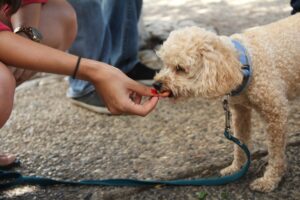
Small, tasty treats work well, but many dogs also respond to toys, praise, and gentle petting. Markers such as a clicker sound or a short word like “Yes!” help pinpoint the exact moment the dog succeeded, making learning faster and clearer.
Keeping sessions short and fun
Dogs tend to focus more easily and learn more efficiently when training is built up through short sessions. A good guideline is 3 to 5 minutes per session, several times a day. Ending before your dog loses focus helps keep their response to commands more consistent.
To avoid confusion, limit each session to “one or two commands.” Also, ending right after a successful attempt makes it easier for your dog to remember training as something enjoyable.
By incorporating play, toys, and petting time as rewards, and creating an environment where your dog can learn in a game-like way without relying only on treats, it becomes easier for them to stay motivated and willing to learn on their own.
Puppies vs. adult dogs
Puppies and adult dogs learn in similar ways, but training plans should differ.
Puppies have short attention spans and are still learning about the world. Short, frequent sessions, gentle handling, and very simple goals suit puppies well. Socialization and preventing problem habits are more important than perfect obedience.
Adult dogs can usually focus for longer and may progress faster, but they may also have established habits or past experiences. Patience and consistency are essential, especially when changing unwanted behaviors. Senior dogs benefit from slower pacing and softer rewards, such as gentle play or low‑impact treats.
21 Core Dog Training Commands Overview

Before starting detailed how‑to steps, it is helpful to see an overview of the 21 basic commands and their main roles. The list in this article is organized into clear groups so owners can prioritize:
| Category | Commands (numbers refer to later sections) | Main purpose |
|---|---|---|
| Essential manners | 1. Sit, 2. Watch me, 3. Down, 4. Stay, 5. Wait | Everyday control and calm behavior |
| Safety and recall | 6. Come, 7. Leave it, 8. Drop it, 9. Off, 10. No | Preventing accidents and conflicts |
| Loose leash and walking | 11. Heel, 12. Let’s go, 13. Wait at the curb | Comfortable, safe walks |
| Household and calmness | 14. Place/bed, 15. Crate, 16. Potty cue, 17. Quiet | Peaceful home environment |
| Handling and everyday care | 18. Touch, 19. Stand, 20. Up, 21. Okay/release word | Vet care, grooming, daily cooperation |
Readers can start with a few essentials, then gradually add commands that fit their lifestyle.
Essential Manners Commands
Essential manners commands are the foundation of everyday life with a dog. They help dogs understand how to behave politely around people, food, and exciting situations. By teaching manners first, owners prevent many common problems such as jumping, dashing through doors, or grabbing items. Solid basic cues also make walks, guests’ visits, and vet trips safer and less stressful for everyone in the household.
1. Sit
The command “Sit” is often the first cue dogs learn and forms the base for many other behaviors. Teaching a reliable sit helps a dog control impulses and focus on the handler. It is useful before meals, when greeting people, and at busy places such as sidewalks or vet clinics. For many dogs, sitting is easier than lying down, so it is an ideal starting point for positive, reward‑based training at home.
When and why to use "Sit"
The cue “Sit” works as a polite default behavior. Use it whenever calm stillness is safer or more appropriate than excitement. For example, before putting on the leash, greeting guests, crossing a road, or receiving food and toys. Sitting prevents jumping up, rushing through doors, or pulling toward distractions. Regular use also helps many dogs relax emotionally, because they learn that sitting makes good things happen in everyday life.
2. Watch me
“Watch me” is a cue that asks the dog to make eye contact with the owner. The dog learns that looking at the owner means good things happen, such as treats, praise, or play. As a result, “Watch me” becomes a powerful way to regain focus when there are distractions like other dogs, people, or noises.
For many daily situations—meeting guests, passing bicycles, or waiting at the vet—having a reliable “Watch me” cue helps the dog stay calm and attentive instead of reacting impulsively.
Building attention on you
Dogs do not automatically focus on owners, especially around distractions. “Watch me” builds a habit of checking in with the handler’s face and eyes. Start in a quiet room. Hold a treat at eye level, say the cue once, and reward the moment the dog looks at the handler’s face. Gradually hide the treat in the hand, then in a pocket, so the dog learns the cue, not the food. Short, frequent practice helps the dog offer eye contact outdoors, at the vet, and on walks, making other commands easier to teach and helping in exciting or scary situations.
3. Down
The "Down" cue asks the dog to lie with the body on the floor and elbows or chest touching the ground. It is more controlled than "Sit" and encourages relaxation. Teaching a reliable Down helps prevent jumping, bolting, and overexcitement in daily life. Start in a quiet place, reward any lowering of the head or shoulders, and gradually shape a full lying position so the dog learns that lying calmly earns praise and treats.
Helping your dog settle calmly
A solid “Down” cue helps many dogs switch from alert to relaxed mode. Lying on the ground makes jumping, pacing, and pushy behavior less likely, so “Down” is ideal for calming overexcited dogs. Use it before guests enter, during family meals, or in busy public spaces. Pair “Down” with a mat or bed and quiet rewards, so the dog learns that relaxing brings good outcomes. Gradually increase how long the dog stays down, always releasing with a clear cue such as “Okay.”
4. Stay
The "Stay" command teaches a dog to hold position until released, even when interesting events occur. It is a key skill for safety and good manners. A clear stay prevents door-dashing, crowding guests, and running into danger. Training begins in a quiet room, with very short stays and generous rewards. Over time, the dog learns that remaining still brings success, not moving first.
Duration, distance, and distractions
For a reliable "Stay", increase difficulty in three clear steps: duration, distance, and distractions. First, extend how long the dog holds the position while the owner stays close. Next, add distance by taking one step back, then more, always returning to reward. Finally, introduce mild distractions, such as a dropped toy, and only reward when the dog continues to stay calmly in place.
5. Wait
The command "Wait" teaches a dog to pause briefly until given permission to move. Unlike "Stay," which asks for a fixed position, "Wait" is useful for short pauses and temporary holds. Dogs learn impulse control, which reduces dashing through doors, rushing out of cars, or grabbing items too quickly. Clear use of "Wait" in daily life supports safety and polite manners without requiring long, formal stays.
Doors, food bowls, and thresholds
Many dogs rush through doors, food bowls, and other thresholds, which can be unsafe and stressful. The "Wait" cue teaches the dog to pause until given a release word. Use it before opening doors, setting down food, exiting the car, or crossing a street. Ask for "Wait," slowly open the door or lower the bowl, and reward the dog for remaining still. Over time, the dog learns that calm behavior makes good things happen, reducing pushy or risky rushing.
Safety and Recall Commands
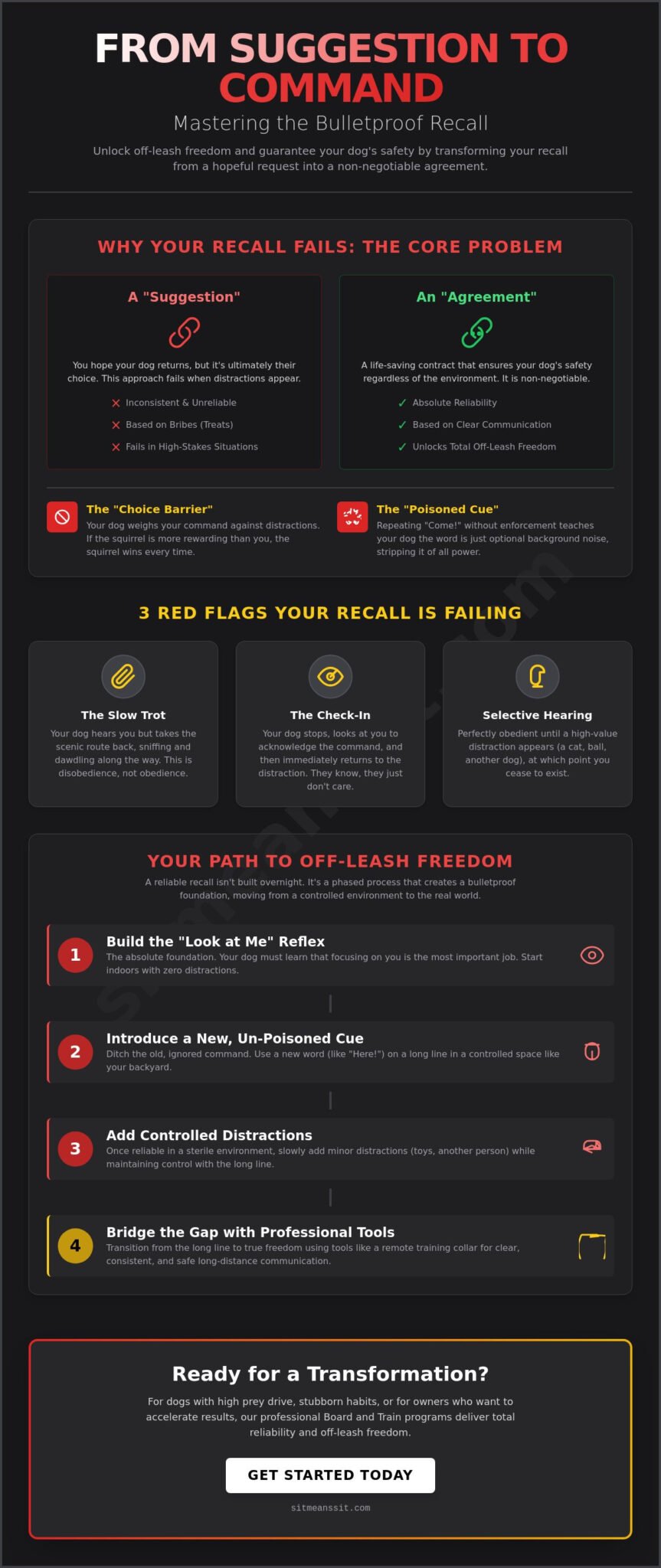
Safety and recall cues are the life‑saving part of basic training. They help prevent accidents, stop unwanted behavior quickly, and guide a dog safely in busy environments. A reliable recall and solid impulse control allow a dog to enjoy more freedom at home, on walks, and during off‑leash play. By teaching clear commands in this category, owners protect both the dog and people around the dog, while also reducing daily stress and frustration.
6. Come
The cue “Come” is one of the most important safety commands for any dog. A reliable recall allows owners to call the dog away from roads, wildlife, or unsafe objects. It also supports more freedom on walks and in parks, because the dog can be trusted to return when called. For clarity, caregivers should use one consistent word or phrase and always reward the dog generously for coming, even if arrival is slow or imperfect.
Building a reliable recall
A reliable recall means a dog chooses to run back immediately even around distractions. Start indoors on a long line, calling the dog’s name once, then "Come" in a happy tone. As the dog turns, move backward and reward with excellent treats and praise near the handler’s legs. Avoid calling when punishment or unpleasant tasks will follow. Gradually increase distance, change locations, and add mild distractions, always rewarding generously so returning to the owner feels like the best option.
7. Leave it
“Leave it” teaches the dog to ignore or move away from something on cue. It is a vital command for safety in daily life.
| Point | Explanation |
|---|---|
| Purpose | Stop the dog from grabbing food, trash, or dangerous objects |
| Everyday use | Passing food on the ground, dropped pills, wildlife on walks |
| Key idea | Reward the dog for choosing to look away and return to the owner |
Begin training with low‑value items and a leash indoors. Gradually increase difficulty only when the dog responds reliably.
Preventing dangerous snacking
Sniffing or moving toward food on the ground is natural behavior, but it can be dangerous. "Leave it" protects dogs from spoiled food, bones, medicine, and trash before they put anything in the mouth.
Practice with safe, boring objects first, then move to more tempting food while using a leash for safety. Reward generously when the dog chooses to turn away. Over time, train indoors, in the yard, and on walks so the cue works in real-life situations, such as parks or city sidewalks.
8. Drop it
The cue “Drop it” protects dogs from swallowing unsafe objects such as cooked bones, socks, or toys that can break. The command means "open the mouth and let go" of whatever is in it. Teaching a reliable "Drop it" reduces chasing games, prevents resource guarding from developing, and makes toy play safer and more enjoyable. It is an essential safety skill for puppies that explore the world with their mouths.
Trading up instead of grabbing
Trading rather than grabbing from a dog protects trust and reduces guarding. Prepare low‑value items for the dog and higher‑value rewards for the human.
- Say "Drop it" once.
- Present a better treat or toy right at the dog’s nose.
- When the dog releases, mark and reward immediately.
- Give the original item back sometimes, so the dog learns that dropping does not mean losing.
Repeated grabbing by hand can cause tension or biting; calm exchanges build a cooperative habit.
9. Off
Teaching “Off” helps a dog understand that paws and body must move away from a person, furniture, or counter. It is useful for managing jumping, preventing counter‑surfing, and protecting children or elderly family members. Reward the dog only when all four paws are on the floor, so the dog learns that keeping distance brings attention and treats, not climbing or pushing closer.
Managing jumping and furniture
Jumping on people or furniture often happens because dogs are excited or seeking attention. The cue “Off” should always mean “put all paws back on the floor”, never “get down and then jump again for fun.”
For people, ask guests to turn away and avoid eye contact until all four paws are on the ground, then reward with calm praise or treats. For furniture, decide clear household rules: always allowed, never allowed, or invited only. Consistency helps dogs understand where they may relax. Provide an appealing dog bed nearby so the dog has a comfortable alternative spot.
10. No
The cue "No" is an interruption signal, not a punishment. It tells the dog, "stop what you are doing" and prepares the dog to choose a better behavior. For clarity, pair "No" with guidance toward an allowed action and reward the correct choice. Overusing a harsh "No" without showing alternatives confuses dogs and can create anxiety, so calm, consistent use is recommended.
Using interruption cues kindly
Interruption cues such as “No” or “Ah‑ah” should redirect, not scare, a dog. Say the cue once in a calm but firm tone, then immediately show a better option and reward that choice. For example, interrupt chewing on shoes, guide the dog to a toy, and praise. Avoid yelling, lengthy scolding, or physical punishment, because fear can damage trust and increase anxiety-driven behavior.
Loose Leash and Walking Commands
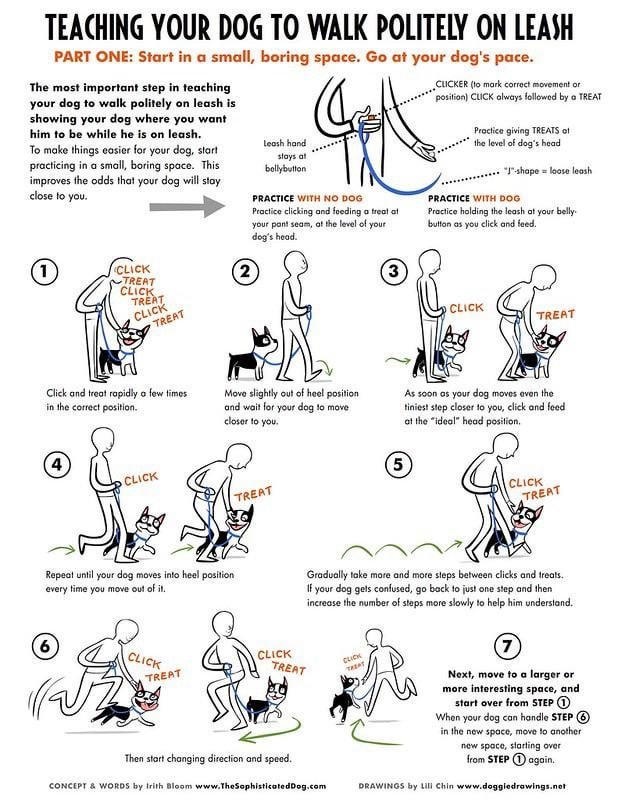
Walking manners affect daily comfort and safety. Loose leash and clear walking cues help dogs move calmly without pulling or zigzagging. Dogs naturally walk faster than humans, so they need guidance to learn a comfortable pace.
With consistent walking commands, owners can prevent shoulder strain, reduce leash reactivity, and make walks more enjoyable. Clear cues such as “Heel,” “Let’s go,” and “Wait at the curb” form a simple system: move beside the owner, follow changes in direction, and stop safely before roads or hazards.
11. Heel
Heel means the dog walks calmly at a person’s side with a loose leash. It is more precise than ordinary loose-leash walking and is useful in busy areas or around triggers such as other dogs or bicycles. Start in a quiet space, rewarding the dog for standing at a person’s left side and looking up. Take one or two steps, then treat at the person’s leg. Gradually increase steps, turn corners, and reward frequently for staying close without pulling.
Teaching polite walking
Heel means the dog walks at the handler’s side on a loose leash, matching pace. It is not about strict military precision for family dogs, but about safe, comfortable walks. Start in a quiet area, rewarding the dog whenever the shoulder stays roughly beside the handler’s leg.
If the dog forges ahead or lags, calmly stop or change direction, then reward when the dog returns to position. Short, upbeat sessions help the dog learn that staying close is more rewarding than pulling. Over time, add distractions and longer distances while keeping criteria clear and consistent.
12. Let’s go
A "Let’s go" cue tells the dog, “walk with the handler in a relaxed way”, without the strict position of heel. It suits everyday walks where some sniffing and side‑to‑side movement are fine, as long as the leash stays loose. Start by saying "Let’s go" the moment the dog begins to move with the handler, then reward frequently for staying near and keeping slack in the leash. Over time, the dog learns that following the handler’s motion at a comfortable pace makes walks pleasant and rewarding.
Moving together without pulling
A “Let’s go” cue means walk with the handler at a loose leash, not rush ahead. Start in a quiet area. Say the cue once, step forward, and reward as soon as the leash hangs in a soft “J” shape. If the dog forges ahead and tightens the lead, calmly stop or turn away without scolding. When the dog returns toward the handler and the leash loosens, mark and reward, then continue walking. Short, frequent walks build the habit that moving forward only happens when the leash stays loose.
13. Wait at the curb
Teaching a “wait at the curb” cue helps a dog pause automatically before crossing roads or driveways. Lead the dog to the curb, ask for “Sit” or “Stand,” then say “Wait”, and reward for remaining still. Step forward alone, return, reward, and then give a clear release word to cross. Gradually add distractions and different locations so the dog learns that reaching any edge means stopping first, which greatly improves daily walk safety.
Street safety habits
Teaching street safety habits helps prevent accidents during walks. Before every road crossing, ask the dog to stop, sit, and make eye contact. Only step off the curb after giving the chosen release cue. Always use the same routine: slow down, stop at the curb, cue "wait," check traffic, then release. Over time, many dogs begin to pause automatically at curbs, creating an important extra layer of safety.
Household and Calmness Commands
Household and calmness commands help dogs understand how to behave politely indoors and relax on cue. They are especially helpful in busy homes, with children, guests, or multiple pets. By teaching clear cues for resting, being quiet, or going to a specific spot, owners can prevent problem behaviors such as door rushing, barking, or constant pacing. Calmness commands also support stress reduction and improve overall quality of life for both dog and family.
14. Place or bed
The “place” or “bed” cue teaches a dog to go to a specific spot and remain there calmly. A mat, bed, or blanket becomes a clear parking space for your dog’s body and mind. Once learned, the cue helps manage overexcited greetings, begging at the table, and underfoot wandering in the kitchen.
For best results, always use the same spot and reward the dog generously for choosing to lie there quietly. Over time, the cue can be used during mealtimes, when guests arrive, or when delivery staff come to the door, creating a predictable routine that helps the dog relax.
Sending your dog to relax
Sending a dog to a “place” or bed teaches the idea of relaxing away from the action on cue. After the cue, guide the dog to the mat or bed, reward calmly, and give chews or quiet toys only there. Over time, increase duration and distance so the dog can settle during meals, doorbells, or guests. Avoid using the place as punishment; it should always feel like a safe, rewarding spot.
15. Crate
Crate cues help dogs understand when to enter and stay calmly in a crate. The goal is to make the crate feel like a cozy bedroom, not a punishment. Start by tossing treats or a favorite toy inside and calmly saying the word, for example “Crate” or “Kennel.” Allow the dog to go in at their own pace, then reward generously. Gradually add short door‑closed periods while the dog relaxes. Over time, the cue becomes useful for safe travel, house training, and giving the dog a quiet rest space at home.
Creating a safe den space
A crate becomes a safe den when it is linked with comfort, not punishment. Start by making the crate inviting: soft bedding, a favorite toy, and high‑value treats placed inside. Feed meals near or in the crate so the space predicts good things. Keep the door open at first and allow the dog to explore at their own pace. Gradually close the door for short periods while the dog is calm, then slowly extend the time. Avoid using the crate for scolding, and ensure potty breaks and exercise are sufficient so confinement remains relaxing, not stressful.
16. Potty or bathroom cue
A clear potty or bathroom cue helps dogs understand exactly when and where they should eliminate. Choose a simple word or phrase such as “Potty,” “Bathroom,” or “Go pee” and use it only during trips to the approved toilet area. Say the cue once, in a calm voice, as the dog starts to sniff and circle, then praise and reward immediately after elimination. Over time, the cue becomes a signal that encourages the dog to go quickly, which is especially helpful in bad weather, before bedtime, or during travel.
Toilet training and routines
Regular routines make toilet training much easier. Take the dog out first thing in the morning, after meals, after play, and before bed. Use the same door and the same potty area so the location becomes a clear signal. Stay calm and quiet while waiting, then praise and reward immediately after elimination. Feed at fixed times to predict potty needs. Supervise indoors or use a crate or pen to prevent accidents, and clean any mistakes thoroughly to remove lingering odor cues.
17. Quiet
Teaching a "Quiet" cue helps a dog learn to stop barking on request, instead of scolding after the fact. First, wait for a brief pause in barking, then calmly say "Quiet" and immediately reward with a treat or praise. Repeating this pairing helps the dog understand that silence earns rewards. Over time, increase the pause length and practice in different rooms so the cue becomes reliable in daily life.
Reducing nuisance barking
Nuisance barking often comes from boredom, frustration, or alerting to sounds. First, identify the trigger: people outside, other dogs, noises, or being left alone. Increase exercise, mental enrichment, and daily engagement to reduce overall tension.
Pair the Quiet cue with rewards. When the dog stops barking even for a second, calmly say “Quiet,” then immediately reward. Gradually delay the reward as the dog learns to stay silent longer. Avoid yelling, because loud reactions can sound like joining the barking.
Also manage the environment: close curtains, use white noise, or move the dog away from windows. For persistent or sudden barking changes, consulting a trainer or veterinarian is recommended.
Handling and Everyday Care Commands
Handling and everyday care commands help dogs stay calm during grooming, vet visits, and daily routines. By teaching clear cues for being touched, standing still, or moving onto surfaces, owners can reduce stress and prevent resistance or biting. Mastering these skills supports safer nail trims, ear cleaning, bath time, and medical checks, making care more comfortable for both the dog and the family.
18. Touch
The “Touch” command teaches a dog to gently bump a human’s hand or target with the nose. It is simple, low‑pressure, and highly useful. Because the behavior is easy and naturally rewarding, many shy or sensitive dogs gain confidence through touch training. In daily life, touch can guide a dog through crowds, onto a scale, or into position without pulling on the collar, helping create cooperative movement and reducing stress in new environments.
Helpful for vet visits and grooming
A solid “Touch” cue is very useful for care routines. The dog learns to willingly move its nose or body toward a hand, which helps guide position on the exam table, into a bathtub, or onto a scale. Many dogs feel calmer when they can choose to approach equipment or a groomer’s hand. Repeating gentle “Touch” cues during nail trims, brushing, or ear checks also keeps focus on the handler and can reduce struggling or fear.
19. Stand
The cue “Stand” teaches a dog to rise on all four feet and remain still. It is especially helpful for grooming, vet checks, and putting on harnesses, because the dog does not sit or lie down mid‑procedure. Many owners teach Stand from Sit: lure the dog’s nose forward so the hind legs unfold, then mark and reward. Gradually add the word “Stand,” then increase only one factor at a time—duration, distance, or mild handling—so the dog gains confidence staying upright.
Bathing, brushing, and exams
Dogs often need to stand calmly for bathing, brushing, nail trims, and vet exams. Once the “Stand” cue is learned, owners can pair it with gentle handling. Start with very short sessions, touch one body area, reward, and release. Gradually increase handling time and body areas, always watching for stress signals. Calm cooperation during care reduces the risk of bites, makes grooming safer, and helps veterinarians perform thorough health checks.
20. Up
The cue “Up” is useful for asking a dog to jump or climb onto a specific surface on cue. For example, a sofa (if allowed), a grooming table, a vet’s exam table, or a low bench during training. Teaching a clear "Up" helps avoid random jumping and supports safe, controlled movement, especially for small dogs or dogs that need assistance.
Safety tips for using "Up"
- Use low, stable surfaces at first
- Avoid high or slippery areas
- Support puppies or seniors who may struggle
When paired with a solid "Off" cue, "Up" gives very clear rules about where your dog may and may not go.
Getting into the car or on scale
Getting into the car or onto a vet scale can worry many dogs. The cue “Up” helps the dog understand when to jump or step onto a surface on purpose, instead of guessing. Start with low, stable objects such as a footstool, rewarding any paw movement toward the target. Gradually move to higher or narrower surfaces like the car seat or scale, always supporting the dog physically and emotionally so the movement stays safe and confident.
21. Okay or release word
A release word such as “Okay,” “Free,” or “All done” tells the dog when a command has ended. Without a clear release, many dogs are unsure how long to hold a sit or stay, which can cause stress or creeping forward. Choose one short word, use a cheerful tone, and only say it when the dog is truly finished. Over time, the dog learns: hold position until the release cue, then relax or move freely.
Ending sits, stays, and downs
A release word clearly tells the dog when a command has ended and freedom begins. After a sit, stay, or down, say the chosen cue (for example “Okay” or “Free”) once, then encourage movement with a small hand gesture or step. Always release the dog, even from short practices, so the dog learns that holding the position patiently leads to a clear, predictable finish.
Basic Dog Commands List for Training
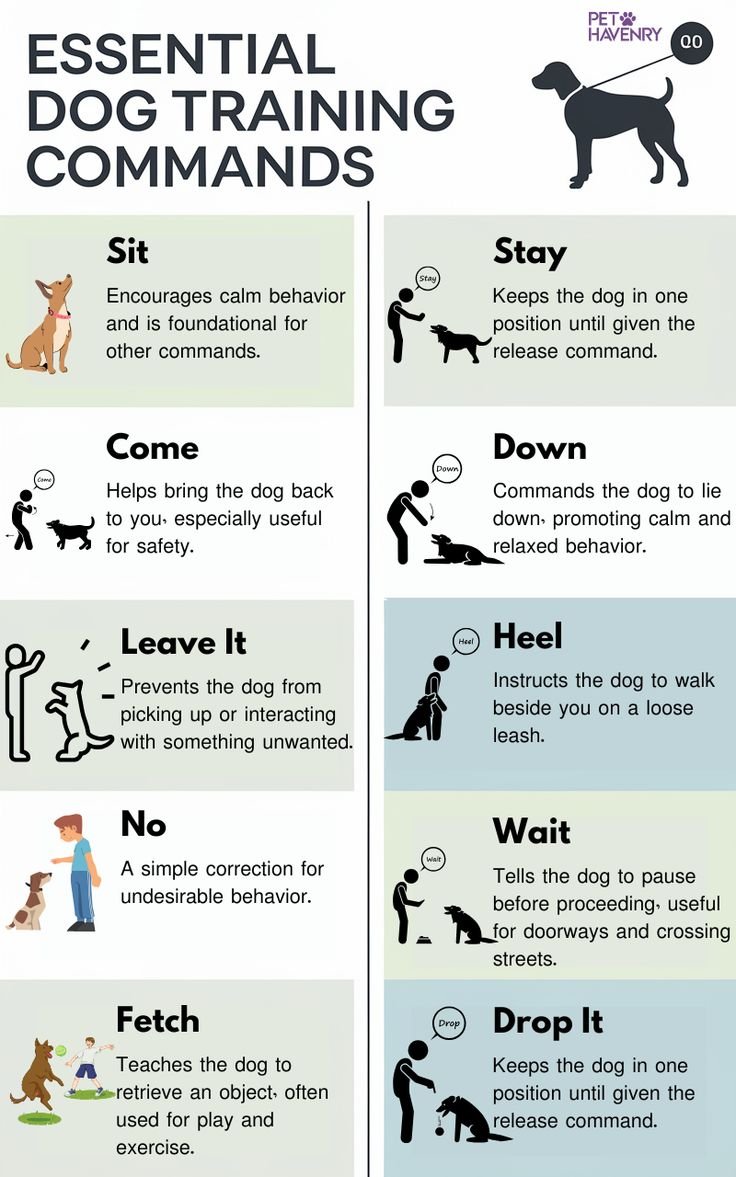
A basic dog commands list is simply a clear checklist of everyday cues that support good manners, safety, and communication. For most families, it helps to divide commands into three groups:
| Category | Main purpose |
|---|---|
| Safety & recall | Protecting the dog in risky situations |
| Manners & calmness | Polite behavior at home and outdoors |
| Care & handling | Stress‑free grooming, vet visits, and travel |
Using a structured list prevents confusion, helps family members stay consistent, and makes it easier to track training progress.
Printable and shareable cue checklist
A simple checklist helps everyone in the household stay consistent with training. Below is an example format that can be printed and posted on the fridge or shared in group chats so cues do not get mixed up.
| # | Command word | Hand signal? | What it means / when to use | Family version (all use this) |
|---|---|---|---|---|
| 1 | Sit | ✔ / ✖ | Dog puts rear on floor | |
| 2 | Down | ✔ / ✖ | Dog lies on floor | |
| 3 | Stay | ✔ / ✖ | Hold position until released | |
| … |
Owners can fill in only the commands actually in use, add rows for new cues, and tick off when the dog responds reliably. Sharing the same sheet with dog walkers, sitters, and family reduces confusion and speeds up learning.
Choosing which commands to start with
For many families, it is easier to begin with safety and everyday life. A common order is: name recognition → Sit → Come → Wait/Stay → Leave it → Drop it → Potty cue. Once daily routines feel smooth, add leash skills (Let’s go, Heel, Wait at the curb), then calming commands such as Place/Bed and Quiet. Playful or “trick‑style” cues, for example Touch or Up, can follow later as the dog’s focus and confidence improve.
Common Training Mistakes to Avoid

Training often goes off track due to a few common habits. Understanding typical mistakes helps progress stay smooth and stress‑free for both owner and dog. Frequent problems include unclear cue words, repeating commands many times, training only in quiet rooms, and reacting with frustration or punishment. By focusing on clear cues, consistent rules, calm timing, and positive rewards, everyday practice becomes safer, faster, and much more enjoyable.
Inconsistent words and rules
If the words you use with your dog or the rules you set change from day to day, your dog will not know what they are supposed to follow. It is important for the whole family to be consistent with the “commands you use” and the “behaviors you want.”
For example, if there are days when your dog is allowed on the sofa and days when they are not, your dog will stay confused. By making the conditions for when they are allowed on clear and responding the same way every time, your dog can feel secure in choosing the right behavior. Writing the rules down and sharing them with the family can help prevent inconsistency.
Repeating cues again and again
If you keep repeating the same command over and over, your dog may learn that it is okay to tune out your words. It is important to give the command clearly just once, and if your dog does not respond, support them through action. For example, if you say “come” and your dog does not come, gently guide them closer with the leash and use a reward to teach the correct behavior. By praising small successes right away, your dog will learn that “listening the first time brings good things,” making their response to commands more consistent.
Using punishment instead of guidance
Training that centers on punishment may stop a behavior temporarily, but it is not an effective way to build learning or trust. Scolding in a loud voice, using physical punishment, or pulling hard on the collar can teach your dog not “what is right,” but that “humans are scary.”
Instead, using “positive reinforcement,” such as praising your dog or giving a reward the moment they show desirable behavior, helps them learn willingly and makes mistakes less likely. Even when it is necessary to stop a dangerous behavior, it is important to ensure safety with a calm voice and environmental adjustments, then teach the correct behavior carefully afterward.
Progressing to Advanced Dog Skills
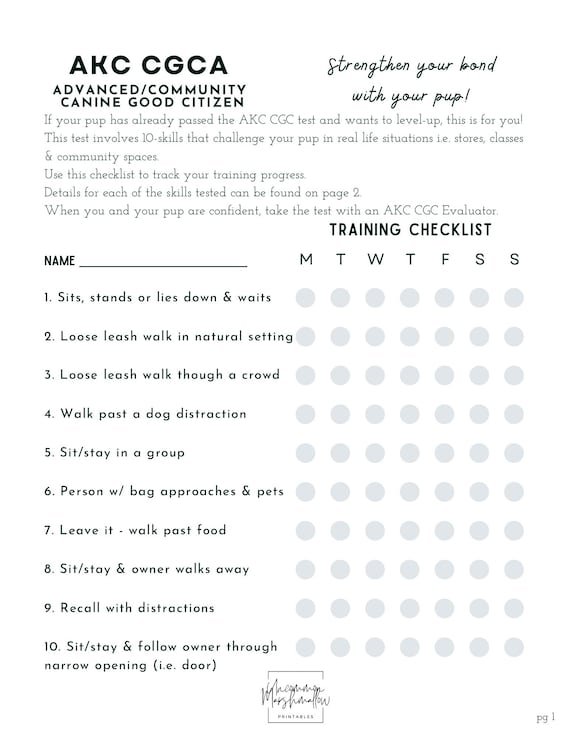
Advanced dog skills build on solid basics and keep a dog’s brain and body active. After mastering sit, down, stay, and come, owners can start gradually increasing difficulty instead of adding random new commands. Useful next steps include longer stays, off‑leash recalls in secure areas, more precise heelwork, and impulse control games around toys or food. Trick training, scent games, and simple agility also strengthen focus and deepen the bond between dog and owner while preventing boredom‑related problem behaviors.
Adding distance and distractions
Adding distance and distractions should begin only after a cue is reliable at home with no distractions. First, increase distance: ask for a sit or stay, take one step back, return, and reward. Gradually add more steps and different rooms. Next, introduce mild distractions such as a toy on the floor or someone walking by. Reward heavily for success and reduce difficulty if the dog struggles. Progress slowly so the dog can stay focused and confident in real‑life situations.
When to seek a trainer’s help
Professional support is useful when safety, stress, or lack of progress become concerns. Consider a qualified trainer if:
- Your dog shows aggression, intense fear, or resource guarding
- Minor issues (pulling, jumping, barking) are not improving after several weeks of consistent practice
- Family members cannot agree on rules or methods
- You feel anxious, frustrated, or unsure how to proceed
Choose a trainer who uses reward‑based, force‑free methods and is willing to explain the plan clearly.
Keeping Training Fun for You and Your Dog
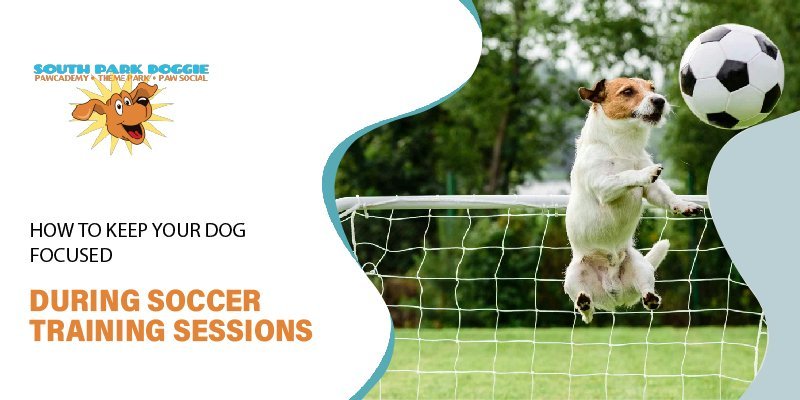
Training should feel like a game, not an exam. Use tiny, tasty rewards, happy praise, and short play breaks so the dog stays eager. End sessions while the dog is still interested, not bored or frustrated. Vary locations, rewards, and commands to keep motivation high. If either owner or dog feels tired or annoyed, pause and try again later. Positive, relaxed practice builds faster learning and a better bond.
This article clearly explains 21 basic commands that are easy to teach at home, categorized by purpose. It covers everything from word choice and reward usage to the differences between puppies and adult dogs, and common mistakes, providing practical training methods to ensure a safe and comfortable daily life with your dog.






![My puppy won't learn to use the toilet [Keep training simple!]](https://with-my-dog.com/wp-content/uploads/2021/12/dog-g33cd6bf6a_1920-150x150.jpg)