

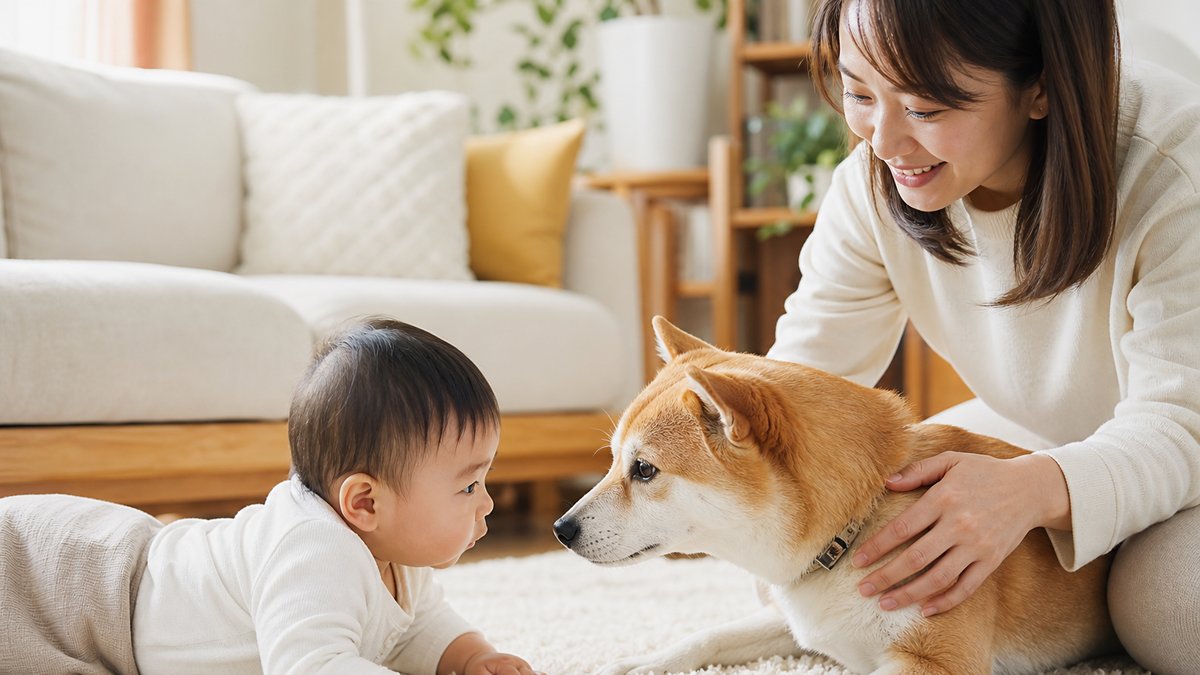
When a baby is born, the way you interact with your beloved dog, who has lived like a family member, changes significantly. To ensure that your dog and baby can comfortably share the same space, a proper "first meeting" is crucial. This article clearly explains the steps for introducing your dog and baby to each other, including how to adjust their daily routines, prepare in advance, and safe first meeting methods. We offer tips for creating a stress-free environment for both of them while respecting your family's lifestyle.
Understanding dogs, babies and safety

Safety for dogs and babies begins with understanding how both experience the world. Dogs rely heavily on smell, sound, and body language. Newborns bring new scents, unpredictable sounds, and sudden movements, which can confuse or worry even friendly dogs.
From the start, the priority is protecting the baby while helping the dog feel secure. A dog that feels safe and understood is far less likely to react badly. Careful management, training, and supervision turn the home into a place where the dog can adjust calmly and the baby can grow up around animals in a safe way.
Common worries new parents have
Many new parents worry, “Will the dog be safe with the baby?” Common concerns include biting or snapping, rough play, jumping up near the baby, and germs or allergies. Others fear the dog will feel jealous, stressed by crying, or ignored because of a busier schedule. Such worries are very normal. With planned training, supervision, and safe spaces for both dog and baby, risk can be greatly reduced and family life becomes more relaxed.
How most dogs react to a new baby
Many dogs react to a new baby with a mix of curiosity, confusion and mild stress. Some dogs sniff the air, keep a little distance and quietly observe, while others may become clingier or temporarily lose interest in food or play.
Well‑socialized, stable dogs usually adapt once a predictable routine returns and they learn what the baby means for daily life. However, even friendly dogs can feel unsettled by new smells, sounds and human behavior, so owners should assume the dog needs time and support, not instant love at first sight.
Prep work before baby arrives

Once you find out you are pregnant, it is important to gradually adjust your dog’s life to prepare for the baby. Sudden changes can easily become a major source of stress for dogs, so preparing over several months is reassuring. By gradually working on health checks, basic training, reviewing daily routines, and helping your dog get used to baby items, the arrival of the baby can feel like an extension of “normal daily life” for your dog, making it easier for them to stay calm and accept the change.
Health checks and basic training
Before a baby arrives, the dog’s health and manners must be checked. A veterinary checkup is important to confirm vaccinations, parasite prevention, and any pain that could lower the dog’s tolerance around a baby. Dental pain or ear infections can also make irritability worse.
Basic training such as sit, stay, come, and down should work reliably, even with mild distractions. Leash walking without pulling and waiting politely at doors are also useful. Good basic training creates predictability and gives adults safe ways to guide the dog’s behavior when caring for the baby.
Teaching key cues for life with baby
Clear cues help a dog understand newborn-related rules and feel secure. Consistent, rewarded cues reduce confusion and prevent unsafe behavior. Focus on a small set that supports everyday life: “leave it,” “drop it,” “go to bed,” a calm greeting cue, reliable recall, and a solid “stay.” Each cue should be practiced in all key places: near the crib, sofa, changing table, and front door. Short, daily sessions prepare the dog before sleep-deprived days with a baby begin.
Leave it and drop it
“Leave it” and “drop it” protect babies from being grabbed, licked, or stepped on along with toys or food. Both cues help prevent accidents before they start.
-
Leave it: The dog looks away and backs off from an object, person, or space when asked. Start with low‑value treats on the floor, reward for eye contact, then slowly move to baby items such as socks or toys (never using the real baby as practice).
-
Drop it: The dog calmly releases what is already in the mouth. Trade for high‑value treats and avoid pulling items out of the mouth. Practice with soft toys, then progress to objects similar to baby items.
Regular short sessions before birth help the dog respond automatically when the baby arrives, even in busy or stressful moments.
Go to bed or safe place
A “go to bed” or “safe place” cue helps a dog retreat calmly when baby activity becomes intense. Choose a consistent spot such as a crate, bed, or mat placed away from the baby zone. Pair the cue with rewards so the dog feels that the area is secure and positive, not punishment.
Practice before birth: cue “bed,” guide the dog to the spot, then give treats or a chew. Gradually add mild noise or movement, rewarding relaxed body language. Over time, the cue becomes an easy way to create space and prevent crowding around the baby.
Calm greetings and no jumping
Calm greetings and no jumping
Calm greetings are essential so a dog does not associate the baby with wild excitement. Before birth, teach a reliable sit or four‑feet‑on‑the‑floor greeting for all arrivals. Ask for the cue every time someone comes home, reward calm behavior, and ignore jumping. If needed, clip on a leash before the door opens so the dog cannot practice leaping. Consistent rules for all family members make it easier to keep greetings gentle once the baby is in a caregiver’s arms.
Getting your dog used to baby sounds
Baby cries, giggles, and sudden shrieks can confuse or scare many dogs. Gradual sound practice before birth helps prevent startle reactions and barking later.
An effective method is to play high‑quality recordings of baby noises at a very low volume during calm moments, such as mealtime or relaxing on a bed or mat. When the dog stays relaxed, offer treats or gentle praise. Over several days, slowly increase the volume while ensuring the dog remains comfortable.
If the dog shows worry—ears back, pacing, panting, or barking—lower the volume immediately or stop the session and try again shorter next time. Short, positive sessions of 3–5 minutes are usually enough. Linking baby sounds with good experiences teaches the dog that noises from the future baby are safe and normal.
Practicing baby handling and touch
赤ちゃんのいる生活では、犬が突然のタッチや抱っこに驚かないことが重要です。安全のためには、事前に「赤ちゃん役」で練習しておくことが効果的です。
まず、クッションや人形を「赤ちゃん」に見立てて腕に抱き、ゆっくり歩きながら犬におやつを与えます。犬が落ち着いていれば静かな声で褒め、興奮した場合は距離を取り、再び落ち着いた行動を強化します。
次に、ブラシや手で優しく触りながら、耳・尻尾・足先・お腹などを軽くチェックする「ハンドリング練習」を行います。犬が嫌がる部分は無理をせず、短時間+ご褒美を徹底することで、少しずつ触られることに慣れていきます。
Preparing your home and routine

Preparing the home and daily rhythm in advance makes life safer and calmer for both dog and baby. The goal is to create clear boundaries, predictable routines, and easy management. Before birth, decide where the dog may rest, where the baby equipment will be placed, and how walks and feeding can fit around nap times. A well‑planned environment reduces accidents, eases jealousy, and supports smoother training once the baby arrives.
Creating safe zones for your dog
A safe zone is a place where the dog can retreat and relax without interruption. Ideally, choose a quiet corner away from the main baby areas and set it up with a bed, water, and favorite toys. Use a crate, pen, or a gated room so the dog has a clearly defined boundary.
Teach a cue such as “bed” so the dog learns to go there on request, and make the safe zone a reward-filled space, never a punishment. Everyone in the family should respect this area and avoid disturbing the dog when resting there.
Setting up no‑go areas and barriers
No‑go areas and barriers protect both baby and dog by removing temptation and risk before problems start. Decide in advance where your dog is never allowed, such as the nursery, changing area, and around the highchair. Make rules clear and consistent for all family members.
Simple tools work well:
| Tool | Main use | Point |
|---|---|---|
| Baby gates | Block halls/rooms | Choose sturdy, walk‑through types |
| Playpens | Safe baby zone | Dog stays outside the pen |
| Exercise pens | Safe dog zone | Give bed, water, chew toys |
| Door latches | Keep doors ajar | Good for cat access, dog blocked |
Introduce barriers before birth, pairing them with treats and praise so the dog learns that being on the “wrong” side still brings good things and calm time.
Planning your new daily schedule
A new baby completely changes timing for walks, meals, and attention, so planning a simple schedule in advance reduces stress for both dog and parents. Start by mapping current dog routines, then decide which tasks a partner, family member, or dog walker can cover in the first weeks. Aim for fixed anchors each day: morning toilet break, main walk, feeding times, short training or play sessions, and a calm evening wind‑down. Building dog care around likely baby patterns (feeding, nap times) helps keep behavior stable and prevents frustration.
First introduction when baby comes home

The first introduction sets the tone for the relationship, so planning for calm and control is essential. Ideally, one adult greets the dog first, allowing jumping and excitement to settle before the baby enters. The environment should be quiet, with the dog on a leash or behind a baby gate so distance can be adjusted. Short, positive sessions with treats and praise help the dog associate the baby with good things, rather than sudden change or stress.
Bringing home baby scents first
Many families find it helpful to introduce the dog to the baby’s scent before the first meeting. Ask the hospital for a worn baby hat, blanket, or onesie. A partner or family member can bring it home and present it to the dog in a calm setting.
Allow the dog to sniff from a short distance while on leash if needed. Pair the smell with gentle praise and tasty treats so the dog learns: “Baby smell = good things.” Avoid waving the item around or forcing contact; quiet curiosity is the goal.
Calm arrival day with your dog
Aim for a quiet, low‑key homecoming. Before baby enters, give the dog a walk or play session so energy is lower. Ask one adult to greet the dog first while another waits outside with the baby. Offer calm praise and high‑value treats only for relaxed behavior. Avoid crowding, visitors, or loud celebrations on arrival day. A predictable, peaceful atmosphere helps the dog feel secure and more able to accept the big change.
Step‑by‑step first meeting process
Introduce dog and baby only when everyone is calm and basic needs are met (dog walked, fed, had a toilet break). Keep the first meeting short and structured:
- Start on leash at a distance where the dog stays relaxed.
- Allow the dog to sniff from the side, not face‑to‑face.
- One adult manages the dog, another holds the baby securely.
- Reward any calm, gentle interest with treats and praise.
- End on a positive note after a brief success, then give the dog a break in a safe space.
Repeat several short sessions over days rather than one long introduction.
Body language to watch during intros
Observing your dog’s body language helps you notice stress or warning signs early. Especially during a first meeting, keeping the following points in mind can provide reassurance.
| Sign | Examples | Meaning / Response |
|---|---|---|
| Relaxed | Soft body / mouth slightly open / tail wagging gently | Your dog is relatively calm, and the meeting may continue for a short time |
| Mild stress | Yawning / licking the nose / looking away | A sign that your dog is “a little nervous.” Shorten the meeting time and increase the distance slightly to help them feel safer |
| Anxiety or caution | Body becoming stiff / ears pinned back / tail lowered or tucked | Do not force the interaction. It is important to create distance immediately and return your dog to a safe place |
| Danger signs | Growling / showing teeth / freezing and staring / raised hackles | Red-flag signs. Stop the meeting immediately and consider consulting a professional |
During a first meeting, check frequently whether your dog remains relaxed or only mildly stressed. If even slight signs of anxiety continue, ending the meeting for the day will help keep everyone safe.
Daily life with dog and baby together

Daily life with a dog and baby centers on management, routine and calm energy. Parents should assume constant supervision, even with a “good” dog. Set clear patterns: dog walks and meals at predictable times, baby on a regular sleep–feed cycle, and quiet zones for both. Using gates and beds helps avoid crowding around the baby. Short, positive interactions, followed by breaks, teach the dog that being near the baby leads to rewards, then rest, not chaos.
Golden rules for safe supervision
Safe supervision means active attention, not just being in the same room. An adult should always be close enough to reach the dog and baby within 1–2 seconds. No unsupervised contact, even with a trusted dog.
A simple rule is: “No floor time together without hands‑on supervision.” Use baby gates, playpens, or crates when the adult’s focus is elsewhere. Avoid allowing the baby to climb on, hug, or grab the dog. Guide gentle touch, keep interactions short, and end on a calm, positive note.
If the dog shows any stress signals—lip licking, yawning, turning away, stiffness—separate first, analyze later. Safety comes before photos, cuddles, or social media moments.
Managing toys, food and space
Toys, food and resting spots often trigger conflict, so clear rules prevent accidents. Keep baby toys and dog toys separate; soft rattles can look like plushes to dogs. Use a basket or box in a set spot for dog toys and teach a cue such as “take it” only from that area. Feed the dog away from baby spaces, ideally in a gated room or crate, and pick up bowls after meals. Reserve a bed or mat as the dog’s “no‑disturb zone” where baby is never allowed to touch, so the dog always has a safe retreat.
Keeping your dog’s needs met
Keeping a dog’s needs met helps prevent frustration, attention‑seeking, and anxiety around the baby. Aim for daily outlets for exercise, mental work, rest, and affection. Even if outings become shorter, keep them predictable and enjoyable.
Use a simple checklist:
| Need | Easy ways to meet it with a baby at home |
|---|---|
| Exercise | Short but frequent walks, indoor fetch |
| Mental stimulation | Snuffle mats, food puzzles, training |
| Rest & safety | Quiet bed in a no‑baby zone |
| Social time | Cuddle sessions when baby naps |
When possible, ask family, friends, or a dog walker to help so the dog’s routine remains stable, even on busy days.
Sample day: walks, naps and feeding
A simple sample schedule helps busy parents picture how dog care fits around baby care. Adjust times to suit each household.
| Time | Baby focus | Dog focus |
|---|---|---|
| Early morning | Feed, diaper, cuddle | Short toilet break, breakfast, brief walk |
| Late morning | Nap | Longer walk or play while baby sleeps |
| Afternoon | Play, feeding | Chew toy or scatter feeding in safe area |
| Early evening | Bath, wind‑down | Calm walk, training games, dinner |
| Night | Night feedings as needed | Quick toilet break, then quiet in safe zone |
Keeping a loose rhythm like this supports both dog and baby, while giving adults realistic pockets of rest.
Lifestyle tips for dog–baby harmony

Dog–baby harmony grows from small, repeatable habits. Aim for a predictable rhythm: regular walks, feeding times, and short training sessions even on busy days. Offer daily calm contact such as gentle brushing while the baby naps, or a chew toy beside the sofa during night feeds. Protect both with clear rules: no dog on baby furniture, no baby in the dog’s bed. Celebrate quiet, relaxed behavior with rewards so the dog learns that being calm around the baby brings good things.
Lifestyle how to introduce dog to baby
A dog–baby household is more than a safety checklist; it is a lifestyle shift. Introducing a dog to a baby works best when care is woven into everyday habits. Before birth, guardians can build calm routines, reward relaxed behavior, and practice future patterns such as stroller walks or quiet time during feeds.
After the baby arrives, it helps to pair baby-related moments with good things for the dog: special chews during nursing sessions, short training games between diaper changes, or a walk whenever a partner or visitor can help. Clear boundaries, predictable schedules, and regular affection prevent frustration on both sides.
Over time, many families find that life with a dog and baby becomes a stable rhythm: supervised interaction, plenty of rest for both, and small daily rituals that keep everyone feeling secure and connected.
Making the most of limited time
Even during the busy parenting period, it is important to focus on “high-quality interaction in a short amount of time”. If walk time decreases, even short but focused sniffing walks or a 3-minute trick practice session after coming home can increase your dog’s satisfaction. By adding petting, talking to your dog, or a simple “sit” practice before or after feeding or putting the baby to sleep, your daily “routine time” can naturally become time with your dog. In addition, deciding how to share responsibilities with your partner or family can help ensure that dog care does not become the burden of just one person, making it easier to maintain emotional breathing room.
Low‑stress enrichment ideas at home
For busy parents, low‑stress enrichment keeps dogs content without major time or effort. Short nose‑work games, such as scatter‑feeding kibble on a mat or around one room, satisfy natural foraging instincts. Food‑puzzle toys, frozen Kongs, and safe chew items help dogs relax while adults feed or settle the baby. Simple training refreshers during diaper changes—like “sit” or “down” before rewards—provide mental exercise. Quiet background music or a snuffle mat near the family area allows the dog to stay involved but calm.
As your baby grows into a toddler

Toddlers move fast, make noise, and explore with hands and toys. For many dogs, the toddler stage is more challenging than the newborn stage, so extra management becomes important. Provide clear boundaries, safe zones, and constant supervision. Refresh training cues, keep routines predictable, and support both child and dog so trust can grow gradually and safely.
Teaching your child to respect dogs
Teaching children to respect dogs becomes the foundation for safety and building a good relationship. First, it is important to clearly explain household rules such as “do not suddenly run, shout, or chase.” In addition, teach specific moments when it is okay to approach and when it should be avoided, such as “do not touch the dog when they are sleeping, eating, or chewing a toy.”
For how to touch the dog, it is reassuring to practice together by avoiding reaching over the head and instead gently petting the shoulders, chest, or back. When a parent always stays nearby to supervise and immediately praises good interaction, children can more easily learn that “the more gently I treat the dog, the safer the dog feels.”
Games kids and dogs can enjoy safely
Shared play is a good way to build positive feelings between dog and child. The safest games are calm and structured. For example, a parent can help with gentle fetch (adult throws, child cheers), treat treasure hunts the child helps hide, or training games where the child gives simple cues and an adult rewards the dog. Avoid chasing, roughhousing, tug-of-war, and any game that encourages jumping on the child or grabbing clothing.
When to separate dog and toddler
For small children and dogs, it is safest to think that “even though they may be a cute combination, you always need to decide when to separate them”. As a guideline, be sure to create distance in the following situations.
| Situation | Why They Should Be Separated Immediately |
|---|---|
| When an adult cannot keep watch | Because even a few seconds can increase the risk of an accident |
| When the child runs or shouts | Because it can easily increase the dog’s excitement or fear |
| When the dog is focused on a meal, treat, or toy | Because it can easily lead to guarding behavior or biting |
| When the dog’s body language is stiff, they try to escape, or they growl | Because the dog is already feeling strong stress |
| When the child straddles the dog, hugs them, or brings their face close | Because many dogs feel strong discomfort in these situations |
When in doubt, it is important to think, “separating them first is safer,” and make use of baby gates or playpens.
Handling common problems early

Early action prevents small issues from becoming unsafe. New parents can watch for patterns such as constant pestering of the baby area, stiff body around baby gear, or over‑excitement whenever the baby moves or cries. When a concern appears, reduce direct contact, use baby gates, and increase calm activities like sniff walks and food puzzles. For any growling, freezing, or snapping, pause introductions and contact a professional trainer or behaviorist promptly so a tailored plan can be created.
Signs your dog is stressed or unhappy
When dogs feel stressed, it can show in many ways, from small signs to dangerous behaviors. Noticing these signs early is the key to keeping everyone safe.
Common signs include the following:
- Looking away or showing the whites of the eyes more than usual
- Frequent yawning, licking the nose, or scratching the body
- Stiffening the body or lowering and tucking the tail
- Growling, snarling, or showing teeth
- Hiding more than usual or not wanting to be touched
If these signs appear frequently near the baby, caution is needed. It is important to create distance, guide your dog to a place where they can rest, and allow interaction again only after they have calmed down.
What to do about guarding or jealousy
Resource guarding and jealousy often appear when a baby “takes over” space, toys, or people. Prevention is easier than fixing a crisis.
Use the table below as a quick guide:
| Situation | What to do |
|---|---|
| Dog guards toys/bed from baby | Remove high‑value items when baby is active; give safe chewing options in a separate area. |
| Dog guards a parent | Ask dog to go to bed and reward calmly while another adult holds baby. Share attention: short, frequent cuddles for dog. |
| Dog guards baby’s items | Teach “leave it” and swap guarded objects for tasty treats, then quietly remove the item. |
Always avoid punishment; it increases anxiety. If growling or snapping appears, separate dog and baby and contact a qualified trainer or behaviorist promptly.
Barking, jumping and over‑excitement
Barking, jumping, and excessive excitement are common problems in many households. In a space where there is a baby, it is important to prioritize basic cues such as “quiet,” “sit,” and “stay”. Give the cue before barking or jumping begins, and reward your dog immediately when they succeed. In situations where your dog is likely to become excited, such as when guests arrive or when preparing the stroller, it is a good idea to use a leash or harness and practice while keeping a safe distance.
When to call a trainer or behaviorist
Early support from a professional can prevent small worries from turning into serious safety issues. As a general guide for when to seek advice:
| Situation | When to Seek Help Promptly |
|---|---|
| Signs of aggression | Growling, showing teeth, or making biting motions |
| Strong anxiety | Trembling near the baby or continuously trying to escape |
| Difficult to control | Cues barely work, and excitement continues for a long time |
| Owner anxiety | Constantly worrying, “What if something happens?” |
If your dog has bitten even once, or if your family does not feel confident supervising safely, it is best to consult a veterinary behaviorist or certified dog trainer as soon as possible.
Special situations and safety notes

Special situations around dogs and babies require extra caution and planning. Certain factors increase risk: strong guarding tendencies, history of bites or growling at children, very large or very fragile dogs, and homes with multiple pets or frequent visitors. In such environments, management (gates, leashes, separation) becomes just as important as training. Parents are encouraged to prepare safety rules in advance, share them with family and caregivers, and seek professional advice early if any concern arises.
Living with multiple dogs and a baby
Living with several dogs and a baby requires clear structure and strict management. Each dog needs its own safe zone, bed, and feeding spot so that no one is forced to share. Separate dogs for high‑value moments such as feeding, chews, and active play.
Use baby gates and crates to control who is near the baby, and only allow the most relaxed, reliable dog closer, one at a time. Rotate walks and training sessions so every dog gets individual attention. Always supervise group interactions and end them early if any dog shows tension, crowding around the baby, or guarding behavior.
If your dog has a bite history
A dog with a bite history requires extra caution and professional support. Before baby arrives, consult a veterinary behaviorist or certified behavior professional and share detailed bite records (triggers, severity, context). A full risk assessment may lead to strict management plans, muzzle training, or in rare cases plans for rehoming to a child‑free home.
At home, use physical barriers (gates, crates, closed doors) so dog and baby never share unsupervised space. Avoid direct contact; many experts recommend no intentional baby–dog interaction when there is a serious bite history. Prioritize predictable routines, calm environments, and clear rules for all adults so safety procedures are followed every time.
Breeds, myths and real risk factors
Many parents worry certain breeds are automatically dangerous. In reality, individual temperament, socialization and management matter far more than breed label. Any dog can bite if scared, in pain or cornered.
Real risk factors include: poor socialization with children, history of resource guarding, chronic pain, lack of supervision, and no safe space to escape. Large, powerful breeds can cause more damage, so clear rules and training are vital, but small dogs also need the same care.
Rather than focusing only on breed, families are encouraged to assess their own dog honestly, work with professionals if needed, and put layered safety measures in place.
This article explains how dog owners can safely and calmly introduce a dog to a new baby. It covers preparation before birth, the first meeting, everyday routines, toddler stages, and how to handle stress or problems so the whole family can live together comfortably.









![[Free Only] 3 Sites Where You Can Download Dog Bone Illustrations](https://with-my-dog.com/wp-content/uploads/2022/03/947760_sのコピー-150x150.jpg)